

the #poem in the screenshots below is a total of fourteen pages long in its original a4 format.
if you want to read the rest of this post, i suggest you read the poem first. but, really, i’m only suggesting. and this sincerely … actually, really, sincerely.

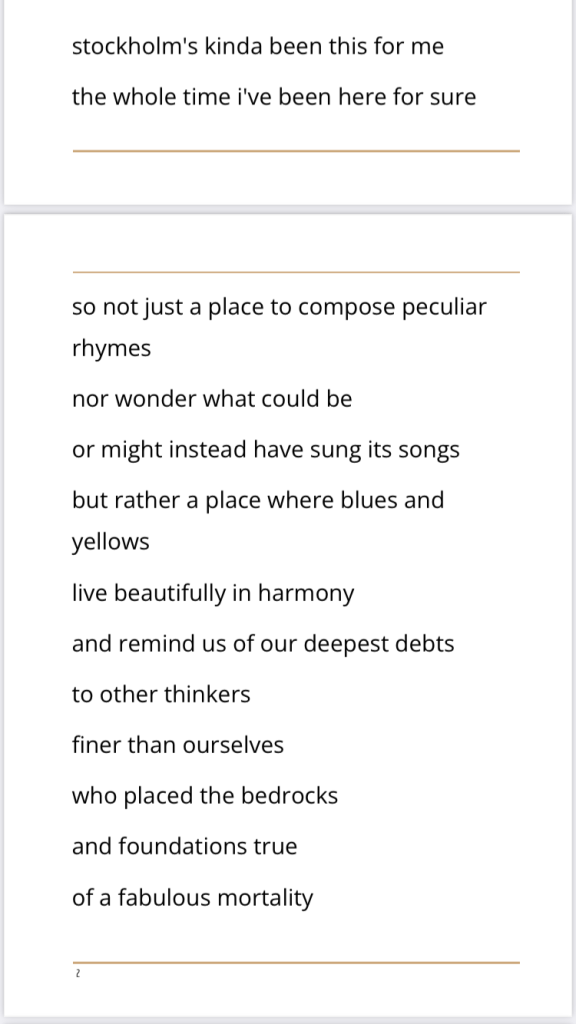
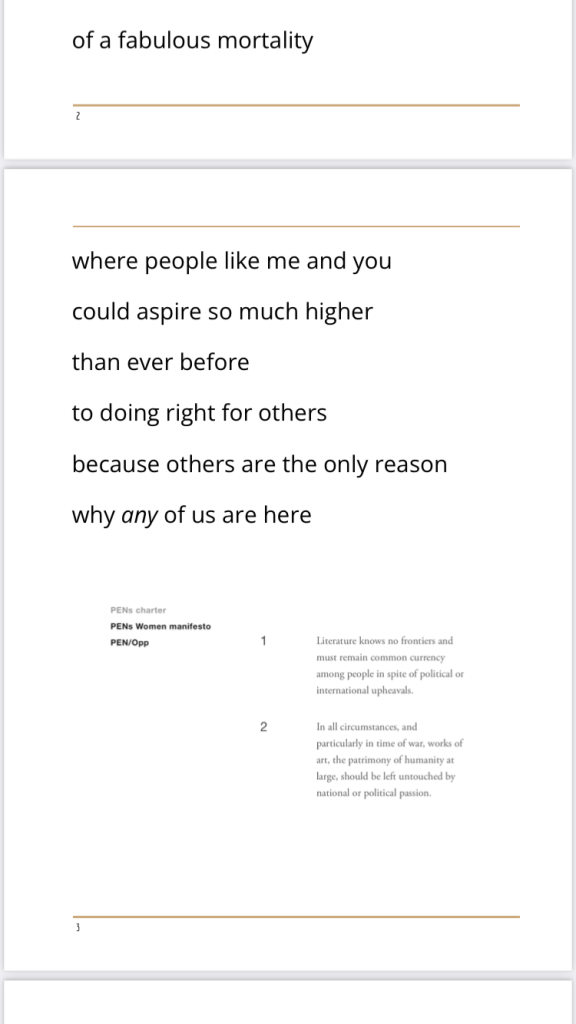
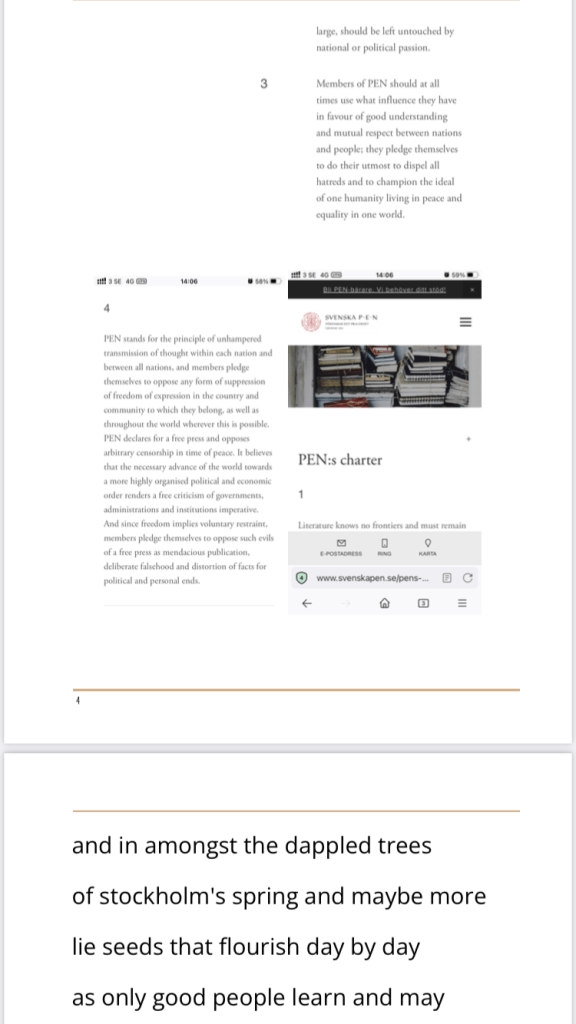
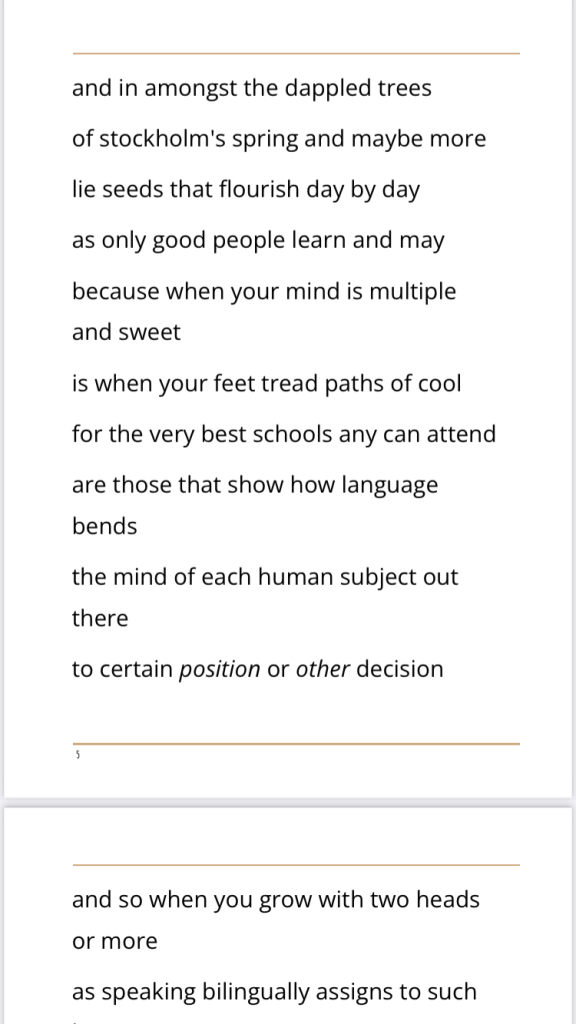


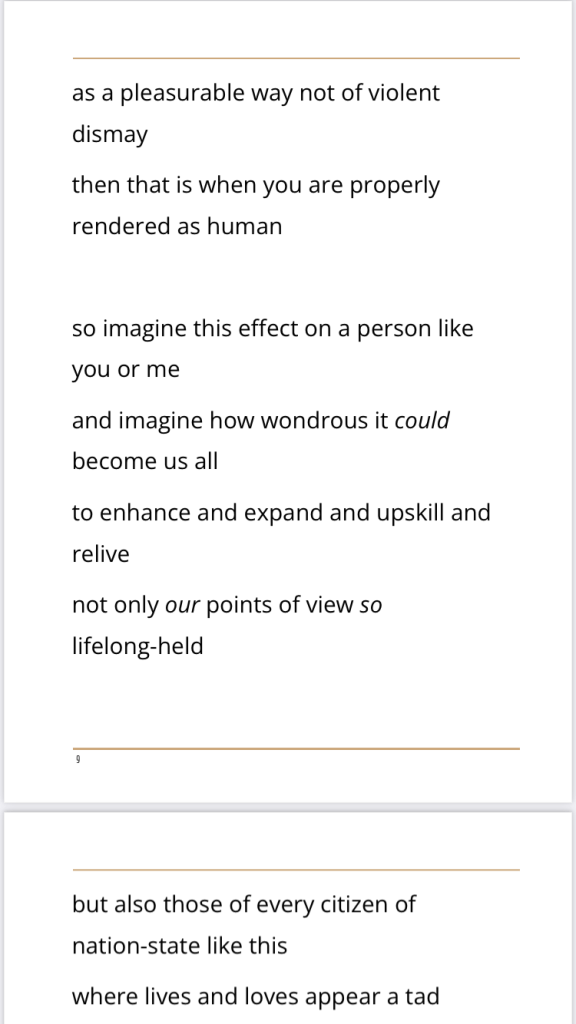
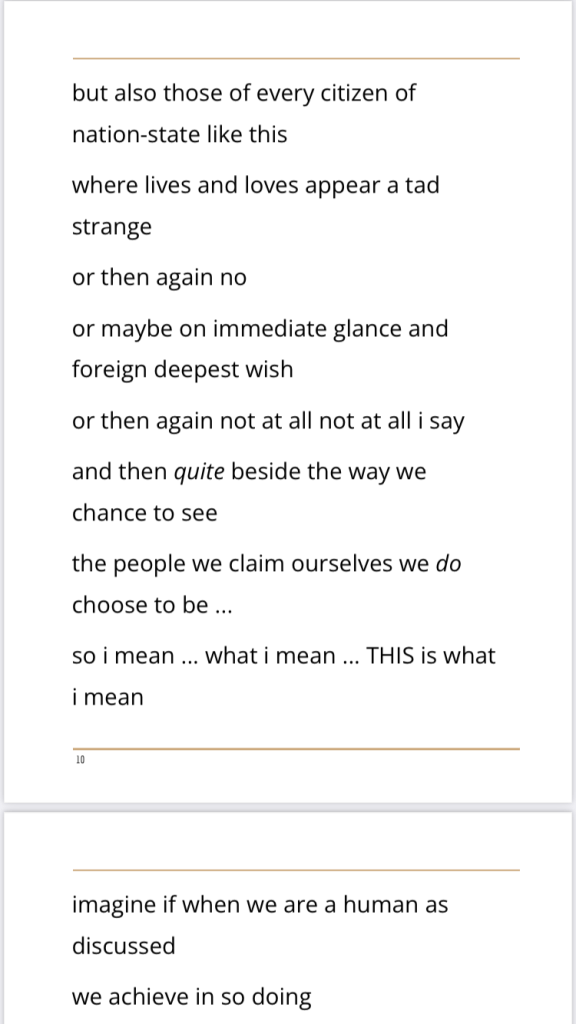
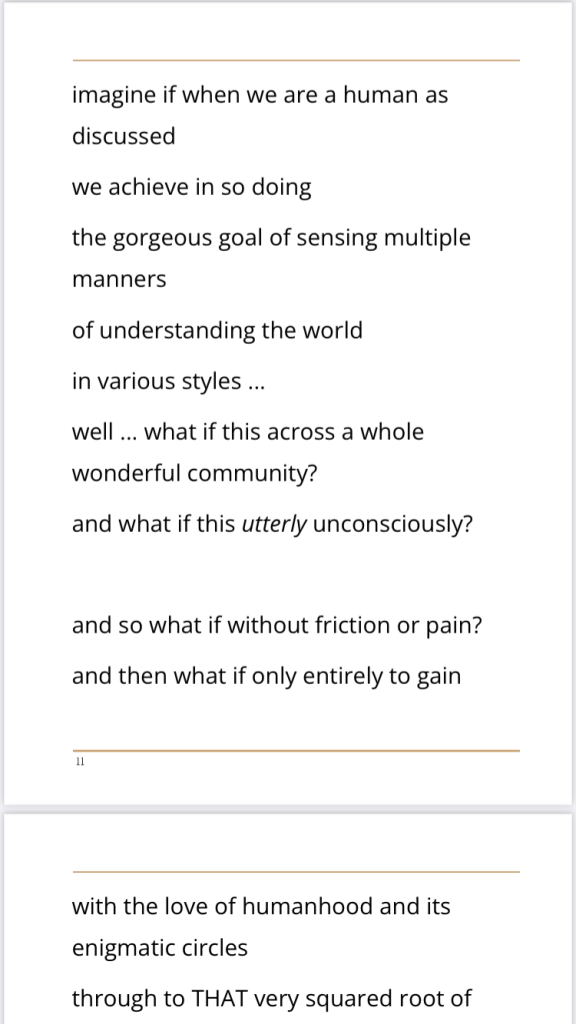


the work itself is shaped by my ongoing desire to accept that reconciliation is desirable, always.
one thing i must say, however. forgiveness for me can only take place when the act which generates the original cruelty has stopped. you can’t leave anything in the past and proceed to easy forgiveness when that past still has you by the scruff of your neck, and is shaking you deliberatedly, just as if you were a child’s rag doll.
another thing, too: whilst forgiveness is what one person does, reconciliation requires the agreement of two parties or more to follow the same process: not one act, then, but a play in at least two parts.
part 1: truth made patent to the whole world. absolute truth; not universal but absolute — absolute in the sense that in any sequence of events there is unequivocal reality. there may also be universal truths … ‘not saying there can’t be. but they don’t always exist. absolute ones, meantime, there always are.
so whilst i can forgive you for what you did in the past to me without you having to do anything in exchange, we cannot achieve a state of reconciliation without moving to this state where we ALL accept the existent absolute truths as such: as being existent.
for example, vukovar doesn’t lend itself to reconciliation until and unless the clear aggressors accepted that they did what happened:
• https://en.m.wikipedia.org/wiki/Battle_of_Vukovar
and even then … so much pain. too much, maybe.
part 2: so, once we agree on the realities committed, being the absolute (not relativised) truths i discuss above, we can then ease ourselves with sensitivity — never with the same aggressions, presumptions and/or violences that led to the original abuse (really no) — into what should be a probably long, but never necessarily interminable, process of reconciliation.
however, here too, where the injuring parties continued to act as they have been doing all along, neither this second process leading to final reconciliation nor the first where an injured party (no longer being actively injured) finds it in themselves to forgive unilaterally and unconditionally (as all true forgiveness actually is) … well .. honestly … neither CAN make any sense whatsoever, can they? not if the wounds are still being salted …
you forgive when you feel safer, surely. when you don’t have to look over your shoulder all the time.
and you agree the truth when you feel honesty is the best policy. when you feel certain that others share minimally your view of what’s really important in the world.
and you finally reconcile when you reach a bedrock — that truth you feel capable of agreeing on with another — which you can then inhabit with someone who, indeed, may never become your friend again, but who at the very least becomes someone you begin to inhabit that same rock with in a way that is ok and comfortably enough.
well.
so much for the words.
if someone wants to discuss the above with me face-to-face at last, ‘am happy to; eager in fact.
but if your method of choice is to impose your physicality covertly on me instead of overtly, invading my personal space knowing you are instead of taking ownership for what you are doing, you are just using brawn (even when nominally brains) over your undoubted brains.
that ennobles no one, imho.
and if truth be told, neither injured nor injuring parties.
no?








further reading:

 mil's page