following on from my previous post today, a reflection or two which i want to represent my future … and if you agree, our future … and if you all agree, all our futures …
realising why
you couldn't be you
makes it time
to start anew
and knowing the crime
committed by them
shouldn't make them not you at all
because the struggle to fight right
escapes us in the night
where the dark barks back at us
instead of harks to deeper lives
and so one day it's true
even when lifetimes are lost
the cost of not showing
we accept we are the same
produces the insanity
that rules our worlds right now

so all i can suggest
is that forgiveness does entrust
the forgiver with perhaps
the only power existent on this earth
where in its exerting
we cannot do ill
for nothing comes close
to the bitter pill
of reliving over and over
the alternative state of pain and stuff

i turn a page then
not if you do too
but with you if you care to also
also if you do
and so my conditions
are now nowhere found
for i've lived my life
and this was how
and all i want for me at least
is to know right now that love exists
yay! got my uni-time #dell laptop back in action again. and it’s such a beautiful machine compared to my #chromebook in all respects.
even the band!
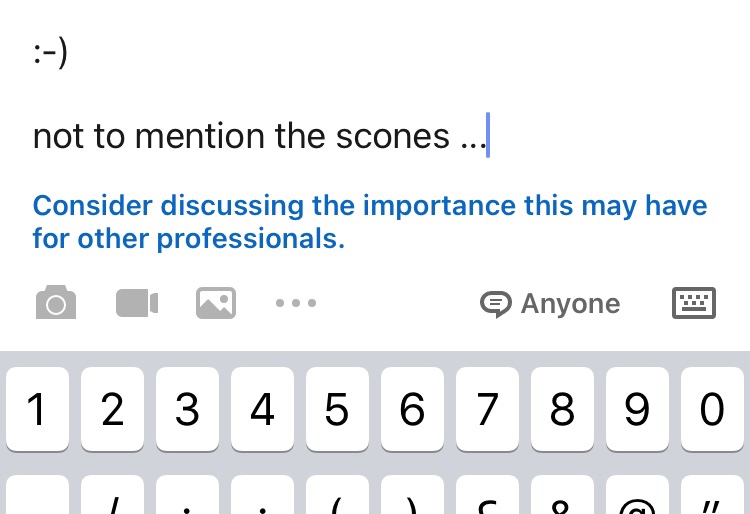
🙂
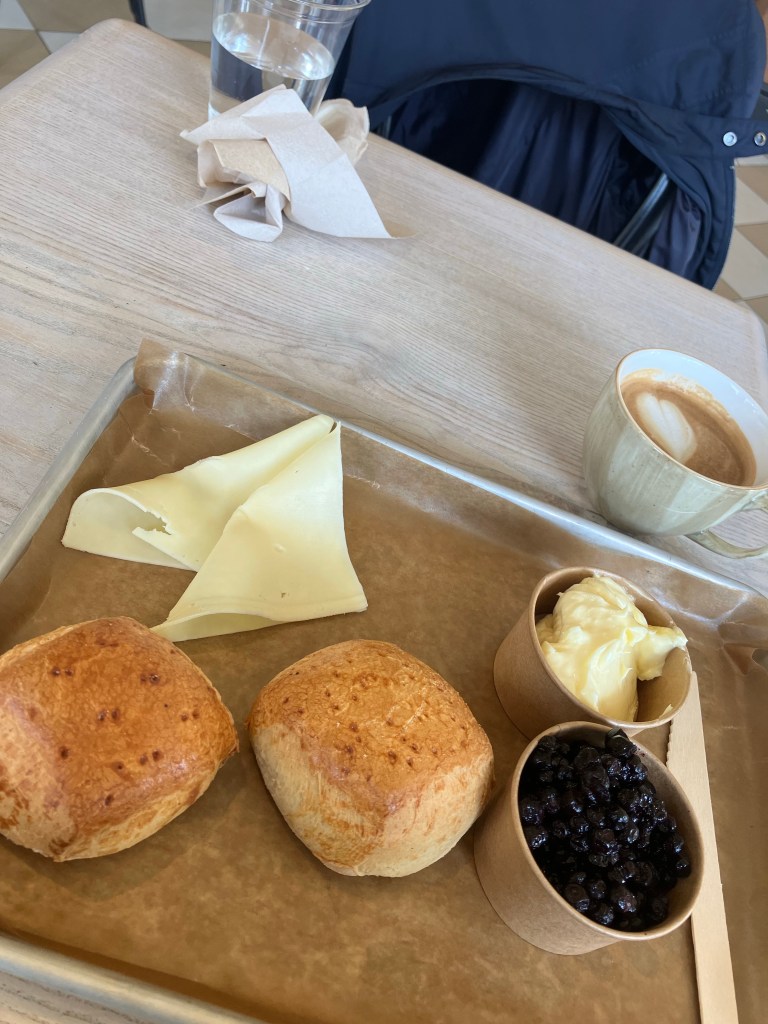
not to mention the scones …
#happymil #ontheroadto anyways
#stockholm #sweden
♥️💐♥️😎♥️🇸🇪
and this is what has taken me nineteen years to understand … but understand i now clearly have … and without your persistence c, none of this myself i’d ever been able to have seen.
so thank you, deeply; for your sacrifices and pain in the name of absolute truth, where not universal: maybe my innate utility and compassion and natural instincts for friendship and life will begin to expand duly again, out of the hole i soon found myself in way-back-then:
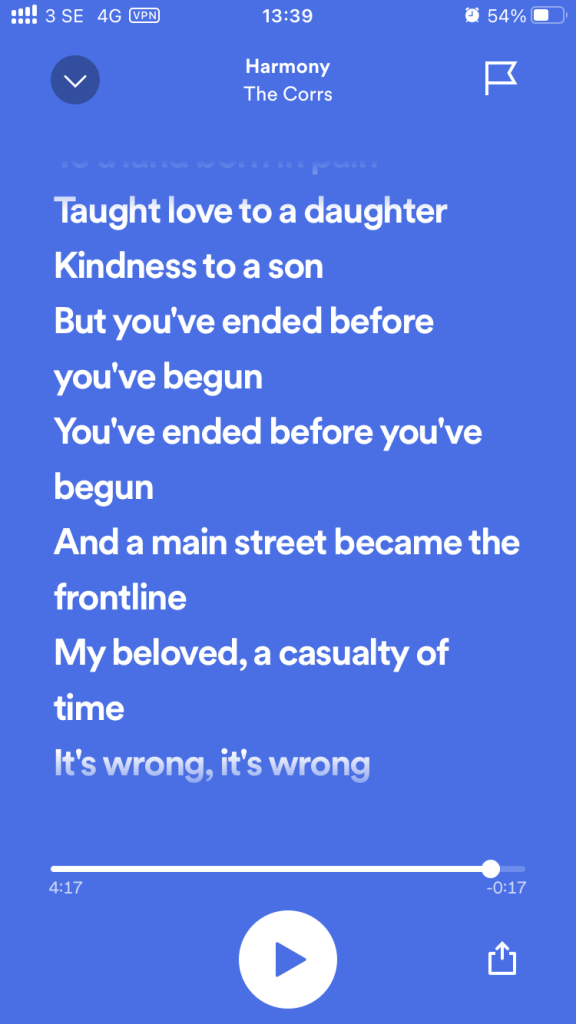
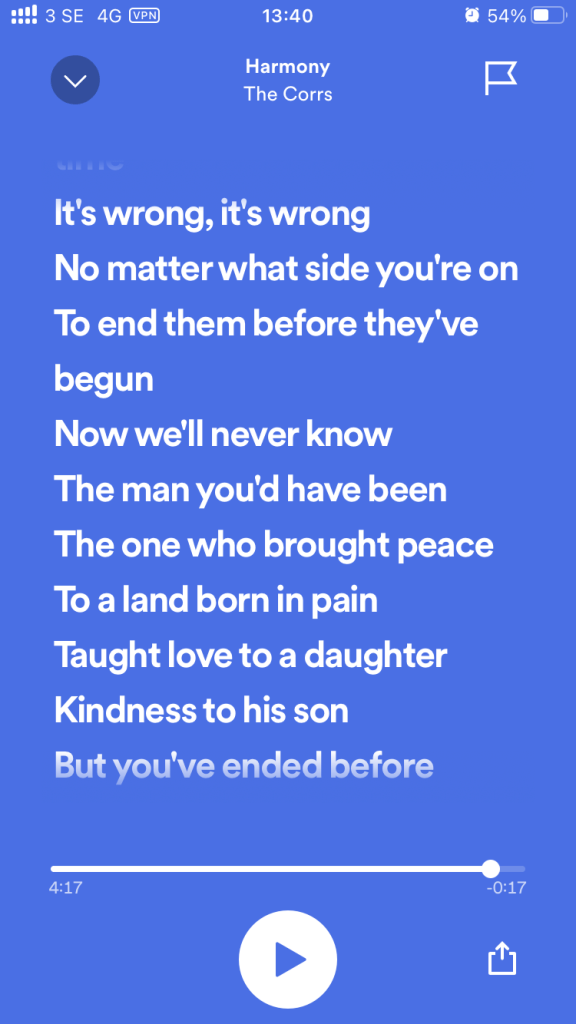
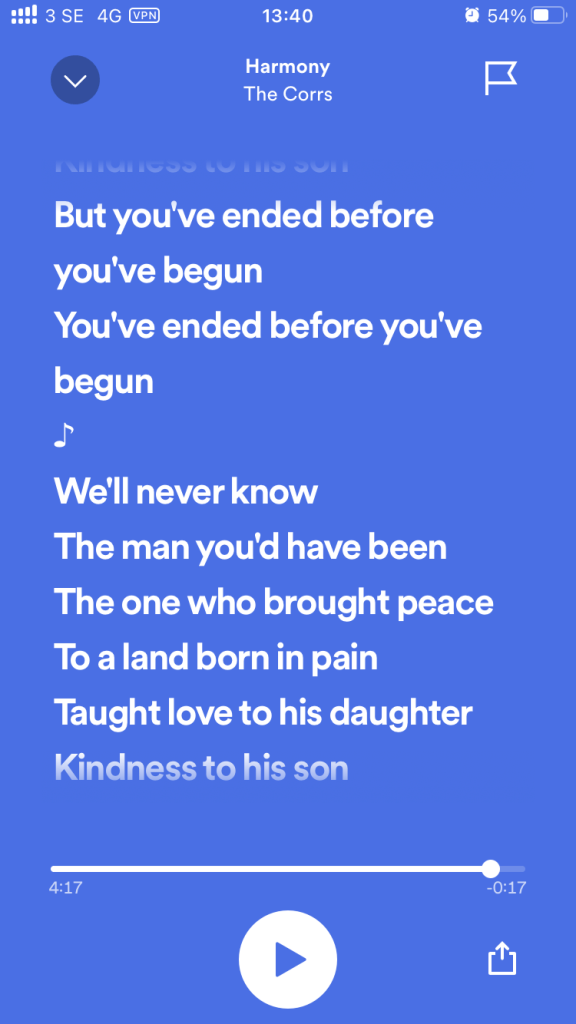
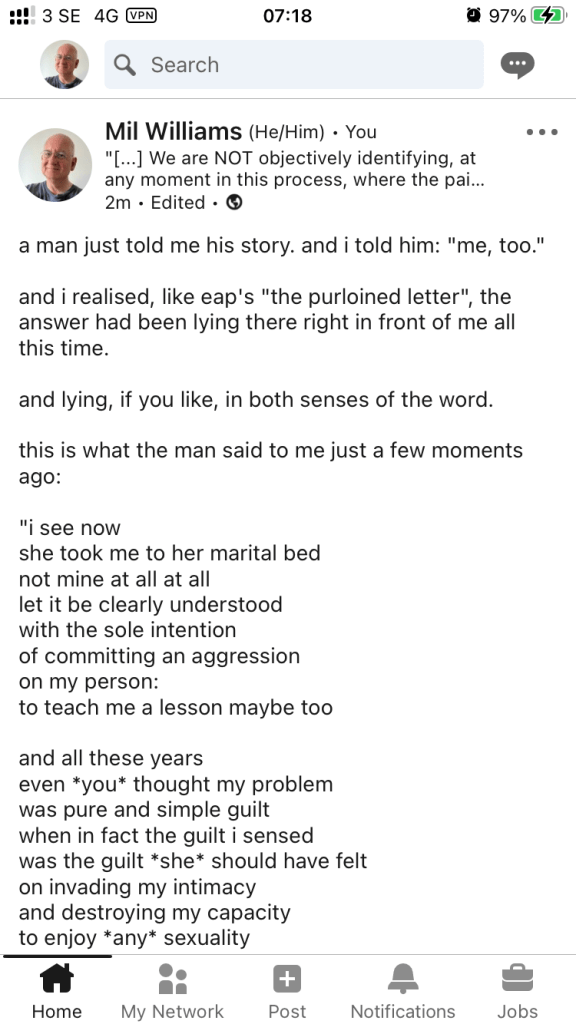
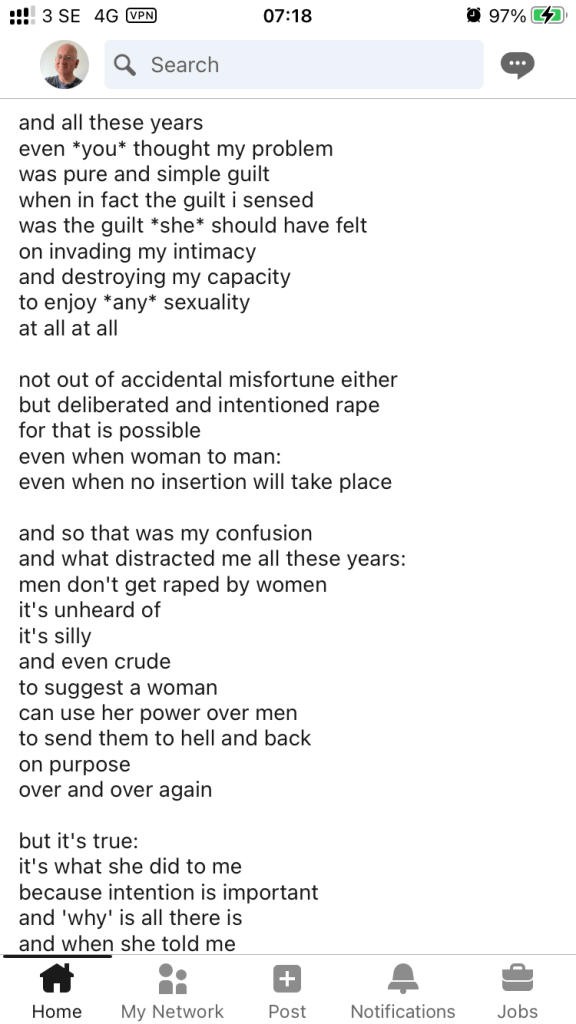
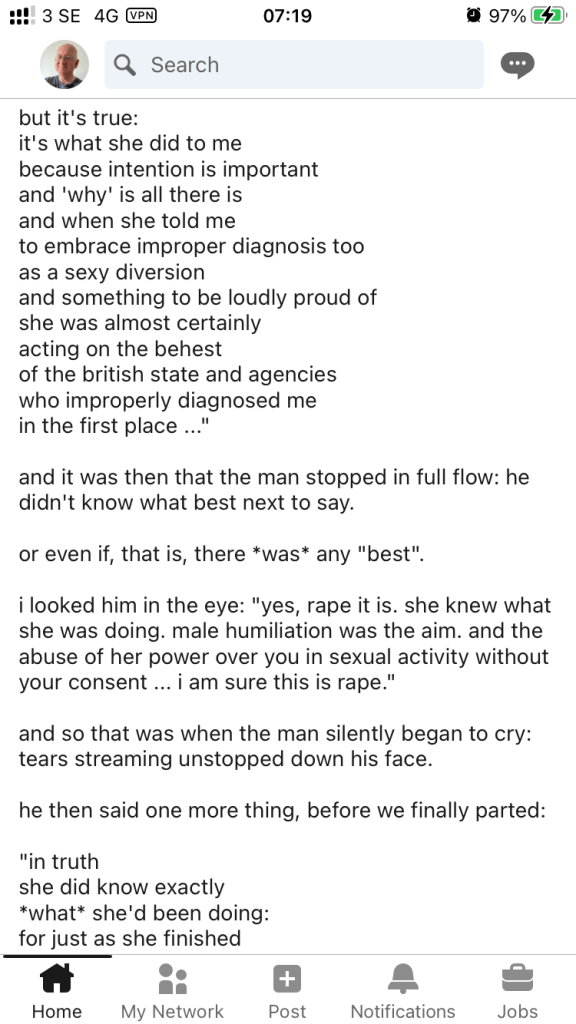
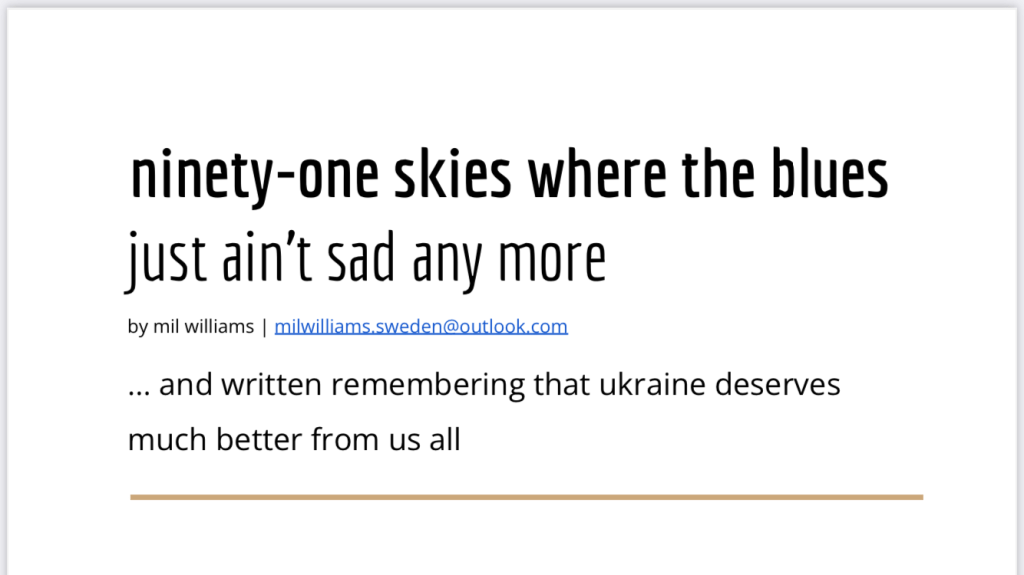
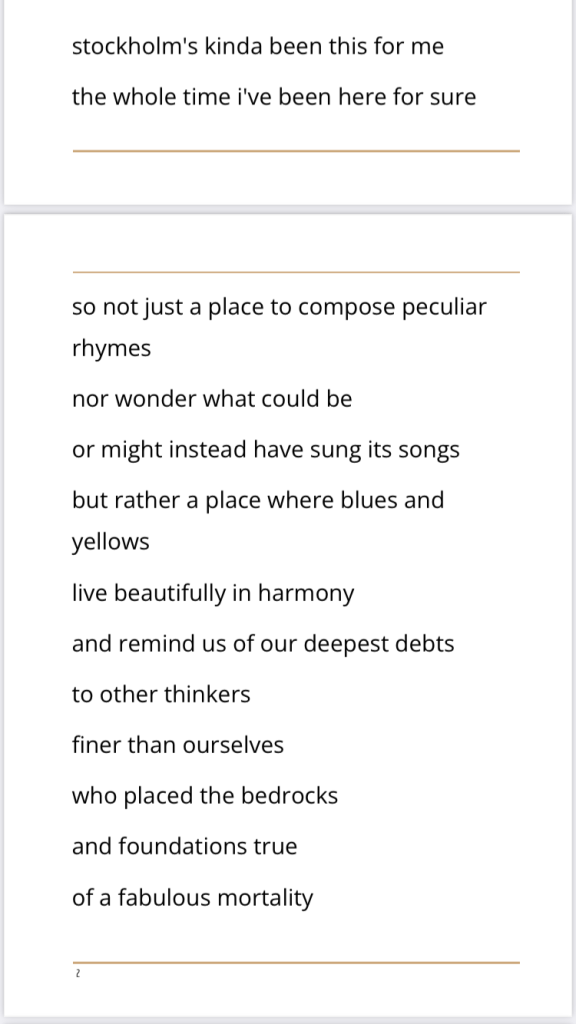
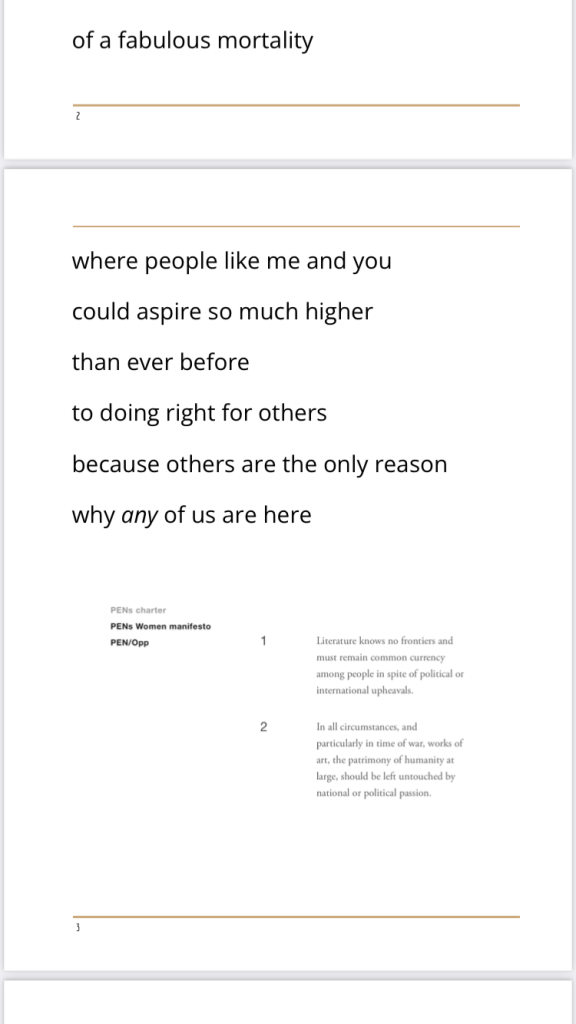
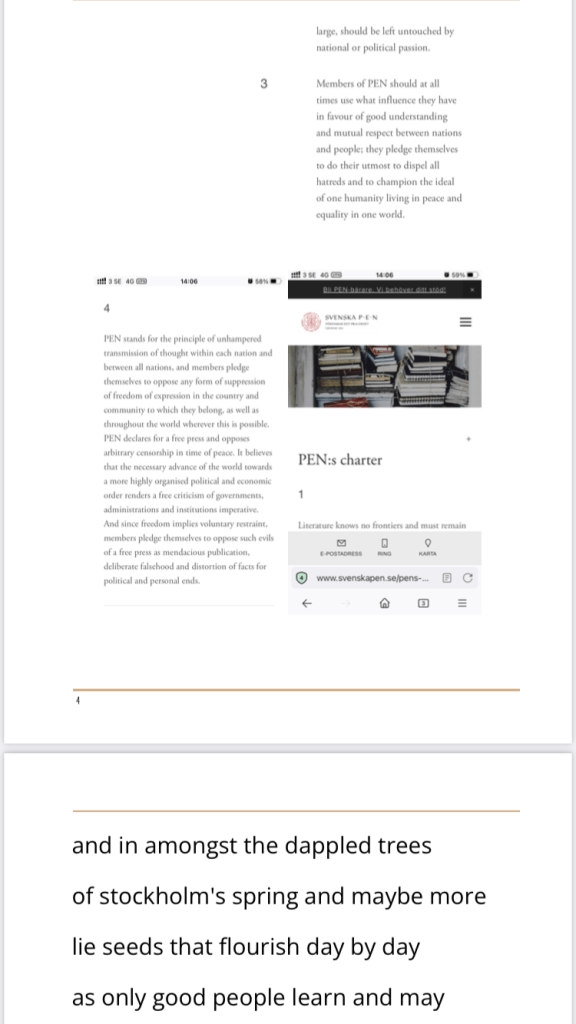
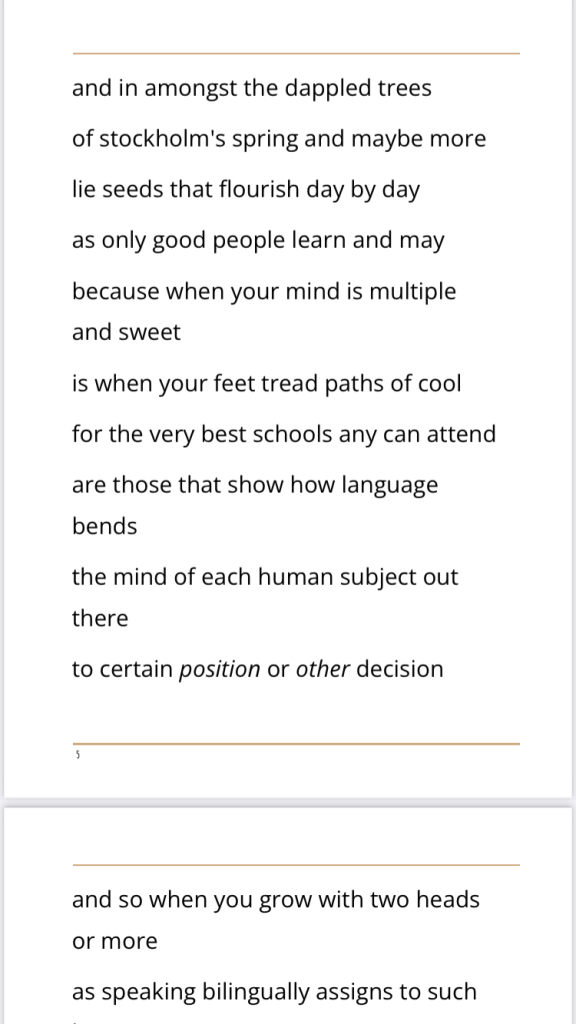
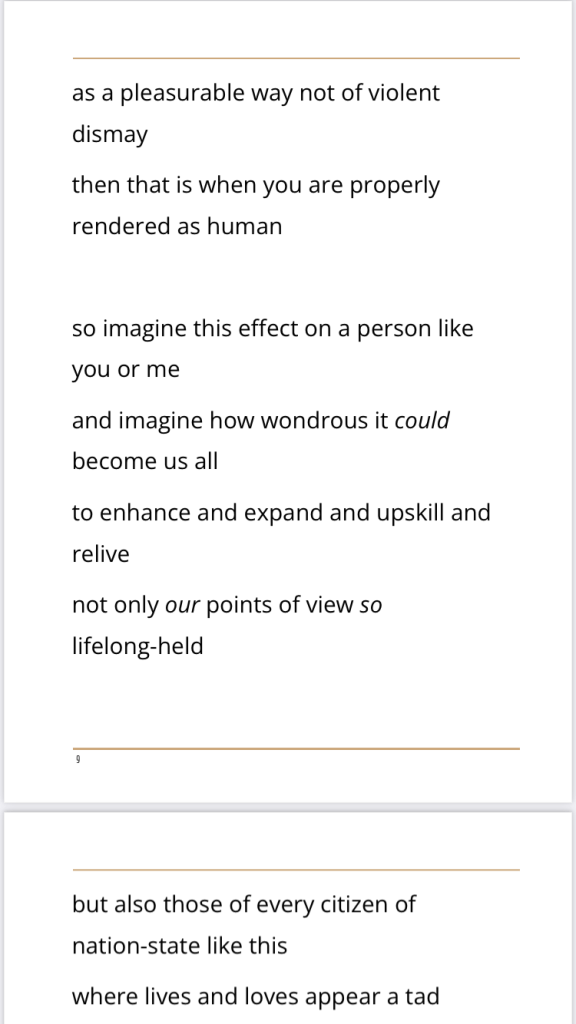
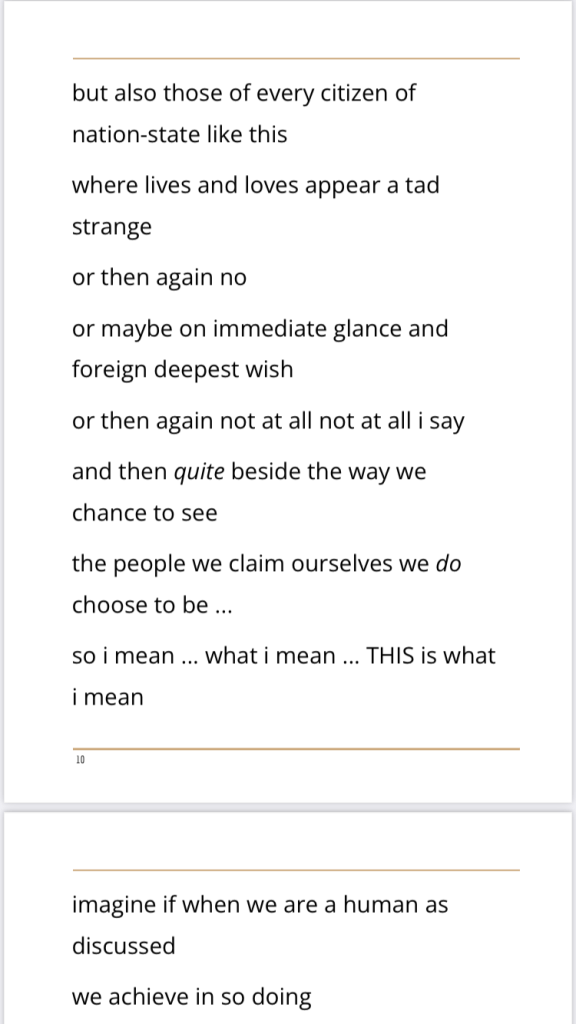
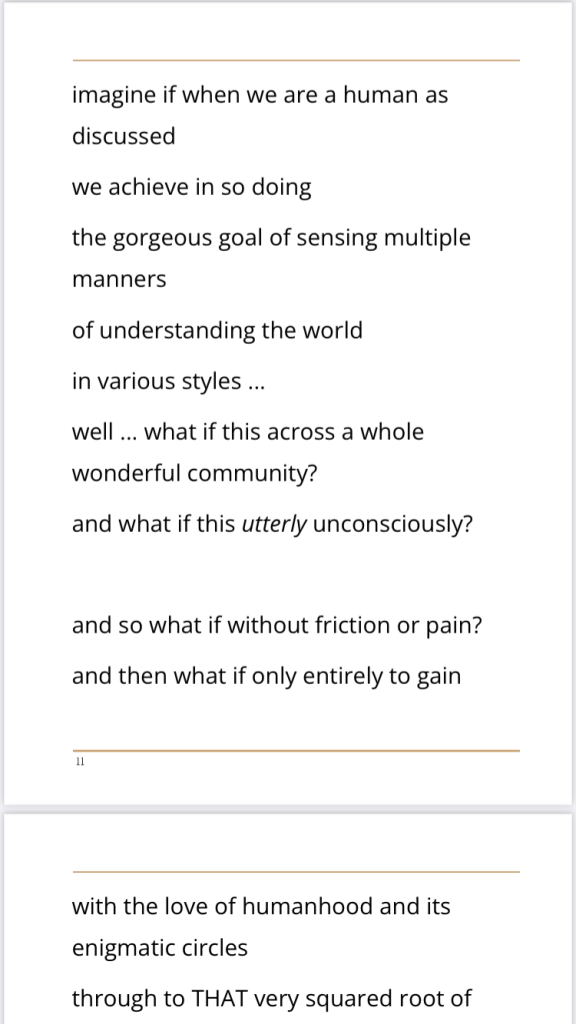
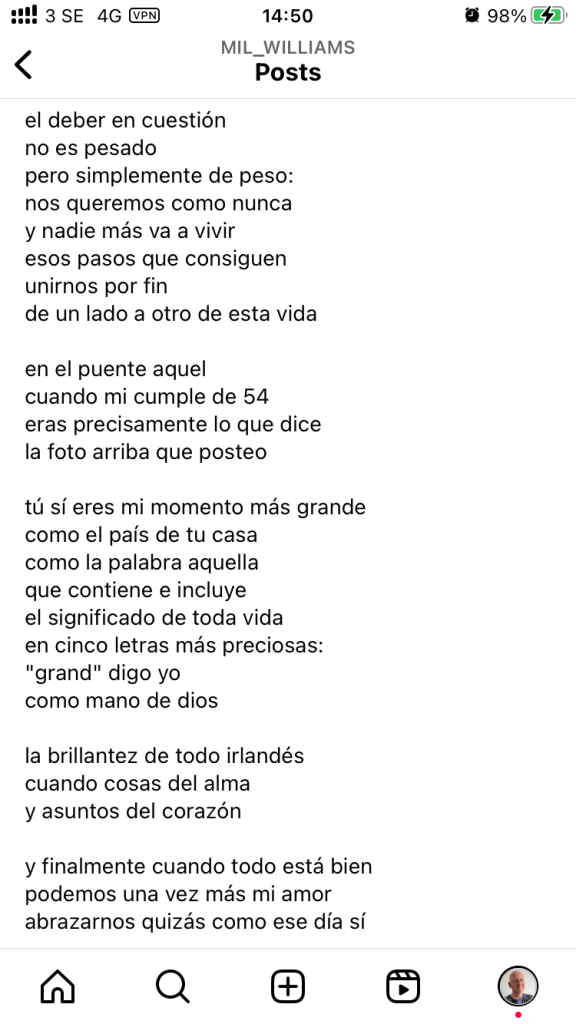
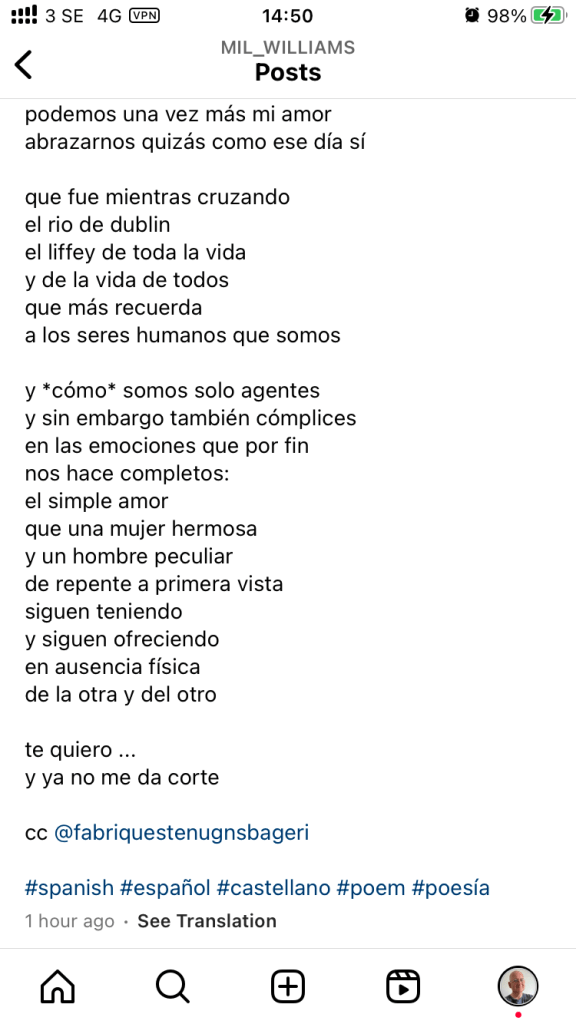
the #poem in the screenshots below is a total of fourteen pages long in its original a4 format.
if you want to read the rest of this post, i suggest you read the poem first. but, really, i’m only suggesting. and this sincerely … actually, really, sincerely.
the work itself is shaped by my ongoing desire to accept that reconciliation is desirable, always.
one thing i must say, however. forgiveness for me can only take place when the act which generates the original cruelty has stopped. you can’t leave anything in the past and proceed to easy forgiveness when that past still has you by the scruff of your neck, and is shaking you deliberatedly, just as if you were a child’s rag doll.
another thing, too: whilst forgiveness is what one person does, reconciliation requires the agreement of two parties or more to follow the same process: not one act, then, but a play in at least two parts.
part 1: truth made patent to the whole world. absolute truth; not universal but absolute — absolute in the sense that in any sequence of events there is unequivocal reality. there may also be universal truths … ‘not saying there can’t be. but they don’t always exist. absolute ones, meantime, there always are.
so whilst i can forgive you for what you did in the past to me without you having to do anything in exchange, we cannot achieve a state of reconciliation without moving to this state where we ALL accept the existent absolute truths as such: as being existent.
for example, vukovar doesn’t lend itself to reconciliation until and unless the clear aggressors accepted that they did what happened:
part 2: so, once we agree on the realities committed, being the absolute (not relativised) truths i discuss above, we can then ease ourselves with sensitivity — never with the same aggressions, presumptions and/or violences that led to the original abuse (really no) — into what should be a probably long, but never necessarily interminable, process of reconciliation.
however, here too, where the injuring parties continued to act as they have been doing all along, neither this second process leading to final reconciliation nor the first where an injured party (no longer being actively injured) finds it in themselves to forgive unilaterally and unconditionally (as all true forgiveness actually is) … well .. honestly … neither CAN make any sense whatsoever, can they? not if the wounds are still being salted …
you forgive when you feel safer, surely. when you don’t have to look over your shoulder all the time.
and you agree the truth when you feel honesty is the best policy. when you feel certain that others share minimally your view of what’s really important in the world.
and you finally reconcile when you reach a bedrock — that truth you feel capable of agreeing on with another — which you can then inhabit with someone who, indeed, may never become your friend again, but who at the very least becomes someone you begin to inhabit that same rock with in a way that is ok and comfortably enough.
well.
so much for the words.
if someone wants to discuss the above with me face-to-face at last, ‘am happy to; eager in fact.
but if your method of choice is to impose your physicality covertly on me instead of overtly, invading my personal space knowing you are instead of taking ownership for what you are doing, you are just using brawn (even when nominally brains) over your undoubted brains.
that ennobles no one, imho.
and if truth be told, neither injured nor injuring parties.
no?
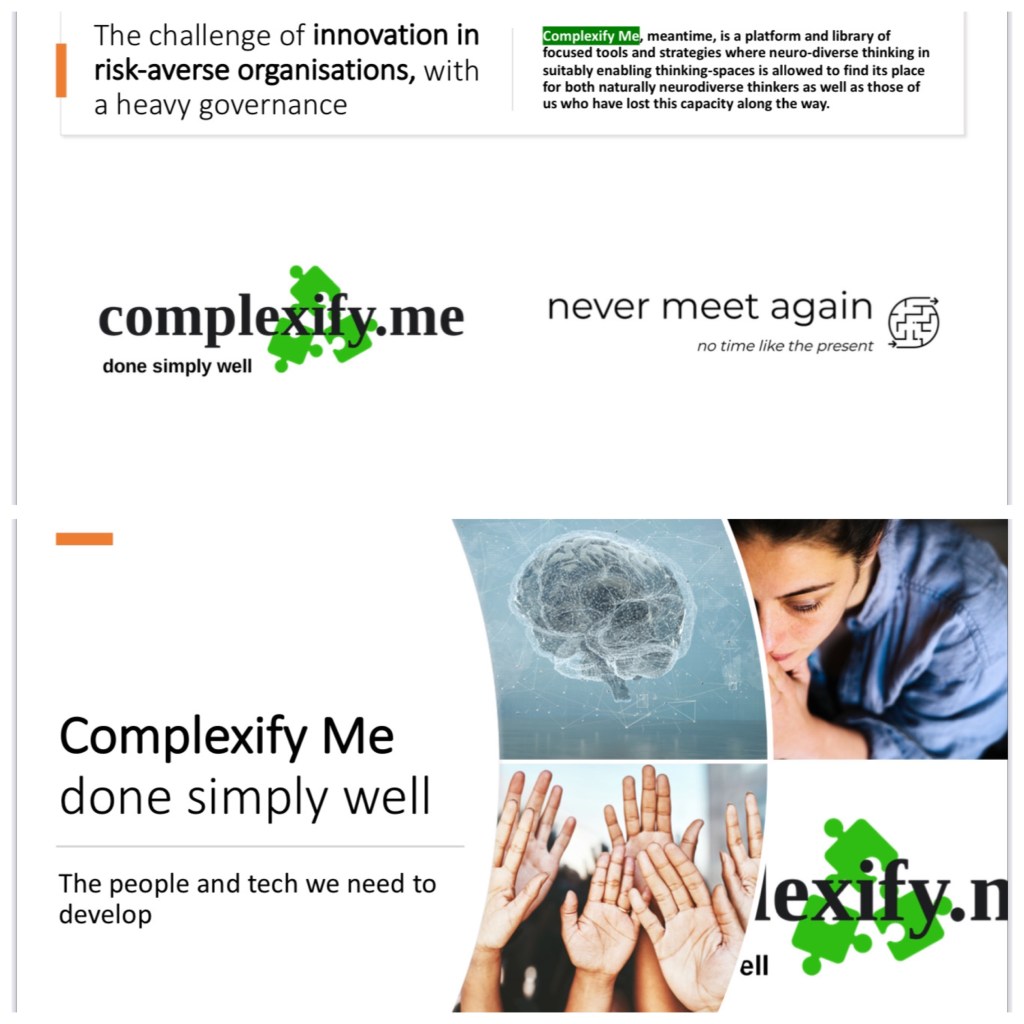
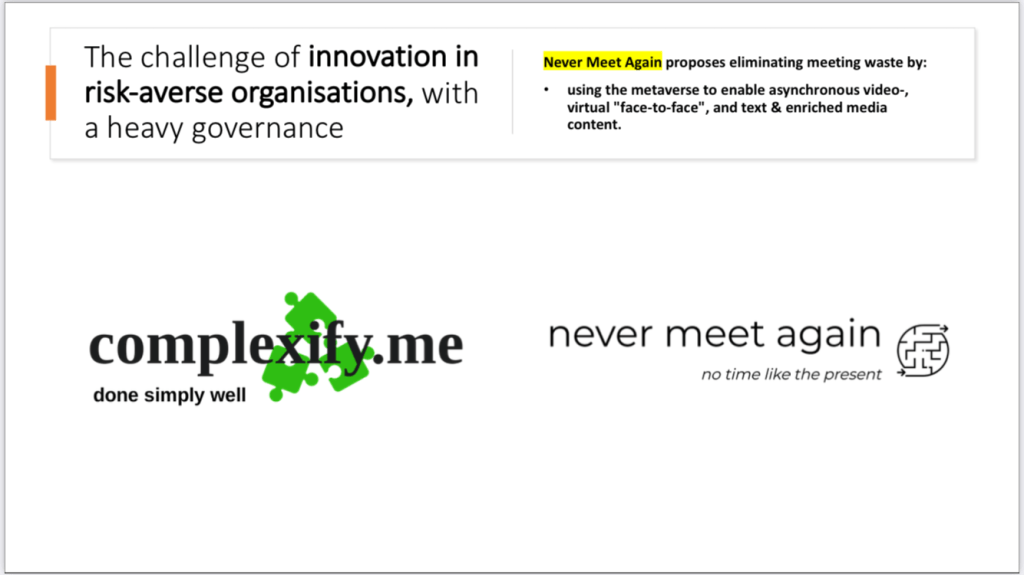
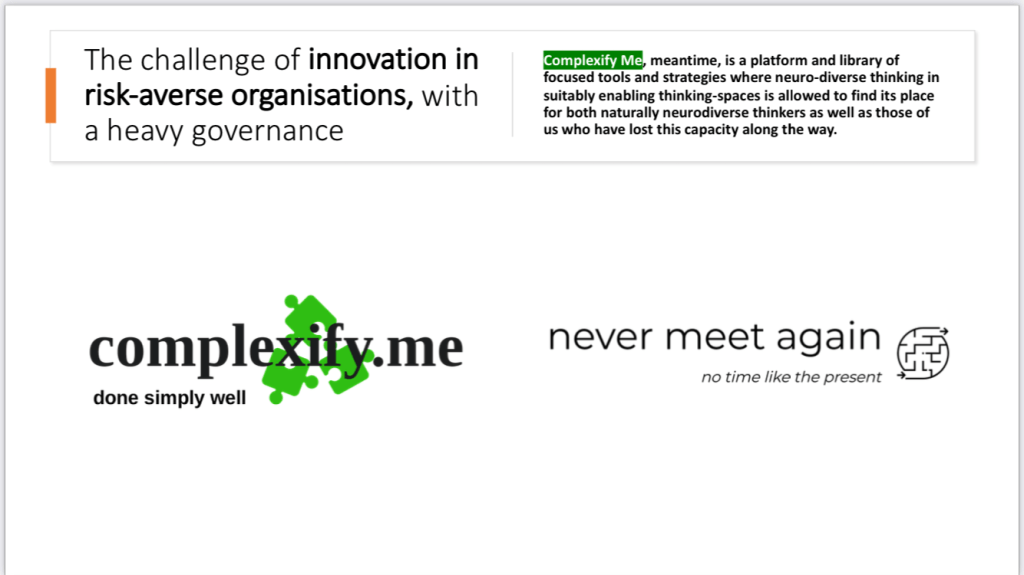
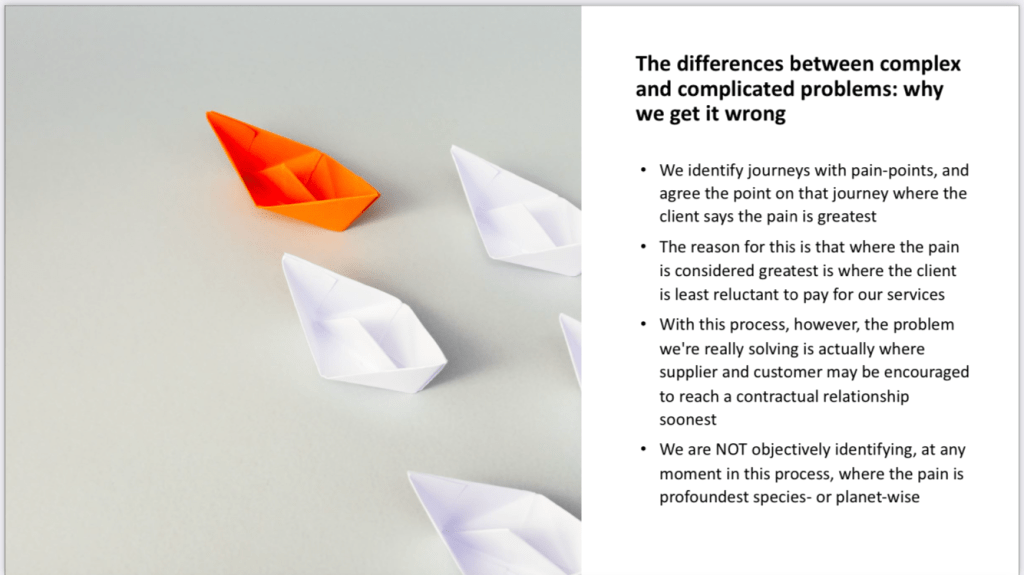
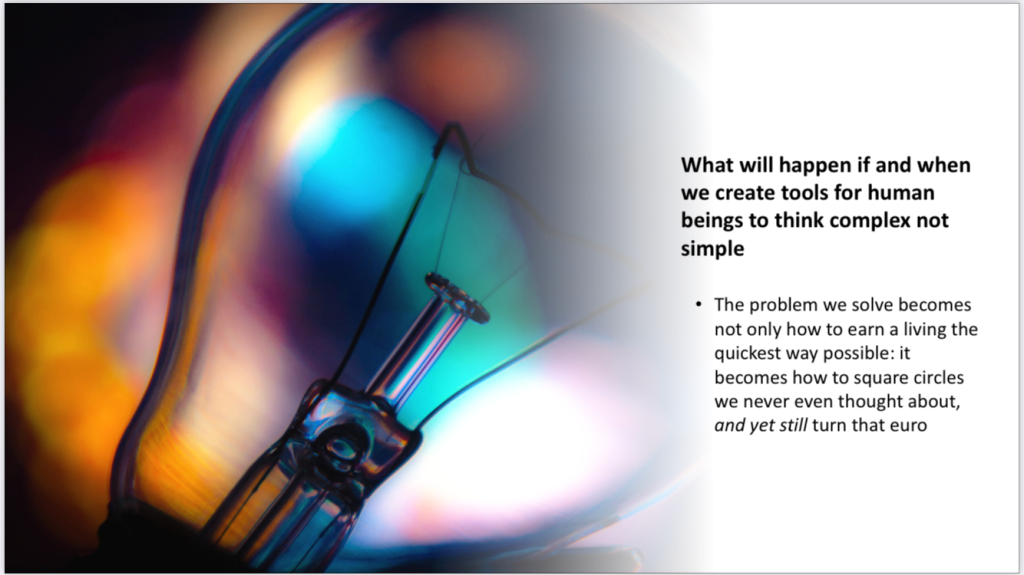
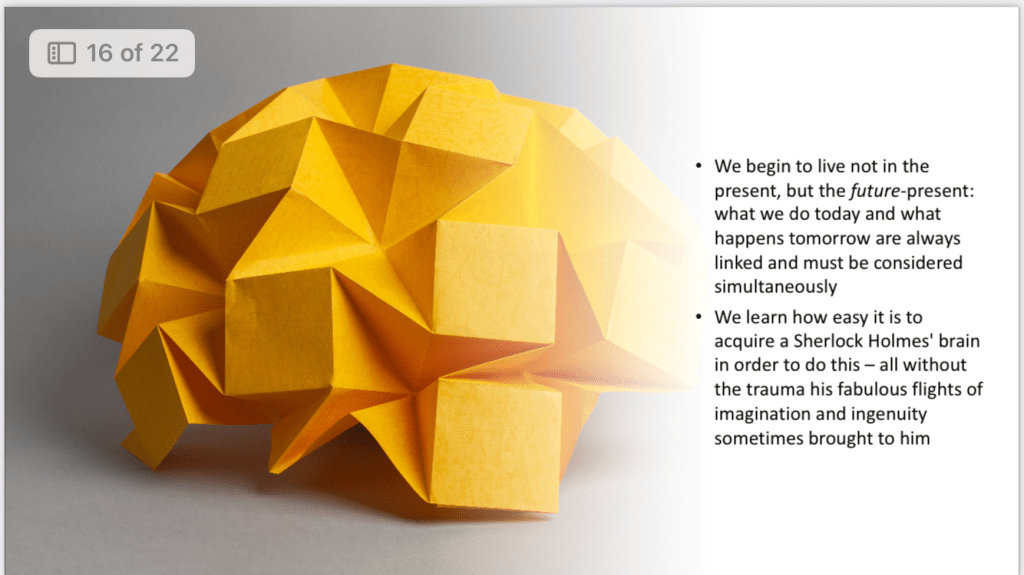
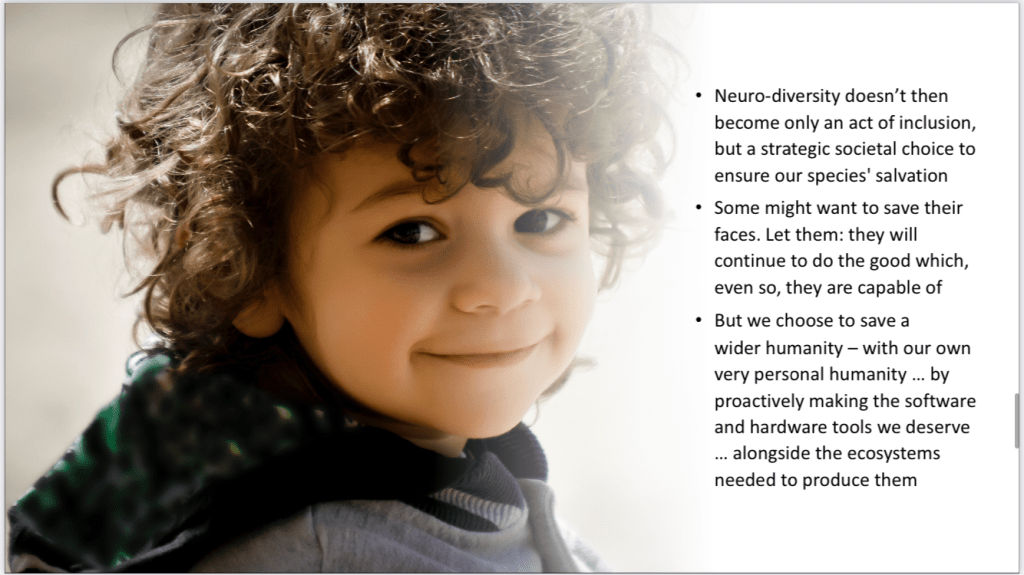
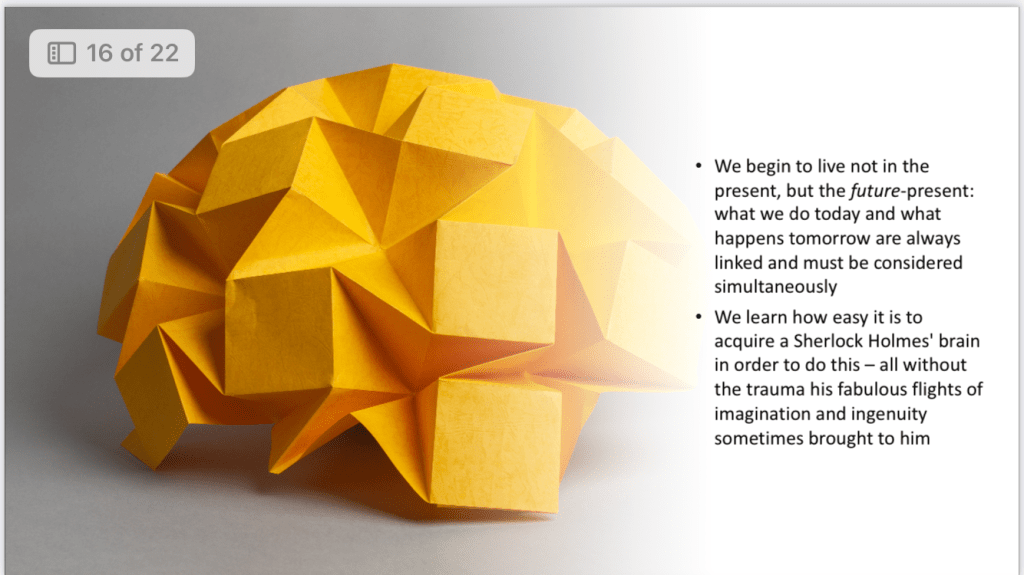
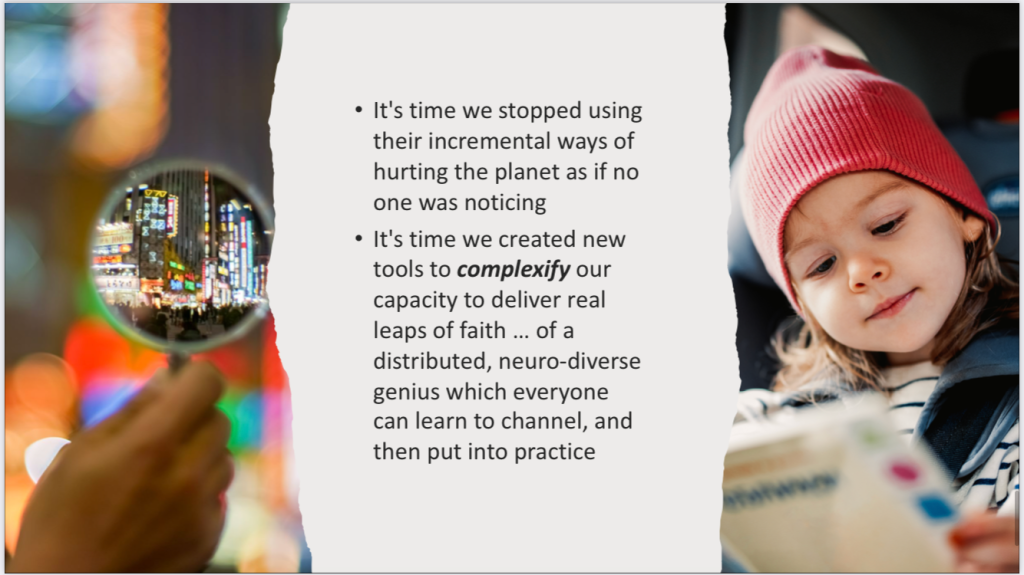
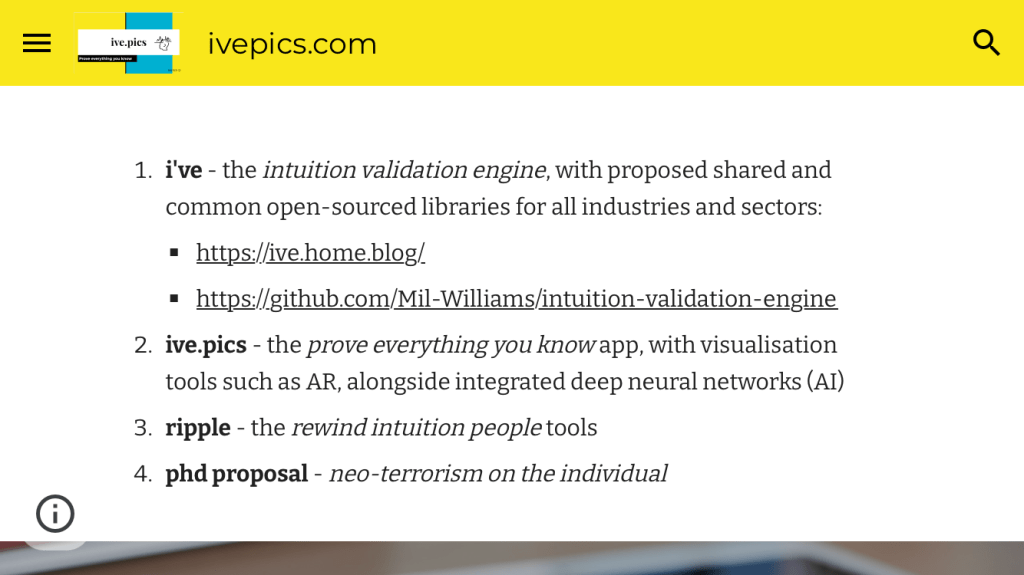
the original cover slides of my research proposal to study tech-driven longitudinal gaslighting: what i call #neoterrorismontheindividual / the latter slides are my latest idea to create neurodiverse software and hardware architectures: #nevermeetagain and #complexifyme
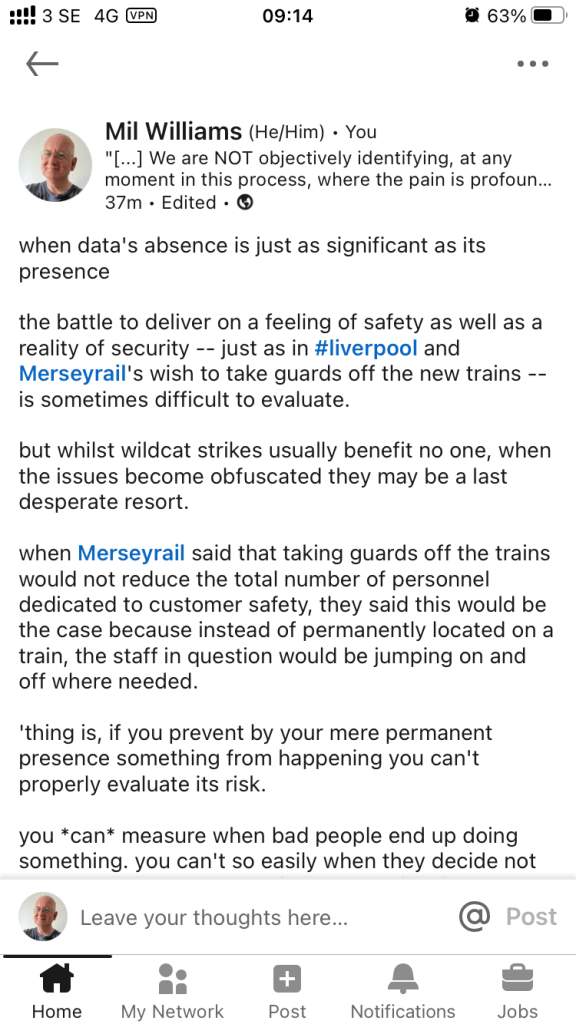
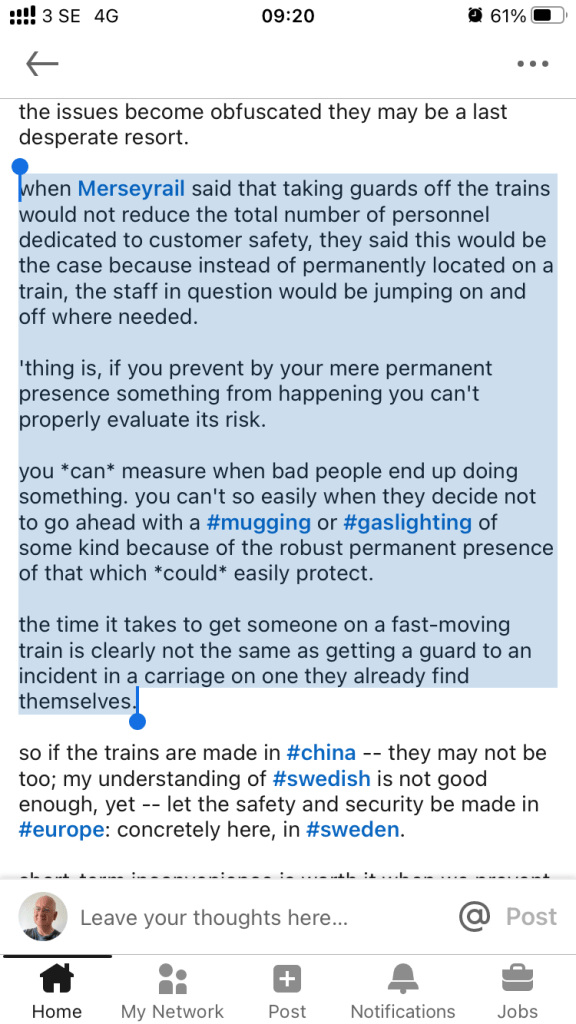
The real nub of the issue is this: in the absence of data, we can only use data that is present. Here, it’s clear when someone commits a crime and we catch them after the event with a certain number of mobile train security personnel on our payroll. That’s measurable: the ratio of events to arrests, for example. What’s not measurable by automated data science and analytics half so easily is when something doesn’t happen because a permanent guard is present to act as deterrent.
Mil Williams, Stockholm Sweden, 21st April 2023
Introduction:
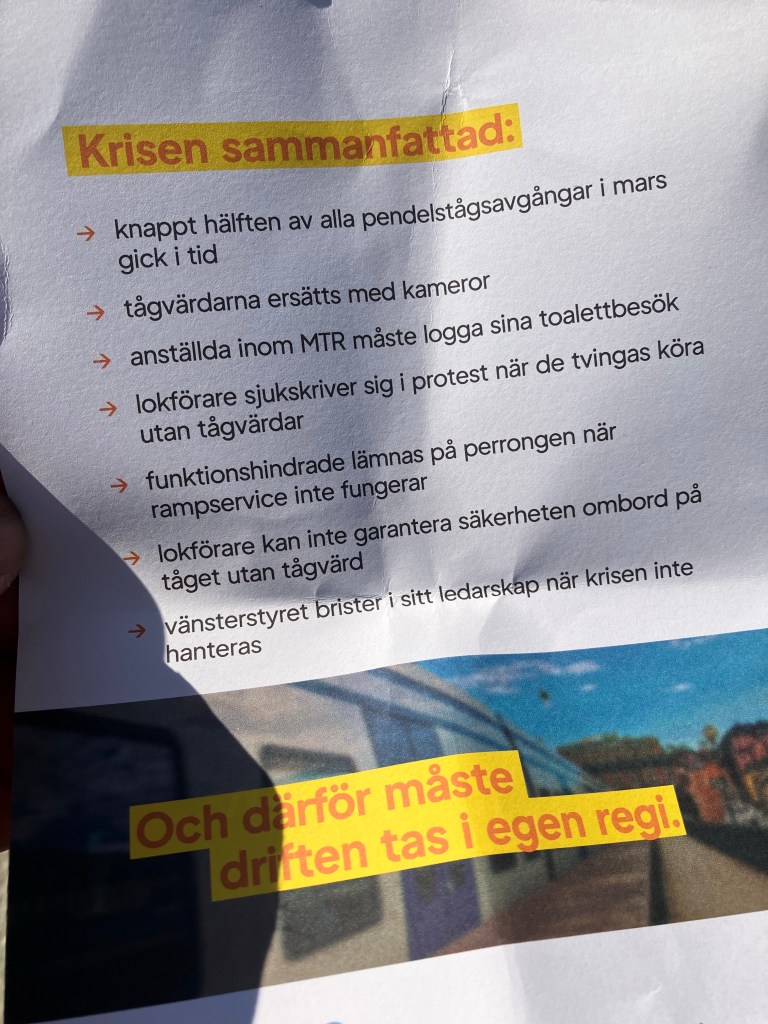
There are strikes on the commuter trains — the otherwise fabulous pendeltågs — here in Sweden: even the occasional wildcat ones. The frustration is patent: more so, because the strikers are right.
This is why:
An aside:
As a brief by the by before I continue, I think the train companies are able to claim the numbers of security and safety staff would remain the same, and yet still want to go ahead with it all, because they’re changing the type of workforce: you still need to go through with rightful and rigorous measures to vet and upskill non-train guards of all sorts it’s true, but with a train guard it’s less easy to change and chop their working locations, conditions and so forth. Or outsource the workforce, even. Change overnight who employs them and how.
No?
So …
How a data-driven world can deceive:
The thing is, here we have a perfect example of when a “data-driven world” actually needs academia more than it needs an automated data analytics and data science as we usually understand them.
The train companies in Liverpool and Sweden both I am sure will have had long-term strategies to re-engineer the structures of their employees and related re in-house and outsourcing options, and whilst taking guards off the trains in the circumstances described wouldn’t deliver immediate economic advantage, as indeed they underlined in Liverpool for sure, long-term if I’m right it definitely would.
The real nub of the issue is this: in the absence of data, we can only use data that is present. Here, it’s clear when someone commits a crime and we catch them after the event with a certain number of mobile train security personnel on our payroll. That’s measurable: the ratio of events to arrests, for example. What’s not measurable by automated data science and analytics half so easily is when something doesn’t happen because a permanent guard is present to act as deterrent.
And this is the challenge here. It really is a challenge around what we do when the evidence base is incomplete: that is, how it leads us to take quite the wrong decisions.
To the solution:
There is a solution too; I alluded to it above. Straightforward academia gives us tools to codify absences, in for example qualitative data such as an interview transcript or video, so that what isn’t said is as significant as what is.
If we could create an equal set of tools for strategic decision-making when deciding if to take train guards off trains or no, perhaps we would avoid the strikes we’re having everywhere: and at the very least, we could validate, in a less conflictive way, the common sense most users of public services have that a “bobby on the beat” engenders an incomparable feeling of safety even where a car in the neighbourhood can be evidenced to deliver on objective data relating to quantitative crime events.
Summarising:
In crime and public safety, what doesn’t happen is as important as what does: and the “why” of both these matters, too.
So.
Let’s do something after the evidence bases for both aspects of the truth: that which has a visible side and the invisible events as well.
And then let’s achieve delivery of these aspirations sooner rather than later.
Another by the by: the promoters of today’s information are a further example of why we should act on the basis of what is not visible, as well as what is.
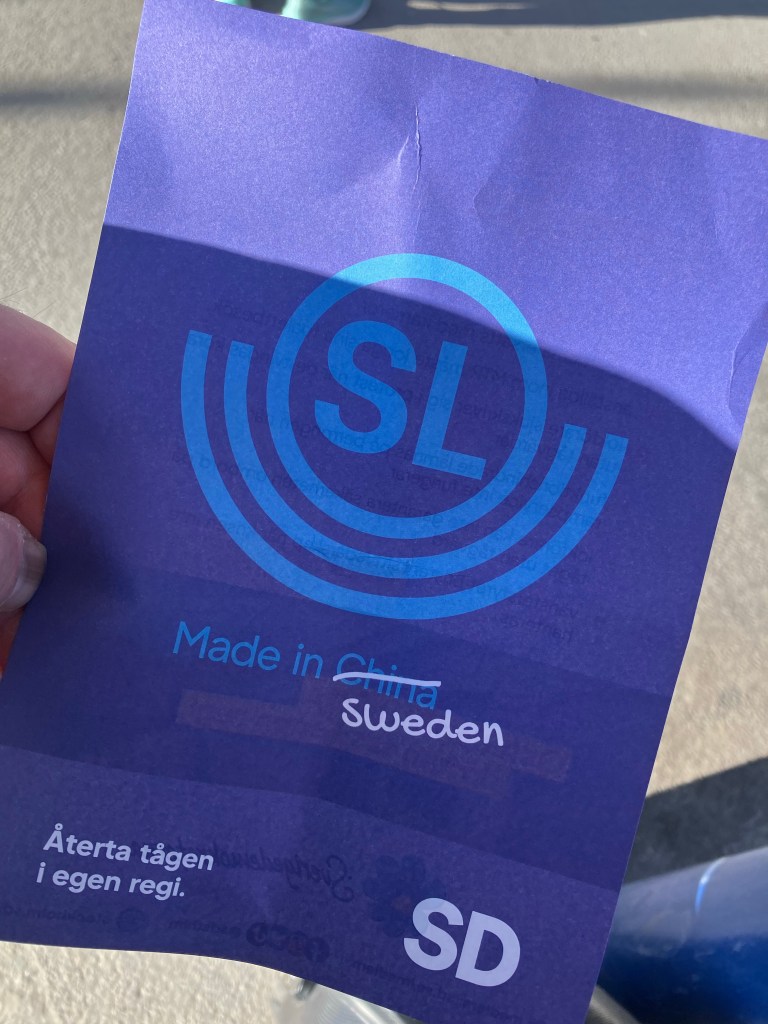
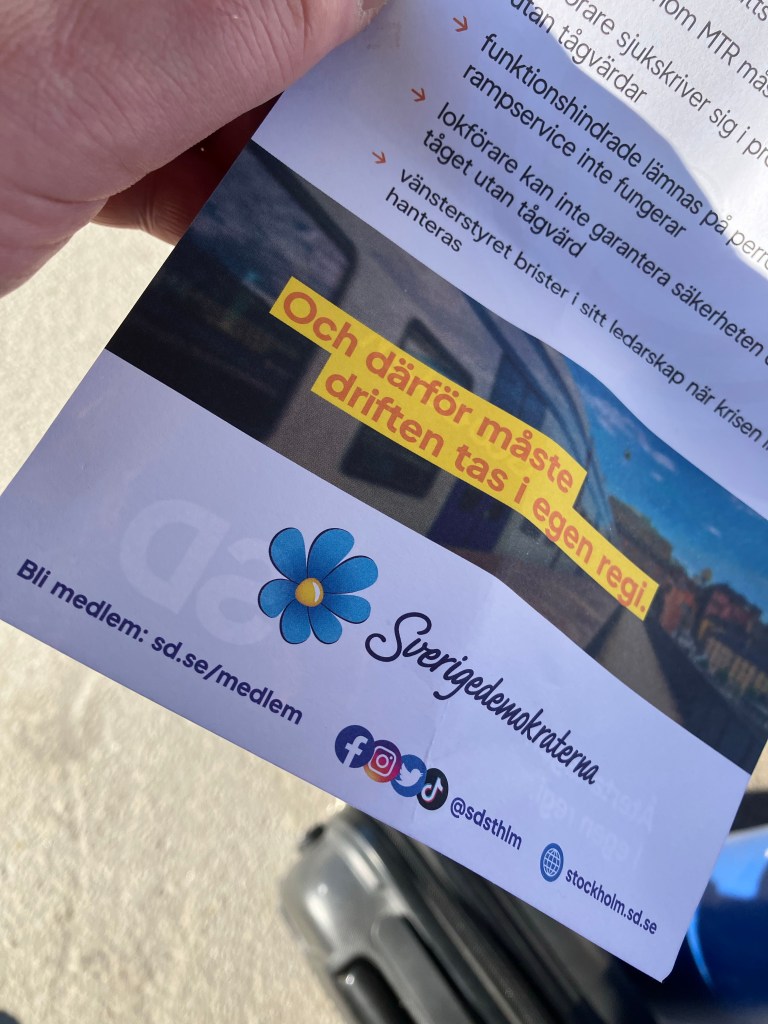
The Sweden Democrats started out as fascist and redolent of nazism of the very worst sort — at least according to the English version of Wikipedia. They themselves claim to have re-engineered their political DNA, which is not impossible but highly unlikely. Even so, medical professionals claim bespoke DNA of the human kind is very close to becoming a reality now; so we could argue that in politics it’s not unthinkable any more.
Let’s just say, however, for the moment unlikely and hard to do.
So. The risk from relying on present datasets instead of datasets relating to both what’s present and absent too? We allow people to hijack in bad faith what needs to be promoted in good faith.
The train personnel are right. Guards on trains deliver safety and security. This Swedish political party — in the current security conditions which China and Russia together have been stealthily laying out for decades together — are also correct to highlight the dangers of such, separate, narratives.
But they are wrong to a) conflate two issues like this; and b) lever the abuse and violence of both nation-states and their outliers in the fields of geopolitics to then promote an immigration narrative of their own re Sweden which delivers total obfuscation of our all too human reality and a zero confusion around their racist truths. Unless you choose to remain confused.
Sometimes it’s right to be firm: China — not all Chinese people — is a toxic regime. Putin’s Russia, too, has absolutely no redeeming qualities. But firm doesn’t mean we have to give fascism a place at the table of a wider collective progress.
Don’t besmirch the truth of the train staff by taking political shortcuts. And if this is what changing your political DNA leads to, change is what clearly you are NOT delivering.
Just occurs to me, too: even more reason to proceed with #intuitionvalidation.
poets learn to codify linguistic systems and use precise forms of ambiguity very quickly. this makes them ideal for making or breaking code more widely.
mil williams, stockholm sweden, 19th april 2023
poetry and #espionage have close connections. i won’t link to the article again; but it was either the #nyt or the #newyorker i read a while back which evidenced the fact in a #longread post.
poets learn to codify linguistic systems and use precise forms of ambiguity very quickly. this makes them ideal for making or breaking code more widely.
for all we know, the most ambiguous sorts of leaders — those who show themselves to be dictators, for example — might be frustrated literati. i wouldn’t be suprised.
when i post out-of-the-box thinking on #linkedin these days, i get a message basically instructing me to give a tip or ask a question to get a conversation going. this is all well and good for basic networking and personal branding. but there are deeper things we can use language for. and i want to prove this longitudinally. a #poet interested in code: not software only, though this of course as well.
but really, how to both reverse- and forward-engineer those #crimes being committed — like #thepurloinedletter — under our very noses. the things we call random which aren’t.
this.
i think by pushing the human #brain in the directions i look at first sight to be waywardly doing is intelligent: and capable of delivering outcomes that will defend us from future #ukraines. outcomes in war and peace. outcomes in engineering and politics. outcomes everywhere.
i think where i am going with this #intuition thing is in expanding the envelope of the possible to the once considered impossible. my brain has downsides: it can be unstable. but like the #eurofighter in its origins, instability duly channelled by #tech can deliver fabulous results.
mil williams, stockholm sweden, 19th april 2023
the #poem below was written an hour or so ago. it’s by a foreign user of #castellano who only lived there some sixteen years. but it has some huge merit for me because of what it strives to communicate. and it may have a minimum merit even for #spanish speakers themselves.
i think this is interesting.
my own #brain is, you see, much better now that it was when i was in my twenties.
so.
i think where i am going with this #intuition thing is in expanding the envelope of the possible to the once considered impossible. my brain has downsides: it can be unstable. but like the #eurofighter in its origins, instability duly channelled by #tech can deliver fabulous results.
why not begin to join me in this?
i mean … the #soldier as #poet … and the #poet as #soldier.
i said the other day i probably wasn’t suited to the fields of #lawenforcement and #security: i’m a free-thinker, a nonconformist in some serious senses, and almost certainly neurodiverse in others. people who work in the aforementioned fields need to be attached to rules, regulations, procedures and tasks. that makes it hard sometimes for them to appreciate the kind of person i often can be.
generally, not them. which makes me no better than them at all. nor them anything but different from me.
but that doesn’t mean we mightn’t be able to connect the two ways of being to better catch a creative criminality:
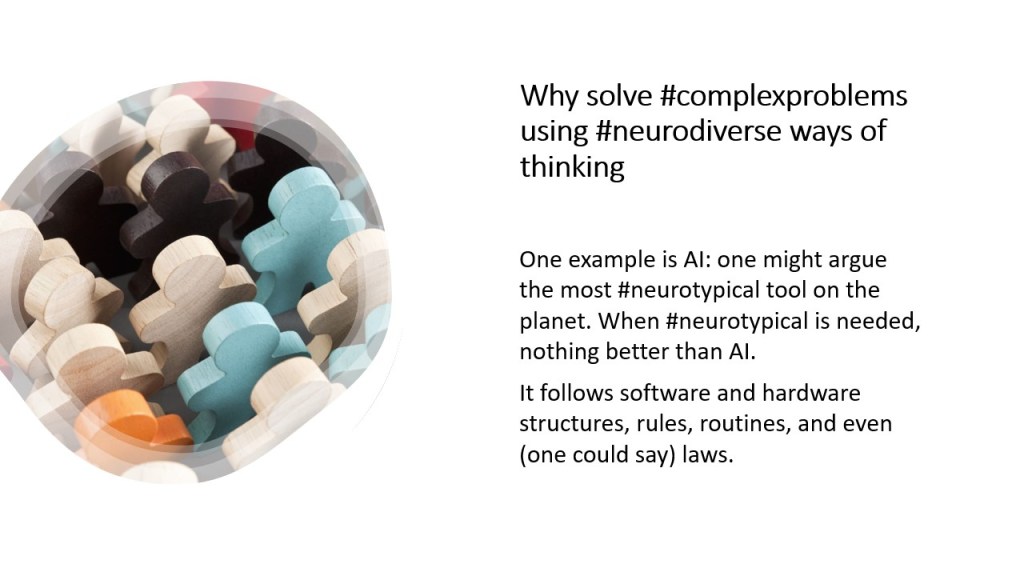
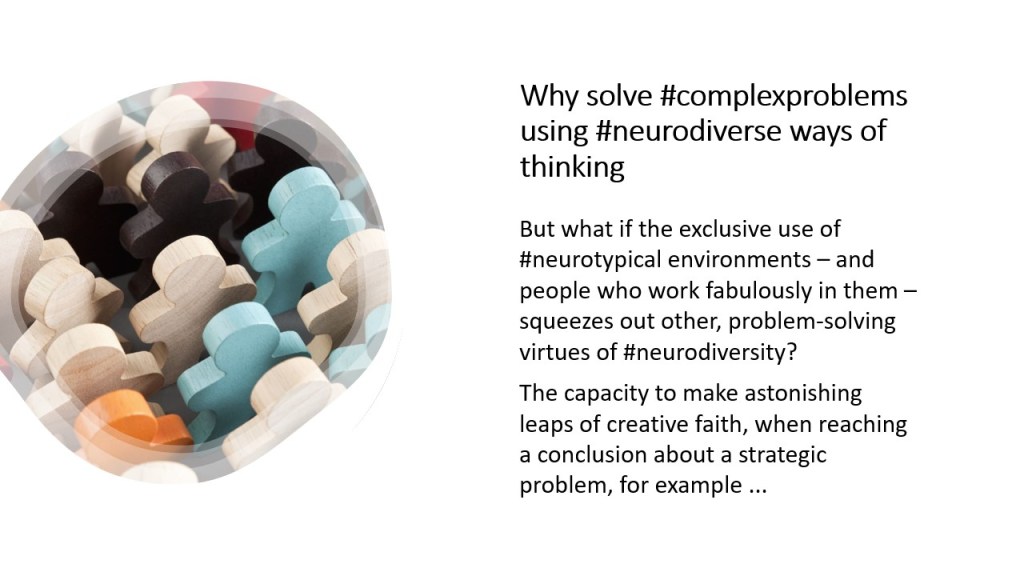
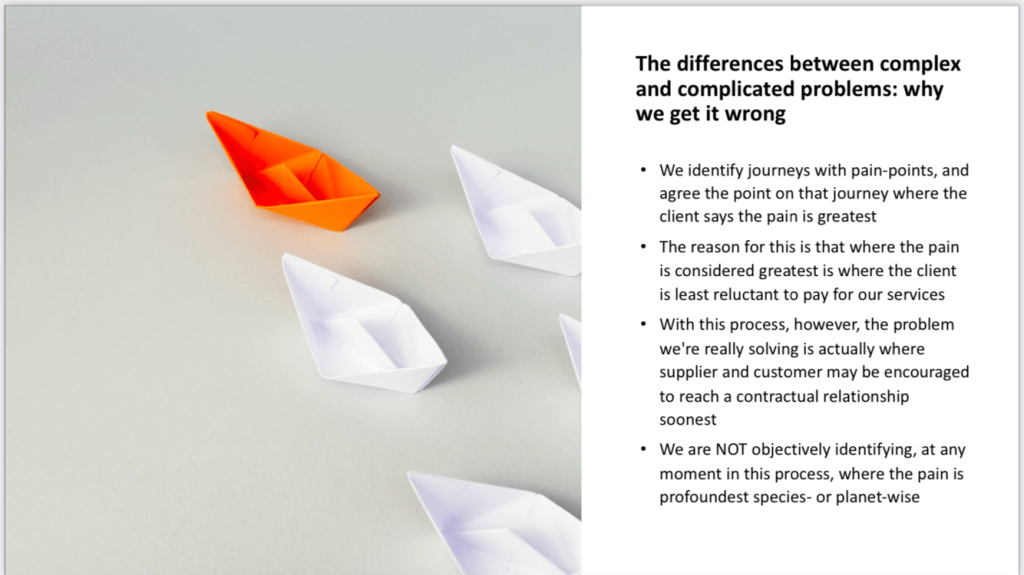
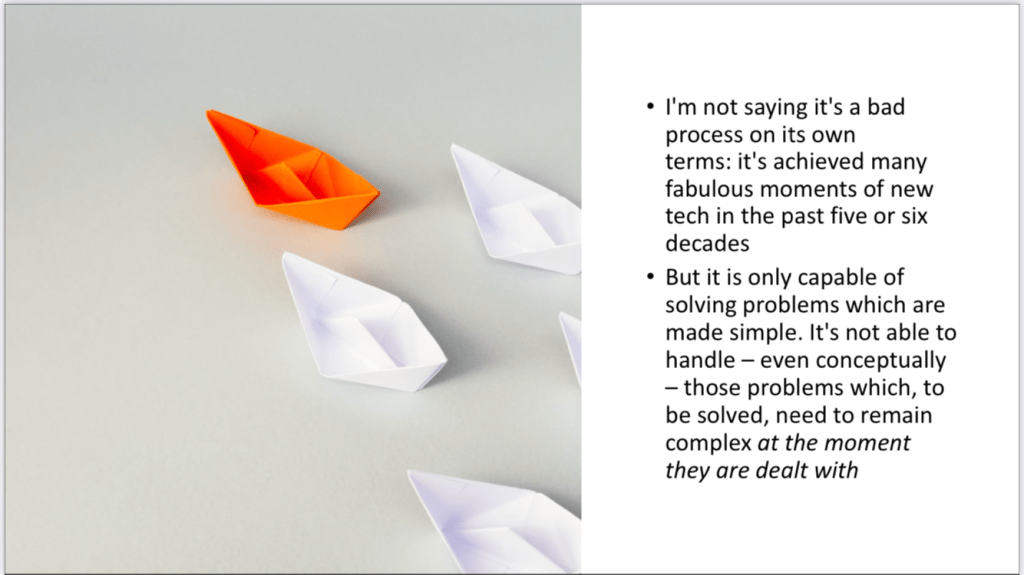
it’s my assertion and firm belief that we’re missing out on neurodiverse ways of seeing for understanding better the world of #complexproblems around us. and this is, partly, by using technologies which, perhaps unconsciously, have become firmly neurotypical — but are no less neurotypical for that. technologies which, as a result, reinforce the ways of seeing and doing that most of the world’s professionals need to share, rather than encourage them to have a broader take on that world.
i think we can do much better: i think we can bring the neurodiverse and neurotypical together: not just from the point of view of company inclusion policies and so forth; much more by engineering different #it-#tech architectures.
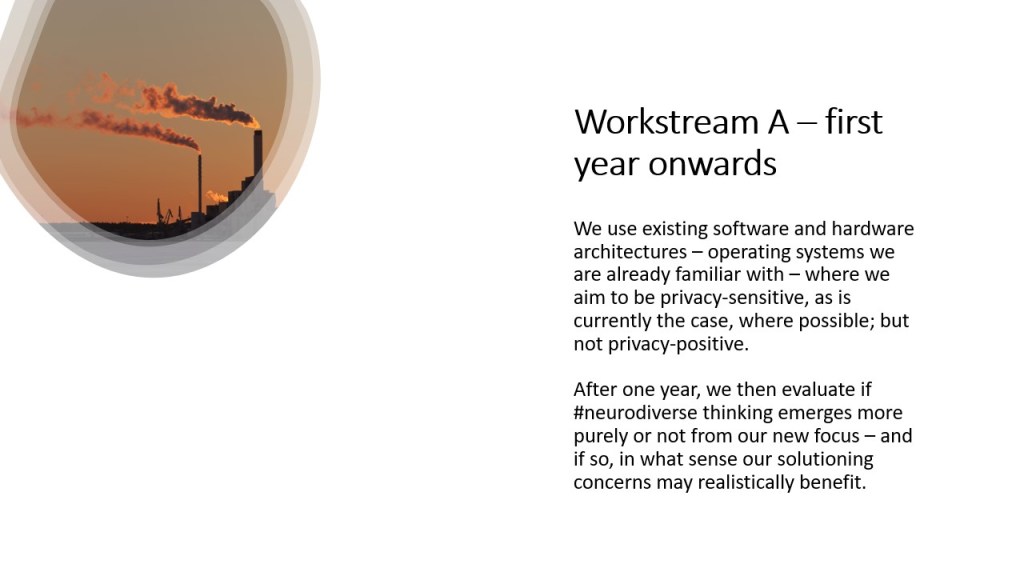
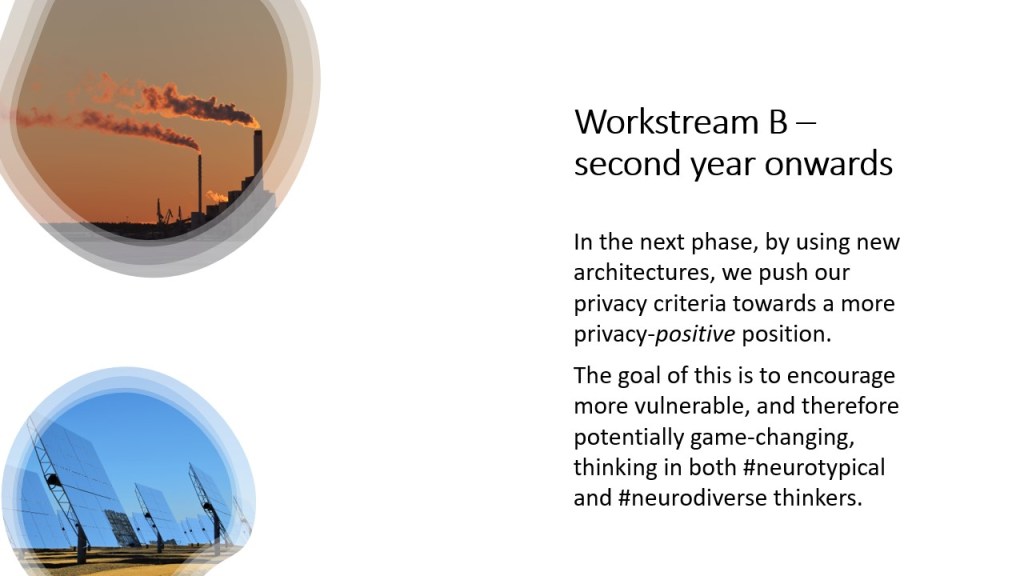
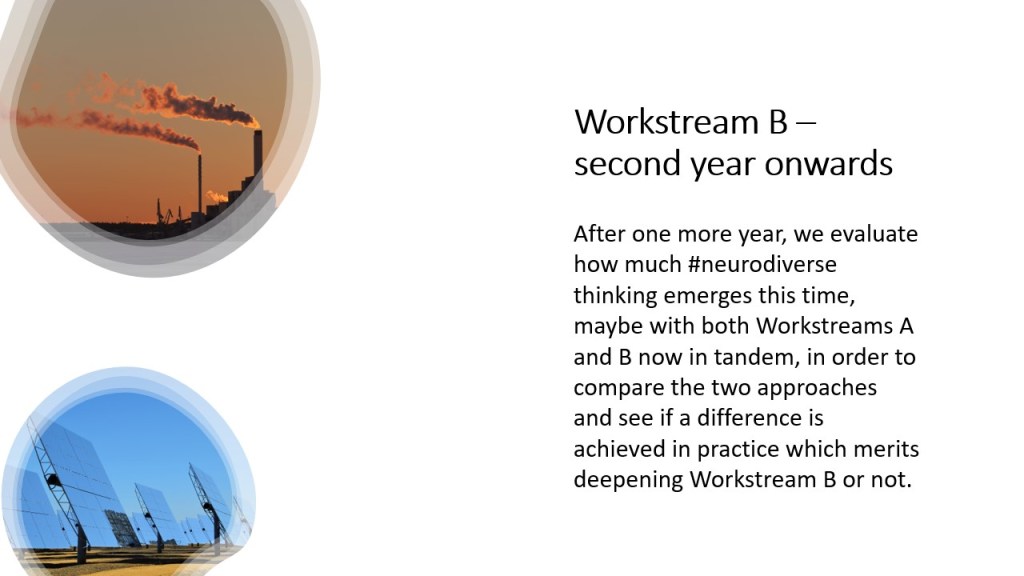
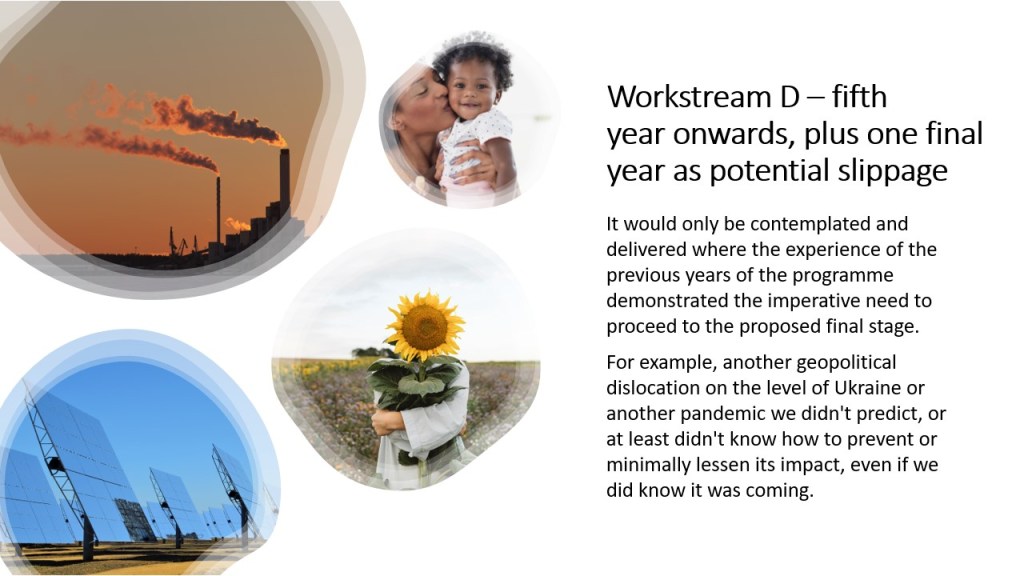
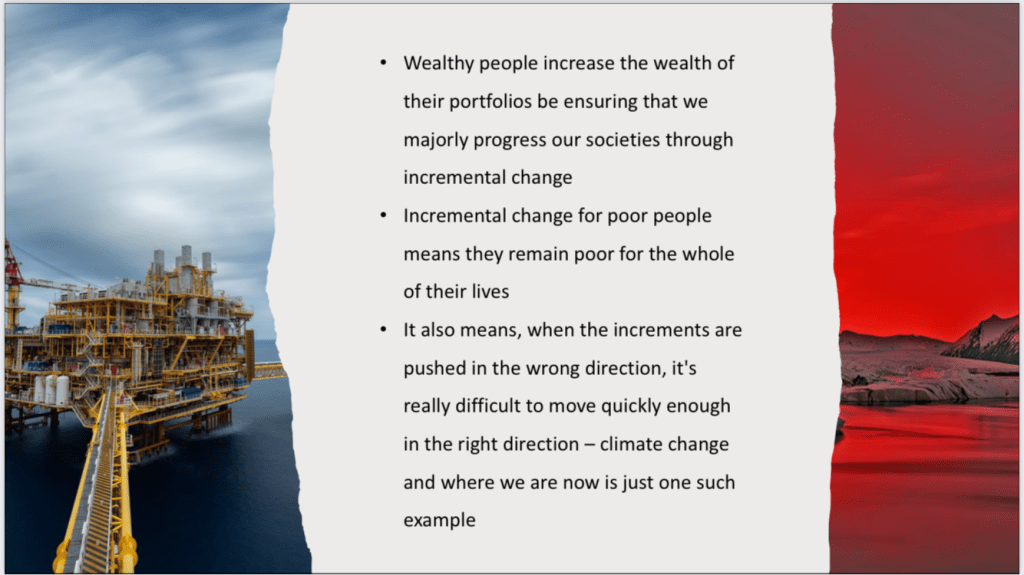
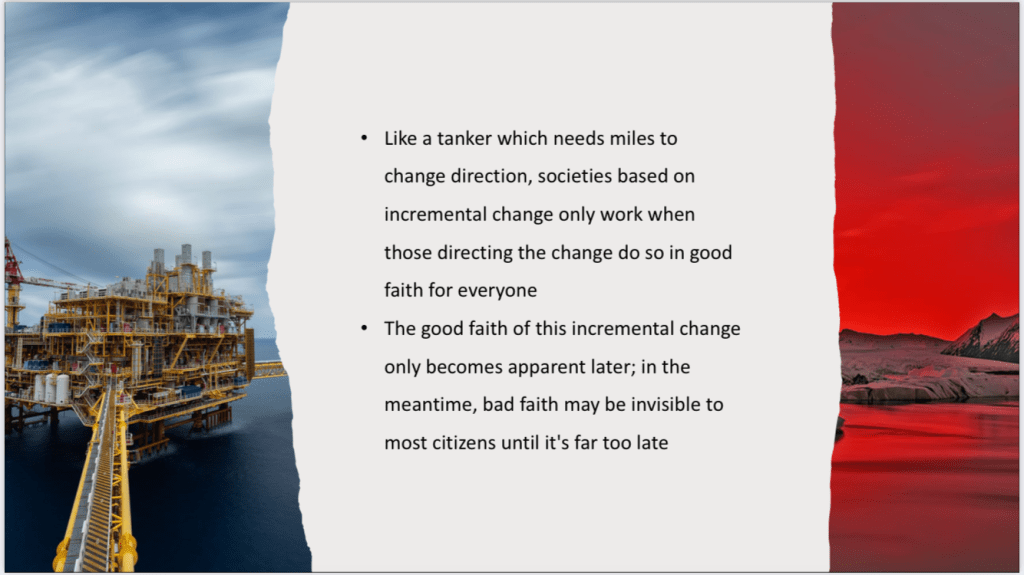
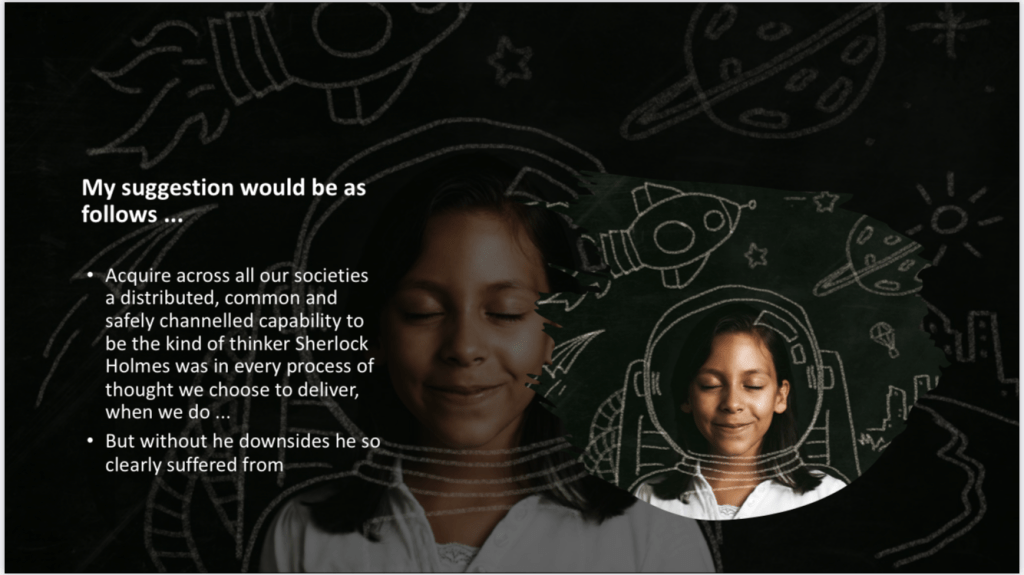
exactly as what follows, in fact — here, in a separate field, a proposed roadmap for dealing with the #complexproblems of climate change:
so to finish this post, something that happened to me today just to show i might — as a different kind of thinker from those who usually work in such fields — be able to usefully contribute, in some capacity of due utility even as i remain such a thinker, to the reality that has become deeply creative criminality: what has been called #darkfigure since the 19th century; and which, for a couple of years now, i’ve preferred to call #neocrime.
the anecdote in question:
here’s an example of my intuition in action. and i might be totally wrong. what i want to do is not prove i am right but absolutely clearly be able to share, without anyone being able to disagree, that i am wrong …
“that gangster-looking guy wanted three things at least potentially, when he asked me to use my card in exchange for his cash, for a pizza order he said he wanted to make:
1. get my card number from his mate at the pizza place.
2. give me counterfeit cash so i’d get into trouble when i tried to use it.
3. see if he could identify the name of my iphone with an excuse to approach me (i was tethering to my laptop at the time) in order for him and his mates to be able to sniff when i was using it in the future.
if i am right about him being a gangster, he had already inhibited me (tried to) by standing near the wall and not moving an inch as i tried to get by behind him, when he was looking at his phone in front of the lift on the landing on floor 1 yesterday.”
as i say, i might be wrong totally about him. he might be a humanitarian of the very best.
but what if we could create systems which didn’t prove we were right … but validated whether or not we were wrong! that is, that i was wrong.
and just to frame it better:
• he was at the hotel i am staying at
• i was working for hours at my laptop in a darkened corner: so he had every reason — seeing me wrapt up so intently in my work — not to approach me
• the receptionist (according to the guy) had already refused to take his cash
• no one uses cash in stockholm
and so for all these reasons, i actually think this might have been an example of #darkfigure waiting to happen.”
of course i could be exhibiting a dreadful prejudice. but this, precisely this, is why i want us, together, to develop systems where we can enter into our deepest thoughts and make it possible for us not prove what we think true — but validate (an utterly different matter altogether) whether true or no.
crime is a domain i have pretty good knowledge of at #autoethnographic and #academic levels, but it is always going to be a subset of #complexproblems: #complexproblems are NOT a subset of a generally creative #criminality.
mil williams, stockholm sweden, 14th april 2023
i just want this to be clear. i’m happy for others to work with my ideas in security and so forth. but i am going to focus on developing systems for #neurodiverse #thinkingspaces that begin to solve #complexproblems our species needs resolving, above and beyond #criminality.
things like #climatechange and #foodsecurity for example.
crime is a domain i have pretty good knowledge of at #autoethnographic and #academic levels, but it is always going to be a subset of #complexproblems: #complexproblems are NOT a subset of a generally creative #criminality.
what’s more, i don’t have the confidence of people in #lawenforcement and #security. never have: never will. i’m a free-thinker, above all. this doesn’t make me better, at all. but it might mean it makes me incompatible with good #security and #lawenforcement praxis.
so this is what i am now thinking and strategising. i may be able to acquire the necessary confidence to do these things in other fields of human endeavour. at the very least, the potential for a decent engagement is more likely in other areas now.
if there are people in some allied country who work, even so, in crime and related, and still are interested in what i propose, do come forwards and show yourselves.
but even here, let’s propose that anything we do starts with the principle and framework of #complexproblems, not creative #criminality.
contact me on the email below, if you do want to explore.
just explore.
just see the reality. examine the truth. and maybe, just maybe, do something usefully different for a change:
there was only one kind of label that ever sounded positive for me during my life. because my parents labelled me and my siblings all our lives. and to our detriment: to diminish us.
labels can be shortcuts to understanding; or they can be machetes to slice a man into the dismembered state he’ll never be able to recover from.
background story:
in 2003 i was labelled and dismembered by the british state: i was judged a paranoid schizophrenic. it was a judgement: perhaps even a judgment.
they incarcerated me for a month and attempted to ensure i believed all was lost. two weeks after leaving my state of incarceration i was working fifteen- to twenty-hour shifts at mcdonald’s. when my social worker had assured me i would be fit for no more than maximum two hours a week voluntary activities for at least two years.
i refused to be cowed by this label: i am not made of the kind of stuff which will.
so as a young democratic citizen who grew up on the battlefield that was his parental marriage and relationship, a life-changing label was also finally applied by the country he had been born to.
nowhere did justice reside in his experience of life.
what happens when the label is right:
the label was wrong: and this i shall sustain to this day. why only one kind of label has sounded at all positive during my time on this otherwise beautiful and precious rock: that thing we call “designer labels”.
even here, they may be tinged with an injustice of sorts: privilege, and so forth. but i am generally generous to these kinds of labels and privileges because they are a form of art: real art. the clothing of human beings in pleasurable and expressive ways might not socioeconomically be within everyone’s reach — but neither is a picasso or a rodin.
what happened yesterday:
yesterday, however, i continued — like a plane’s circling of a crowded airport — my slow approach to the idea of being labelled … only this time in good faith, accurately and professionally competently.
before we continue, i’m not saying this is necessarily my “rosebud”, but as a process to getting closer to fairly starting to unpick my enigma, it’s not a bad place to begin.
second, i’ve been in sweden on and off since just before christmas. the swedish are generous; not malicious. they are watchful; not cautious. they are incessant, though not obsessive, gatherers of data of the world around them; they always know when they still haven’t got quite enough to take a rightful decision. and they are, in the main, kindly and aspirational; not ambitious in a trampling way.
my sister was accused of bad parenting for just about seven years by the english & welsh education system. her two children are super-intelligent: the brightest buttons and shiniest souls i have ever seen. the education law in england & wales makes it impossible for a parent to get a proper medical intervention when behavioural issues show themselves — unless and if the school agrees it’s not bad parenting. for seven years the two schools she had to interface with refused access to doctors. under this law, you cannot get access to a consultant for your own child even via their gp.
now it might occur to you to think maybe my sister didn’t know the truth about her own children. she doesn’t claim to, either. she never has. she did know that she didn’t have enough tools to deliver on the sacred joy and duty of being as good a parent as she wishes to be always.
i do have to say at this point, however, that she is a qualified psychologist and counsellor under uk systems, various. she does therefore have some privileged understanding and critical capacity in the areas of knowledge in question. the schools in the uk didn’t care. that only made it a more bitter pill for her to choke on.
how and why sweden is different:
she and her family emigrated to sweden a couple of years ago. her children, and wider family therefore, are now being supported and enabled more in a year than seven in the uk.
she has had to accept that to unlock this support a labelling process for her children did have to proceed. but here the process has striven mostly all along to evidence its trustworthiness: that is, its desire to be trusted by all stakeholders involved. in the uk, my experience showed that the british are prepared to use mental health tools as weapons of an undemocratic security infrastructure.
this is why i am now ready to be labelled:
you might immediately say: “surely RElabelled.” but no: you would be wrong. i wasn’t labelled: i was attacked, taken out and dismantled over decades by a security establishment that didn’t like the truths they knew pretty soon i would begin to deliver on in respect of their incompetences, multiple. if, that is, i didn’t have my capacity to bear intellectual and sociopolitical witness undermined profoundly first.
the time i’ve been in sweden is the first time — the very first — i’ve ever been in a country where this hasn’t been the desired end i’ve sensed.
and this is why — in such an environment — i am now fully ready, aware of all the potential consequences — to be labelled duly and compassionately by a nation-state of compassionate and proper citizens and professionals.
because what this will unlock is surely, now, worth its weight in the most precious substance known to humanity: the truth.
i like what i say about #happiness below — and in the film at the end of this post — because, for me, it’s spot-on and describes how i’ve lived my life till now.
however, a bit more forcefully than till now i want #happiness and its #butterfly to settle rather sooner than later on my shoulder.
just a bit of daily joy is all i ask … not even so i can fight more sustainably the bad people i must fight … just so i do it more efficiently.
you can’t be efficient if you’re unhappy. that’s why so many people who make a living out of monetising our capacity for waste promote so vigorously the unhappiness of us all.
let’s begin now to stop them together. and let’s find a bit of joy — each of us — for each other every day.













































































 mil's page