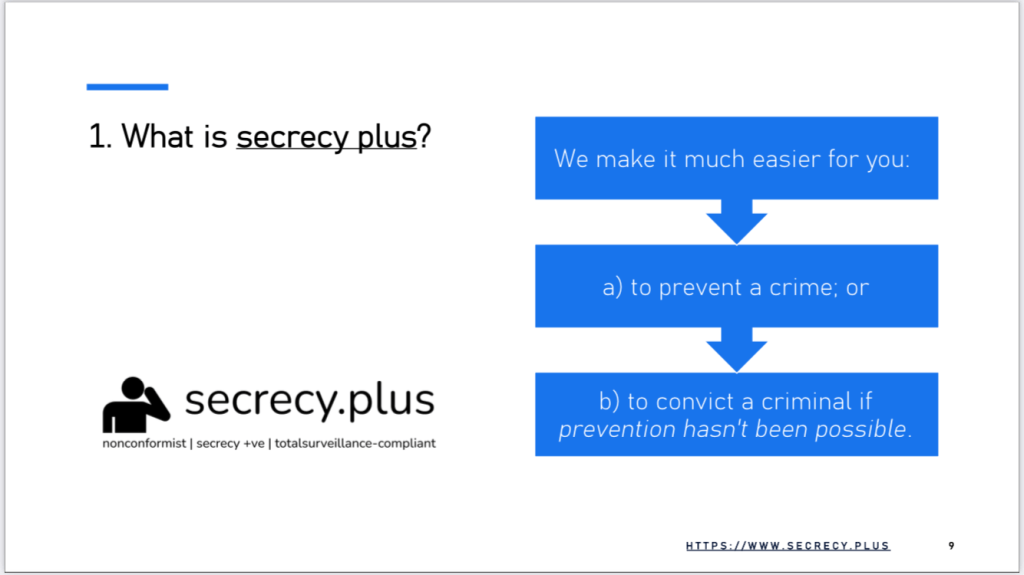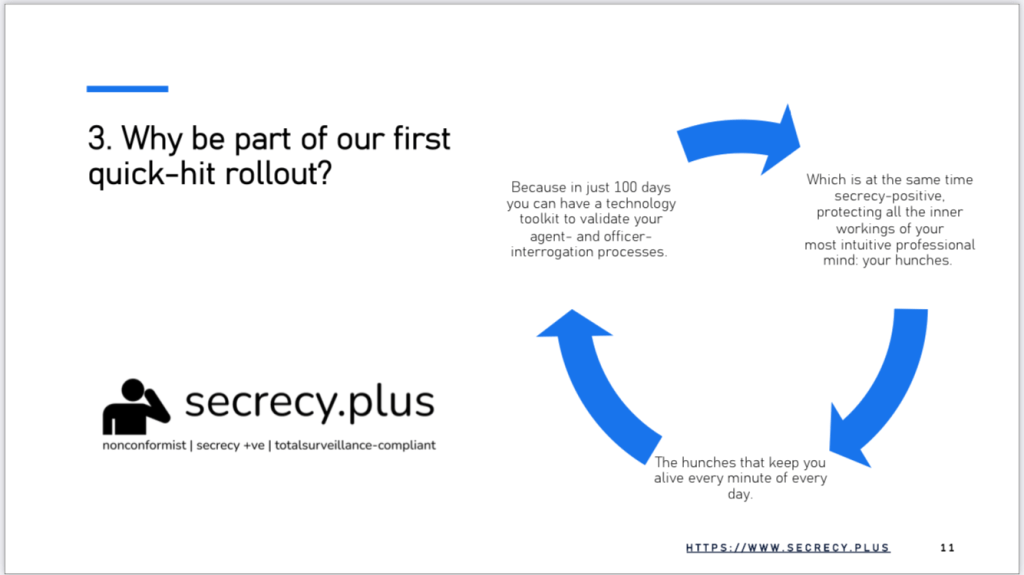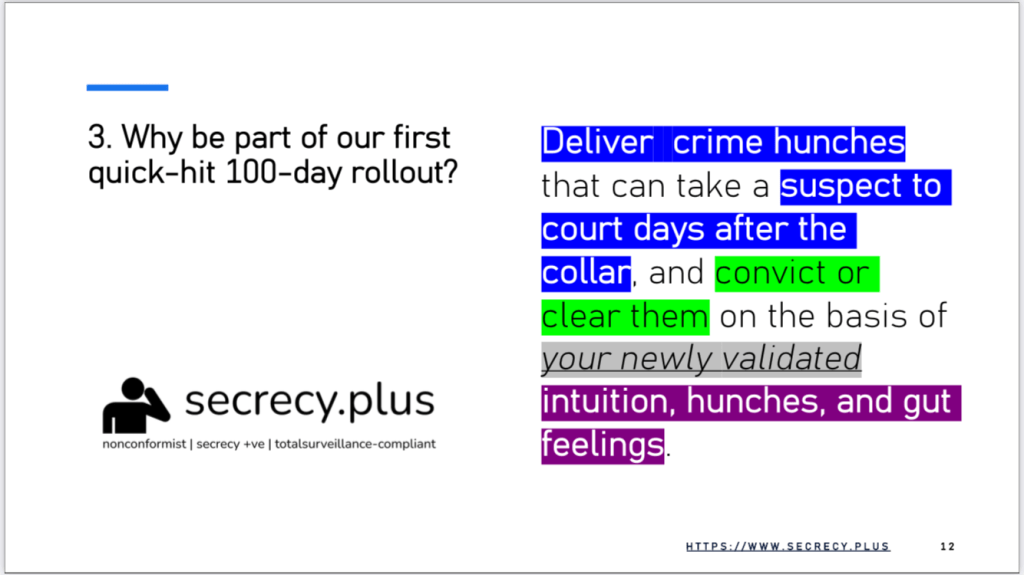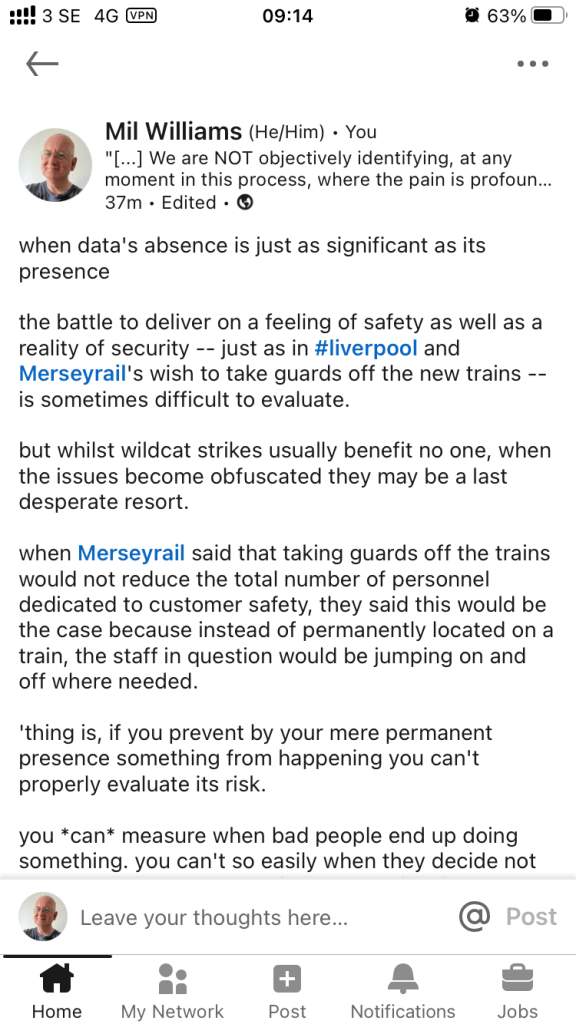
on a blended approach to #totalsurveillance

background

i read a meme a while back which said:

it takes ten years ramming a new idea down people’s throats for them to get it.

i started what would become the #intuitionvalidationengine back when a discovery interview with a #liverpool university. in the middle of this interview i came up with the phrase #industrialisationoforiginalthought. i didn’t know, then, the roots of this occurrence.

i do know now.

my first university qualification, of the three i now have, was a ba hons in film & literature, back in the early 1980s. i realised a few years ago now that this was the very source of my thinking around #intuitionvalidation.

film, until #generativeai, was an example of how, despite the temptations, movie technologists chose to make a tech that enhanced and expanded human beings, rather than diminished and automated them out of relevance.

the microphone made the voice more powerful; the camera, the eye more beady-eyed; the film language of close-up and long-shot making the actor able to express their feelings with more impact; and even the stage and a wider mise-en-scene serving to extend the ability for great actors to deepen their expressiveness using the surroundings designed specifically around them.

that, then, all a clear example of the #industrialisationoforiginalthought.

and with that, a direct precursor to the #intuitionvalidationengine, and what then became #platformgenesis:

gb2earth.com/tools | gb2earth.com/pgtps


if we take 2016 as my baseline of these later ideas, though not where the ideas originally connect back to, of these ten years i allude us to, ramming a new idea down everyone’s throats, i’m in year 8 of the aforementioned decade.

what next …

i’d like now to make something firmly tangible of all this.

and this, for two reasons and two reasons only:

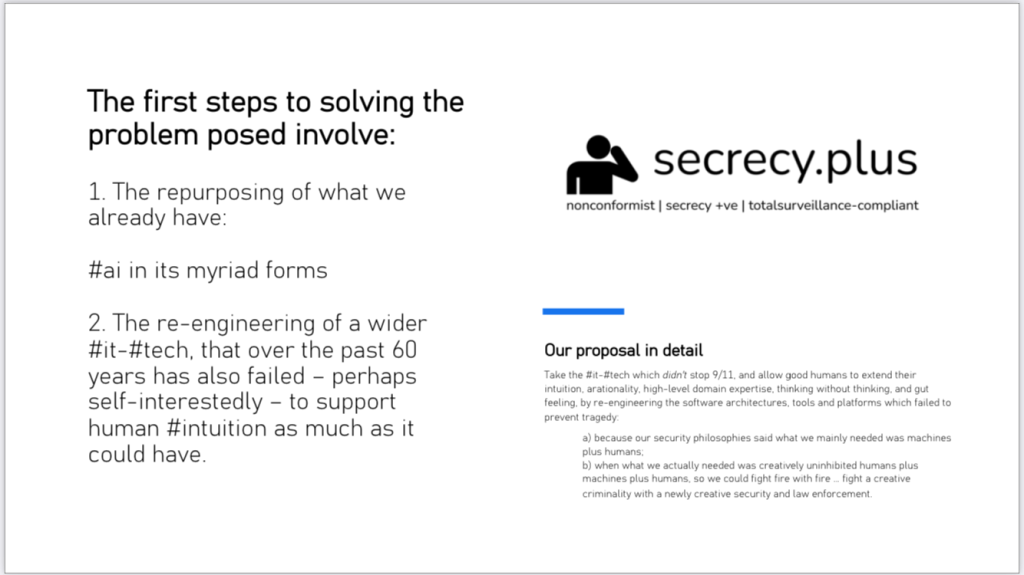
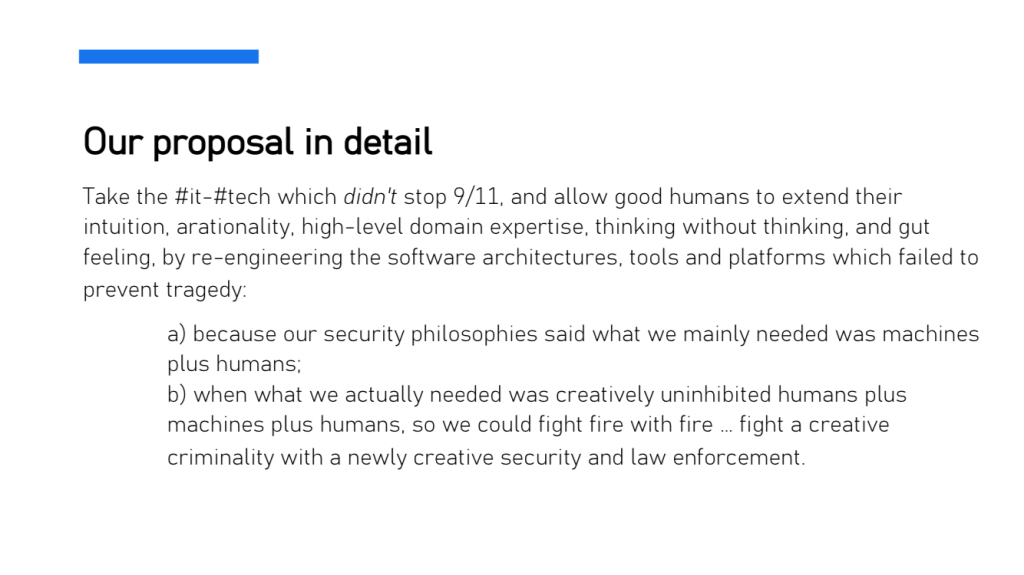
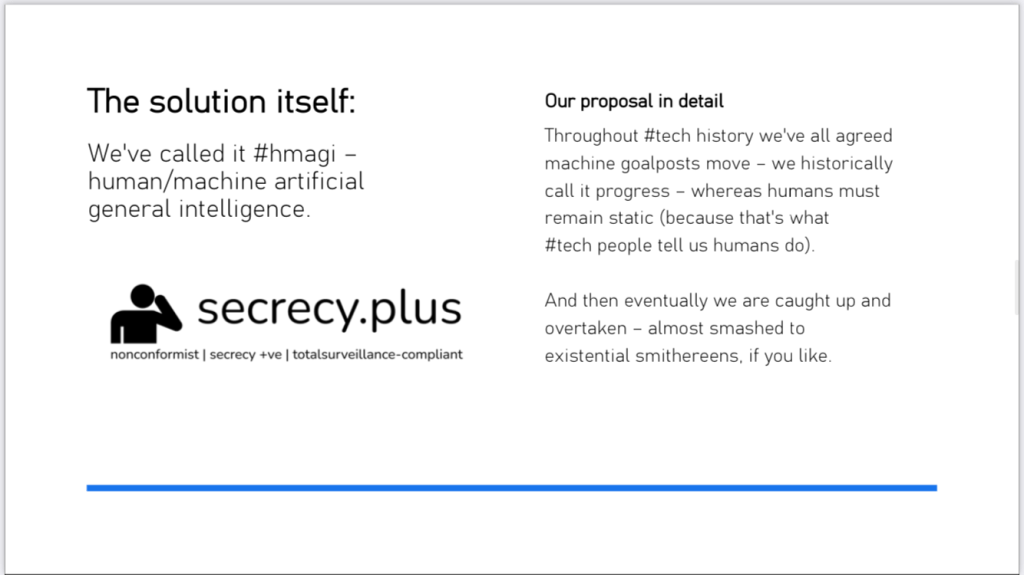
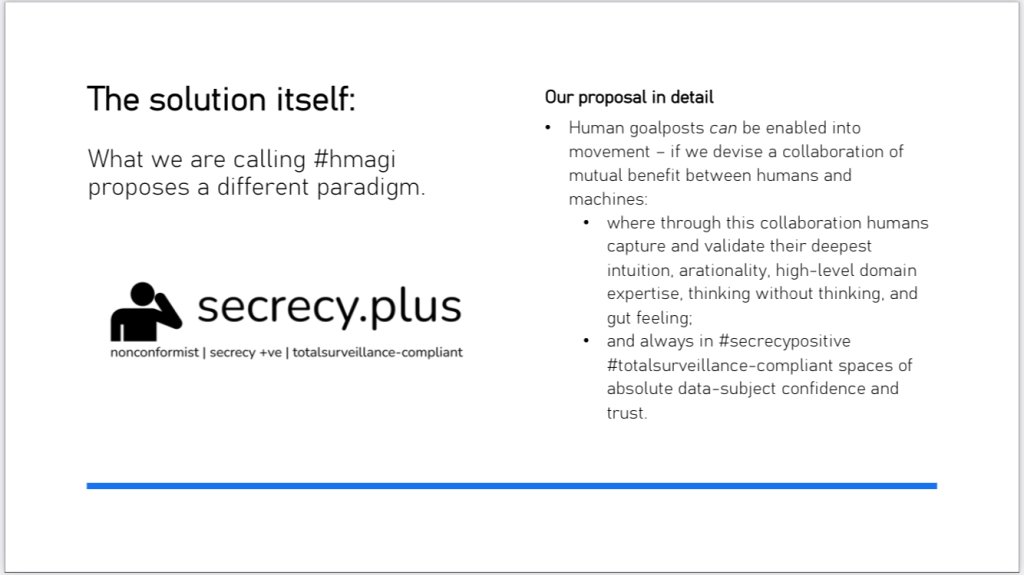
1. under the current #totalsurveillance philosophies, 9/11, putin’s russia, and hamas all flourished. i’m not saying those who promoted these solutions, where machines have humans as extensions of their processes and procedures, wilfully ignored an alternative i’ve been proposing for a number of years now: that is, humans with machines as extensions of themselves. but if it does continue to be rejected, the ignoring of them does become wilful:


2. the second reason is more personal. i’d like to think that some good people at the highest levels of #tech begin to recognise that perhaps everyone — all of us, that is, without exception — should have considered other options sooner.

9/11 was a horrendous event we considered absolutely singular and, thankfully, unrepeatable.

but then came along the utterly illegitimate invasion of ukraine by putin’s russia, where we still even today — some of us, that is — choose to see him as a man who stumbles into one misadventure after another. only this isn’t true at all. he’s a horrible nonconformist whose awful capacity to think out of the box is left untouched by our machine-driven teams and ways of working.

and so, finally, 9/11 does repeat after all. with, you can’t say no, hamas’s dreadful attack on israeli and palestinian people, both. and under the very same philosophy of #totalsurveillance which didn’t succeed as it could’ve done the first two times round either.

my ask

so what do i say? what do i want? what can i get reasonably from you?

what can we all, ultimately, achieve together?

it’s not #totalsurveillance that’s the problem: it’s a #totalsurveillance which upscales exclusively machines over humans for every security, law-enforcement, and espionage process ever.

it’s the philosophy and implementation, not the need or the instinct to protect and defend absolutely: because the latter is absolutely spot-on. meantime, 9/11, ukraine, and now hamas surely question the former in ways we never cared to in the past twenty years.

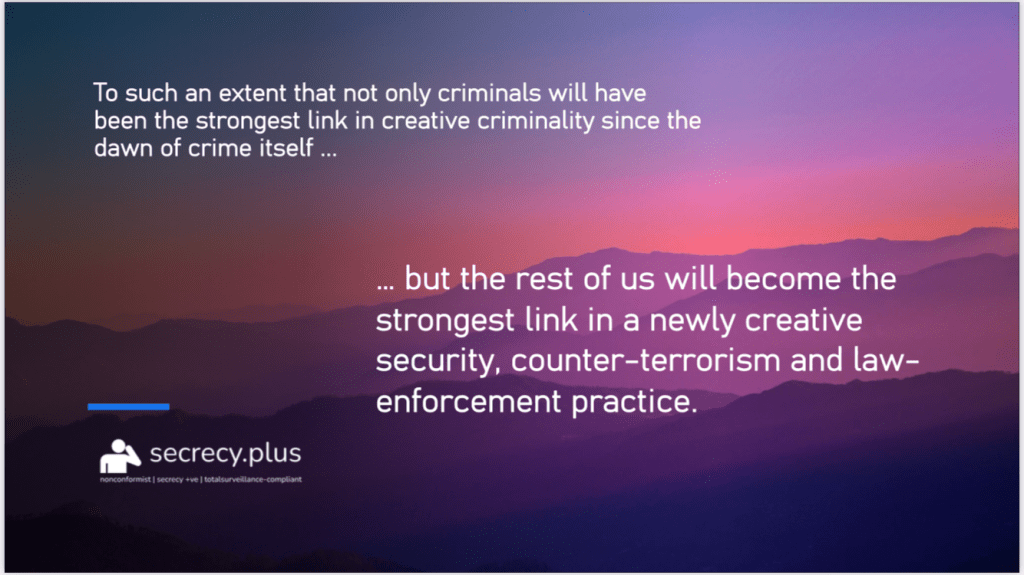
this is why i am now looking proactively and openly for a powerful and paradigm-upturning partner who can provide the runway to get this blended approach to #totalsurveillance all underway: an approach which i have proposed with so many challenges to my own person all along.

and the aim of these ideas?

simple, tbh.

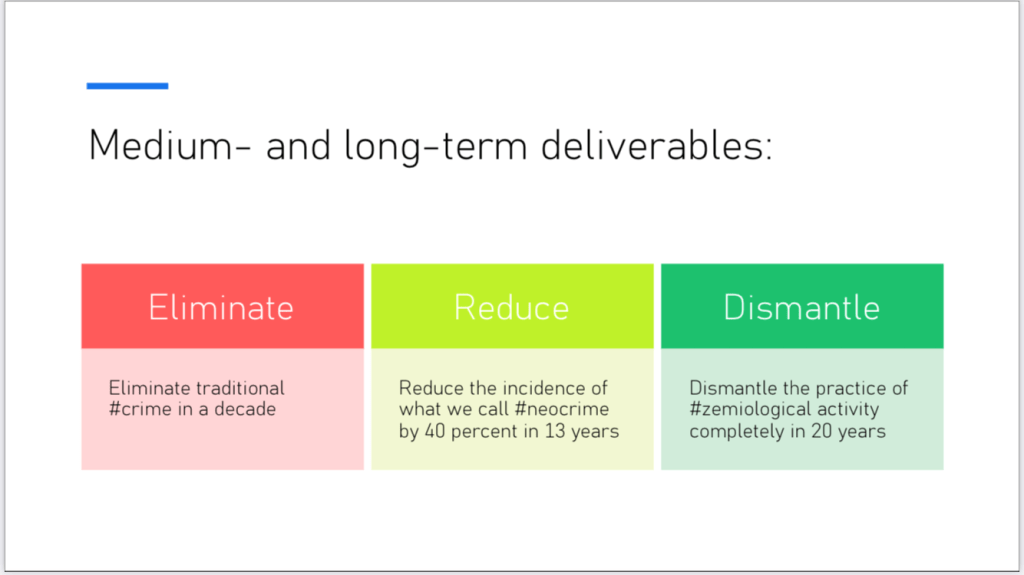
no more 9/11s, invasions like that of ukraine, or attacks like that of hamas on israeli and palestinian peoples both.

i want to save us all from future pain.

that is the gain i most want out of my legacy.

that is what i want my ideas around #totalsurveillance to begin to deliver: a more secure world which feels, also, so much safer …

Why is it so hard for good people to stay good?

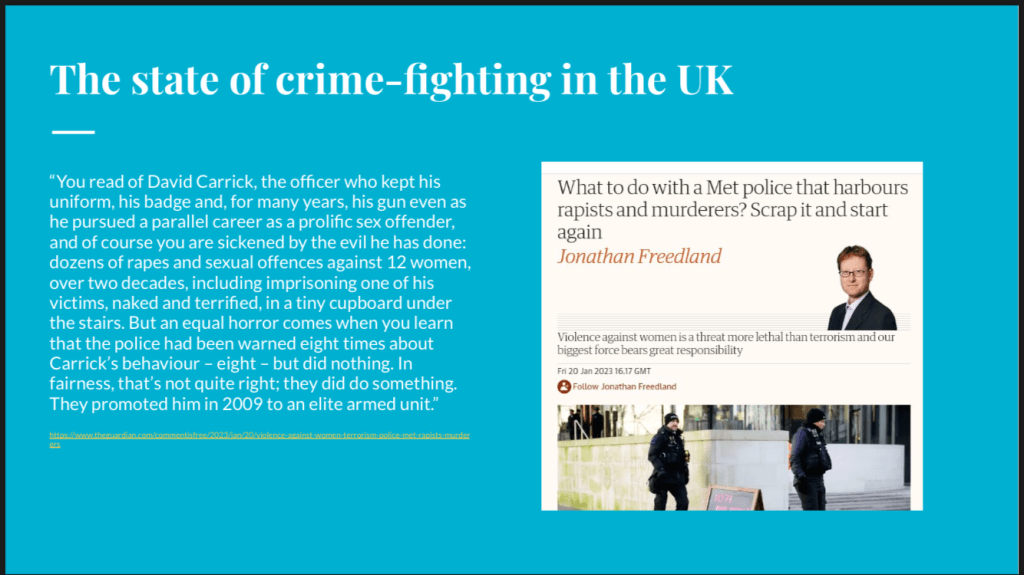
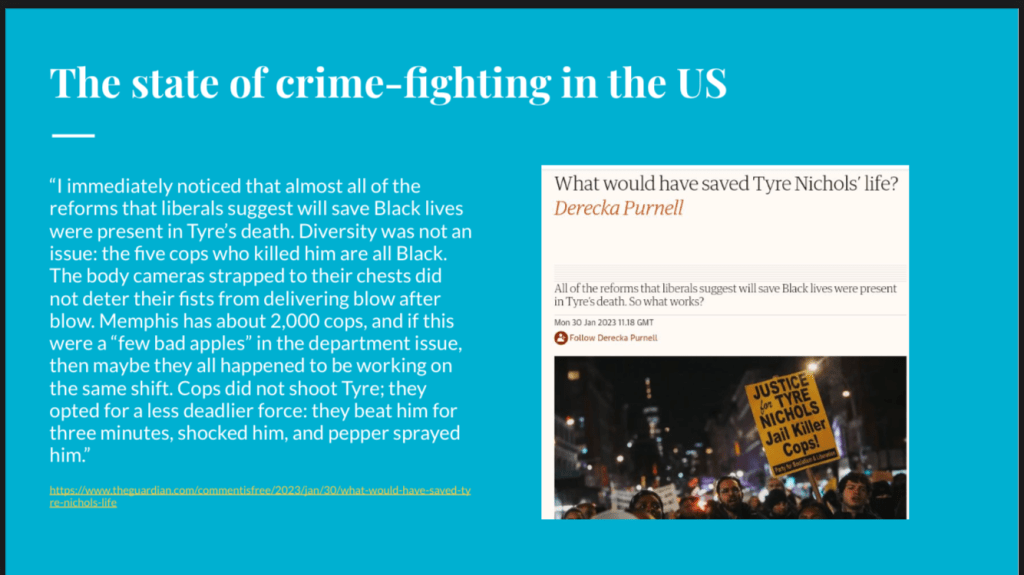
It’s clear that #criminaljustice isn’t working. The fact of #putin’s #russia and its invasion of #ukraine — just one example of how malevolent experts in #loopholes are able to act in the very worst of bad faith — absolutely demonstrates that #criminaljustice manifestly can’t pursue and being to book the most serious #societalharm before it harms in the most serious ways.


Because #ukraine didn’t start the year of the invasion. It started a long time ago when the #kgb man #putin has always been firmly decided that any vestiges of #european hopes that a joint way forwards which might have been found between one side of the ex-#ironcurtain and the other needed to be longitudinally strategised out of existence forever. But also stealthily so: you don’t tell the enemy there’s a knife getting ready to be twisted deeply right in their back.

And so #ukraine was also enabled long-term by the richest centres of power on the planet: transnational corporations which had implemented the original way-back-when command & control #sovieteconomics — top-heavy and hyper-integrated economic structures — which in the age of supercomputers and their capacity to number-crunch in ways the #soviets never even dreamed possible made it possible for these companies to calendarise entire societies over periods as long as decades, never mind the crusty Lada-ridden 1984-style five-year plans.

What exactly am I getting at here?

Some of these corporations have more power than ANY country. Maybe not in the sense of the country GDP versus corporate revenue numbers themselves: but definitely in the almost authoritarian capability they have to make rapid decisions about billions of whatevers; and when I judge rapid I mean virtually from one day to the next.

And, therefore, in this sense in much more immediately impactful ways than any mere democracy will ever be able to engineer.

So this is power: and if knowing you have it you do choose to act, and you prevent #ukraines with your perspicacious even where secretive research data — even if only for bottom-line reasons, forget for the moment the rag-doll babies lying in pools of red at the end of a parent’s counterpane — it’s a massive power indeed exerted for the wider good.

But if conversely you don’t act; if you limit yourself to the role of spectator; if you trim and tack your humongous dinghy so any possibility of encroaching waves remains distant to your ship of shareholder stock … then effectively, when all those immense command & control buttons of the brightest are simply NOT being pressed, you actually are proactively enabling the #putins of the world.

Why is so hard for good people to do good? Really … why?
Well. There’s a thing, for sure.

I read a George Monbiot article in the Guardian a long while ago: it described a survey which said that most of us think most of us are bad people but, equally, most of us simultaneously see ourselves as good people.

Curious, huh?

Some weird disconnect, there.

For me it’s a question of access: the potential whistleblower needs to know their digital notes won’t be read by #badtech people (as mine almost certainly were on the metro this evening); equally, the #abusedspouse must know not only that her husband’s #mafia-behaving business colleague won’t be able to touch a friendly police office for a favour that needs to be called in, but that when it ends up in court and the husband’s word against hers, some kind of fair #tech platform for validating such assertions will also have been invented in the first place, so the pillar of the community he is won’t be able to sway the jury with his mere presence.

This is mostly why I want The Philosopher Space: so people – ALL of us, citizens and professionals, both — can recover our right to the secrecy of pencil and paper but with the 21st century advantages of digital.


That is, when we’re obliged to use digital, we aren’t forced by the system to strip ourselves naked in front of the #tech experts — as I might accurately observe, 70 percent men — who NEVER themselves have to perform the same humiliating acts of self-discovery.

spt-it.com | www.secrecy.plus/spt-it

when #secrecypositive tools were turned long ago against their creators …

i’ve described the idea of “mil’s theorem” before:

“If, in an almost infinitely malleable digital world, I can imagine a new kind of criminal activity via the limited intellectual and financial resources I have access to, others with far more of both will already be doing what I imagined. I don’t, therefore, need to provide more evidence than that to be able to demonstrate it’s happening and it exists.”

let’s take the above theorem one more time then.

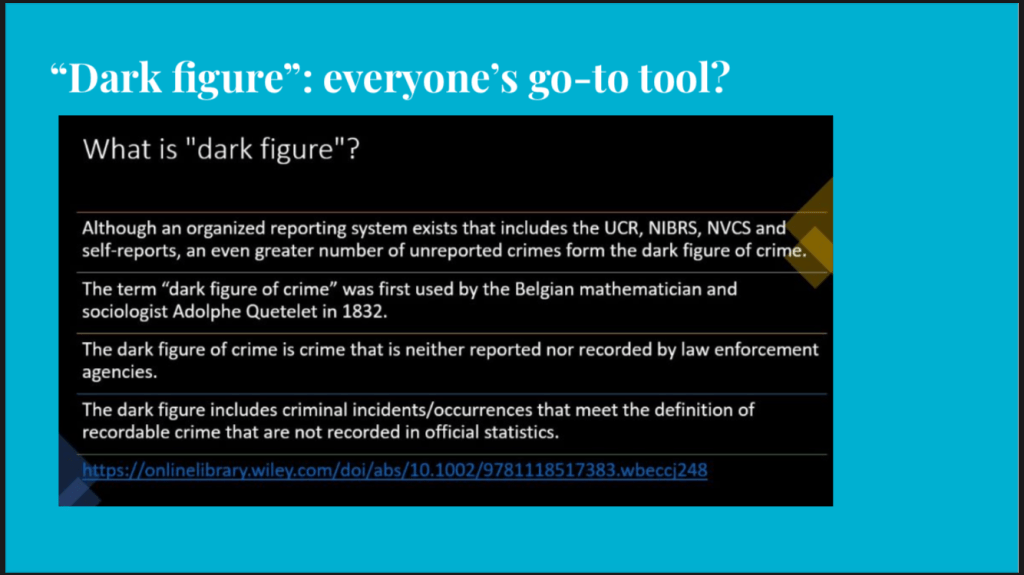
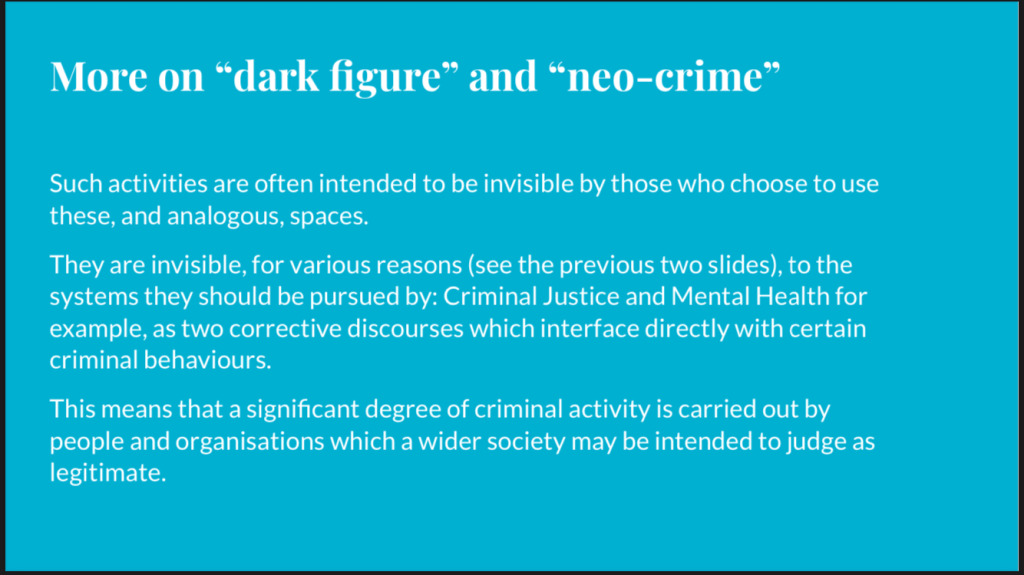
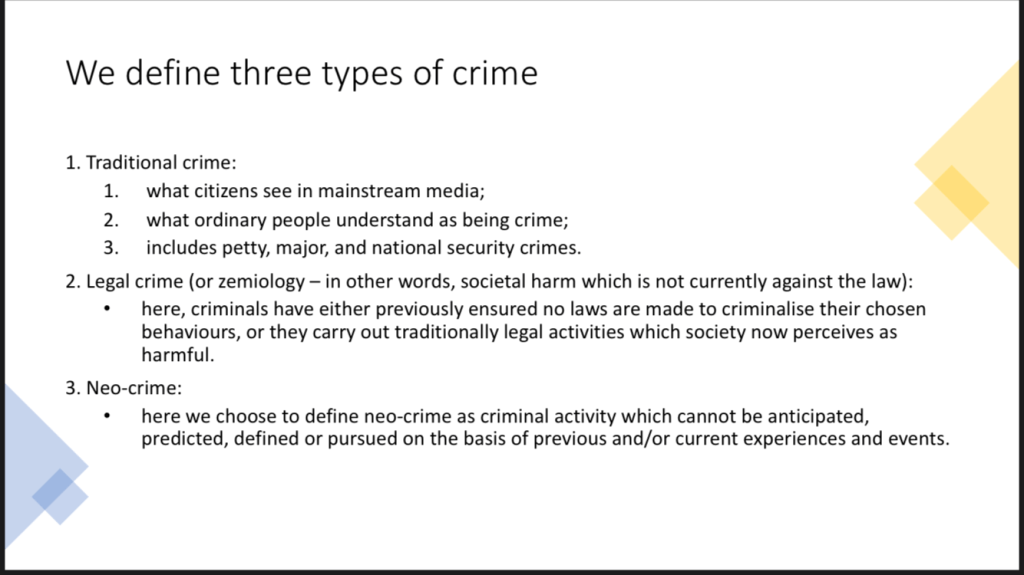
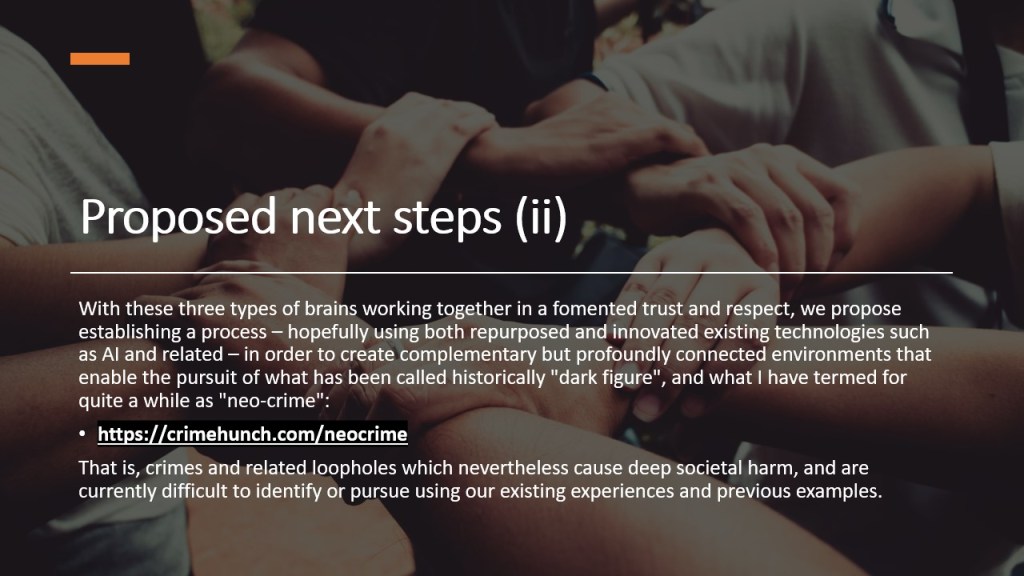
the definition, in my #whirled and your #world, of #neocrime having become this:

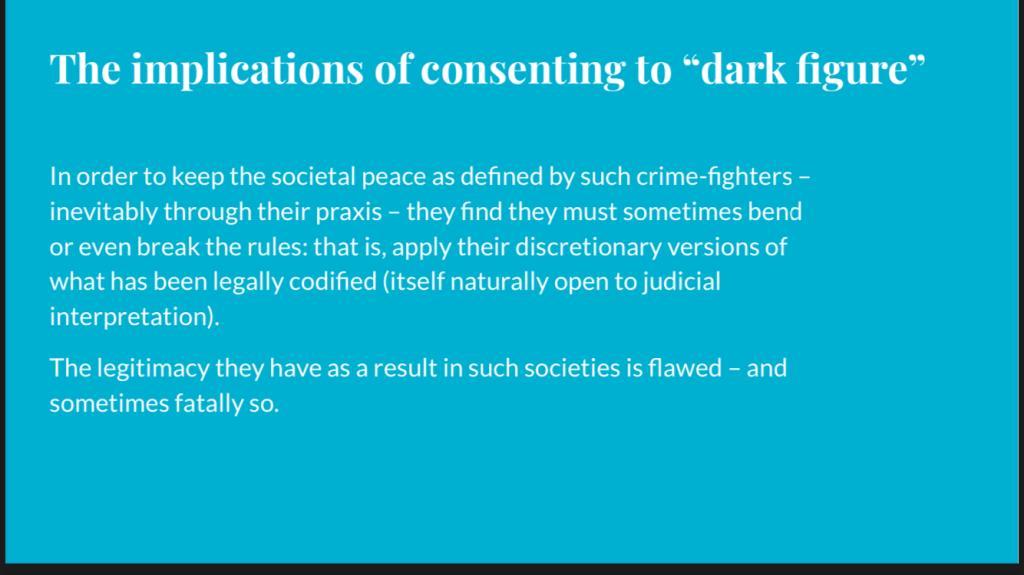
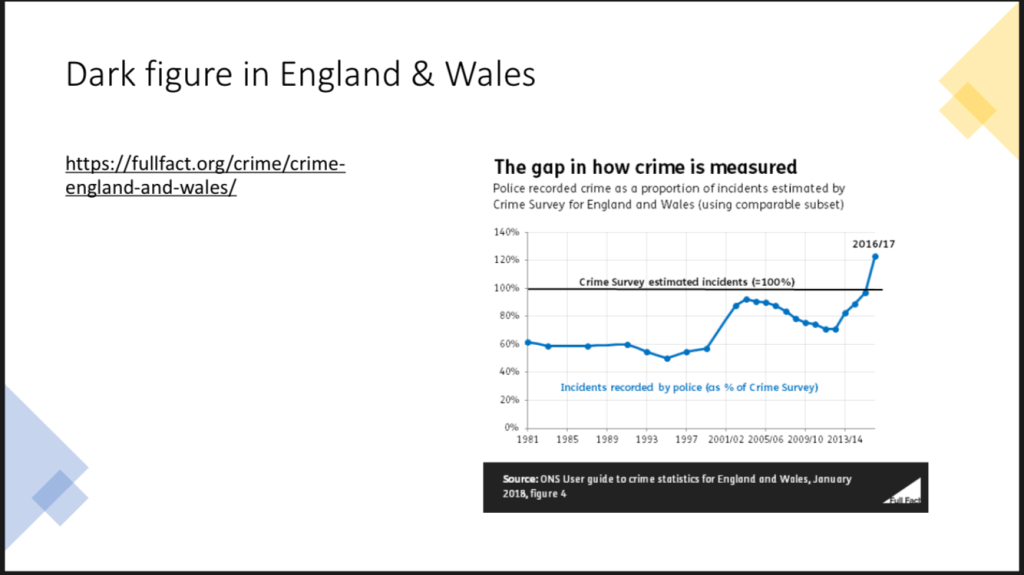
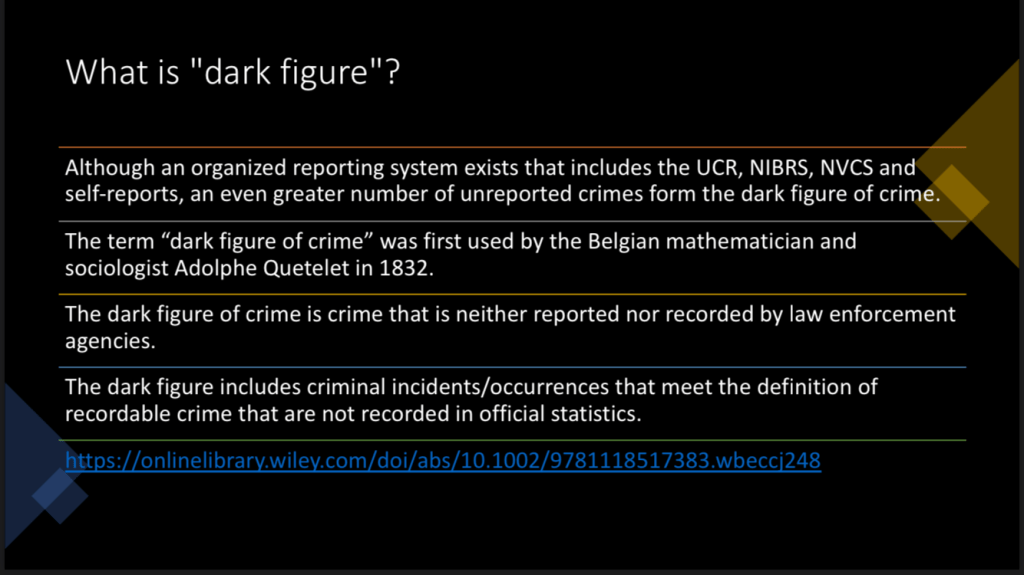
crimehunch.com/neocrime | an updated understanding of the 19th century concept of “dark figure”

now then: if we accept my argument for argument’s sake, that in almost infinitely malleable digital we only have to intuitively and creatively think up new criminal activity in terms of its “whats” and “hows” (“who” and “when” remaining the preserve always of the machines) in order to be evidencing their existence, today i bring a new one to the table:

“let’s imagine that communities of professional praxis exist in #espionage, too. just like journalists who communicate outwith their employer-spaces with other journalists; just like security people and bus drivers acknowledge the presence of the nominal ‘opposition’ with a tip of the cap or a thumbs-up … just like any profession where specialised skillsets bring humans together with humans who are like them because of their knowledge-sets more than the allegiances they are paid to maintain …

imagine the above, then, in #spycraft in particular; and so imagine over the years that a network out of sight of the employers themselves has grown up exponentially, where — using tools i nowadays sustain firmly have been developed to operate in the areas of #neocrimes and #darkfigure (supposedly on the side of the good gals and guys, too) — agents commonly communicate with each other using #secrecypositive (and NOT #totalsurveillance-compliant as i would prefer) environments and architectures, in order to basically scratch each other’s backs at the expense of broader citizen and state interests.

remember “mil’s theorem”: if i can simply think it up, someone else more powerful and monied than me already did long ago.

but here’s the thing: it’s possible the field operatives might be doing such things but it’s also possible that in 99 percent of cases out of deep ingrained senses of honour and responsibility (and why not? patriotism too …) they’ve chosen over the years not to. even when they could. (some of us still exist, you know.)

so here’s another #neocrime-ism: what if it wasn’t the operatives who worked behind democracy for their own self-enrichment — or maybe even global domination — but, instead, their bosses …?

not one and all. not even all that many. but enough to tip the balance over the years between #ukraine NEVER happening and #russia being given an under-the-counter carta blanca to proceed as it would wish, and always wanted.”

ok. that’s the last bit of “mil’s theorem” theorising for today.

enough, right? and maybe understandably insulting for many at that.

listen up before you get utterly irritated with me. what i’m doing here is using a public space as if it were a #secrecypositive space. i’ve reached a moment in my life where i realise what was done to me in 2003 can’t be done again. since then, i’ve studied #criminaljustice at master’s level and have a whole battery of logical tools and legal principles to defend myself. and so i’m feeling fairly impregnable — and will continue to do so unless someone actually, literally, wipes me off the face of the planet.

but assuming the latter won’t happen … what if #secrecypositive spaces have now been turned against the people who invented them? and not me thinking now? but them, having built decades ago? because when you create a weapon of destruction you ALWAYS consider how its corresponding shield might need to look …

so what if the guys and gals who did this technology all those years ago as i now surmise were good people who defend our security and safety every day? and what if the bad gals and guys are now abusing savagely — to the extent of enabling #ukraine AT LEAST — such architectures and platforms to their own ends?

what if … that?

On talking about #intuition

Introduction to this post:

Today I had a brief video-chat with someone positively predisposed to the idea of #intuition. He even saw it as bordering the mystical. He was Indian. Indians love #intuition, it’s true. But #it-#tech Indians have caveats they all seem to share. This is something I have seen before: real deep trust in human #intuition’s capabilities but a real distrust in any chance of ever validating it usefully.

This man is also involved professionally in #it-#tech. When I gave him four examples of how not all #tech had chosen to diminish human beings in the field of non-traditional #datasets, he was still unconvinced.

The four templates we should look to when validating #intuition:

Example 1: the #film-#tech industry from its beginnings over a hundred years ago has decided to almost always amplify and enhance existent human abilities: more voice with a microphone; keener vision with a camera; greater expressiveness with the language of close-up. And in so doing it’s made billions, perhaps trillions, in the paradigmatic century of its total cultural dominance.

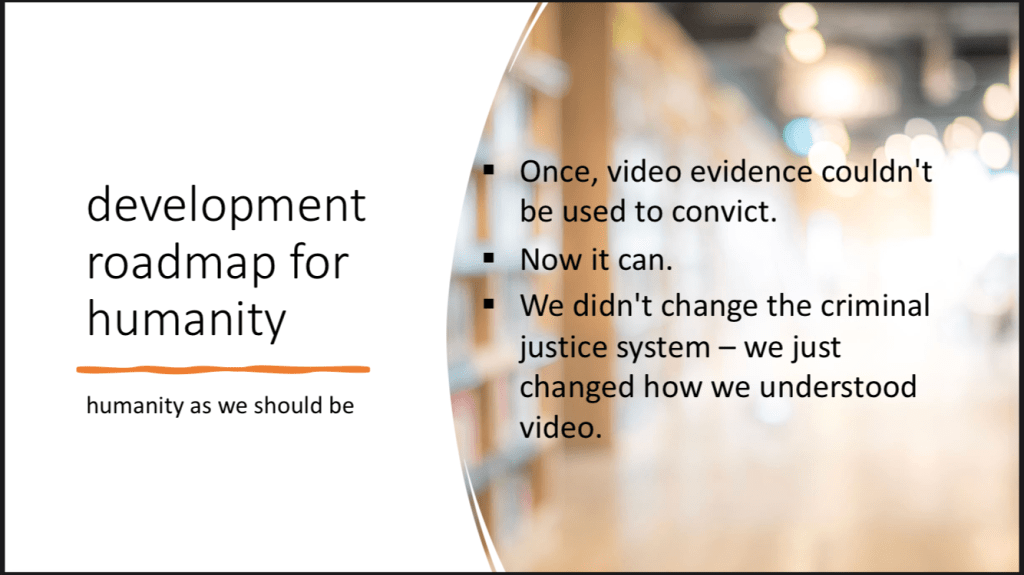
Example 2: in my younger years video was not admissible evidence in the #criminaljustice system of my homeland. Now it is. What changed to put in the hands of #lawenforcement and #justice’s stakeholders and subjects this tool to eliminate procedural waste so dramatically? We didn’t change any #justice system: we just introduced new tools to validate video evidence, so that the hidden knife in the real life holdup was proven to have been used via a validated electronic cousin.

Example 3: the detective who just knows that someone is lying in an interrogation may be wrong too, on occasions; but often they all too accurate. Yet it then takes due process months, maybe years, to arrive at the same conclusion. What if we could validate — not prove right but decide definitively (as the #video example above now allows us to much more speedily) whether in truth MAYBE wrong but ALSO maybe right — so that this detective’s #hunch would bring about a conviction (or release) of the most adequate?

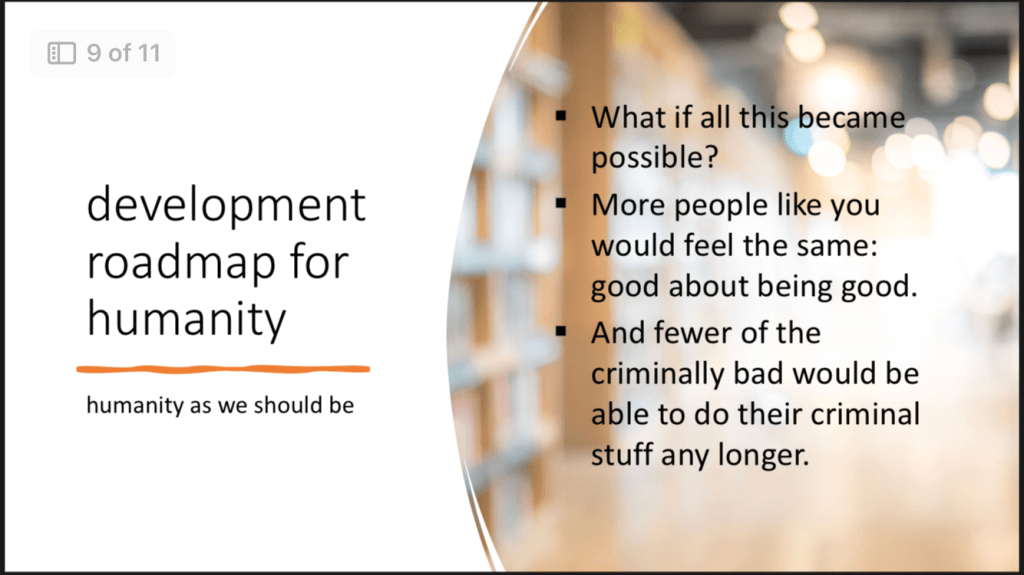
Example 4: I then suggested to my interlocutor that we should come up with a new 9/11 before it strikes us again. Here, I suggest we learn how to reverse- or forward-engineer bad human thought, so as to stop it in its tracks, with the most #creativecrimefighting you could conceive of:

crimehunch.com/terror

But not the “when” or “who” of what is already being planned out: in these cases, machine automation operates really competently on the basis of existent #lawenforcement and #nationalsecurity #it-#tech data-gathering processes …

Rather, I mean to say here the “what” and “how” of an awfully #creativecriminality. And I say this because 9/11 was a case of where assiduous machines which humans used conscientiously, and in all good faith, were roundly beaten by horrible humans who used machines as extensions of themselves terrifyingly well: being the case, therefore, of simply not supporting existent habits of #creativecrimefighting (because detectives can be immensely creative already in tussling out narratives that explain otherwise insoluble crimes) with conventional #it-#tech choices and strategies that absolutely do NOT since time immemorial care to foreground and upskill human #intuition.

What happened next and, maybe, why:

When I said to my interlocutor that these four examples surely served as robust precedents and templates for proceeding to validate #intuition and #crimehunch insights just as deeply, as well as to an equally efficient end … well, this was when he veered back to talking again of #intuition’s impenetrable workings. “Yeah,” he was saying, “intuiting is great process … but don’t dare to untangle it.”


And it’s funny how those who work in an industry — that is, #it-#tech — where the richest of its members are incredibly wealthy on the back of their particular and often mostly privately privileged visions of how the future must become … well, that these wealthy individuals then, and similarly equally, find themselves incapable of conceding that such a profoundly value-adding activity for them should have its own wider validation systems for us all. Why? Well. In order that EVERYONE who could care to might acquire a distributed delivery of similar levels of genius-like thinking: what I have in fact called the “predictable delivery of unpredictable thinking”.

platformgenesis.com

How I would, then, most like us to proceed:

I’d like us to create software, wearables, firmware and hardware environments where not only a select few can enjoy being geniuses, but where we all have the opportunity to be upskilled and enhanced into becoming value-adding, natively intuition-based thinkers and creators:

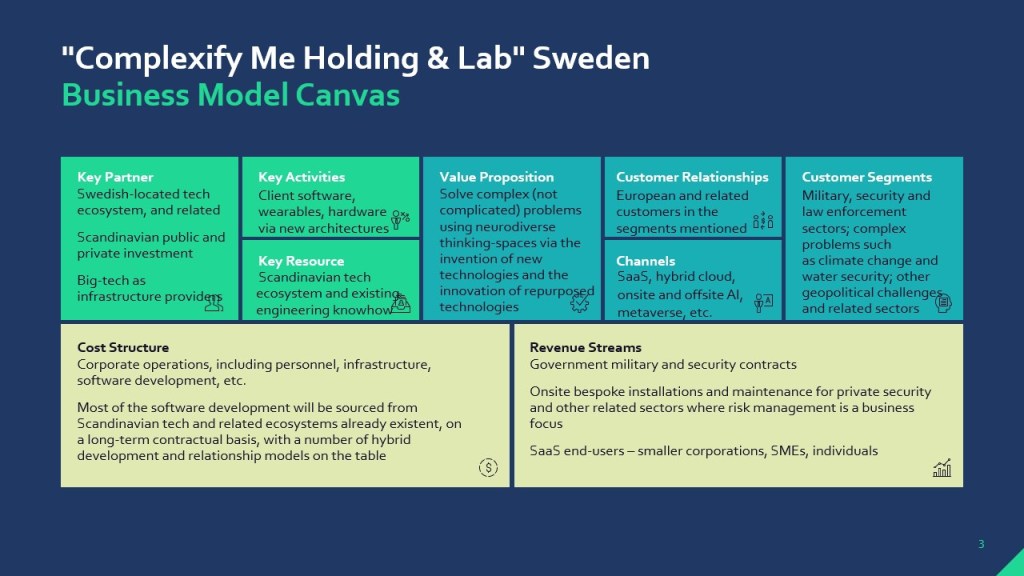
complexifylab.com | sverige2.earth/canvas


One small and hugely practical example:

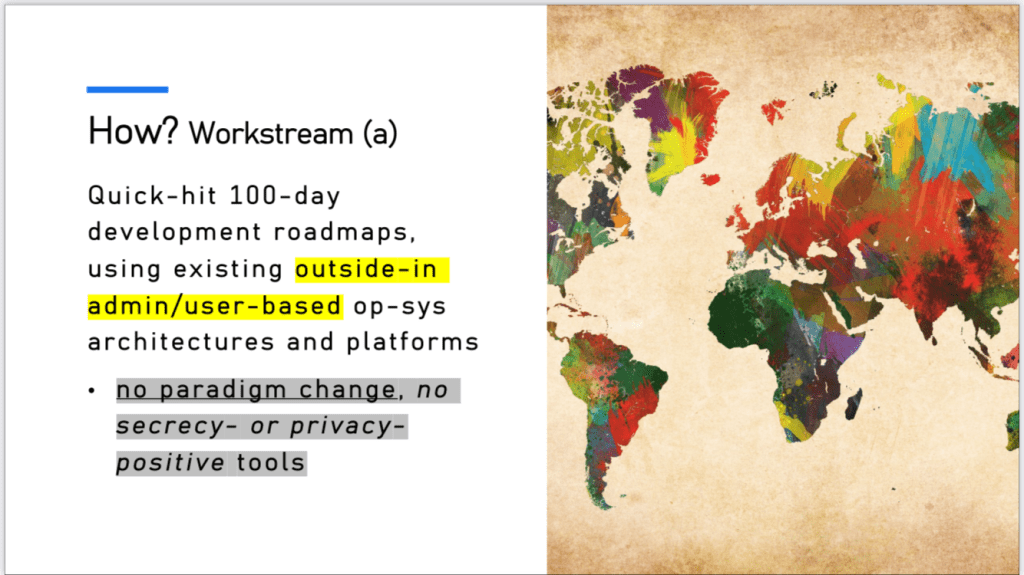
Attached below, just one small application we might develop, using existent architectures — not the particular ones I think more appropriate for truly deep #intuitionvalidation, where we conflate admin/user in one #datasubject — and with a proposed 100-day roadmap to demonstrate that the beautiful insight I had more than a year ago is actually, honestly, spot-on:

1. That #intuition, #arationality, #highleveldomainexpertise, #thinkingwithoutthinking, and #gutfeeling are potential #datasets as competent as #video suddenly became when we believed finally its validation was a real deliverable.

2. That all the above all-very-human ways of processing special #datasets actually contain zero #emotion and even less of the #emotive when it’s their processes we’re dealing with. And that when they do EXPRESS themselves emotionally it’s out of the utter frustration which the driver and #datasubject of such #intuitive processes suffers from as a consequence of the fact that no one at all, but NO ONE, in #it-#tech cares to consider #intuition and related as #datasets worthy of their software and platform attentions.

So out of frustration I say .. but never the intrinsic nature of such #intuitive patterns of collecting #data and extracting insights which people like that detective I described earlier do believe sincerely in, when driving the most mission-critical operations of #publicsafety of all.

secrecy.plus/fire


Why a data-driven world isn’t everything in life … and why it’s important we understand this much much better

The real nub of the issue is this: in the absence of data, we can only use data that is present. Here, it’s clear when someone commits a crime and we catch them after the event with a certain number of mobile train security personnel on our payroll. That’s measurable: the ratio of events to arrests, for example. What’s not measurable by automated data science and analytics half so easily is when something doesn’t happen because a permanent guard is present to act as deterrent.

Mil Williams, Stockholm Sweden, 21st April 2023

Introduction:

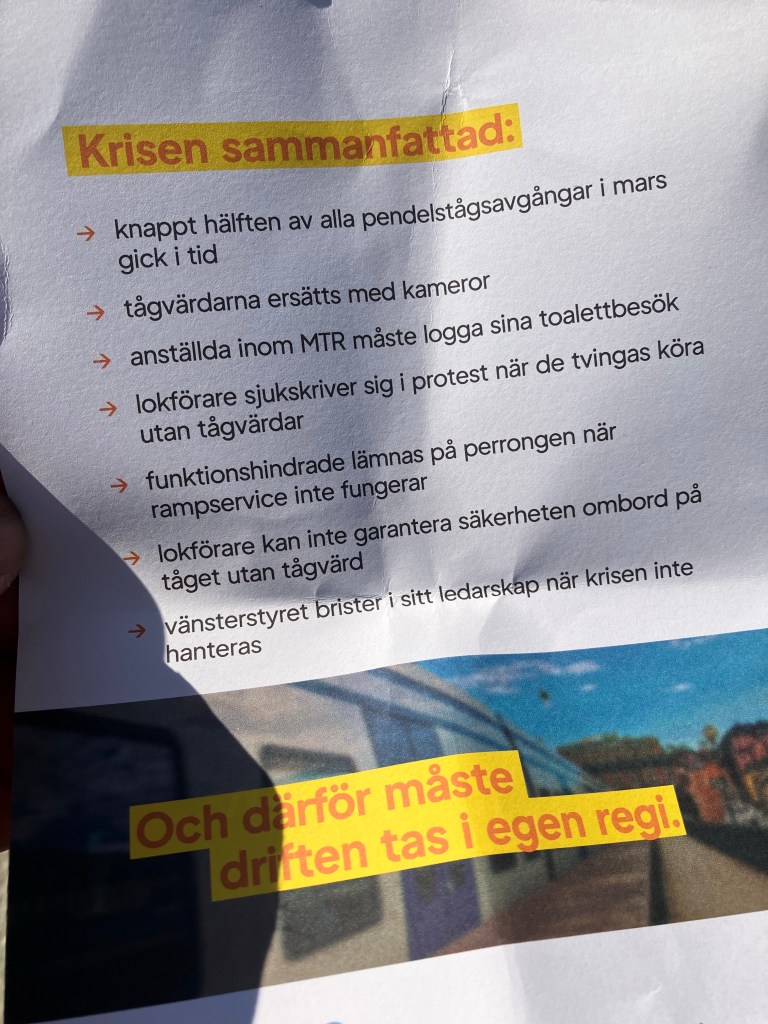
There are strikes on the commuter trains — the otherwise fabulous pendeltågs — here in Sweden: even the occasional wildcat ones. The frustration is patent: more so, because the strikers are right.


This is why:


An aside:

As a brief by the by before I continue, I think the train companies are able to claim the numbers of security and safety staff would remain the same, and yet still want to go ahead with it all, because they’re changing the type of workforce: you still need to go through with rightful and rigorous measures to vet and upskill non-train guards of all sorts it’s true, but with a train guard it’s less easy to change and chop their working locations, conditions and so forth. Or outsource the workforce, even. Change overnight who employs them and how.

No?

So …

How a data-driven world can deceive:

The thing is, here we have a perfect example of when a “data-driven world” actually needs academia more than it needs an automated data analytics and data science as we usually understand them.

The train companies in Liverpool and Sweden both I am sure will have had long-term strategies to re-engineer the structures of their employees and related re in-house and outsourcing options, and whilst taking guards off the trains in the circumstances described wouldn’t deliver immediate economic advantage, as indeed they underlined in Liverpool for sure, long-term if I’m right it definitely would.

The real nub of the issue is this: in the absence of data, we can only use data that is present. Here, it’s clear when someone commits a crime and we catch them after the event with a certain number of mobile train security personnel on our payroll. That’s measurable: the ratio of events to arrests, for example. What’s not measurable by automated data science and analytics half so easily is when something doesn’t happen because a permanent guard is present to act as deterrent.

And this is the challenge here. It really is a challenge around what we do when the evidence base is incomplete: that is, how it leads us to take quite the wrong decisions.

To the solution:

There is a solution too; I alluded to it above. Straightforward academia gives us tools to codify absences, in for example qualitative data such as an interview transcript or video, so that what isn’t said is as significant as what is.

If we could create an equal set of tools for strategic decision-making when deciding if to take train guards off trains or no, perhaps we would avoid the strikes we’re having everywhere: and at the very least, we could validate, in a less conflictive way, the common sense most users of public services have that a “bobby on the beat” engenders an incomparable feeling of safety even where a car in the neighbourhood can be evidenced to deliver on objective data relating to quantitative crime events.

Summarising:

In crime and public safety, what doesn’t happen is as important as what does: and the “why” of both these matters, too.

So.

Let’s do something after the evidence bases for both aspects of the truth: that which has a visible side and the invisible events as well.

And then let’s achieve delivery of these aspirations sooner rather than later.


Further reading:

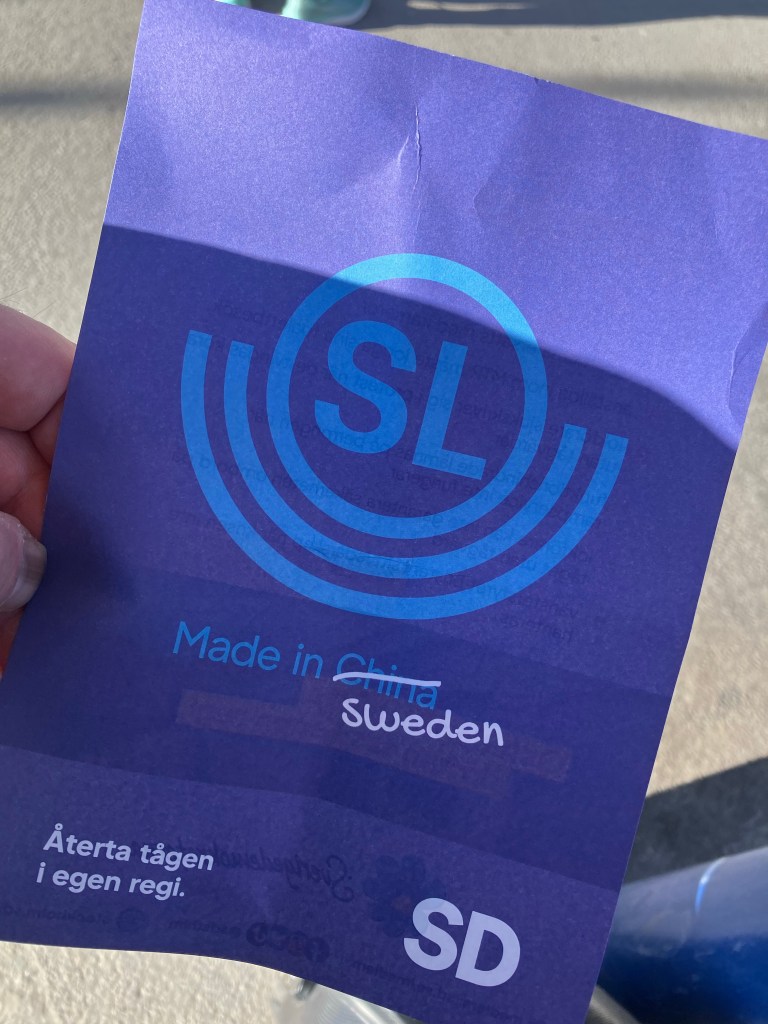
https://en.wikipedia.org/wiki/Sweden_Democrats

Another by the by: the promoters of today’s information are a further example of why we should act on the basis of what is not visible, as well as what is.

The Sweden Democrats started out as fascist and redolent of nazism of the very worst sort — at least according to the English version of Wikipedia. They themselves claim to have re-engineered their political DNA, which is not impossible but highly unlikely. Even so, medical professionals claim bespoke DNA of the human kind is very close to becoming a reality now; so we could argue that in politics it’s not unthinkable any more.

Let’s just say, however, for the moment unlikely and hard to do.

So. The risk from relying on present datasets instead of datasets relating to both what’s present and absent too? We allow people to hijack in bad faith what needs to be promoted in good faith.

The train personnel are right. Guards on trains deliver safety and security. This Swedish political party — in the current security conditions which China and Russia together have been stealthily laying out for decades together — are also correct to highlight the dangers of such, separate, narratives.

But they are wrong to a) conflate two issues like this; and b) lever the abuse and violence of both nation-states and their outliers in the fields of geopolitics to then promote an immigration narrative of their own re Sweden which delivers total obfuscation of our all too human reality and a zero confusion around their racist truths. Unless you choose to remain confused.

Sometimes it’s right to be firm: China — not all Chinese people — is a toxic regime. Putin’s Russia, too, has absolutely no redeeming qualities. But firm doesn’t mean we have to give fascism a place at the table of a wider collective progress.

Don’t besmirch the truth of the train staff by taking political shortcuts. And if this is what changing your political DNA leads to, change is what clearly you are NOT delivering.

Just occurs to me, too: even more reason to proceed with #intuitionvalidation.

my REAL concerns around democracy’s use of digital: an overview of the last week’s work

introduction to my rationales for a new #neurodiverse-#it in order to solve #complexproblems:

my real concerns around being #secrecypositive, or not at all, have lately had nothing to do with governments and what they do with our right to #secrecy. after all, many citizens buy #secrecypositive reading- and sharing-machines of highly controversial content quite legally in all #european countries: we call them books, and they are made of paper. nothing more #secrecypositive than this millennium-old way of sharing and spreading, both in good and bad faith, information of all kinds.

so if it’s legal on paper, with pencil or ink, and has been for centuries, why not repeat in digital — and sooner than later?

you see, the problem isn’t discovering a digital burglary has taken place. because the removal of a digital privacy or object or piece of content like this is possible to achieve by copying exactly. the removal is consequently effected without removing. but its potentially prejudicial removal is a fact all the same. just as if in a life more conventionally real:

www.secrecy.plus/spt-it

my problem is never a government access to my bedroom, and always instead a criminal usage of similar accesses:

no.

i don’t mind — really don’t mind — knowing good governments can see what i do. i wouldn’t mind, for example, the #swedish government watching me in this way, because they are a state which strives to legitimate itself always.

meantime, i have minded the british doing the same to me since they incarcerated me improperly back in 2003, using #mentalhealth legislation to achieve #nationalsecurity objectives: there really is no way the homeland of boris johnson, even now as it currently stands twenty long years later, can be called a legitimate world player of any standing whatsoever.

and certainly not for the rest of #europe. because in order to erect and democratically sustain a hierarchy of surveillance, you have to robustly aspire in an ongoing way to manifesting that same democracy of legitimation.

to challenges, then, which i’d like to answer with the project “complexify.me”:

but even governments and governances as immensely competent as the #swedish ones manifestly show themselves to be can’t respond wholly cogently to the following set of quandaries i and many others find ourselves both intellectually and emotionally suffering from right now:

  • yes, the governments of good nation-states like #sweden must act deeply to preserve the delicate balance of their societies which evidence this goodness: and more intelligently as a result of their delicacy.
  • for they, more than say the british (and not just now but, in hindsight, for much longer than we pretended was ever the case), are entirely vulnerable — out of choice … and rightly so! — to such ecosystems of goodwill being upturned by outsiders and insiders who prefer to take advantage of these profoundly democratic freedoms for their own criminal gain. for in the freedoms of such constituted trusts lie the essences of their wisdoms.
  • the quid pro quo, or the caveat if you like, is this: we must as essentially democratic peoples accept that sometimes in order to protect our treasured states there will exist a need to do less democratic acts. but for a limited period of time clear to all, and even then to proportionate measure.
  • because being this kind of democracy doesn’t mean you cannot maintain yourself with insight and firmness. you don’t have to limit yourself to rolling over and thinking of the northern lights because you are good and mustn’t defend yourself with decision on occasions. and so to deliver on this, you do need to have the ongoing capacity to gather any information and datasets that preserve these laudable states of fragile coexistence, without at the same time puncturing them.

summarising my thoughts on these matters a little:

understand me: i’m not saying don’t watch your citizens. i’m saying as citizens we have to watch each other, all of us to all of us: but as KEEPERS of each other’s human souls, so that necessary violent actions of the state are always, always, kept to a bare minimum.

finally, digital burglary — as described above — inconveniently can happen without us ever being aware of it: and in this “us”, i mean the state, its best professionals and its most intelligent citizens … all of us.

my issue, therefore, with deep surveillance is that if my government does it, even where immensely cleverly, in it will exist people with two dangerously connected roles:

a) rights of legal and proper access to state surveillance tools, datasets and infrastructures; and

b) illegitimate obligations, for whatever reasons, as humans possessed of covert and completely illegal relationships with an ever more embedded, organised, and creative criminality.

conclusions to the above:

if my state says it needs to surveill me to the extent that it can even see and hear me whilst i have sex, in order that it may protect me in more relevant matters, it will already exist as a capability of the aforementioned criminality years before. and so, as mil’s theorem suggests:

“in an almost infinitely malleable digital environment and world, if i — with my limited intellect and financial resources — can imagine a new crime, someone else with far more money and brains will already be doing it. i don’t need to prove this #neocrime exists to know it does.”

mil williams, stockholm sweden, 17th april 2023
crimehunch.com/neocrime
  • the consequences being …? we can’t fight this kind of crime only with good #neurotypical people who are naturally comfortable with such #neurotypical-#it platforms and tools.
  • we must include equally good people with #neurodiverse abilities and brand new kinds of #neurodiverse-#it, so they can then start to construct and tell the stories that describe the #darkfigure increasingly being committed out there in some of the ways i now describe.
  • stories which the existent #neurotypical professionals — properly and usefully so, too — can then begin to chase down and stop in whatever sanctioned ways the states of good faith in our #europeanunion judge to be necessary, at each historical moment in our collective future-presents.

complexify.me | www.sverige2.earth/complexify

how to combine three brains to fight the fire of creative criminality with the fire of a newly creative crimefighting

introduction:

this post contains thoughts from a fortnight’s thinking processes more or less; plus the content of a synthesising presentation which is the sum of years of thought-experimenting on my part. i’ll start with the presentation, which is now where i want us to go:

fighting creatively criminal fire with a newly creative crimefighting

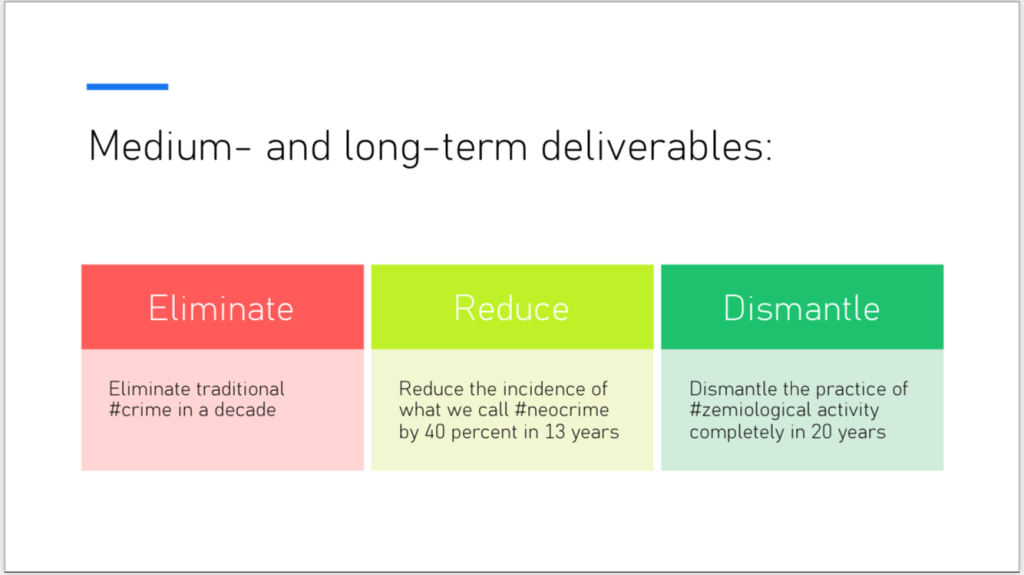
i created the slide below for a presentation i was asked to submit to a european digital agency pitching process, by the uk organisation public. the submission didn’t prosper. the slide, however, is very very good:


the easy answer is that obviously it benefits an industry. the challenging question is why this has been allowed to perpetuate itself as a reality. because real people and democratic citizens have surely perished as a result: maybe unnecessarily.

here is the presentation which public failed to accept for submission to the european digital process last october 2022, and from which the above slide is taken:

presentation submitted to public in october 2022 (pdf download)


where and how i now want us to come together and proceed to deliver on creative crimefighting and global security

the second presentation which follows below indicates my thinking today: no caveats; no red lines; no markers in the sand any more. if you can agree to engage with the process indicated here, no conditions on my side any more.

well. maybe just one. only western allies interested in saving democracy will participate, and benefit both societally and financially from what i’m now proposing:

www.secrecy.plus/fire | full pdf download


following on from the above then, thoughts i wrote down today — in edited format to just be now relevant only to the above — on my iphone notes app. this constitutes a regular go-to tool for my thought-experimenting:

on creating a bespoke procurement process for healthy intuition-validation development

step 1

pilot a bespoke procurement process we use for the next year.

we keep in mind the recent phd i’ve had partial access to on the lessons of how such process is gamed everywhere.

we set up structures to get it right from the start.

no off-the-peg sold as bespoke and at a premium, even when still only repurposed tech for the moment.

step 2

we share this procurement process speedily with other members of the inner intuition-validation core.

they use it: no choice.

but no choice then gives a quid quo pro: this means total freedom to then develop and contribute freely to the inner core ip in ways that most fit others’ cultures.

and also, looking ahead, to onward commercialise in the future in their zones of influence where they know what’s what, and exactly what will work.

and so then, a clear common interest and target: one we all know and agree on.

mil williams, 8th april 2023

historical thought and positions from late march 2023

finally, an earlier brainstorming from the same process as described in part two above, conducted back in late march of this year. this is now a historical document and position, and is included to provide a rigorous audit trail of why free thinking is so important to foment, trust and believe in, and actively encourage.

we have to create an outcome which means we know we think unthinkable things far worse than any criminal ever will be able to, to prevent them. we need a clear set of ground rules, but these rules shouldn’t prevent the agents from thinking comfortably (as far as this is the right word) things they never dared to approach.

the problem isn’t putin or team jorge. it is, but not what we see. it’s what they and others do that we don’t even sense. it’s the people who do worse and events that hurt even more … these things which we have no idea about.

if you like, yes, the persian proverb: the unknown unknowns. i want to make them visible. all of them. the what and how. that’s my focus.

trad tech discovers the who and when. but my tech discovers the what and how before even a glint in criminals’ eyes.

so we combine both types of tech in one process that doesn’t require each culture to work with the other. side-by-side, yes. but in the same way, no. so we guarantee for each the purest state each needs of each.

my work and my life/love if you prefer will not only be located in sweden but driven from here too. that’s my commitment. and not reluctantly in any way whatsoever.

[…]

i have always needed to gather enough data. now i have, the decision surely is simple.

mil williams, 21st march 2023

“upskilling” human beings in the ways of the machine … again? i don’t THINK so

introduction

i just got a message from microsoft (linkedin) which asked me to consider and/or explain how what i was about to post (what you see below in the screenshots) related to my work or professional role.

why nudge in this way

is this a stealthy attempt to remove the ambiguities of #arts-based thinking patterns from contaminating the baser #chatgpt-x instincts and what they scrape?

more than personally, quite intellectually i think it’s wrong — in a world which needs lateral and nonconformist thinking — to define, a priori, what a thinker who wishes to shape a better business should use as a primary discourse.

because this discourse may include how much we follow or no the traditional way of framing information: where we state what we will say, say it, and then summarise it, we fit the needs of machines and people trained to think like them.

art should be used to communicate in any forum

‘truth is, when we choose a precise ambiguity (one forged out of the arts — not the confusions — of deep communication), where such ambiguity and the uncertainty it generates may in itself be a necessary part of the communication process’s context — and even content — what value ever is added by telling the speaker and/or writer they are ineffective?

in any case, the public will always have the final vote on this: and if you prefer to communicate in such ways and be not read, why not let it happen?

why choose this kind of nudge to upskill writers in the ways of the machine?

using automated machines to do so, too …!

so what do YOU think? what DO you?

me, what follows is what i want. what no one in tech wants to allow. because i’m not first to the starting-line: i’m last. they decided it didn’t suit their business models decades ago. i decided i didn’t agree. and i still don’t. and neither should you.

on making a systemically distributed intelligence and genius of all human beings … not just an elite

a different, more process-focussed way of humanising #ai

introduction

i had an idea way-back-when. i posted it and then talked about it in various forums. i think the first time formally was a berkeley skydeck submission.

then i did an online whitepaper called crime hunch:

crimehunch.com

it contained a number of different ways of doing crime, ways which lent themselves particularly to the almost infinitely malleable — and therefore unimaginably criminal — world we now live in.

crimehunch.com/neocrime

crimehunch.com/loopholes

it also included what in hindsight has become a nascent way of fighting crime:

crimehunch.com/terror

developing the nascent idea more fairly

without asking the question as clearly as i could have at the start, the image that follows is really what was at the back of my mind … what i was gnawing away at without being so clear as i could have been at the time:

after the crime hunch page on terror and before the above slide, which in truth was created for a euro-event sponsored by the british organisation PUBLIC, i also had a lengthy video conversation with seven or eight american tech corporation executives. i never saw their faces or knew their names. but the conversation, even so, was valuable. before and after this conversation, i have found it easy to rate positively and highly the corporation in question.

anyway. i asked the assembled the conundrum which the crime hunch terror page poses. however, none of them was prepared to say anything; not even address it to say that it shouldn’t have been posed in the first place.

this was when i began to realise i might have gone too far.

so recently i decided i, myself, would address what could have been hurting people out there: people who otherwise might have seen themselves through to considering it useful to work with me.

i realised, too, i needed to finesse not only my words but also how i might address the challenges being raised: the tool or tools — or conceptual positions — needed.

squaring the circles of human intuition-enhancing #ai (and therefore of creative crimefighting) with traditional #datascience views

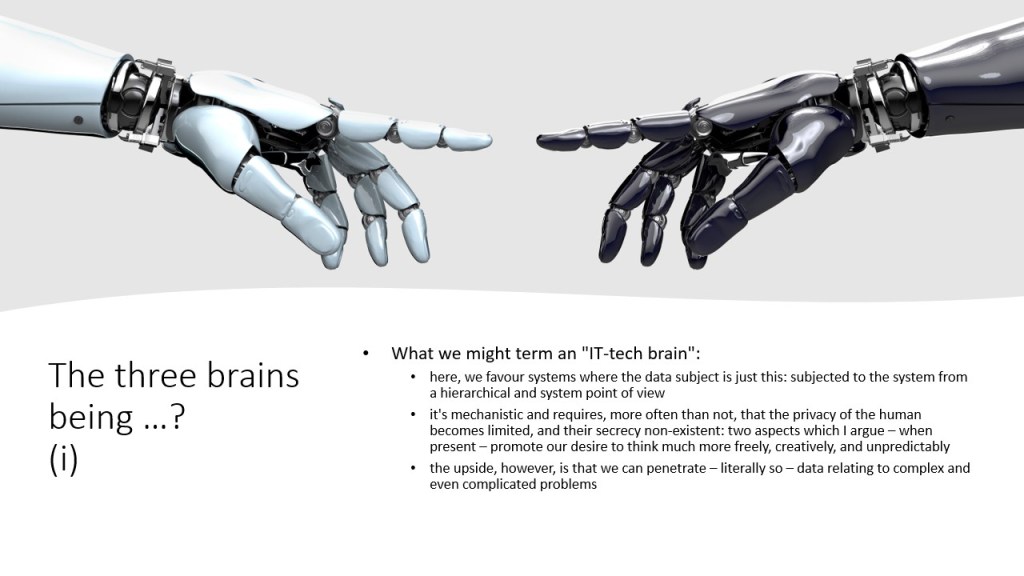
less than a month ago i produced a presentation about three kinds of human brains and how we might make it easy for them to work together. i was interested in exploring the weaknesses in my hollywood writers idea, and maybe bring onboard as well the strengths of a more traditional and exclusively automating #ai.

because one of the replies those people who do answer the terror conundrum have previously given is that using both teams of resources is the best solution.

the problem with this however is that it’s not necessarily a solution. we have cultural challenges of simple workplace interactions which inevitably kick in, where differing professional mindsets — necessarily conformist crimefighters (someone has to want to apply the rules) versus nonconformist creatives, for example — may struggle to understand, or even minimally validate, the other’s work and approaches.

what #datascience finds easy — and then, what it really struggles with

i then deepened this perception specifically in relation to the #datascience brain and how it values other, more intuitive ways of thinking.

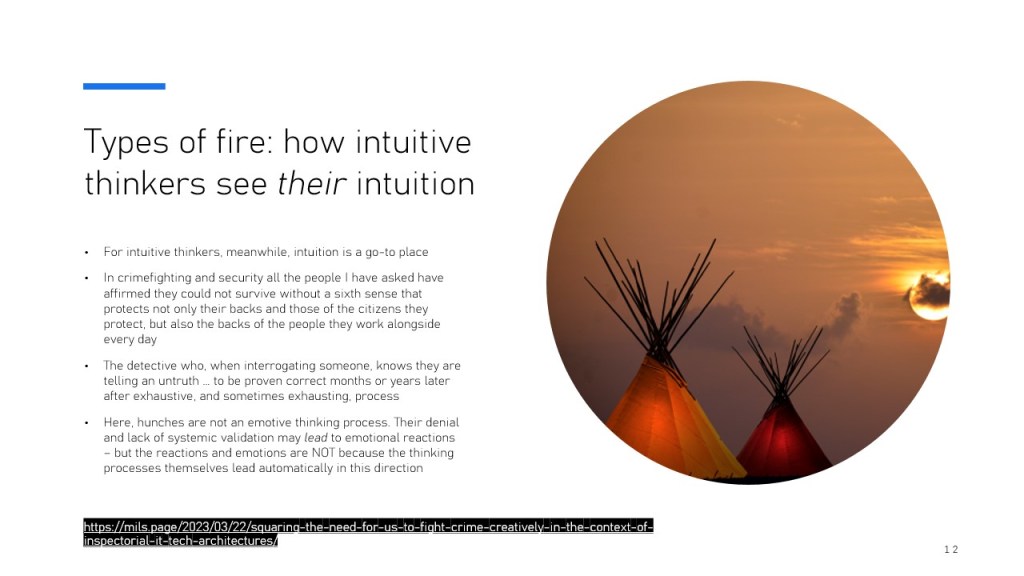
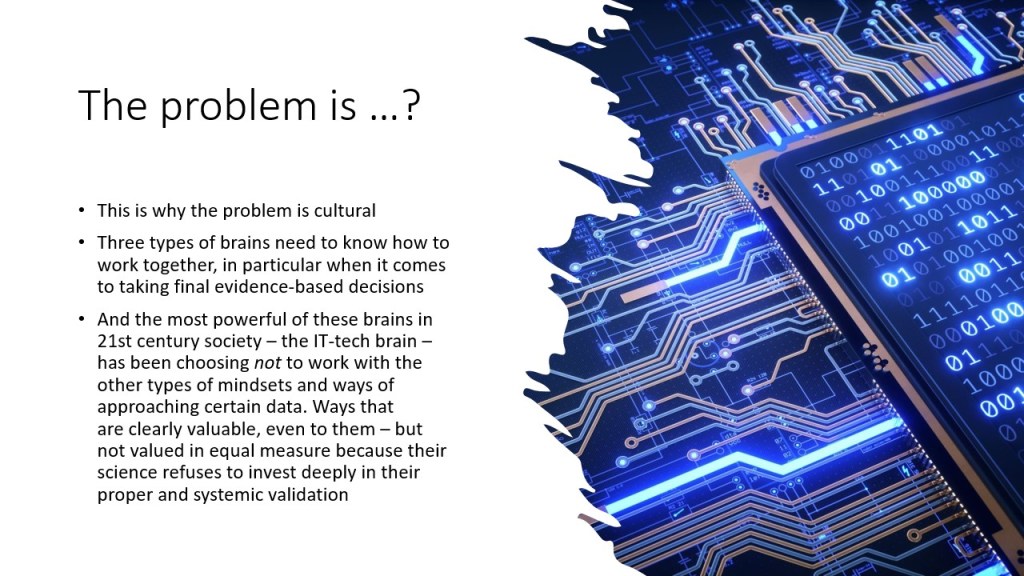
and this formed the basis of the three brains presentation i mentioned: “fighting fire with fire”:

www.secrecy.plus/fire

and what follows from the presentation itself on what i honestly now believe are cultural NOT technological challenges facing us:

i’d like us to focus for the moment on the first slide above:

without intending to or seeing at first what i had done, i was delivering finally on a solution to the conundrum i had — maybe a year or so before — ended up using in good faith but, at the same time, unintentionally hurting the sensibilities and feelings of more than a few.

in this slide we see a process emerging at last where two cultures can work profoundly well together, without having to negotiate anything ever of their own ways of seeing, or of their professional praxis and therefore often unspoken assumptions.

so. to the nitty-gritty.

how would it work?

we take the sorts of minds and creatives i’ve already typed and labelled as “hollywood screenwriters”. but not just hollywood, of course. more widely, the intuitive thinkers; the ones who go with hunches and inventing new future-presents on the basis not of experience exclusively but, rather, in tandem, and deeply so, with what we could call the leaps of faith of what often necessarily leads to genius — whether good guys or criminals.

and then with these brains, in the first stage of our newly creative part but never whole of crimefighting, law enforcement and national & global security, we also type the increasingly unknown unknowns of #darkfigure, and related, which the what and how of terrifyingly unexpected creative criminal activity surely involve.

and with this approach and separation of responsibilities — traditional #datascience and automating #ai on the one hand, creative #intuition-focussed humans to the max on the other — we may now propose using traditional automating #ai as it has functioned to date: that is, where the patterning and recognition of past and present events serves to predict the who and when of future ones. and so, leaving the frighteningly, newly radical and unexpected unknown unknowns of what and how to the creatives.

the value-add of this new process-focussed approach to humanising #ai

never the twain shall meet, maybe? because in a sense, with this separation of responsibilities, established and necessarily conforming security and law-enforcement organisations can advantage themselves of the foresight of creative #intuition and #hunches without losing the purity — if you like — of tried and tested security processes.

and the creative second and third brains below can create and forward-engineer the real evil out there before it becomes a bloody fact — yet without inhibitions or compunctions.

and then, what’s more, both parties — rightly conformist security professionals and effectively nonconformist creative crimefighting professionals — can do to the max, without confusion or shame, what best — and even most emotionally — floats their boats.

initial steps to delivering this process

this is the first steps of process i see and suggest:

final words

so what do you think?

is this a fairer, more inclusive, and frankly practical approach — as well as a way forwards to a real and potential implementation — of the original crime hunch terror conundrum i outlined at the top?

and if so, what would those first steps actually look like? #ai technologies and approaches like this, maybe — coupled closely with an existing #ai where no one would have to change their spots?

www.secrecy.plus/hmagi

thephilosopher.space

____________________

further reading:

platformgenesis.com | • crimehunch.com

curie + foucault … and then a crime-free world?

foucault said everything is dangerous: and more reason, for this reason, to study everything more deeply.

curie said we shouldn’t fear understanding: almost that it was our duty.

i want, now, to set up a national security facility which uses curie’s approach for its outer core, where our good people learn in supported ways to fight bad people.

and i want then, once we have fashioned the necessary tools, to develop an inner core which gets as pointed as foucault’s persistence re the dangerous.

at the #nobelprize museum today i saw two words on the floor near the entrance, amongst many others. the two i recognised and stood near were in english. i hope one day others i am able to recognise will be in swedish.

my words of preference were “persistence” and “disrespect”. of the two, the one i stood next to first was “disrespect”. not gratuitous: measured. that’s me. and that will always be me.

and that’s what i want to make of the aforementioned national security facility: something deeply infused with a profound lack of respect to the shibboleths of crime and … to what we can or can’t do to stop and dismantle them.

let’s do it.

it’s time we did. time to have confidence in our abilities. our competences. and our integrity.