when #secrecypositive tools were turned long ago against their creators …

i’ve described the idea of “mil’s theorem” before:

“If, in an almost infinitely malleable digital world, I can imagine a new kind of criminal activity via the limited intellectual and financial resources I have access to, others with far more of both will already be doing what I imagined. I don’t, therefore, need to provide more evidence than that to be able to demonstrate it’s happening and it exists.”

let’s take the above theorem one more time then.

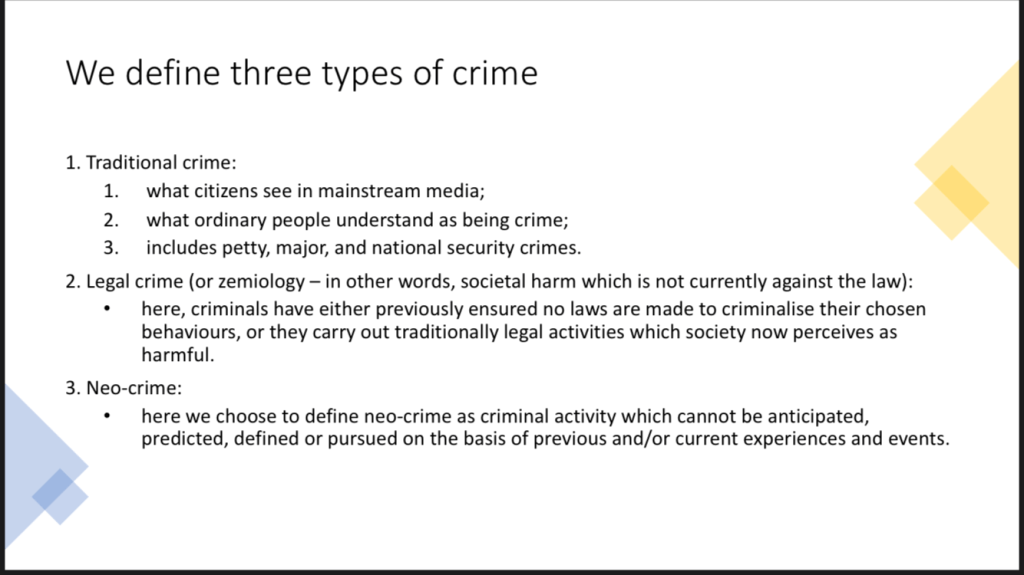
the definition, in my #whirled and your #world, of #neocrime having become this:

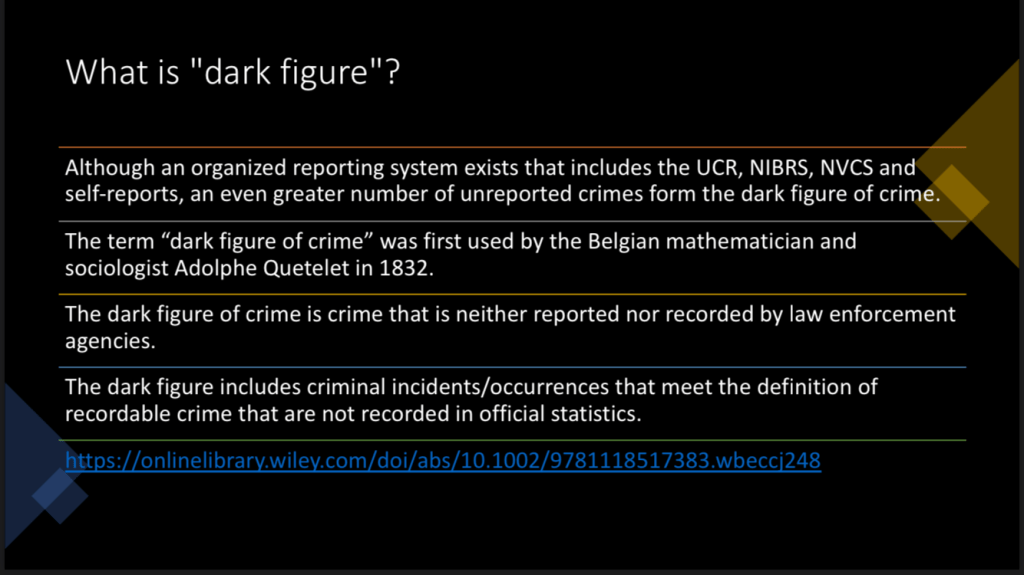
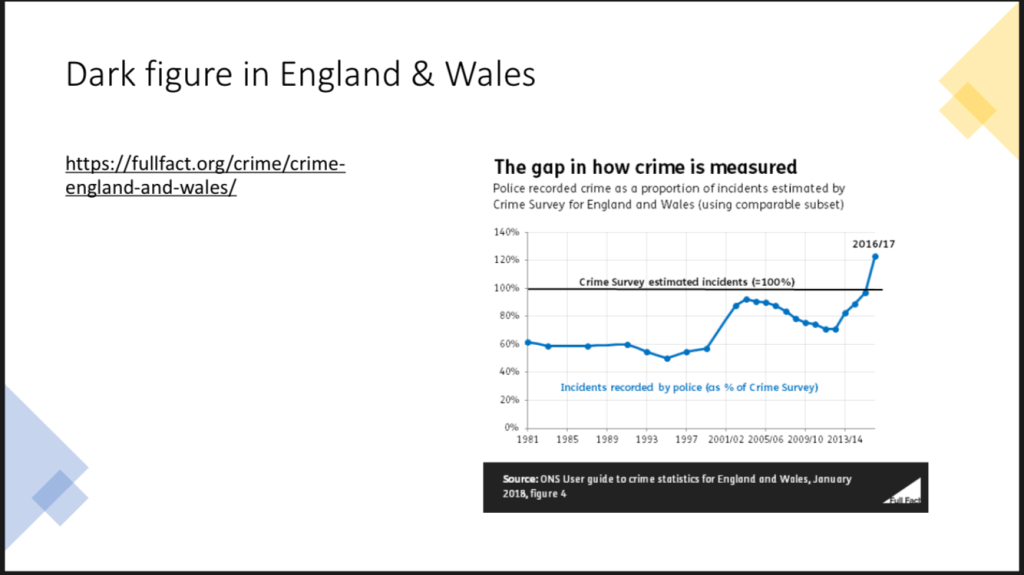
crimehunch.com/neocrime | an updated understanding of the 19th century concept of “dark figure”

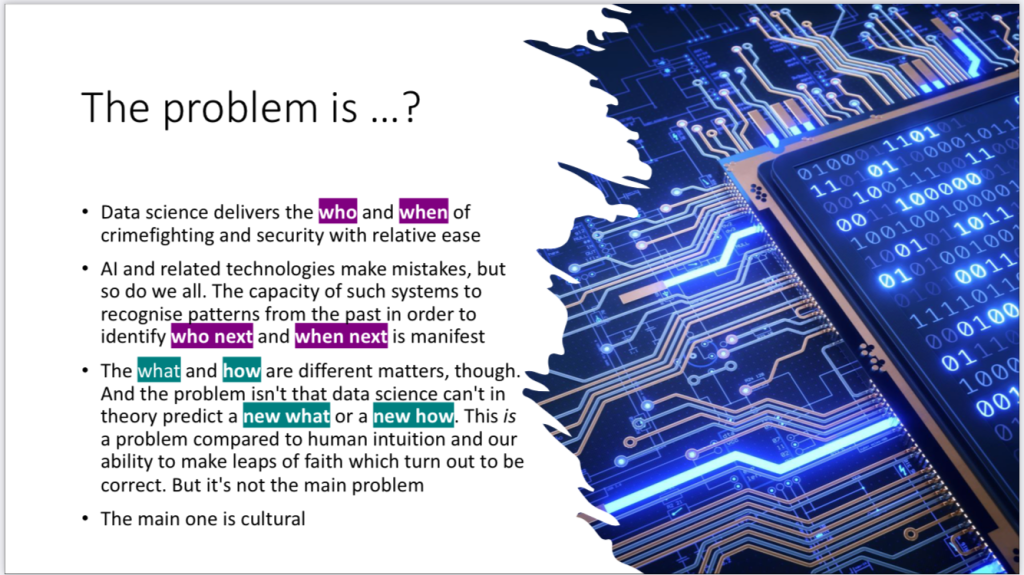
now then: if we accept my argument for argument’s sake, that in almost infinitely malleable digital we only have to intuitively and creatively think up new criminal activity in terms of its “whats” and “hows” (“who” and “when” remaining the preserve always of the machines) in order to be evidencing their existence, today i bring a new one to the table:

“let’s imagine that communities of professional praxis exist in #espionage, too. just like journalists who communicate outwith their employer-spaces with other journalists; just like security people and bus drivers acknowledge the presence of the nominal ‘opposition’ with a tip of the cap or a thumbs-up … just like any profession where specialised skillsets bring humans together with humans who are like them because of their knowledge-sets more than the allegiances they are paid to maintain …

imagine the above, then, in #spycraft in particular; and so imagine over the years that a network out of sight of the employers themselves has grown up exponentially, where — using tools i nowadays sustain firmly have been developed to operate in the areas of #neocrimes and #darkfigure (supposedly on the side of the good gals and guys, too) — agents commonly communicate with each other using #secrecypositive (and NOT #totalsurveillance-compliant as i would prefer) environments and architectures, in order to basically scratch each other’s backs at the expense of broader citizen and state interests.

remember “mil’s theorem”: if i can simply think it up, someone else more powerful and monied than me already did long ago.

but here’s the thing: it’s possible the field operatives might be doing such things but it’s also possible that in 99 percent of cases out of deep ingrained senses of honour and responsibility (and why not? patriotism too …) they’ve chosen over the years not to. even when they could. (some of us still exist, you know.)

so here’s another #neocrime-ism: what if it wasn’t the operatives who worked behind democracy for their own self-enrichment — or maybe even global domination — but, instead, their bosses …?

not one and all. not even all that many. but enough to tip the balance over the years between #ukraine NEVER happening and #russia being given an under-the-counter carta blanca to proceed as it would wish, and always wanted.”

ok. that’s the last bit of “mil’s theorem” theorising for today.

enough, right? and maybe understandably insulting for many at that.

listen up before you get utterly irritated with me. what i’m doing here is using a public space as if it were a #secrecypositive space. i’ve reached a moment in my life where i realise what was done to me in 2003 can’t be done again. since then, i’ve studied #criminaljustice at master’s level and have a whole battery of logical tools and legal principles to defend myself. and so i’m feeling fairly impregnable — and will continue to do so unless someone actually, literally, wipes me off the face of the planet.

but assuming the latter won’t happen … what if #secrecypositive spaces have now been turned against the people who invented them? and not me thinking now? but them, having built decades ago? because when you create a weapon of destruction you ALWAYS consider how its corresponding shield might need to look …

so what if the guys and gals who did this technology all those years ago as i now surmise were good people who defend our security and safety every day? and what if the bad gals and guys are now abusing savagely — to the extent of enabling #ukraine AT LEAST — such architectures and platforms to their own ends?

what if … that?
if you must, make sure you’re legal, you take care of your own, and above all you know your enemy

in #stockhom #sweden #sverige, what was broached in #dublin #ireland in 2016 is now possible here.


and i feel like it is new; not returning to an awful toxic past and having to pay every day for it, as it remains close and clammy to the touch.

no.

not that.

solving the putin problem

i was asked on the train today what the keys are to solving the #putinproblem.

the #putinproblem includes #trump, and #brexit, and #facebook escaping with virtual murder as #cambridgeanalytica became the fall guy for the inevitable outcome of #zuckerberg’s choice of business model: this outcome being the savage and unremitting dismantling of citizen agency in modern western and associated democracies.

it includes everything that means even professionals will think, when they take a life-changing decision on someone in their life-changing nominal charge, they do so with this agency i mention: no one else is furtively intervening. and god forbid that those intervening might be criminals on the scale of #putin’s #russia.

so the keys to solving these #complexproblems longitudinally and long-term are …?

first: accepting how we’ve been part of the problem

first, everyone who wants to join me in this battle in favour of a new democracy and against the #tech-driven #gaslighting that has been designed, developed and implemented over decades must accept they both tolerated and in some senses embraced #neoterrorismontheindividual because they used it themselves to shape their societies. they must take it firmly on the chin, as i do, that we are still part of the problem.


and whilst they/we were better at it than the enemy — #russia, a #badmoney without sovereign frontiers, #bigtech in practically all its manifestations — all was kinda ok. people like myself did get improperly incarcerated by proficient users of symbolic communication such as the #british, and by extension the #irish, but those of us who had to suffer such indignities and injustices were relatively small in number. i suppose.

second: how we’ve enabled the enemy

the problem is when the enemy gets better than you could ever imagine at this #neoterrorismontheindividual i uncover. and an even bigger challenge: when you simply have no inkling that they have got so much better than you, nor indeed for how long … nor when it all started to go belly-up.

crimehunch.com/neocrime


this is what i say has happened already. i was saying it somehow in my #criminaljustice dissertation back in 2017. i realise in hindsight now that both the #british and #irish agreed and were as one: i had to be scoped out of academic circulation. symbolic language is a mark of the #british security state’s capacity to control a society without ever taking ownership. (the #irish — suffering the colonising #english — had to compete against this: and we know the #tech adage about being careful who you compete against because, one fine terrible day, you’ll become just like them.)

and so see how cozying up to these #espionage ways and means enabled deep #russian interests close to #putin to embed themselves in #uk football clubs, financial institutions and other channels where money flows freely and conveniently.

third: symbolism as a cancer to democracy

wherever a country prefers to use #symbolism to rule we have a cancer: a cancer on democracy; on the opportunities for democracy to flourish; on the chances that democracy might sustain and renew itself where needs be.

‘question is: are the upsides of using #symbolic systems worth the downsides? maybe they are: #espionage is a common thread throughout #human #history. so maybe all ok in this sense (despite the occasional collateral damage such as myself back in 2002-2003 and then again in 2004, and in 2017 … and many more times i guess even i haven’t yet sussed).
but it’s NOT ok when the genie whose bottle we uncorked centuries ago becomes owned by the enemy under our noses.

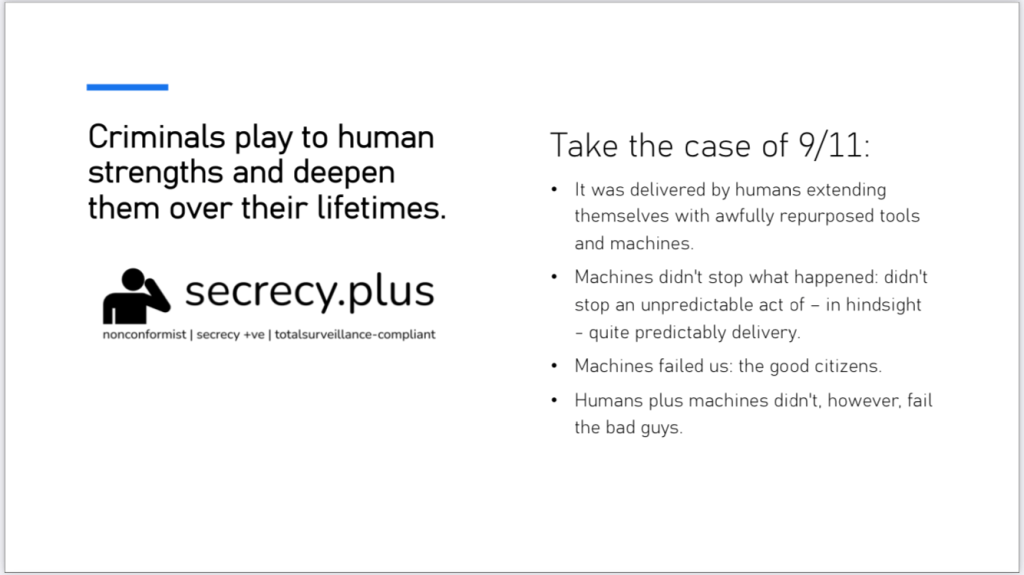
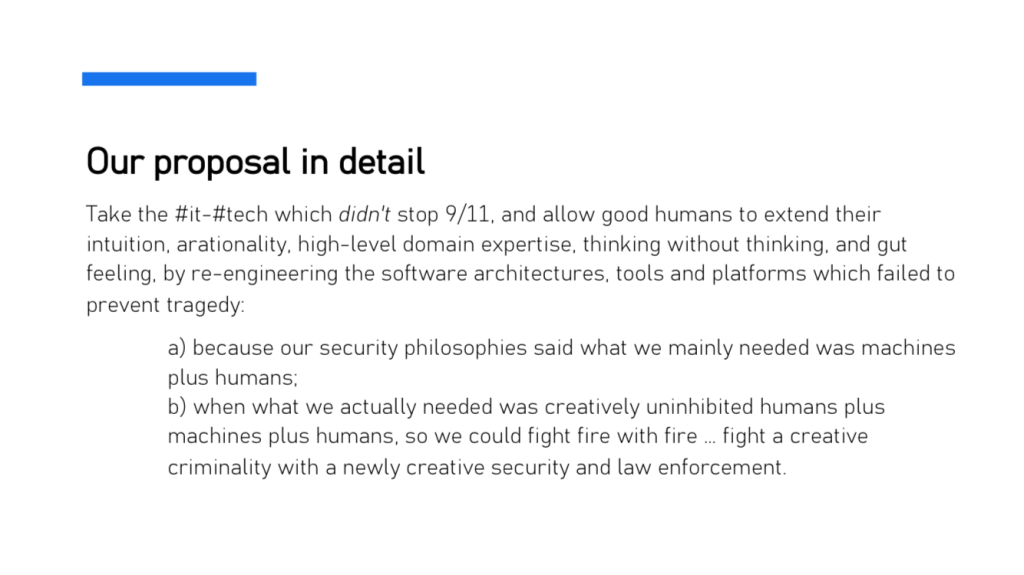
so to answer, finally, the question i was posed on the train this morning: if #zuckerberg and the illegitimate influencing of democratic discourse … if #brexit … if #trump and insurrection … and ultimately if #putin’s three wars in fifteen years culminating in his unforgivable invasion of #ukraine … if all this doesn’t provide the evidence we need in order to say we’ve currently, deeply, awfully lost the war of #espionage; that our enemies far outplay us; and that tolerating and even embracing the tools described in my slide-deck below are something we can continue to do … you really really do, sadly so too, have zero self-awareness.

fourth: solutions and caveats

and i’m not saying don’t use the tricks i define in the slide-deck. i’m saying:

1. if you do sanction their use, do so legally.

2. if you do sanction their use, then do not do so against your own, just because they’re inconvenient voices and thinkers. (that leads to a dismantled democracy from within, and thus supports the enemy even more profoundly than they could hope for.)

3. and last but not least, if you do end up seeing no alternative, never never never show by default or inaction that you underestimate the enemy because #bigtech #corporations tell you that you have all the tools you need. and all the tools the enemy might have.

crimehunch.com/terror


like the magdalena’s memory #911

i tasted cold coffee with soya drink just now
and the memories of a campsite somewhere in austria maybe
high up in the mountains where summer green was all around
and showers stopped automatically
and buttons had to be repeatedly pressed
and the early morning drifted smells of bacon grill and more
and the milk was uht
'cos it had to be it just had ...

so all this came drifting back to me
and all this was sharp as nines
and all this was in my head just how
and right now is when i remembered with fondness
the trials and tribulations and real pain
of being my mother and father's son

because mostly it was pain:
slashing tongues which fast cut me to the quick
nailing me to the spot like hammer hitting out
and lashing me with criticisms of everything i tried
to make emerge from me

and so only this minute
do i begin very slowly
to do the things i always wished to do
and be the man i never was
and grin to love
not grin to bear
and find at last
in human relations
the right to enjoy myself full fair
without recrimination or disapprobation
or disapproval of some religious scriptures:
what hurt me so all those years ago
and still on occasions serves to actually destroy my soul

and so now i don't care
what he might think
because now he's passed and is in his clink
and she meanwhile reveals herself
as authoritarian body
of dictatorial mouse:
scampering around and making all silent
and then patting down the violences of them both

for the passive-aggression he imposed on my child
was fully enabled by her actions of default
and whilst i was younger
and felt myself deeply
the blame of just being there and occupying a space
which was never to be mine
in the end it's true i've had this life of falsehood
and in the end it will be TRUER
you and me
or me and another
or whomsoever i shall finally meet
in joy and daily grandeur
when heads hit pillows
and the mellowness of affection
turns into
for a moment
no longer the passions of terrible and bloody rejection
for my brain is a magdalena
and my memories are beginning to heal

On talking about #intuition

Introduction to this post:

Today I had a brief video-chat with someone positively predisposed to the idea of #intuition. He even saw it as bordering the mystical. He was Indian. Indians love #intuition, it’s true. But #it-#tech Indians have caveats they all seem to share. This is something I have seen before: real deep trust in human #intuition’s capabilities but a real distrust in any chance of ever validating it usefully.

This man is also involved professionally in #it-#tech. When I gave him four examples of how not all #tech had chosen to diminish human beings in the field of non-traditional #datasets, he was still unconvinced.

The four templates we should look to when validating #intuition:

Example 1: the #film-#tech industry from its beginnings over a hundred years ago has decided to almost always amplify and enhance existent human abilities: more voice with a microphone; keener vision with a camera; greater expressiveness with the language of close-up. And in so doing it’s made billions, perhaps trillions, in the paradigmatic century of its total cultural dominance.

Example 2: in my younger years video was not admissible evidence in the #criminaljustice system of my homeland. Now it is. What changed to put in the hands of #lawenforcement and #justice’s stakeholders and subjects this tool to eliminate procedural waste so dramatically? We didn’t change any #justice system: we just introduced new tools to validate video evidence, so that the hidden knife in the real life holdup was proven to have been used via a validated electronic cousin.

Example 3: the detective who just knows that someone is lying in an interrogation may be wrong too, on occasions; but often they all too accurate. Yet it then takes due process months, maybe years, to arrive at the same conclusion. What if we could validate — not prove right but decide definitively (as the #video example above now allows us to much more speedily) whether in truth MAYBE wrong but ALSO maybe right — so that this detective’s #hunch would bring about a conviction (or release) of the most adequate?

Example 4: I then suggested to my interlocutor that we should come up with a new 9/11 before it strikes us again. Here, I suggest we learn how to reverse- or forward-engineer bad human thought, so as to stop it in its tracks, with the most #creativecrimefighting you could conceive of:

crimehunch.com/terror

But not the “when” or “who” of what is already being planned out: in these cases, machine automation operates really competently on the basis of existent #lawenforcement and #nationalsecurity #it-#tech data-gathering processes …

Rather, I mean to say here the “what” and “how” of an awfully #creativecriminality. And I say this because 9/11 was a case of where assiduous machines which humans used conscientiously, and in all good faith, were roundly beaten by horrible humans who used machines as extensions of themselves terrifyingly well: being the case, therefore, of simply not supporting existent habits of #creativecrimefighting (because detectives can be immensely creative already in tussling out narratives that explain otherwise insoluble crimes) with conventional #it-#tech choices and strategies that absolutely do NOT since time immemorial care to foreground and upskill human #intuition.

What happened next and, maybe, why:

When I said to my interlocutor that these four examples surely served as robust precedents and templates for proceeding to validate #intuition and #crimehunch insights just as deeply, as well as to an equally efficient end … well, this was when he veered back to talking again of #intuition’s impenetrable workings. “Yeah,” he was saying, “intuiting is great process … but don’t dare to untangle it.”


And it’s funny how those who work in an industry — that is, #it-#tech — where the richest of its members are incredibly wealthy on the back of their particular and often mostly privately privileged visions of how the future must become … well, that these wealthy individuals then, and similarly equally, find themselves incapable of conceding that such a profoundly value-adding activity for them should have its own wider validation systems for us all. Why? Well. In order that EVERYONE who could care to might acquire a distributed delivery of similar levels of genius-like thinking: what I have in fact called the “predictable delivery of unpredictable thinking”.

platformgenesis.com

How I would, then, most like us to proceed:

I’d like us to create software, wearables, firmware and hardware environments where not only a select few can enjoy being geniuses, but where we all have the opportunity to be upskilled and enhanced into becoming value-adding, natively intuition-based thinkers and creators:

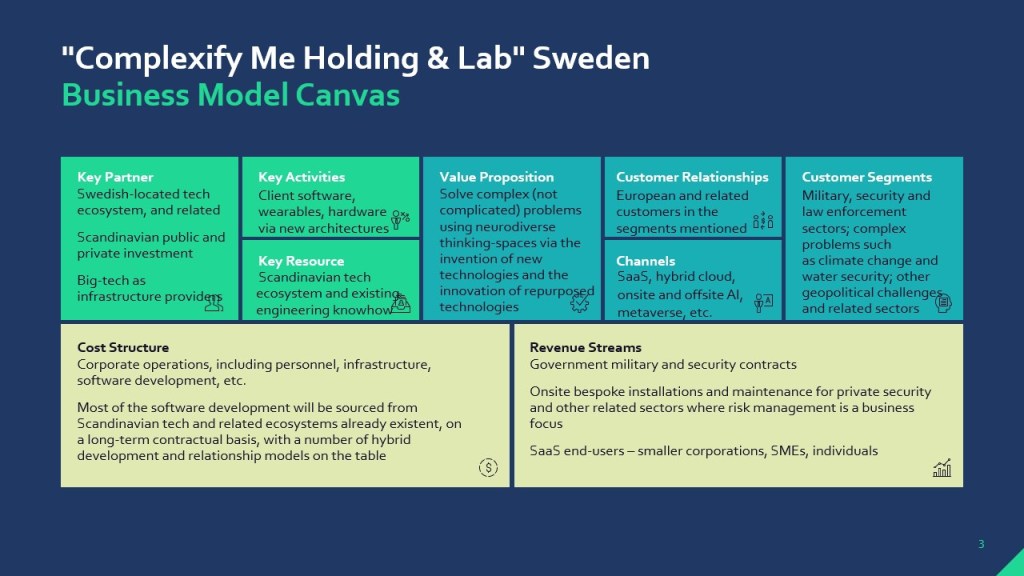
complexifylab.com | sverige2.earth/canvas


One small and hugely practical example:

Attached below, just one small application we might develop, using existent architectures — not the particular ones I think more appropriate for truly deep #intuitionvalidation, where we conflate admin/user in one #datasubject — and with a proposed 100-day roadmap to demonstrate that the beautiful insight I had more than a year ago is actually, honestly, spot-on:

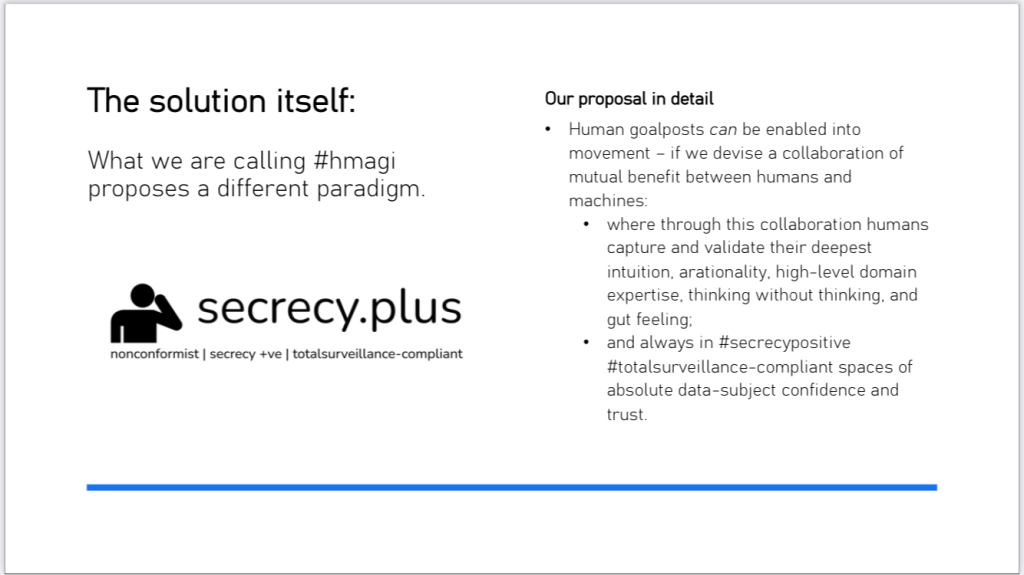
1. That #intuition, #arationality, #highleveldomainexpertise, #thinkingwithoutthinking, and #gutfeeling are potential #datasets as competent as #video suddenly became when we believed finally its validation was a real deliverable.

2. That all the above all-very-human ways of processing special #datasets actually contain zero #emotion and even less of the #emotive when it’s their processes we’re dealing with. And that when they do EXPRESS themselves emotionally it’s out of the utter frustration which the driver and #datasubject of such #intuitive processes suffers from as a consequence of the fact that no one at all, but NO ONE, in #it-#tech cares to consider #intuition and related as #datasets worthy of their software and platform attentions.

So out of frustration I say .. but never the intrinsic nature of such #intuitive patterns of collecting #data and extracting insights which people like that detective I described earlier do believe sincerely in, when driving the most mission-critical operations of #publicsafety of all.

secrecy.plus/fire


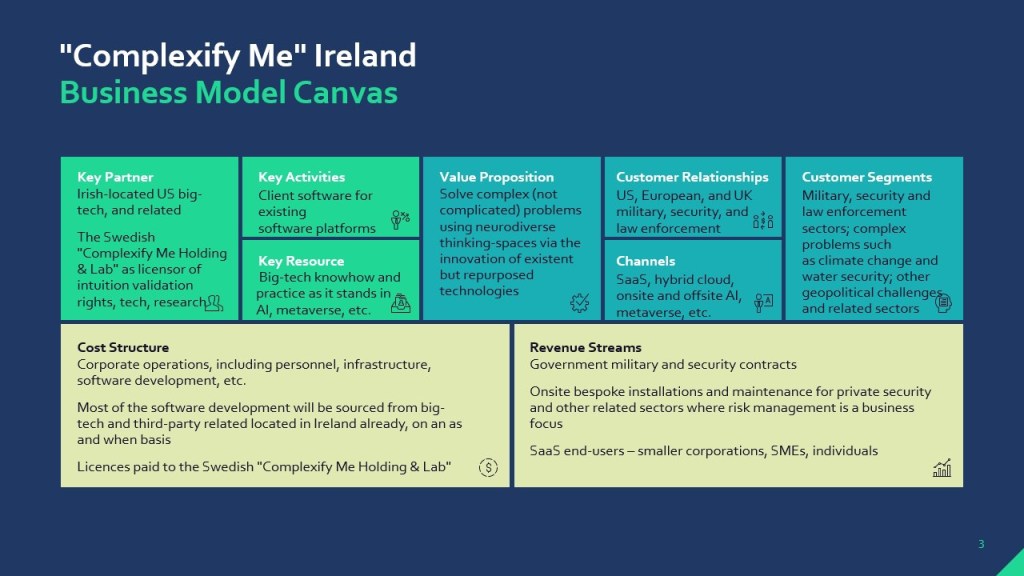
On the “Complexify Me” and “Complexify Me Holding & Lab” proposals

I’ve been progressing my projects recently quite a bit. See the two “business model canvas” drafts below as one example:

One observation I need to add as per the following updated sverige2.earth homepage — Ireland and Liverpool UK may now form a co-location for Workstream A with its associated AI innovation (though not invention) processes:

As you can see, Irish-located big-tech would provide circular-economy hardware lifecycle delivery and management, whilst the cloud that would sit behind an agnostic cloud management services dashboard, also located in Ireland, would itself be located in the Nordic versions of US big-tech cloud services.

Finally, in this first corporate relationship, the responsibility for AI innovation (though not, as already observed, invention) would be that of existent Liverpool AI organisations and institutions.

*

Meantime, I’ve finally been on the serious hunt for a funding flexible enough to allow me to locate in two or three countries without being imperiously tied to one. The latter has always been my objection to the UK-based government funding streams I’ve been offered: zero intention to promote ties with other countries that don’t purely involve selling to them, with no collaboration contemplated at deep levels; no transfers of technology, knowhow, or business models; and nothing, really, that talks to me of open doors, whether intellectual, technological, or even simply business-related. And this was before Brexit.

As a result of all this, I’ve now found a funding-pot foreign to UK government and agency approaches which will, if awarded, allow me to capitalise on my existing UK-based ltd company structure, establishing myself in Ireland simultaneously for what I mentioned above already that I call Workstream A, alongside a filtered Workstream B; and then taking the next step to set up a Swedish AB as Holding and driver of the Intuition and Neurodiverse Thinking Lab I want to be my direct responsibility and end-of-life work, covering off the pure research and invention that will form the basis of Workstream C and Workstream D.

This funding stream I have applied for just yesterday would enable all of the above to be kickstarted into the life it should’ve had already years ago. And I now exclude no one: simply include everyone with starting-conditions I will be firm about, it is true; but that once agreed I have no intention of us changing, ever.

Below, then, as a flavour of the tenor of my thinking, the video I was asked to make for the funding submission described above:

“Complexify Me” and “Complexify Lab” funding submission video

This video now forms part of this submission for funding, the initial decision on which will be taken by the organisation in question in June 2023.

*

Useful further reading:

Enjoy!

🙂

Oh, and have a safe Sunday … yeah?

Why a data-driven world isn’t everything in life … and why it’s important we understand this much much better

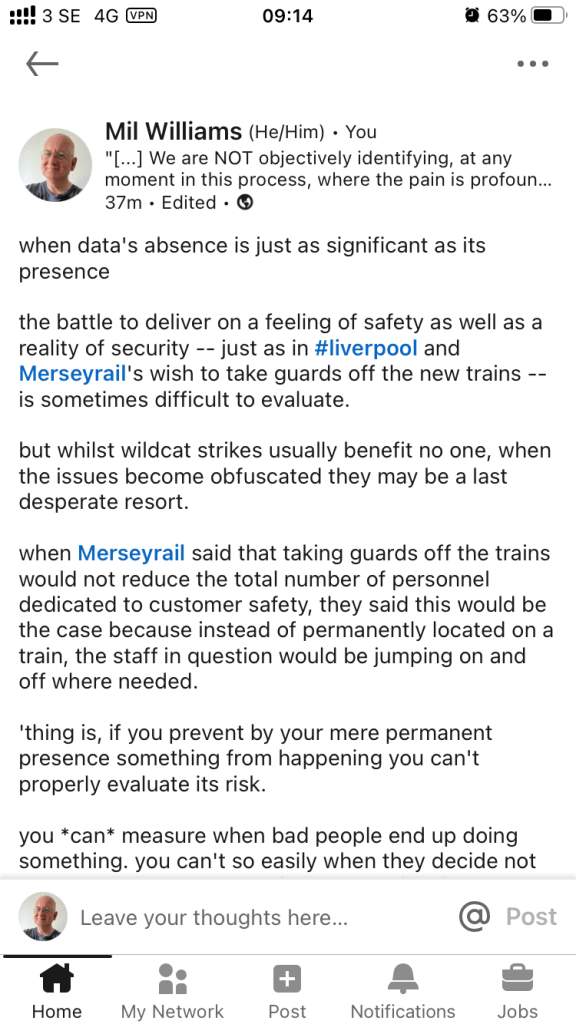
The real nub of the issue is this: in the absence of data, we can only use data that is present. Here, it’s clear when someone commits a crime and we catch them after the event with a certain number of mobile train security personnel on our payroll. That’s measurable: the ratio of events to arrests, for example. What’s not measurable by automated data science and analytics half so easily is when something doesn’t happen because a permanent guard is present to act as deterrent.

Mil Williams, Stockholm Sweden, 21st April 2023

Introduction:

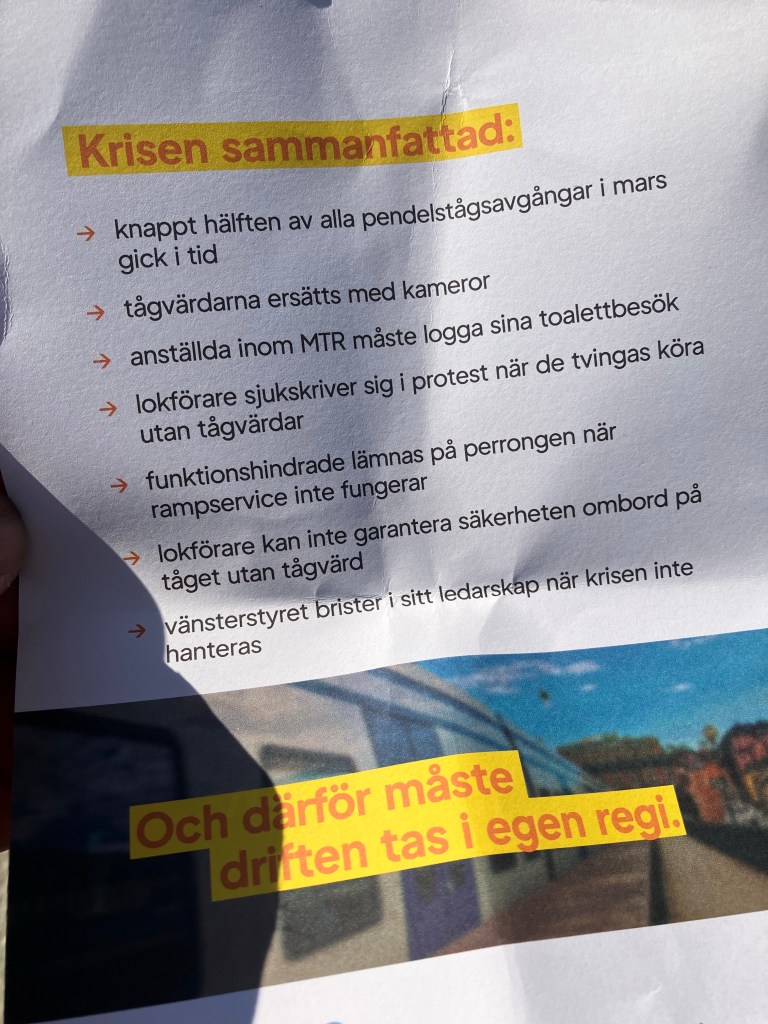
There are strikes on the commuter trains — the otherwise fabulous pendeltågs — here in Sweden: even the occasional wildcat ones. The frustration is patent: more so, because the strikers are right.


This is why:


An aside:

As a brief by the by before I continue, I think the train companies are able to claim the numbers of security and safety staff would remain the same, and yet still want to go ahead with it all, because they’re changing the type of workforce: you still need to go through with rightful and rigorous measures to vet and upskill non-train guards of all sorts it’s true, but with a train guard it’s less easy to change and chop their working locations, conditions and so forth. Or outsource the workforce, even. Change overnight who employs them and how.

No?

So …

How a data-driven world can deceive:

The thing is, here we have a perfect example of when a “data-driven world” actually needs academia more than it needs an automated data analytics and data science as we usually understand them.

The train companies in Liverpool and Sweden both I am sure will have had long-term strategies to re-engineer the structures of their employees and related re in-house and outsourcing options, and whilst taking guards off the trains in the circumstances described wouldn’t deliver immediate economic advantage, as indeed they underlined in Liverpool for sure, long-term if I’m right it definitely would.

The real nub of the issue is this: in the absence of data, we can only use data that is present. Here, it’s clear when someone commits a crime and we catch them after the event with a certain number of mobile train security personnel on our payroll. That’s measurable: the ratio of events to arrests, for example. What’s not measurable by automated data science and analytics half so easily is when something doesn’t happen because a permanent guard is present to act as deterrent.

And this is the challenge here. It really is a challenge around what we do when the evidence base is incomplete: that is, how it leads us to take quite the wrong decisions.

To the solution:

There is a solution too; I alluded to it above. Straightforward academia gives us tools to codify absences, in for example qualitative data such as an interview transcript or video, so that what isn’t said is as significant as what is.

If we could create an equal set of tools for strategic decision-making when deciding if to take train guards off trains or no, perhaps we would avoid the strikes we’re having everywhere: and at the very least, we could validate, in a less conflictive way, the common sense most users of public services have that a “bobby on the beat” engenders an incomparable feeling of safety even where a car in the neighbourhood can be evidenced to deliver on objective data relating to quantitative crime events.

Summarising:

In crime and public safety, what doesn’t happen is as important as what does: and the “why” of both these matters, too.

So.

Let’s do something after the evidence bases for both aspects of the truth: that which has a visible side and the invisible events as well.

And then let’s achieve delivery of these aspirations sooner rather than later.


Further reading:

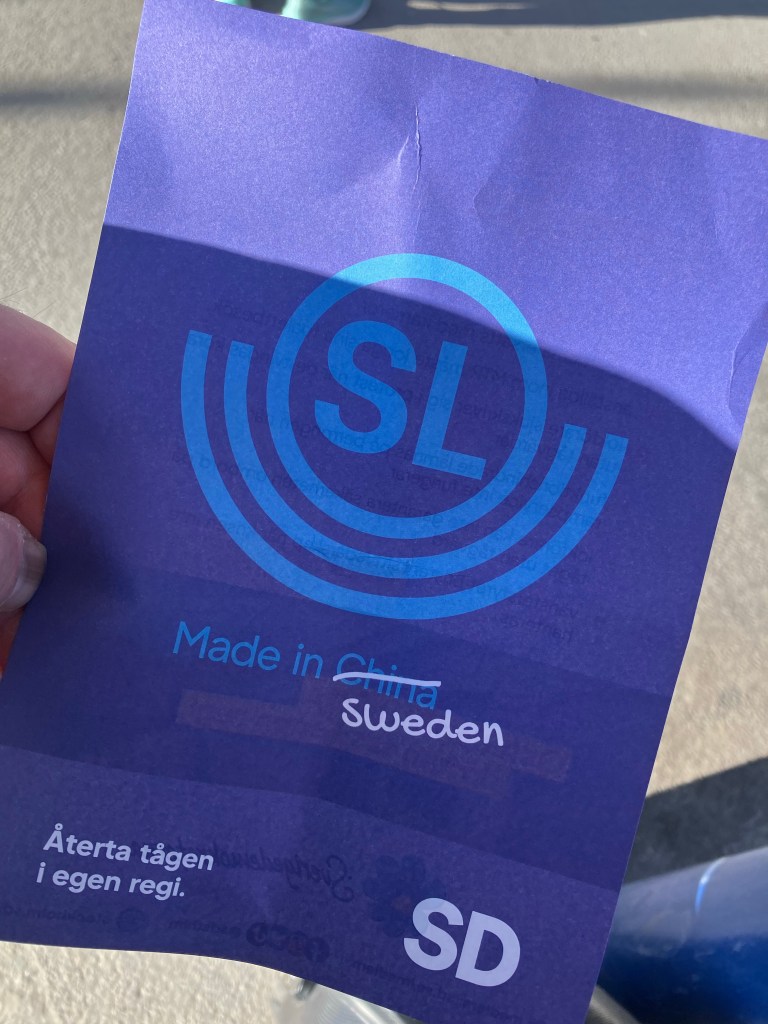
https://en.wikipedia.org/wiki/Sweden_Democrats

Another by the by: the promoters of today’s information are a further example of why we should act on the basis of what is not visible, as well as what is.

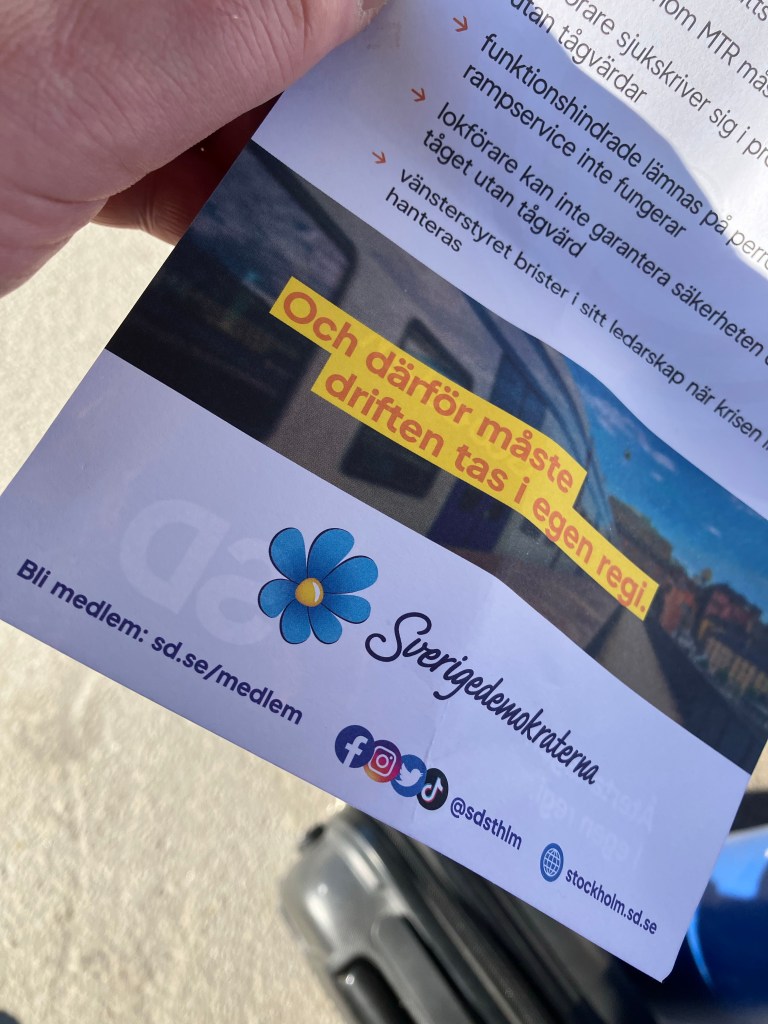
The Sweden Democrats started out as fascist and redolent of nazism of the very worst sort — at least according to the English version of Wikipedia. They themselves claim to have re-engineered their political DNA, which is not impossible but highly unlikely. Even so, medical professionals claim bespoke DNA of the human kind is very close to becoming a reality now; so we could argue that in politics it’s not unthinkable any more.

Let’s just say, however, for the moment unlikely and hard to do.

So. The risk from relying on present datasets instead of datasets relating to both what’s present and absent too? We allow people to hijack in bad faith what needs to be promoted in good faith.

The train personnel are right. Guards on trains deliver safety and security. This Swedish political party — in the current security conditions which China and Russia together have been stealthily laying out for decades together — are also correct to highlight the dangers of such, separate, narratives.

But they are wrong to a) conflate two issues like this; and b) lever the abuse and violence of both nation-states and their outliers in the fields of geopolitics to then promote an immigration narrative of their own re Sweden which delivers total obfuscation of our all too human reality and a zero confusion around their racist truths. Unless you choose to remain confused.

Sometimes it’s right to be firm: China — not all Chinese people — is a toxic regime. Putin’s Russia, too, has absolutely no redeeming qualities. But firm doesn’t mean we have to give fascism a place at the table of a wider collective progress.

Don’t besmirch the truth of the train staff by taking political shortcuts. And if this is what changing your political DNA leads to, change is what clearly you are NOT delivering.

Just occurs to me, too: even more reason to proceed with #intuitionvalidation.

on #poetry and #espionage

poets learn to codify linguistic systems and use precise forms of ambiguity very quickly. this makes them ideal for making or breaking code more widely.

mil williams, stockholm sweden, 19th april 2023

poetry and #espionage have close connections. i won’t link to the article again; but it was either the #nyt or the #newyorker i read a while back which evidenced the fact in a #longread post.

poets learn to codify linguistic systems and use precise forms of ambiguity very quickly. this makes them ideal for making or breaking code more widely.

for all we know, the most ambiguous sorts of leaders — those who show themselves to be dictators, for example — might be frustrated literati. i wouldn’t be suprised.

when i post out-of-the-box thinking on #linkedin these days, i get a message basically instructing me to give a tip or ask a question to get a conversation going. this is all well and good for basic networking and personal branding. but there are deeper things we can use language for. and i want to prove this longitudinally. a #poet interested in code: not software only, though this of course as well.

but really, how to both reverse- and forward-engineer those #crimes being committed — like #thepurloinedletter — under our very noses. the things we call random which aren’t.

this.

i think by pushing the human #brain in the directions i look at first sight to be waywardly doing is intelligent: and capable of delivering outcomes that will defend us from future #ukraines. outcomes in war and peace. outcomes in engineering and politics. outcomes everywhere.

i think where i am going with this #intuition thing is in expanding the envelope of the possible to the once considered impossible. my brain has downsides: it can be unstable. but like the #eurofighter in its origins, instability duly channelled by #tech can deliver fabulous results.

mil williams, stockholm sweden, 19th april 2023

the #poem below was written an hour or so ago. it’s by a foreign user of #castellano who only lived there some sixteen years. but it has some huge merit for me because of what it strives to communicate. and it may have a minimum merit even for #spanish speakers themselves.

i think this is interesting.

my own #brain is, you see, much better now that it was when i was in my twenties.

so.

i think where i am going with this #intuition thing is in expanding the envelope of the possible to the once considered impossible. my brain has downsides: it can be unstable. but like the #eurofighter in its origins, instability duly channelled by #tech can deliver fabulous results.

why not begin to join me in this?

i mean … the #soldier as #poet … and the #poet as #soldier.

my REAL concerns around democracy’s use of digital: an overview of the last week’s work

introduction to my rationales for a new #neurodiverse-#it in order to solve #complexproblems:

my real concerns around being #secrecypositive, or not at all, have lately had nothing to do with governments and what they do with our right to #secrecy. after all, many citizens buy #secrecypositive reading- and sharing-machines of highly controversial content quite legally in all #european countries: we call them books, and they are made of paper. nothing more #secrecypositive than this millennium-old way of sharing and spreading, both in good and bad faith, information of all kinds.

so if it’s legal on paper, with pencil or ink, and has been for centuries, why not repeat in digital — and sooner than later?

you see, the problem isn’t discovering a digital burglary has taken place. because the removal of a digital privacy or object or piece of content like this is possible to achieve by copying exactly. the removal is consequently effected without removing. but its potentially prejudicial removal is a fact all the same. just as if in a life more conventionally real:

www.secrecy.plus/spt-it

my problem is never a government access to my bedroom, and always instead a criminal usage of similar accesses:

no.

i don’t mind — really don’t mind — knowing good governments can see what i do. i wouldn’t mind, for example, the #swedish government watching me in this way, because they are a state which strives to legitimate itself always.

meantime, i have minded the british doing the same to me since they incarcerated me improperly back in 2003, using #mentalhealth legislation to achieve #nationalsecurity objectives: there really is no way the homeland of boris johnson, even now as it currently stands twenty long years later, can be called a legitimate world player of any standing whatsoever.

and certainly not for the rest of #europe. because in order to erect and democratically sustain a hierarchy of surveillance, you have to robustly aspire in an ongoing way to manifesting that same democracy of legitimation.

to challenges, then, which i’d like to answer with the project “complexify.me”:

but even governments and governances as immensely competent as the #swedish ones manifestly show themselves to be can’t respond wholly cogently to the following set of quandaries i and many others find ourselves both intellectually and emotionally suffering from right now:

  • yes, the governments of good nation-states like #sweden must act deeply to preserve the delicate balance of their societies which evidence this goodness: and more intelligently as a result of their delicacy.
  • for they, more than say the british (and not just now but, in hindsight, for much longer than we pretended was ever the case), are entirely vulnerable — out of choice … and rightly so! — to such ecosystems of goodwill being upturned by outsiders and insiders who prefer to take advantage of these profoundly democratic freedoms for their own criminal gain. for in the freedoms of such constituted trusts lie the essences of their wisdoms.
  • the quid pro quo, or the caveat if you like, is this: we must as essentially democratic peoples accept that sometimes in order to protect our treasured states there will exist a need to do less democratic acts. but for a limited period of time clear to all, and even then to proportionate measure.
  • because being this kind of democracy doesn’t mean you cannot maintain yourself with insight and firmness. you don’t have to limit yourself to rolling over and thinking of the northern lights because you are good and mustn’t defend yourself with decision on occasions. and so to deliver on this, you do need to have the ongoing capacity to gather any information and datasets that preserve these laudable states of fragile coexistence, without at the same time puncturing them.

summarising my thoughts on these matters a little:

understand me: i’m not saying don’t watch your citizens. i’m saying as citizens we have to watch each other, all of us to all of us: but as KEEPERS of each other’s human souls, so that necessary violent actions of the state are always, always, kept to a bare minimum.

finally, digital burglary — as described above — inconveniently can happen without us ever being aware of it: and in this “us”, i mean the state, its best professionals and its most intelligent citizens … all of us.

my issue, therefore, with deep surveillance is that if my government does it, even where immensely cleverly, in it will exist people with two dangerously connected roles:

a) rights of legal and proper access to state surveillance tools, datasets and infrastructures; and

b) illegitimate obligations, for whatever reasons, as humans possessed of covert and completely illegal relationships with an ever more embedded, organised, and creative criminality.

conclusions to the above:

if my state says it needs to surveill me to the extent that it can even see and hear me whilst i have sex, in order that it may protect me in more relevant matters, it will already exist as a capability of the aforementioned criminality years before. and so, as mil’s theorem suggests:

“in an almost infinitely malleable digital environment and world, if i — with my limited intellect and financial resources — can imagine a new crime, someone else with far more money and brains will already be doing it. i don’t need to prove this #neocrime exists to know it does.”

mil williams, stockholm sweden, 17th april 2023
crimehunch.com/neocrime
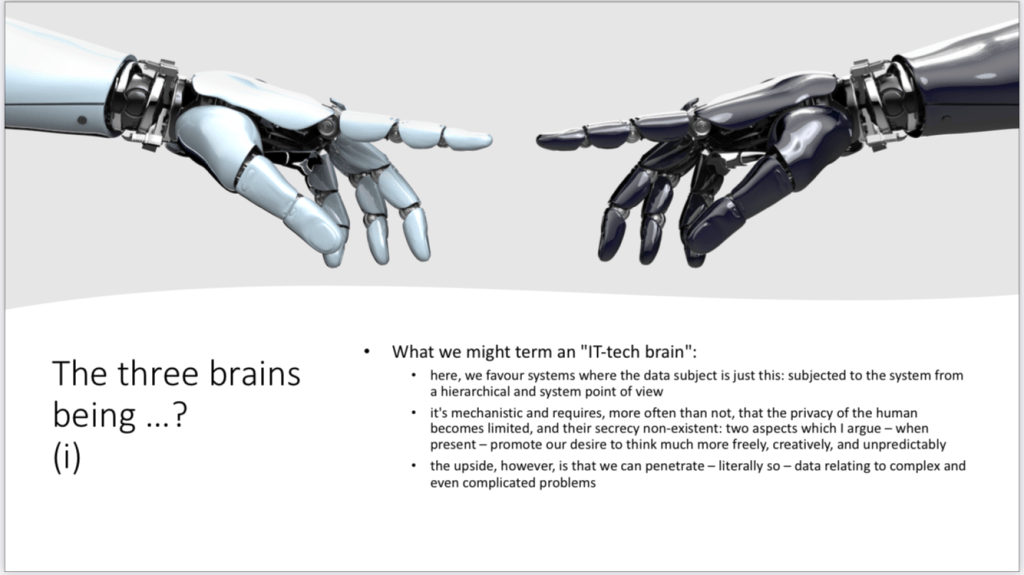
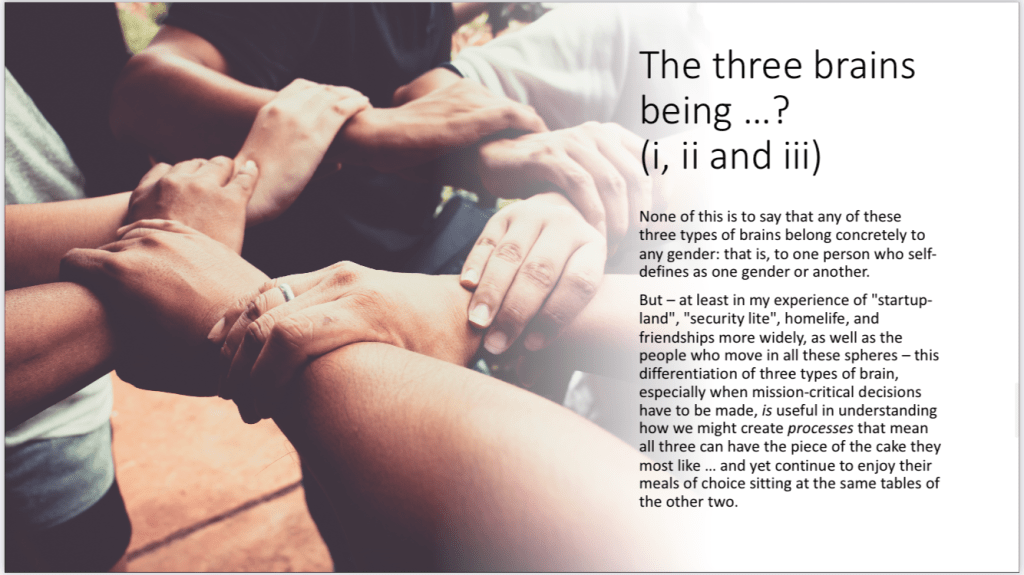
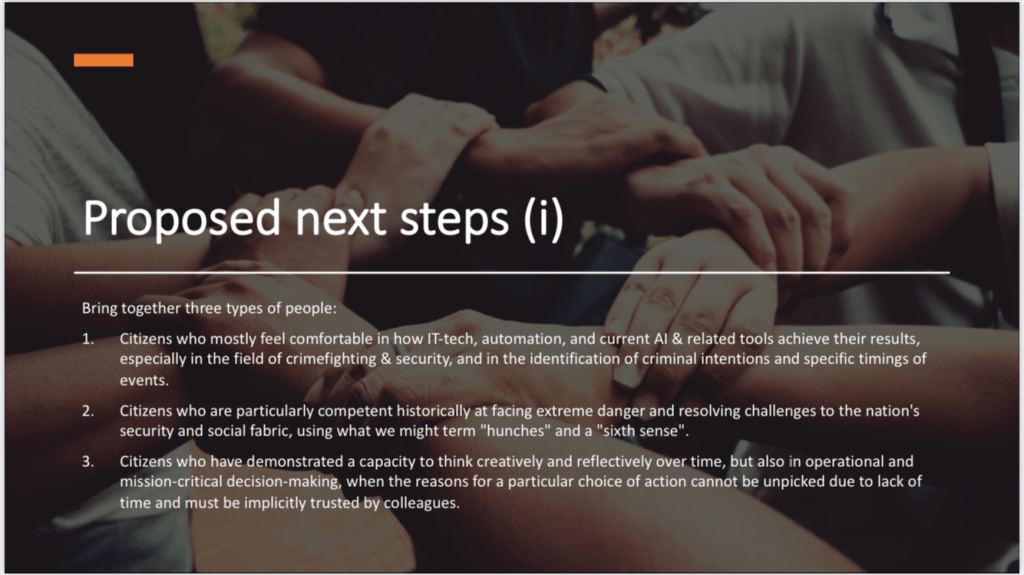
  • the consequences being …? we can’t fight this kind of crime only with good #neurotypical people who are naturally comfortable with such #neurotypical-#it platforms and tools.
  • we must include equally good people with #neurodiverse abilities and brand new kinds of #neurodiverse-#it, so they can then start to construct and tell the stories that describe the #darkfigure increasingly being committed out there in some of the ways i now describe.
  • stories which the existent #neurotypical professionals — properly and usefully so, too — can then begin to chase down and stop in whatever sanctioned ways the states of good faith in our #europeanunion judge to be necessary, at each historical moment in our collective future-presents.

complexify.me | www.sverige2.earth/complexify

criminals mind …

i said the other day i probably wasn’t suited to the fields of #lawenforcement and #security: i’m a free-thinker, a nonconformist in some serious senses, and almost certainly neurodiverse in others. people who work in the aforementioned fields need to be attached to rules, regulations, procedures and tasks. that makes it hard sometimes for them to appreciate the kind of person i often can be.

generally, not them. which makes me no better than them at all. nor them anything but different from me.

but that doesn’t mean we mightn’t be able to connect the two ways of being to better catch a creative criminality:


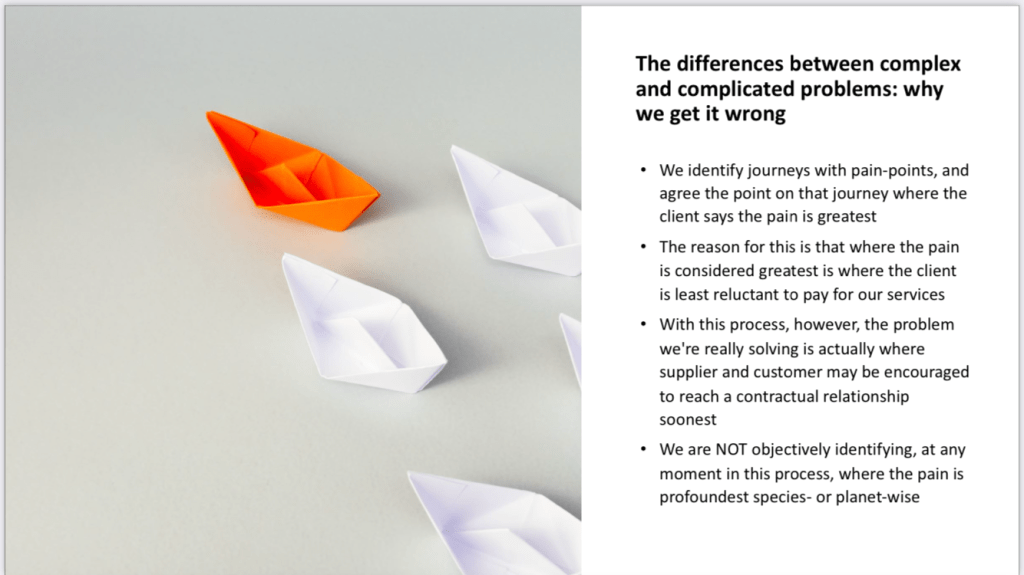
it’s my assertion and firm belief that we’re missing out on neurodiverse ways of seeing for understanding better the world of #complexproblems around us. and this is, partly, by using technologies which, perhaps unconsciously, have become firmly neurotypical — but are no less neurotypical for that. technologies which, as a result, reinforce the ways of seeing and doing that most of the world’s professionals need to share, rather than encourage them to have a broader take on that world.

i think we can do much better: i think we can bring the neurodiverse and neurotypical together: not just from the point of view of company inclusion policies and so forth; much more by engineering different #it-#tech architectures.

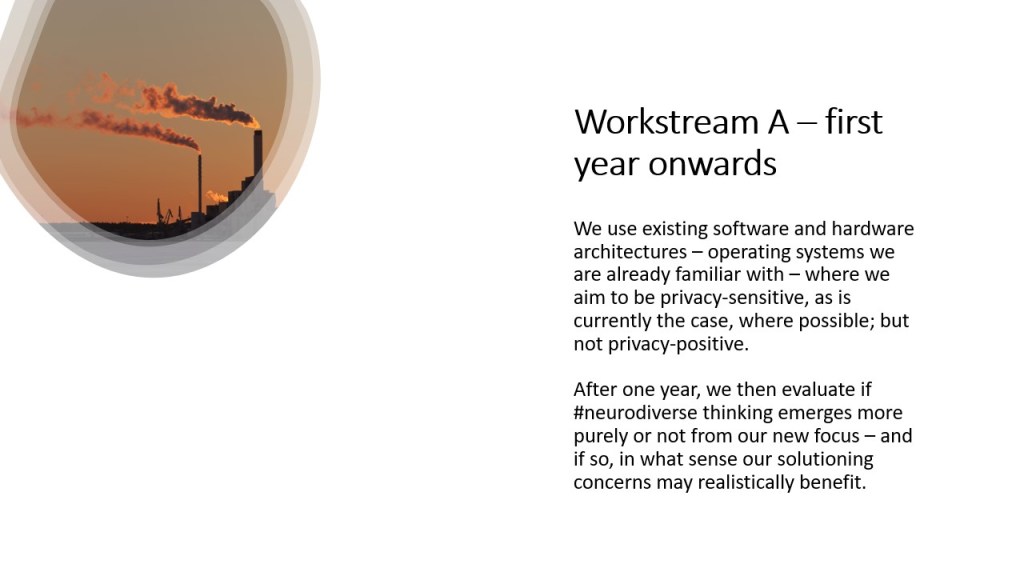
exactly as what follows, in fact — here, in a separate field, a proposed roadmap for dealing with the #complexproblems of climate change:


so to finish this post, something that happened to me today just to show i might — as a different kind of thinker from those who usually work in such fields — be able to usefully contribute, in some capacity of due utility even as i remain such a thinker, to the reality that has become deeply creative criminality: what has been called #darkfigure since the 19th century; and which, for a couple of years now, i’ve preferred to call #neocrime.

the anecdote in question:

here’s an example of my intuition in action. and i might be totally wrong. what i want to do is not prove i am right but absolutely clearly be able to share, without anyone being able to disagree, that i am wrong …

“that gangster-looking guy wanted three things at least potentially, when he asked me to use my card in exchange for his cash, for a pizza order he said he wanted to make:

1. get my card number from his mate at the pizza place.

2. give me counterfeit cash so i’d get into trouble when i tried to use it.

3. see if he could identify the name of my iphone with an excuse to approach me (i was tethering to my laptop at the time) in order for him and his mates to be able to sniff when i was using it in the future.

if i am right about him being a gangster, he had already inhibited me (tried to) by standing near the wall and not moving an inch as i tried to get by behind him, when he was looking at his phone in front of the lift on the landing on floor 1 yesterday.”

as i say, i might be wrong totally about him. he might be a humanitarian of the very best.

but what if we could create systems which didn’t prove we were right … but validated whether or not we were wrong! that is, that i was wrong.

and just to frame it better:

• he was at the hotel i am staying at

• i was working for hours at my laptop in a darkened corner: so he had every reason — seeing me wrapt up so intently in my work — not to approach me

• the receptionist (according to the guy) had already refused to take his cash

• no one uses cash in stockholm

and so for all these reasons, i actually think this might have been an example of #darkfigure waiting to happen.”

crimehunch.com/neocrime

of course i could be exhibiting a dreadful prejudice. but this, precisely this, is why i want us, together, to develop systems where we can enter into our deepest thoughts and make it possible for us not prove what we think true — but validate (an utterly different matter altogether) whether true or no.

just this.

as a tool of state, this is not life (says the “he” that is “me” in #sweden … where life BECOMES a tool of state)

but never again shall i salivate the evil of the unnecessarily violent. as a last resort … this is how life sometimes must conduct itself. as a tool of habitual state … this is not.

mil williams, johan & nyström coffee shop, stockholm sweden, 9th april 2023

it’s not all plain selling. but then that’s not what life’s about.

but if i manage to stay here in the end, this — the end — it won’t be. it will be the best beginning i’ve ever managed. i spent seven years between the uk and ireland, trying to engineer a relationship between ireland and the uk. i failed.

now i say it out loud: not with joy but acceptance. acceptance that i failed in everything institutionally and personally related.

but not ideas-wise. not in respect of my increasing capacity to uncover them: like a pig and his beloved truffles. for me, ideas are truffles, waiting to be found; and they say that pigs bear many good resemblances to humans. physiologically, for sure. maybe in other respects i am still unaware of.

all i can say is if a pig is good enough for george clooney, why not associate myself with the same?

🙂

so why here — and now?

because in a very brief period of time i see a society like none i have experienced in my life. there are cruel people here: but the society as a wider whole is striving not to legislate or legitimate state cruelty. and this i am defo not accustomed to back in my homeland.

so if i have to contribute to a tech which scales up basic government and regional administrative instincts, i want it to be in a place where more manually these instincts are sound. meantime, the triumvirate of evil exists in the uk with the conservative attachment to russian wealth and trump’s idiocies all in one. and all by now as an all too well-established nouveau establishment of the horrifyingly, casually cruel.

one thing many don’t realise, and i still don’t fully understand: a military society can be a liberating one too. it all depends to what purpose you militarise — and with what genders you compose your military out of.

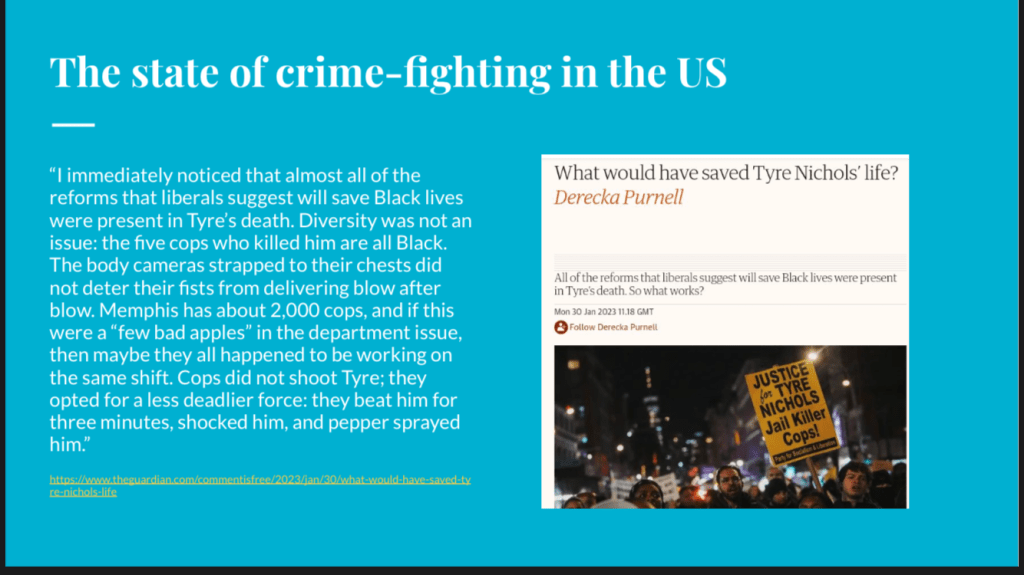
during my whole time in the uk i was oppressed by outliers of a military which, tbh, needed very few outliers anyway to operate and impose such oppression with the necessary precision. look at the state of the london metropolitan police right now just to appreciate how ugly the uk has allowed itself to become. and that’s the first line: just the police.

this is why here, and why now. and if it’s not possible now and here, it will be somewhere else similar, and sometime then.

but never again shall i salivate the evil of the unnecessarily violent. as a last resort … this is how life sometimes must conduct itself. as a tool of habitual state … this is not.