
i just saw an example of the power of culture over rules & regs when looking to achieve a particular outcome.
a human being removed a box cover and fluffed up some bags of crisps not because they had a rule saying when, but simply because their culture said now.

why conflict in the first place, for goodness sake?
an #ai designed to foreground the functions of machine-approaches to #complexproblem solutioning uses rules & regs always. it will do what you want it do as long as you have told it once. and told it in accordance with the needs of your domain. that is, all its needs.
a #humanbeing made bigger by #tech meantime — as per #film- and #movie-#tech has always chosen to do (the mic making the human voice bigger, the camera increasing the vision of the human eye, and even the stage extending great actors’ capabilities to express themselves powerfully via mise-en-scene) — will always operate better with the unexpected.
on the very human ability to deal with the unexpected
the unexpected doesn’t have to be: but it is. whether because it really was (9/11) or because you’re a newbie (me all the time in almost everything i do), our grand virtues as #humans supported by #machines (in this order), designed primarily to extend our existent virtues instead of deepen existent pockets (both are good, mind — when they coincide; but it’s my thinking the first is a problem to be solved and the second should never be permitted to become a solution in search of the former …), is that the unexpected is what engages us most deeply in life. and therefore what makes us reach our heights, every time.
in truth, it’s the kind of #machines we are if we were: except we’re not. we’re flesh and blood: we forget, only to remember a fabulous idea six months later; we frustrate, only to go on a drinking binge and then after hangover find marvellous beauty lodged amazingly in our heads; we get angry with another human for rejecting our beautifully formed solutions worked and reworked so often … and then after a sulk maybe of days we recapitulate and find an even better synthesis of both.
as #humans, the unexpected is what we are. only when we use #techtools designed to make their design cheaper to build and more profitable to hype, we act more like these #machines ourselves and may appear for a while to lose our capacity to surprise. to be different from machines, that is.
but it’s not true. believe me. an example. i’ve worked deeply in language learning for two decades in a previous life and know exactly what happens when the job of teacher becomes that of enabler; the task is no longer one of acquiring more data; and then, at last, it’s producing what we need as humans with what we’ve already got as thinkers that becomes the real challenge and delight.
and we don’t steal someone’s intellectual property to build an empire, either. it’s just not part of the gameplan.
no.
really.
we don’t.
and how many different types of burgers did #siliconvalley’s stand actually sell in the first place?
meanwhile, #siliconvalley has lately (“last three decades” lately, at that) delivered only one piece of money-making #tech.
when the #newspaperindustry was an industry, we called this “tech” #classifiedadvertising. this kind of #advertising had great virtue, too: to make people want to go to it and buy the products advertised and therefore pay the bills of what was actually very often a #publicservice, journalists wrote the greatest analysis and deconstruction of democratic and anti-democratic players; descriptions of things that were going just dandy and then again things that were going just frankly belly-up; and so finally we’d even get the most beautiful features and reportage that would manifest the world around us with #photography and #words that became #art in incredibly undeniable consonance.
and all of the above was rigorously original content.
#siliconvalley? hmm …
on the robbery of #ip
my question has to be this: why do we now go to the #classifiedadvertising we find on #searchengines and #socialnetworks and other sorts of apparent innovations?
well …
tbh, basically to read someone else’s unpaid-for content: what’s more, when a newspaper’s, quoted in full by a reader who in theory isn’t paying anyone for the honour, either.
this is not right. it happened with #search: that is, the robbery of #ip and content with clear #copyright. we shouldn’t allow it now to repeat with tools such as #chatgpt-x.
but can we square this circle to the satisfaction of all players?
why i’m of a mind now to propose a radically different approach to how #ai of any kind — never mind just #chatgpt-x & co — are trained and launched onto markets.
no. we don’t discard any #tech invented out of hand. ‘not suggesting this. but in #europe at least, in #sweden maybe to start with, the content used for the training of any #ai such as these must be duly paid for.
always. every use.
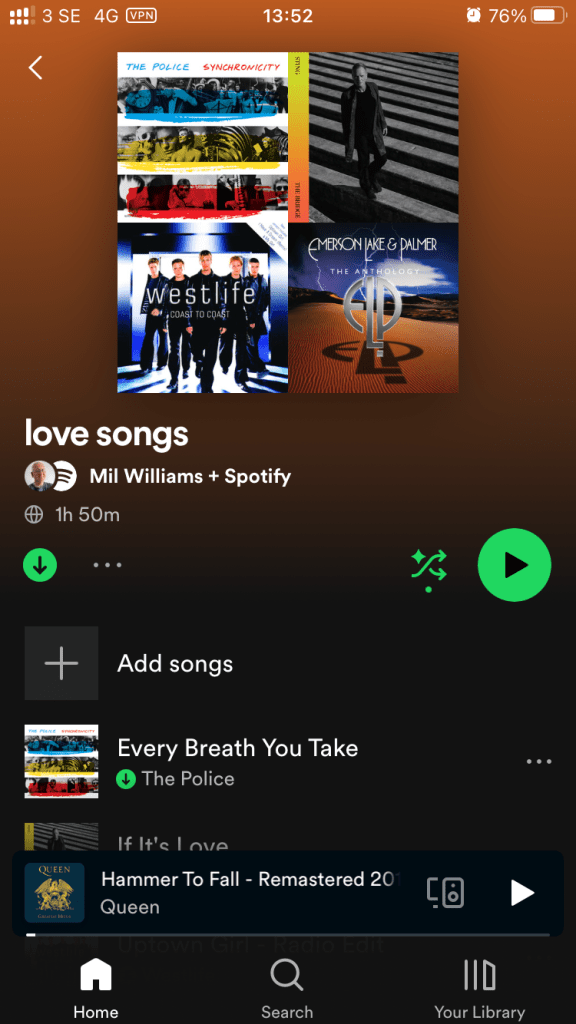
how? we could have a spotify-type platform which #ai developers could subscribe to, allowing for sanctioned access to all kinds of content, not just music of course.
and then the #ai tools would have certificates showing “denominación de origen” for all the #ip used to train up the #ai in question. and in their absence, the product could not be released in any legal form to the market.
this is practical; the streaming tools already exist and would allow for agile development to continue; and we would NOT repeat the daylight robbery conducted all those years ago under the banners of #search #classifiedadvertising.
wdyt?
there’s a business model in this too; not dissimilar at all to spotify as it stands.
no?
coffee, anyone?
 mil's page