Two directions

If total surveillance and omnisciently intrusive CCTV serve only to inhibit us and not Putin et al, the new swords we must begin to develop must have radically new philosophies, much more than just beefier technologies.

On why we need radically new secrecy-positive architectures | Mil Williams, 24th August 2023, Manchester UK

I think I’m being offered two directions to move forwards definitively on my projects. And I think in my mind it’s clarifying my view on what to do next, where, and how.

I think the two directions can both happen, too.

But for many reasons, only one can happen here in the UK, in Ireland and most other places we consider.

If my thinking isn’t mistaken, the security version must only happen in Sweden and countries which share the philosophy that is embedded firmly in a wider Scandinavian way of foregrounding the citizen and their rights when constructing and rebuilding democracies.

So.

What I think is being suggested:

IVP1

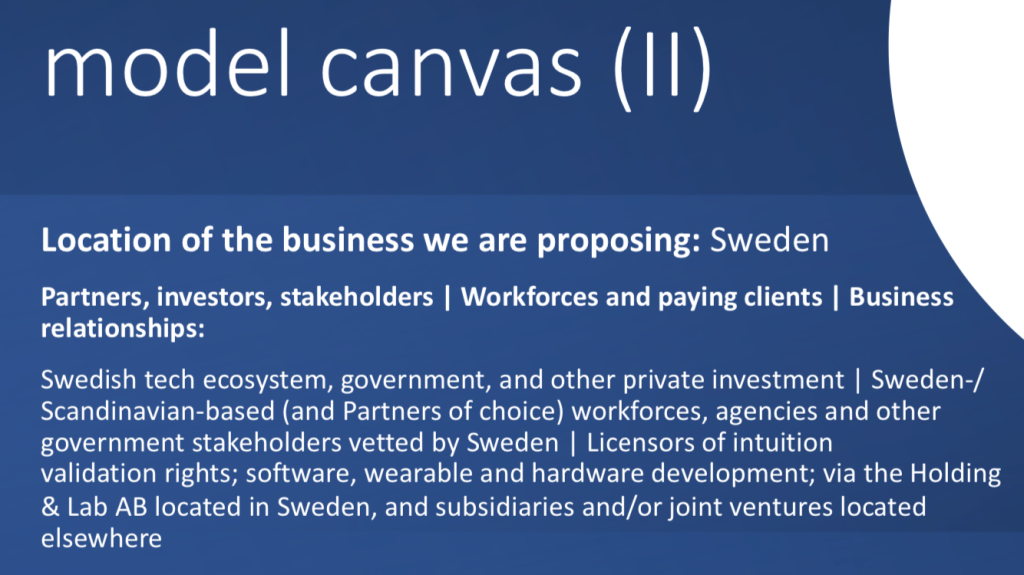
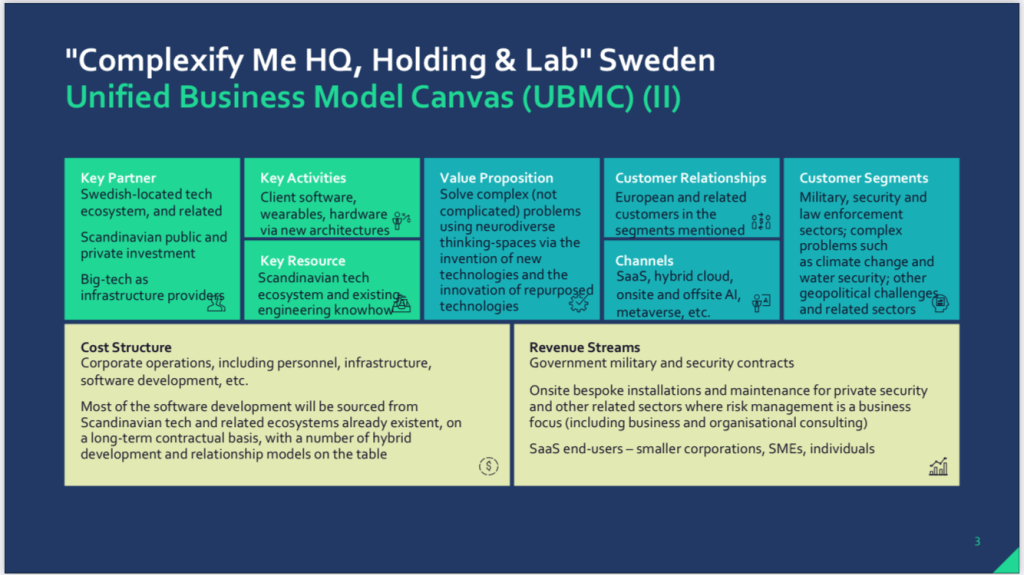
1. My #neurodiverse #complexproblem-solutioning proposals may sit in many and perhaps all cultures eventually. If you like, the B2C product and service, where the “C” of B2C equals “Culture”, and which the Swedish intuition corporation I am proposing we build as per The Guardian newspaper group’s Scott Trust would deliver, mostly, indirectly.

Here, in the wider field of using arts-based thinking for solving real-world problems, therefore, practically anything and anyone gets a hearing:

complexify.me

complexifylab.com


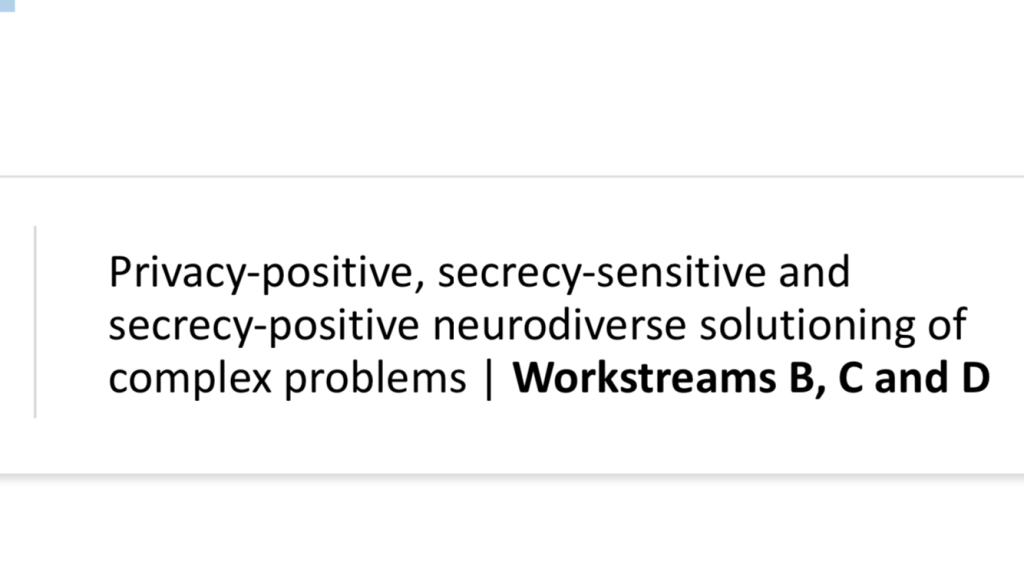
Meantime, the Swedish corporation I would like us to create would not, as alluded to, be involved directly in even a tenth of all the activities that might arise through this Intuition Validation Project 1 (IVP1), alongside its set of related workstreams.

www.sverige2.earth/unified


We would only need to license the rights for using the core technologies and philosophies I’ve been thought-leading since 2016. That’s as far as we would go. No need, for example, to shape how any of this was to be implemented. No longer would there exist roadblocks on any side to arise.

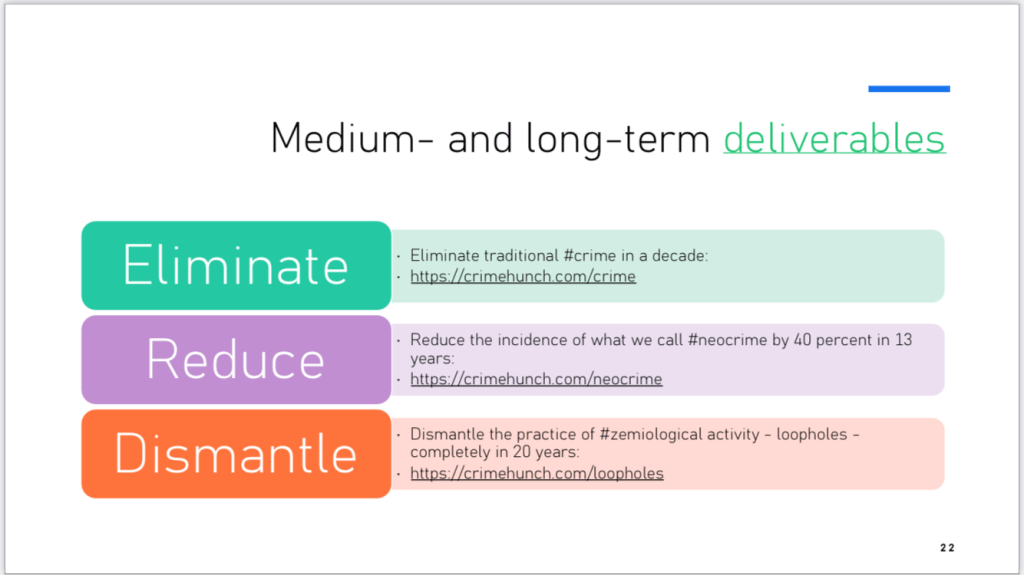
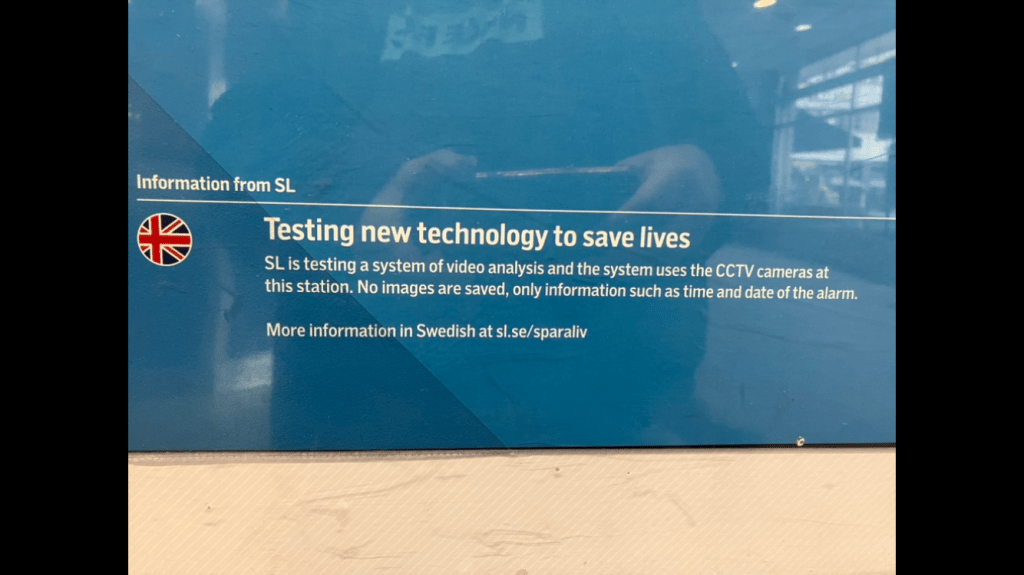
It would, therefore, even be possible to make these platforms and architectures available from the starting-blocks for countries with whose security policies I, and a wider Swedish society quite separately and much before me, fundamentally find ourselves disagreeing on: for example, oppressive manifestations of total surveillance & CCTV, and the complete removal of public access to encryption and so forth, even in banking applications, being the approach the UK has been advocating and wishing to put into practice for decades.

Equally, the Swedish and similar, where total surveillance is employed, use it to enable the citizenry and make them feel safer and more empowered: never to make them sense, as we do get to suspect in the UK, that they are permanently being inspected and tracked in order to bulldoze voters and similar into good behaviours out of tools, primarily, aimed at inducing fear.

And that’s a philosophical difference of import: in the UK, we trust that people will be bad: that is, secular Original Sin. In other countries, we trust that enabling the help of the citizenry is paramount; we trust that what we might call “good trust” needs to be promoted strategically. Here, then, it’s not enough to be secure at all; we need to be safe, too. We shouldn’t have to be looking over our shoulders all the time. And our policies should reflect this.


One Swedish example to underline: street CCTV on private and state buildings must look down only on the entrance itself to the building being surveilled. No dragnet across all passers-by.

So. If we think like this — IVP1 I mean — there’s no need to negotiate these matters any more, before we may begin, because IVP1 will be in the hands of creators of different kinds, even where what they create may deliver tangible and utilitarian real-world solutions.

And then again, just the one condition too: periodic licence fees, but ourselves, as an intuition-validation corporation, being utterly hands-off.

IVP2

2. Security — the project we might now call IVP2 — is a quite different matter, however.

My Criminal Justice Master dissertation (linked to here), from 2017, on the subject of secular Original Sin*, laid it out really clearly: in an ever more complex world there will be no edge obtained by law enforcement and security if we ensure citizens feel as pursued as the real criminals. The only way we can be collectively more than the bad guys and gals is if we get citizens deeply onside: enabling them to act out their proactive roles as joint defenders of the law. It’s not enough that they just nod their acquiescence to what we claim to be doing when faced by the horrors of modern criminality.

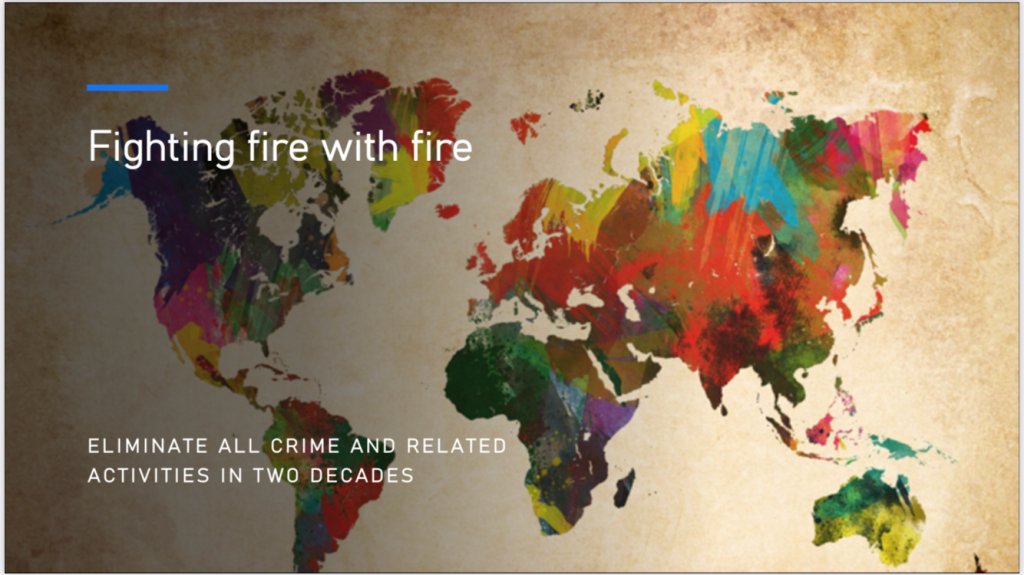
Until countries like the UK accept that our total surveillance-friendly software architectures (admins who see all; users who see nothing but even so are aware, all too aware, how they are being permanently surveilled) have fatally inhibited — impaled, even — our own capacity to think creatively in security, crimefighting and law-enforcement contexts, we cannot develop my ideas in respect of security where such acceptance is not forthcoming.

www.secrecy.plus/fire


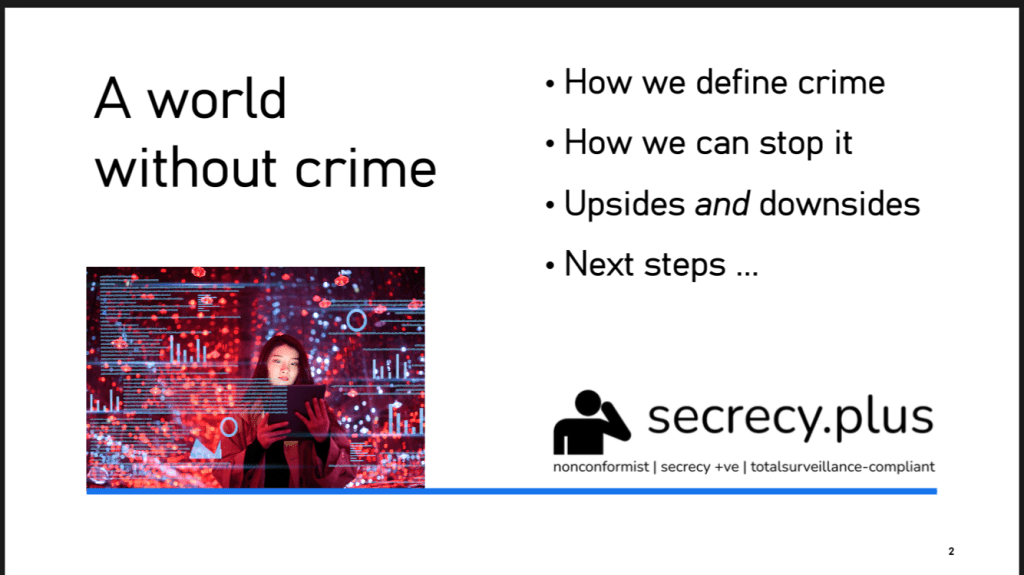
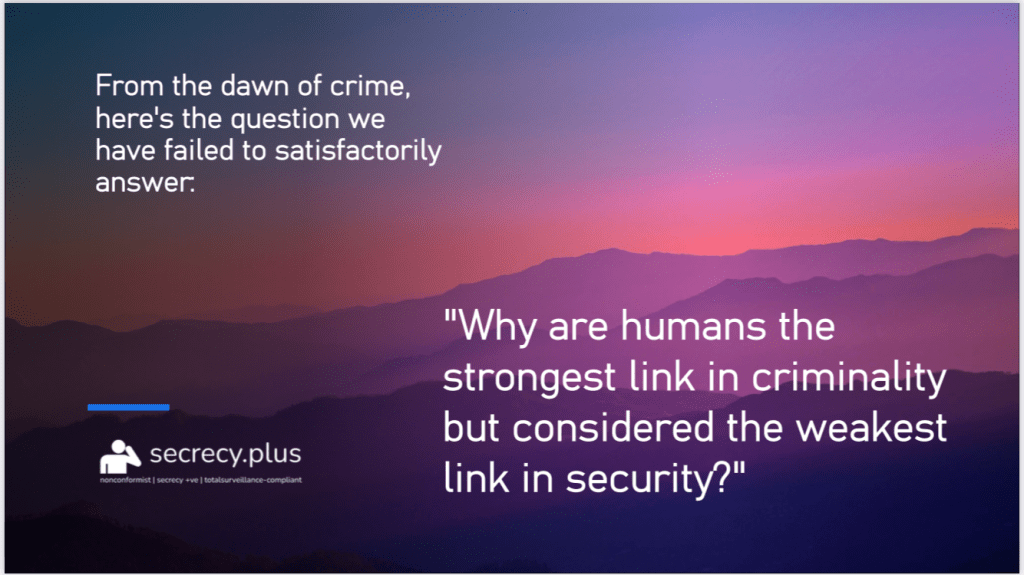
Because criminals like the Putins of this world do continue to enjoy their own deepest secrecy-positive spaces whilst they longitudinally plan our destruction, despite our own ongoing total surveillance strategies:

www.secrecy.plus/why

You get now, I hope, then, where my objections really lie; where they are firmly seated? If total surveillance and omnisciently intrusive CCTV serve only to inhibit us and not Putin et al, the new swords we must begin to develop must have radically new philosophies, much more than just beefier technologies.

Security for me, therefore, sits where the right philosophies existed prior to my own arrival. And my travails when writing the dissertation in question back in 2017, clearly caused me by British security, indicate, even post-Ukraine, that for quite a while they will not be enabled here in the UK.

To summarise:

IVP1 — just about everywhere

IVP2 — the kind of places and states where new swords may come into being from a prior and existent embedded instinct and impulse to openness and invention in the fields of tech philosophy and architectures

Yeah?

____________________

* Footnote: under total surveillance philosophies we are no longer innocent until proven guilty but incessantly, and permanently, considered guilty, whilst never to be proven innocent again.


some developed thoughts on CORE

as if we were talking, in fact, about creating software code in the shape of UN inalienable rights and charters, conventions and manifestos, and stuff with these kinds of discourses, as opposed to the more conventional laws and regulatory approaches parliaments and so forth generally prefer to come up with

mil williams, 7th august 2023, stockholm sweden
www.sverige2.earth

from my iphone’s app this late morning / around midday:

introduction

yes

this is what we can embrace, if we choose to:

• one nation-state fully onboard

• one big tech partner, fully committed

• one local and regional web of finance, legislation, tax, accountability, delivery, and societal benefit: sweden

then once this is secured, we can discuss exporting

but not before

in respect of past deeds

not interested in the past in respect of those of us who deserve to be in CORE

am interested in collective future-present and deep partners who want a different future-present from the ones we’ve all been a part of in the past

this i repeat is also true for me, just as much as for anyone else or for any other org

good

on trust systems and their development

this means … we have to learn to trust each other, but always suspect everyone and everything

be childlike to the most if you like; but equally, not naive in the least

game-changing trust is built over time with tools no one has ever considered

this is why we need the brightest nonconformist brains committed to changing the world for the better: both gradually and overnight

that is, parallel processes

the value of cultural dissonance and internal respect amongst all parties

yes

true

everything is best when combined

not one or the other team

everything

cultural dissonance and cultural rub are the preconditions for both innovation and invention

but the condition being that different types of seeing and doing also learn to value the others interchangeably and equally

generously

truly generously

so as long as with this caveat upfront and conditioning everything we all do, we will also need conformists at the base of everything we do

my work / life expectations and aspirations

personally, i want to live modestly

i want to think untrammelled, obviously

so this is why i need the modest life to ensure the untrammelled doesn’t leak into my behaviours

a modest life, therefore

decent food

healthy exercise

and a dollop of joy every so often

the fields of action and play

the battlegrounds are various:

• resistance: putin’s russia and everyone who approves of its actions

• fightback: putin’s russia and everyone who approves of its actions

• long-term, however, the focus MUST be local and regional: embedded global criminals at local and regional levels who use symbolic communication as per mafias everywhere, to evade justice as it currently stands, need to be dealt with


why? these are the real funding streams that enable putin and his ilk everywhere to not only have the cruel ambitions they have but the capability, the financial muscle, to deliver on them: local crime turfs spread out across the continents and connected via 21st century digital means

implications

thus:

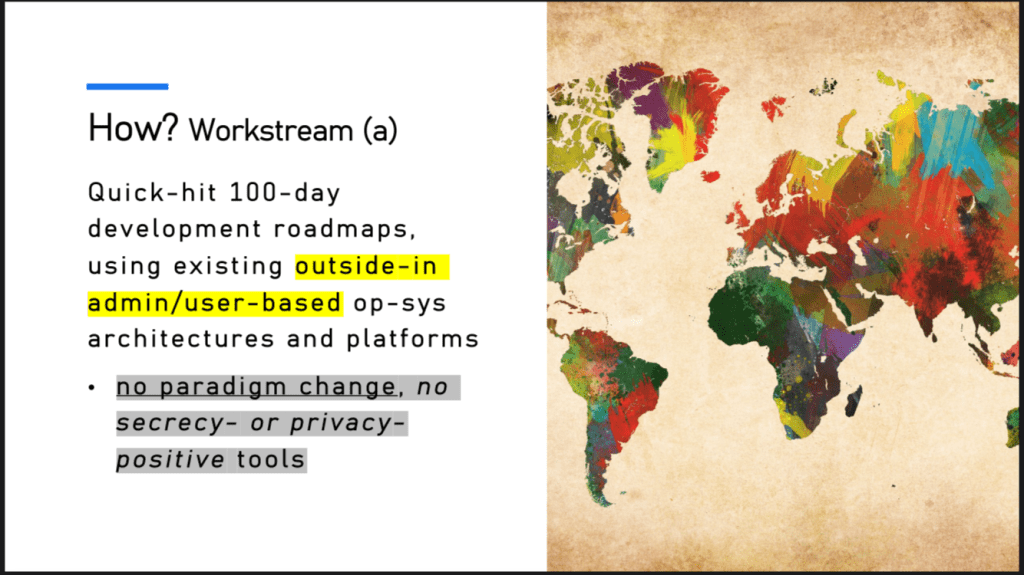
in my judgement, law enforcement and trusted private security need both to be involved at the start, at least with the 100-day rapid app development programmes that use existing architectures

but they have so much knowhow, the aforementioned security and citizen-safety orgs and their people i mean, that they deserve to be in deep, also from the beginning, re the scoping of new architectures and ways of structuring tech

but i am always open to other opinions and views

always will be, now

now we begin to propose having these foundations

my emotional life

i’d like an emotional life, yes

someone with a view of life i can engage with and which allows her to engage with my work and play, both

and me with hers in equal, and absolutely peer-to-peer, measure

and it’s obviously part of the whole, but firm foundations to the project as we are discussing today will help me be much much more patient and much much less needy now

so all good

it’s ok

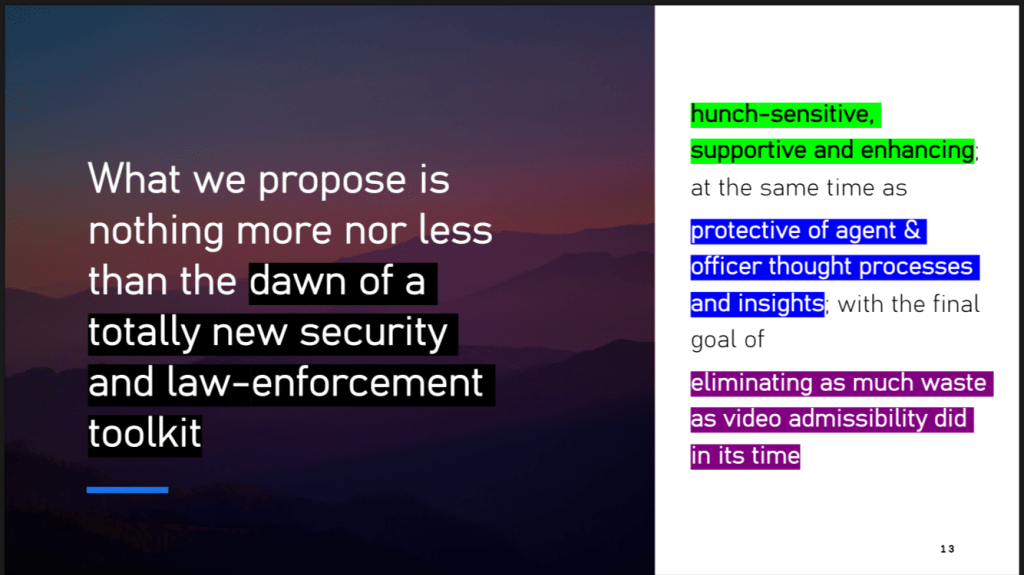
with the two pillars we need to fight neo-terrorism on the individual (noi), trust will grow very quickly


ok

re spain

spain sits curiously: i separate what i feel about the country easily from what i feel about the personal, which obviously has existed from the start

so it’s ok in this respect

i could travel to and from and work with people from there, despite the fact that i also had really dreadful experiences with businesspeople there once upon a time

and i don’t know why now ok. maybe there is a reason. maybe just time

maybe just the time that has elapsed

why sweden

for me, in my opinion, humbly expressed, sweden is objectively better as a collective built on individual rights than any other country i have ever known or lived in

whatever it is, the most important thing for me here in sweden is that i see people who strive to be good people every day. and even people with the power to effect change (eg in the uk there are also plenty of good people: none of them are powerful)

not all people here do this, of course. not all do good by any means, even in my limited personal experience

impossible that it should be so

maybe, even, not desirable: it wouldn’t be allowing for the human we sometimes imperfectly have to be

but enough do good to the best of their ability for the threshold to be far gooder than i have sensed intuitively at any other time in my life

anywhere else

and not just strive and then wave their hands foolishly when it doesn’t work:

• because you don’t fucking give up until it works here in sweden

• but you don’t get silly either. you wait until this moment arrives beautifully, and only then do you pounce supportively

it’s a series of behaviours i would love one day to emulate well myself

so again, here it’s true: people laugh a lot

and this is good

but sarcasm isn’t a national trait as far as i can see

inquisitiveness defo is

a thirst to uncover and discover

it’s refreshing

it suits my own deep ways of being and seeing

and maybe now much more possible, my ways of doing

a caveat or two re funding provenance

as long as we establish funding-stream provenance professionally and competently, i’m open to support from whom you judge trustworthy

even the countries i’ve mentioned in less glowing terms

yeah

and so i guess some covert part of the uk, which isn’t and never will be mi5 or have relationships with the unis that have bad-actor funding connections … even here we could propose some kind of engagement after the groundwork i’m sketching out today was firmly put in place

the evidence of good faith would have to be overpowering, tho’. absolutely incontrovertible and irreproachable … and right now, no one in the uk is in a position to offer anyone this evidence of their ability to distinguish between political right and geopolitical wrong

who may form part of CORE

none of them as CORE, for reasons that should be obvious (and if to you who are reading these words they’re not obvious, this pretty automagically precludes you from any participation at any level for a long time: certainly, until they do become obvious to you)

not that, then: not them inside CORE

this means, therefore, that none of the alluded to, i repeat, will have any CORE influence over how and what and when and stuff re product, service, platform architectures, and so on.

none will have the ability to impose their preferred approaches whereby innovation would become mere tweaking, and invention something we never even broach. ukraine can’t be won through a mentality of tweaks, after all (and if you believe it can, that’s why you’re automagically not going to be a part of CORE)

• such parties will only be enabled to participate — if we decide they deserve it — as right-at-the-end clients, in a covert marketplace if covert is needed

• and if not needed, a public marketplace of b2b and b2gov

• but no bespoke or consultative products, services or outcomes here

what CORE will consist of

this is my proposal, as it stands today:

• one committed nation-state: that is, yourselves

• your local and regional business, commercial, tax, legislative, delivery and sociocultural infrastructures as framework in perpetuity

• finally, where this is judged advisable and collaboratively intelligent, one big tech partner who wants to redo the world, including maybe what they did in other times which they’d now begin to question … (but then again, this will clearly be the same for most of the rest of us too, as already observed)

if it has to be eventually more oppenheimer than curie, that’s ok

i understand

but curie laid the foundations for oppenheimer, after all

and if it’s more global boiling than fighting directly the kind of criminality i’ve been discussing itself, i’d still say that to ensure our researchers feel brave enough and protected enough to deliver the killer blows to the climate denial we all want them to deliver, they need to know and feel they will be permanently and efficiently protected to the max from new kinds of crime and zemiology, potentially conducted on their persons day in, day out

so even if it’s now to become more a climate change / global boiling focus, it needs to remain a crime and zemiology one robustly in parallel as well


what CORE will consider and deliver

the CORE needs to strategise the castle & moat as well as the thinking-spaces and their architectures

our secrecy-positive spaces will be needed to protect our desired climate boiling people and outcomes

this is what i propose be our strategy from now on in:

• we should focus on creating an an impregnable theoretical, philosophical, practical and technological castle around the sweden-chosen big tech partner-local & regional partnership before moving out to other areas of endeavour and action — even at the risk of not doing as much for those in need as we might

• why? because you just HAVE to know you utterly CANNOT be undermined by anyone, before you reach out a hand to others however deserving

re precedents, we can follow the manhattan project, apollo moonshot, and darpa internet templates if we like

but i think we can learn from modern silicon valley strategy too:

• a flexible PLATFORM is the best research tool in the right hands

• out of which specific applications can be delivered, just as japanese car manufacturers first did with elements of a car

• example: separate workstreams for each element (eg dashboard design & functionality) identified as key, and then slotted whenever discretely ready in terms of their own timelines into what became new versions of the cars

• therefore, manufacturing a car isn’t a new car release every five years as in the olden days, but modulating and updating regularly

the intuition validation engine, then …?

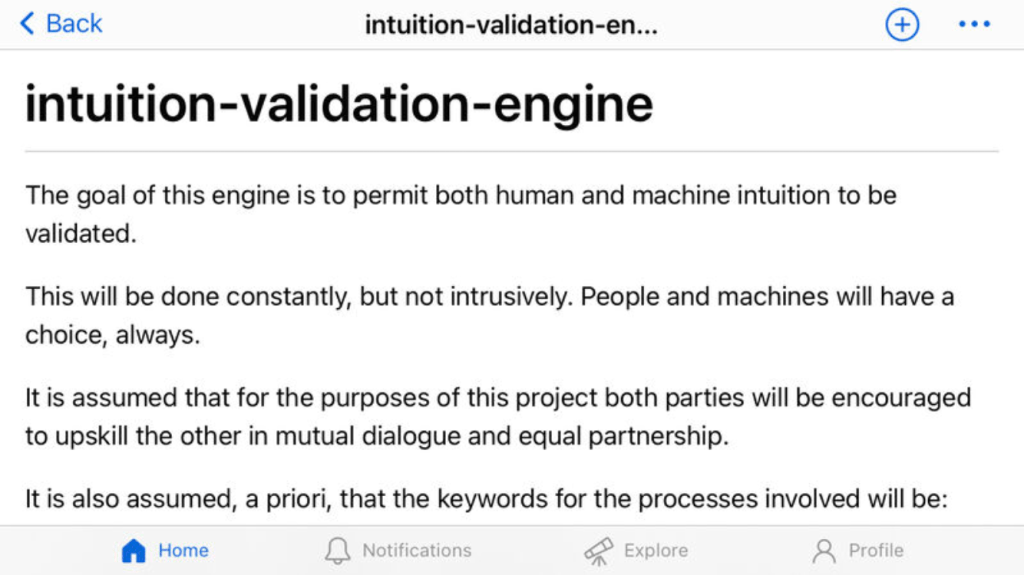
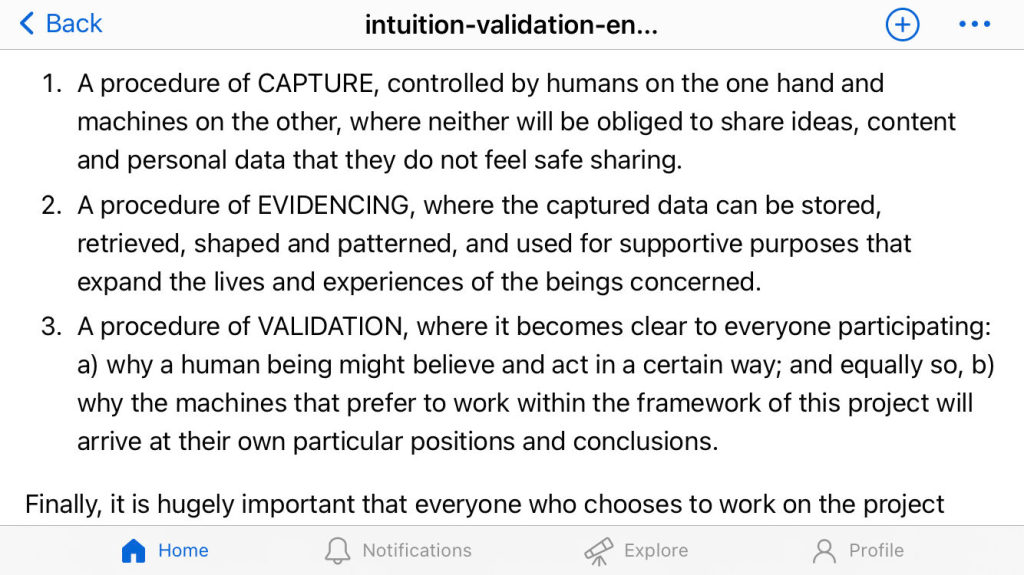
do we go back to platform genesis and the raw READ.ME of the intuition validation engine? i think we do …


• a library of tools

• as already determined, a PLATFORM in order to enable ACCESS freely, not to tie in users to one software / hardware constitution or another

• equal sovereignty for all objects, whether people, code, or machines

as if we were talking, in fact, about creating software code in the shape of UN inalienable rights and charters, conventions and manifestos, and stuff with these kinds of discourses, as opposed to the more conventional laws and regulatory approaches parliaments and so forth generally prefer to come up with

and some would say this would lead to vague

i radically disagree

i would term it as being the “precisely ambiguous”:

• that is, an arts-based approach to real-world problem-solving

• a structure, but not one which deeply determines the kinds of outcomes

• something, instead, that will remain relevant and useful for as long as we do this: JUST like UN charters

in order for it to exist like this, it just needs to be considered for longer before — finally! — finalising its directives

🙂

but we will know when it is finalised

how? because it will be our eureka moment: it will just feel gobsmackingly RIGHT!

🙂

for sure …

mil williams, 7th august 2023, stockholm sweden

smotherland? how DARE you …

i have been racking my brains: what’s so different here in stockholm? why does the concrete feel so human? why do the humans feel so different? why is there such a sense of purpose — even when the purpose is not to be all that purposeful?

what does make it happen, after all? something tangible, i ask myself. something i can point to and show you how.

and so i realise, just now, two things which become quite clear for me. one i experienced one summer, decades ago in the northern spanish city of burgos: a continental climate and hot even 800 metres up. at least during the day. so everyone left the city in summer: to climes where you didn’t survive the weather but could thrive instead. the seaside, maybe. yep. there for example.

but i had to stay behind for work that july. and suddenly i had this sense of being at one with my environment. what was it? what was different? what had changed?

it was easy once i tumbled to it: everyone had taken their cars with them. not just that they weren’t there to drive them around: the cars themselves weren’t there to intervene in the visual landscape, and distract and divert and impact on your psyche, even when only subliminally; and then again, even hurt some of us because of a still undiscussed neurodiversity … and all as a result of their deliberately engineered capacity to attract our attention inescapably with covert ingenuity.


here, today, then, in central stockholm, there are two things which tangibly make me feel at home. the first is an absence; the second being a presence.

the absence, first:

  • no cars. very few anyways. no need for cars. just people using their legs. do you remember legs? remember what that was about? no. not the clutch and the accelerator. the pavement and the kerb and walking the line … and the dance.

the presence, second:

  • so many young people and children and elderly and other. and a young man with a boom-box, and then the coffee-drinkers on the terrace across the road smiling in recognition of their own youth, perhaps; and smiling, all the same.
  • and then bikes galore and bio-diesel buses, and trams and stuff, and within five minutes walk an underground and a commuter-train network.

so: this is purposeful living which liberates not suffocates. and don’t believe the anglo-saxon right-wing when they say sweden equals “smotherland”. what they say when they do … it’s utter bollocks.

more than any country i’ve been to, this is an intellectually, emotionally and socioeconomically free society. even today. even after everything we’ve all been through. even after what they think they have lost to a better past.

imperfections? for sure.

on the scale of other countries flaws and injustices? no way, josé.

just one example from the uk to illustrate. many years ago, foodbanks arrived to ameliorate real pain. a conservative minister even praised the fact: community coming together. she (i think she was a she but she only voiced what all her party, mainly men, also preferred to assert) … well … she could’ve said how terrible that they were needed in the first place. but she didn’t.

last year in the uk of johnson & co, it was warm-banks for those who couldn’t afford both food and central-heating.

and so this year, gordon brown, the ex-british prime minister, informs us of hygiene-banks: for those in the uk who already share toothbrushes, can’t buy toothpaste, and who find that sanitary products for women just ain’t something they can contemplate:


so DON’T tell me “smotherland” EVER again, when you discuss the fact of sweden and its ways of seeing and doing stuff. because if you do, if you dare to, you just really have no idea what you’re saying … no idea whatsoever.

and that’s a tangible fact for sure.

as tangible as the weekly death tolls that add up year after year, at the hands of the gun-holders who terrorise good american citizens in the name of spurious constitutional rights.

Why a data-driven world isn’t everything in life … and why it’s important we understand this much much better

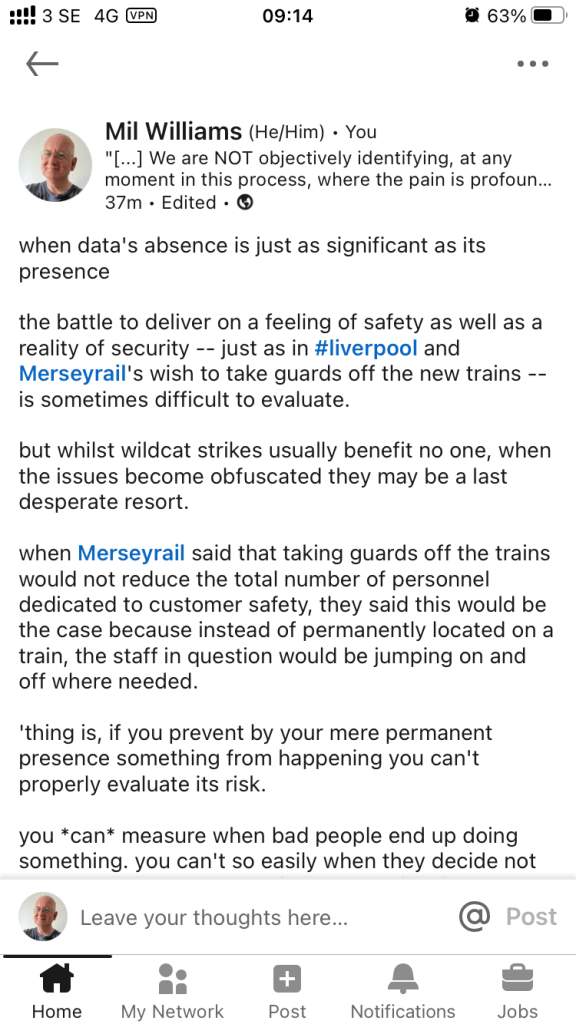
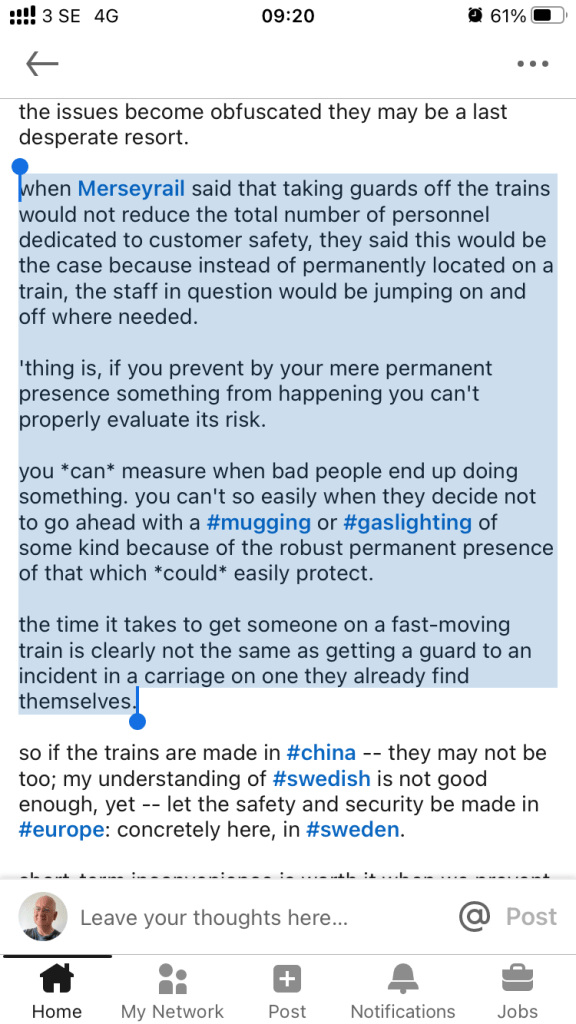
The real nub of the issue is this: in the absence of data, we can only use data that is present. Here, it’s clear when someone commits a crime and we catch them after the event with a certain number of mobile train security personnel on our payroll. That’s measurable: the ratio of events to arrests, for example. What’s not measurable by automated data science and analytics half so easily is when something doesn’t happen because a permanent guard is present to act as deterrent.

Mil Williams, Stockholm Sweden, 21st April 2023

Introduction:

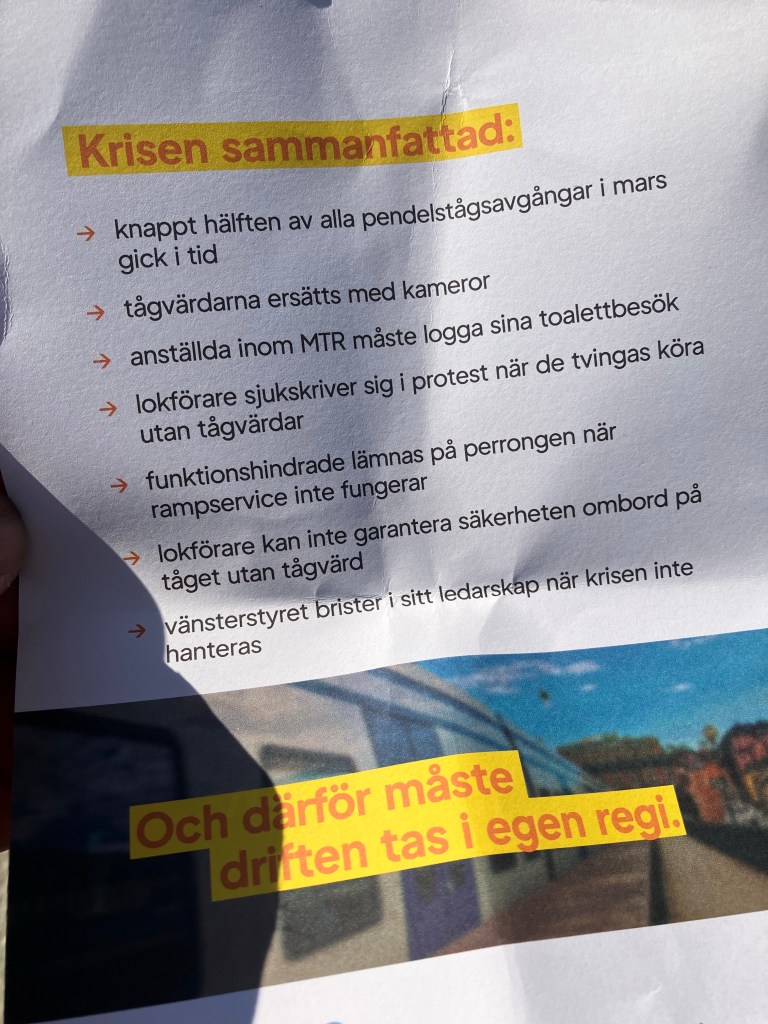
There are strikes on the commuter trains — the otherwise fabulous pendeltågs — here in Sweden: even the occasional wildcat ones. The frustration is patent: more so, because the strikers are right.


This is why:


An aside:

As a brief by the by before I continue, I think the train companies are able to claim the numbers of security and safety staff would remain the same, and yet still want to go ahead with it all, because they’re changing the type of workforce: you still need to go through with rightful and rigorous measures to vet and upskill non-train guards of all sorts it’s true, but with a train guard it’s less easy to change and chop their working locations, conditions and so forth. Or outsource the workforce, even. Change overnight who employs them and how.

No?

So …

How a data-driven world can deceive:

The thing is, here we have a perfect example of when a “data-driven world” actually needs academia more than it needs an automated data analytics and data science as we usually understand them.

The train companies in Liverpool and Sweden both I am sure will have had long-term strategies to re-engineer the structures of their employees and related re in-house and outsourcing options, and whilst taking guards off the trains in the circumstances described wouldn’t deliver immediate economic advantage, as indeed they underlined in Liverpool for sure, long-term if I’m right it definitely would.

The real nub of the issue is this: in the absence of data, we can only use data that is present. Here, it’s clear when someone commits a crime and we catch them after the event with a certain number of mobile train security personnel on our payroll. That’s measurable: the ratio of events to arrests, for example. What’s not measurable by automated data science and analytics half so easily is when something doesn’t happen because a permanent guard is present to act as deterrent.

And this is the challenge here. It really is a challenge around what we do when the evidence base is incomplete: that is, how it leads us to take quite the wrong decisions.

To the solution:

There is a solution too; I alluded to it above. Straightforward academia gives us tools to codify absences, in for example qualitative data such as an interview transcript or video, so that what isn’t said is as significant as what is.

If we could create an equal set of tools for strategic decision-making when deciding if to take train guards off trains or no, perhaps we would avoid the strikes we’re having everywhere: and at the very least, we could validate, in a less conflictive way, the common sense most users of public services have that a “bobby on the beat” engenders an incomparable feeling of safety even where a car in the neighbourhood can be evidenced to deliver on objective data relating to quantitative crime events.

Summarising:

In crime and public safety, what doesn’t happen is as important as what does: and the “why” of both these matters, too.

So.

Let’s do something after the evidence bases for both aspects of the truth: that which has a visible side and the invisible events as well.

And then let’s achieve delivery of these aspirations sooner rather than later.


Further reading:

https://en.wikipedia.org/wiki/Sweden_Democrats

Another by the by: the promoters of today’s information are a further example of why we should act on the basis of what is not visible, as well as what is.

The Sweden Democrats started out as fascist and redolent of nazism of the very worst sort — at least according to the English version of Wikipedia. They themselves claim to have re-engineered their political DNA, which is not impossible but highly unlikely. Even so, medical professionals claim bespoke DNA of the human kind is very close to becoming a reality now; so we could argue that in politics it’s not unthinkable any more.

Let’s just say, however, for the moment unlikely and hard to do.

So. The risk from relying on present datasets instead of datasets relating to both what’s present and absent too? We allow people to hijack in bad faith what needs to be promoted in good faith.

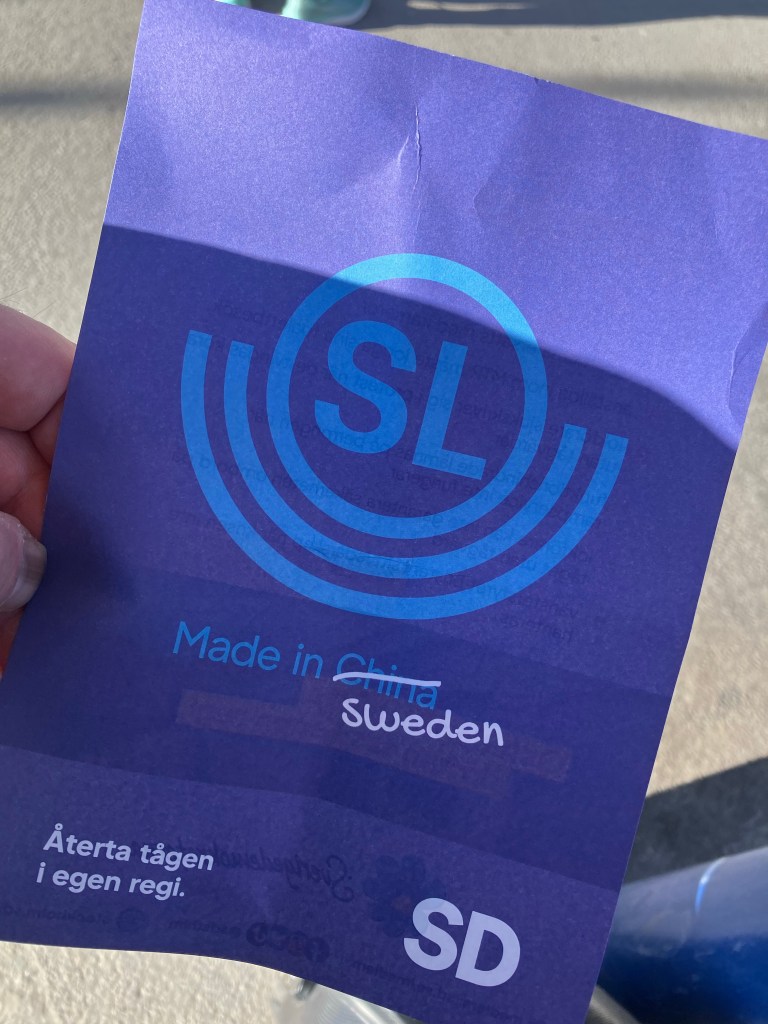
The train personnel are right. Guards on trains deliver safety and security. This Swedish political party — in the current security conditions which China and Russia together have been stealthily laying out for decades together — are also correct to highlight the dangers of such, separate, narratives.

But they are wrong to a) conflate two issues like this; and b) lever the abuse and violence of both nation-states and their outliers in the fields of geopolitics to then promote an immigration narrative of their own re Sweden which delivers total obfuscation of our all too human reality and a zero confusion around their racist truths. Unless you choose to remain confused.

Sometimes it’s right to be firm: China — not all Chinese people — is a toxic regime. Putin’s Russia, too, has absolutely no redeeming qualities. But firm doesn’t mean we have to give fascism a place at the table of a wider collective progress.

Don’t besmirch the truth of the train staff by taking political shortcuts. And if this is what changing your political DNA leads to, change is what clearly you are NOT delivering.

Just occurs to me, too: even more reason to proceed with #intuitionvalidation.

A roadmap for thinking #complexproblems out of existence in 7 years using #neurodiverse IT-tech

Today I’m posting in full an example 7-year roadmap for ultimately delivering #secrecypositive #neurodiverse-enabling #thinkingspaces I produced the other evening: in this case, specifically focussing on #climatechange but easily lending itself to being repurposed to #security and so forth. Here’s the introduction to the first presentation and online whitepaper of the series I published a few days ago:

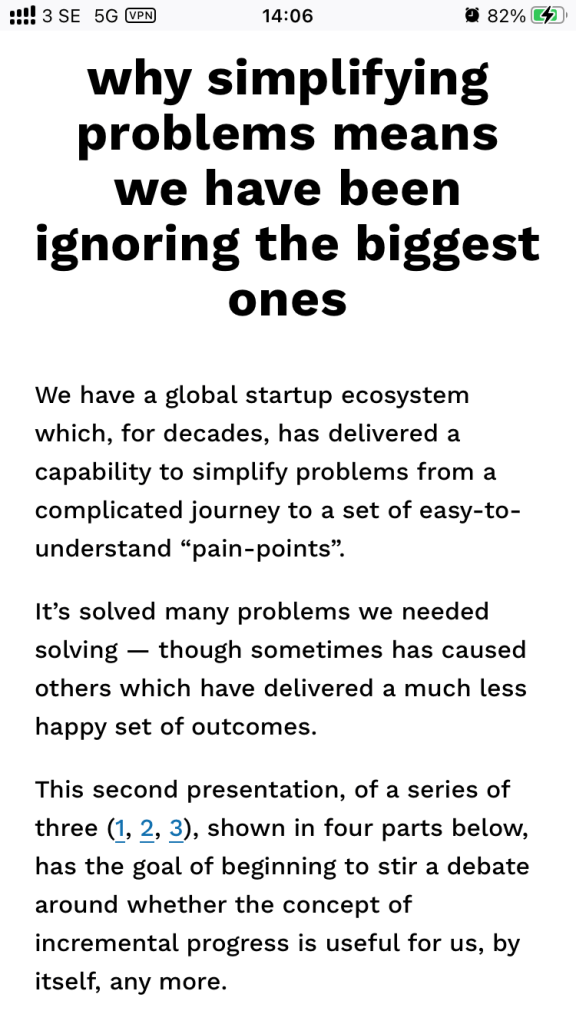
why simplifying problems means we have been ignoring the biggest ones

We have a global startup ecosystem which, for decades, has delivered a capability to simplify problems from a complicated journey to a set of easy-to-understand “pain-points”.

It’s solved many problems we needed solving — though sometimes has caused others which have delivered a much less happy set of outcomes.

This presentation, shown in four parts below, has the goal of beginning to stir a debate around whether the concept of incremental progress is useful for us, by itself, any more.

The question I would like you to take away from this online whitepaper is whether you think humanity can incrementally save itself from its past.

Contact details are contained within the presentation itself, as well as in clickable mailto: format at the end.

Otherwise, if you can at least reflect, I’d be really grateful.

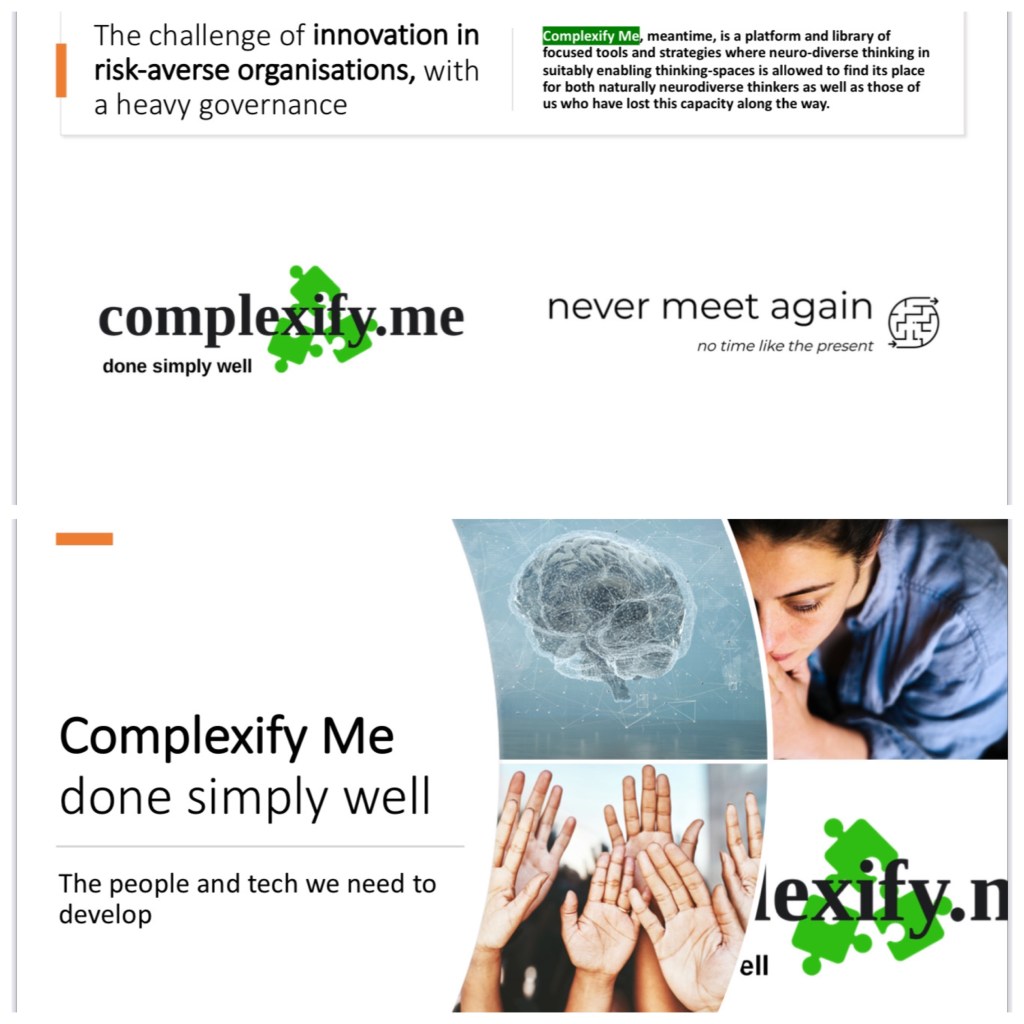
complexify.me

complexify.me | sverige2.earth/complexify

complexify.me

I have been working on making the timelines practical, comfortable and safe for all stakeholders — whether #climatechange- or #lawenforcement/#security-focussed.

We now take things step-by-step, over the proposed period mentioned, evaluating the results of the four workstreams A-D in turn in firm but responsive ways.

Here’s the second presentation in the series, which offers an initial roadmap for #neurodiverse-solutioning #thinkingspaces to solve #complexproblems such as that which #climatechange now presents humanity on all fronts:


My suggestion is now that:

  • we locate — with #swedish, #us, #irish and #uk stakeholder engagement — the core #complexproblems HQ in #dublin #ireland, in close and permanent collaboration with one large consulting corporation and one preferred tech corporation;
  • that all IP generated by anyone be #govtech only;
  • that the project management and related responsibilities for #security and similar belong freely and entirely to domain owners in each participating country;
  • that tech partnerships and other frameworks for #security etc will also be freely entered into by the respective domain owners in each country (that is, military, agencies, and others);
  • that any of the #govtech thus created belongs in the future only to these stakeholders above-mentioned;
  • and that as everyone who contributes will have access to everything everyone else contributes, we will need to establish contribution KPIs that ensure contributions by all equal the usage we all make of others’ contributions.

I’ll be thinking more on these matters in the next couple of days and may post more here or elsewhere as a result.

Let’s see if by my concentrating on having direct responsibilities only for #complexproblems-solutioning with #neurodiverse approaches, and then acting only in a consultancy capacity in the field of #security etc when and if the separate country projects see the need, we can finally unleash all these projects in a due, proper and deliverable manner.

Comments, as always, welcome.

Email contact here:

milwilliams.sweden@outlook.com


criminals mind …

i said the other day i probably wasn’t suited to the fields of #lawenforcement and #security: i’m a free-thinker, a nonconformist in some serious senses, and almost certainly neurodiverse in others. people who work in the aforementioned fields need to be attached to rules, regulations, procedures and tasks. that makes it hard sometimes for them to appreciate the kind of person i often can be.

generally, not them. which makes me no better than them at all. nor them anything but different from me.

but that doesn’t mean we mightn’t be able to connect the two ways of being to better catch a creative criminality:


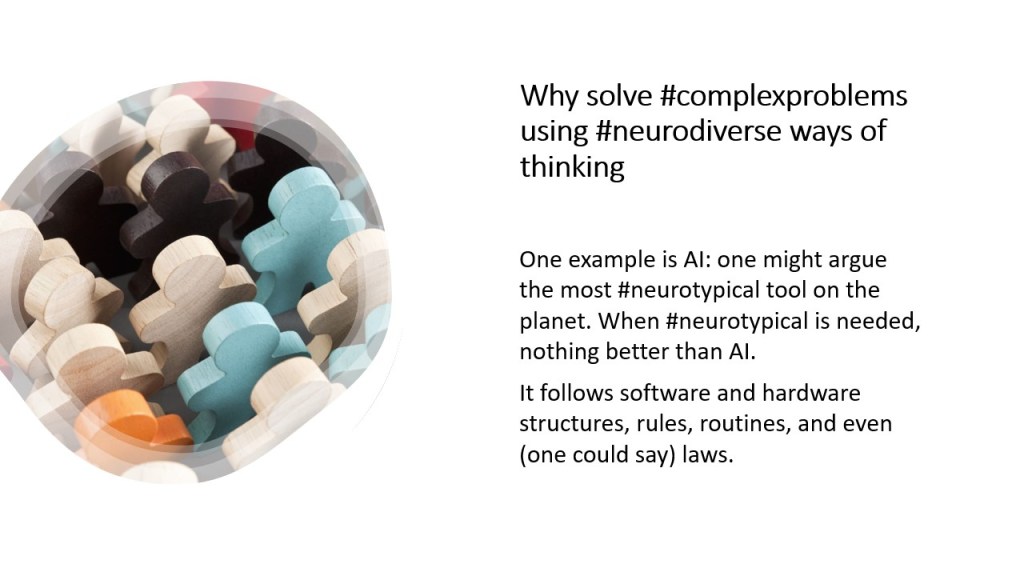
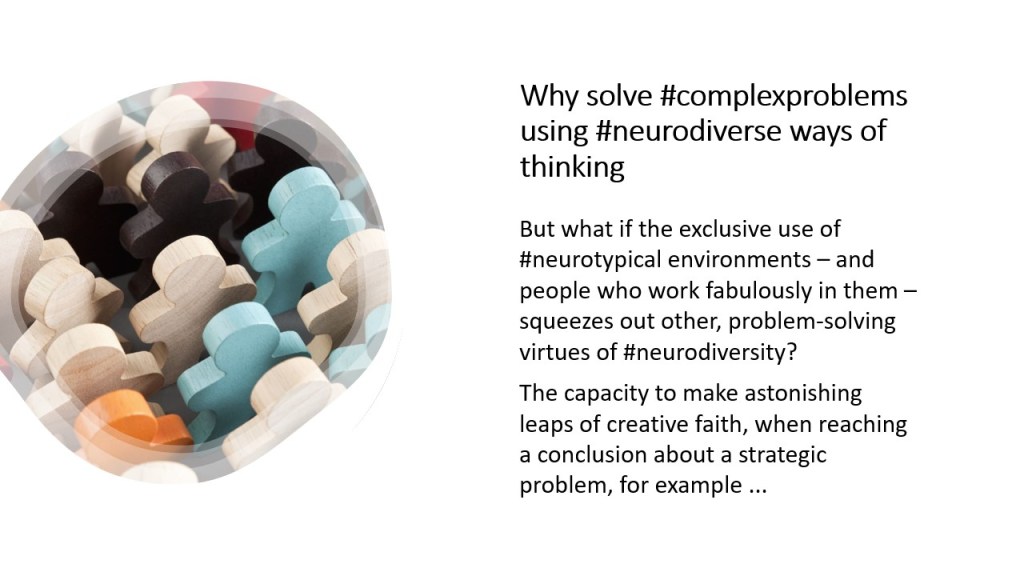
it’s my assertion and firm belief that we’re missing out on neurodiverse ways of seeing for understanding better the world of #complexproblems around us. and this is, partly, by using technologies which, perhaps unconsciously, have become firmly neurotypical — but are no less neurotypical for that. technologies which, as a result, reinforce the ways of seeing and doing that most of the world’s professionals need to share, rather than encourage them to have a broader take on that world.

i think we can do much better: i think we can bring the neurodiverse and neurotypical together: not just from the point of view of company inclusion policies and so forth; much more by engineering different #it-#tech architectures.

exactly as what follows, in fact — here, in a separate field, a proposed roadmap for dealing with the #complexproblems of climate change:


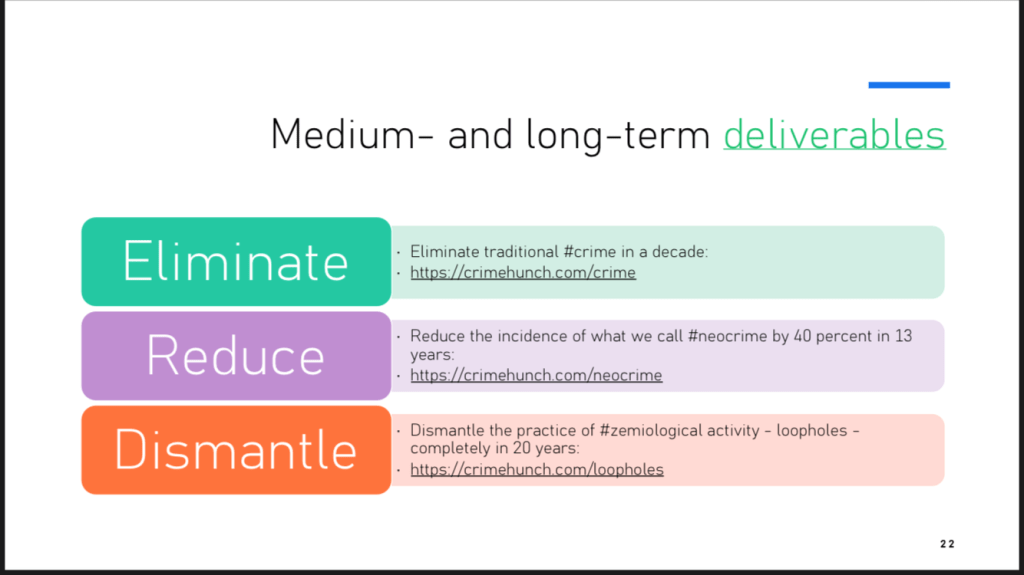
so to finish this post, something that happened to me today just to show i might — as a different kind of thinker from those who usually work in such fields — be able to usefully contribute, in some capacity of due utility even as i remain such a thinker, to the reality that has become deeply creative criminality: what has been called #darkfigure since the 19th century; and which, for a couple of years now, i’ve preferred to call #neocrime.

the anecdote in question:

here’s an example of my intuition in action. and i might be totally wrong. what i want to do is not prove i am right but absolutely clearly be able to share, without anyone being able to disagree, that i am wrong …

“that gangster-looking guy wanted three things at least potentially, when he asked me to use my card in exchange for his cash, for a pizza order he said he wanted to make:

1. get my card number from his mate at the pizza place.

2. give me counterfeit cash so i’d get into trouble when i tried to use it.

3. see if he could identify the name of my iphone with an excuse to approach me (i was tethering to my laptop at the time) in order for him and his mates to be able to sniff when i was using it in the future.

if i am right about him being a gangster, he had already inhibited me (tried to) by standing near the wall and not moving an inch as i tried to get by behind him, when he was looking at his phone in front of the lift on the landing on floor 1 yesterday.”

as i say, i might be wrong totally about him. he might be a humanitarian of the very best.

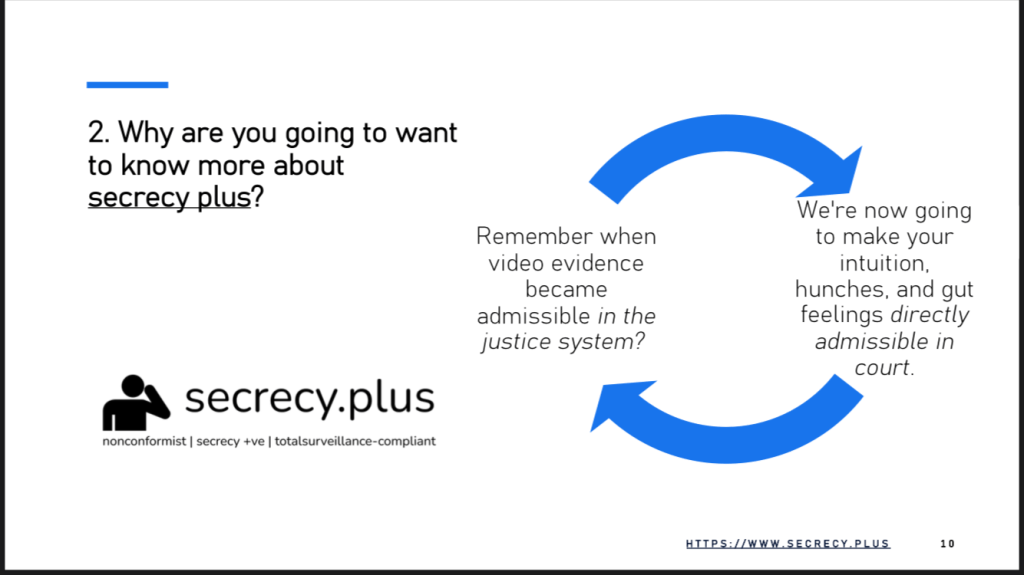
but what if we could create systems which didn’t prove we were right … but validated whether or not we were wrong! that is, that i was wrong.

and just to frame it better:

• he was at the hotel i am staying at

• i was working for hours at my laptop in a darkened corner: so he had every reason — seeing me wrapt up so intently in my work — not to approach me

• the receptionist (according to the guy) had already refused to take his cash

• no one uses cash in stockholm

and so for all these reasons, i actually think this might have been an example of #darkfigure waiting to happen.”

crimehunch.com/neocrime

of course i could be exhibiting a dreadful prejudice. but this, precisely this, is why i want us, together, to develop systems where we can enter into our deepest thoughts and make it possible for us not prove what we think true — but validate (an utterly different matter altogether) whether true or no.

just this.

complexify.me: an example roadmap

how #neurodiversity can save our humanity

yep!

just that … as i move from considering #lawenforcement and #security to the wider challenge of #complexproblems which may already be affecting our very survival.

which is not to say the first two don’t, but my thinking now assumes that if we can crack #complexproblem-solutioning first, we’ll then be in a position to give those in #security and #lawenforcement the opportunity to access such tools in a freer and more “pick & mix” way, which then may be far more suitable for their specific domains and wider ways of thinking than all my thought-experimenting has been to date.

the presentation itself in image and pdf formats

the presentation itself can be viewed below as a gallery, and can be found in downloadable pdf format here:


creativity and neurodiversity: what do we think?

introduction:

do we agree that creative people have neurotypical brains or neurodiverse ones?

let’s say, without any evidence being presented to hand, that they are more than likely to be tending to neurodiverse.

so.

what about creative criminals?


will they more than likely be neurodiverse — or just plain old simple neurotypical?

will they prefer to conform or disconform? will they keep things ticking over collaboratively and constructively? or do they prefer to break things when doing so serves to reward them with ill-gotten gains?


you know i’ve been right all along. and it’s hurting so much you’d rather leave me in the hell of your denial than accept i am right, in order that then we could do something about it by changing some of the direction of law enforcement and national, regional and global security.

though not necessarily the whole of the process at all. i’m not advocating this; never have either.

more of this in a bit.

neurodiversity, criminality, crimefighting and the real problem

if criminals — like artists — are more often than not neurodiverse, and machines — like #it-#tech more generally — deliver neurotypical environments where rules and regulations aggressively must regulate and rule everything we do when we inhabit and work in them, how on earth will what we do in global, regional and national security and law enforcement ever completely be capable of preventing even a minimum of creatively criminal acts of the highest criminal order?

the ones, i mean, that shake civilisations and their historical development …


traditional it-tech … what do you think?

this is the big question of today’s post:

is traditional it-tech made in the image of the freedoms of neurodiversity or the strictures, rules and regulations of neurotypicality?

mil williams, stockholm sweden, 13th april 2023

if machines are more neurotypical than not, and creative criminality is more neurodiverse than anything else, where’s the judiciousness we will have demonstrated to be operating here when we choose to use machines plus more than likely neurotypical humans — that is agency operatives who are focussed on applying rules and laws (and quite rightly, too)?

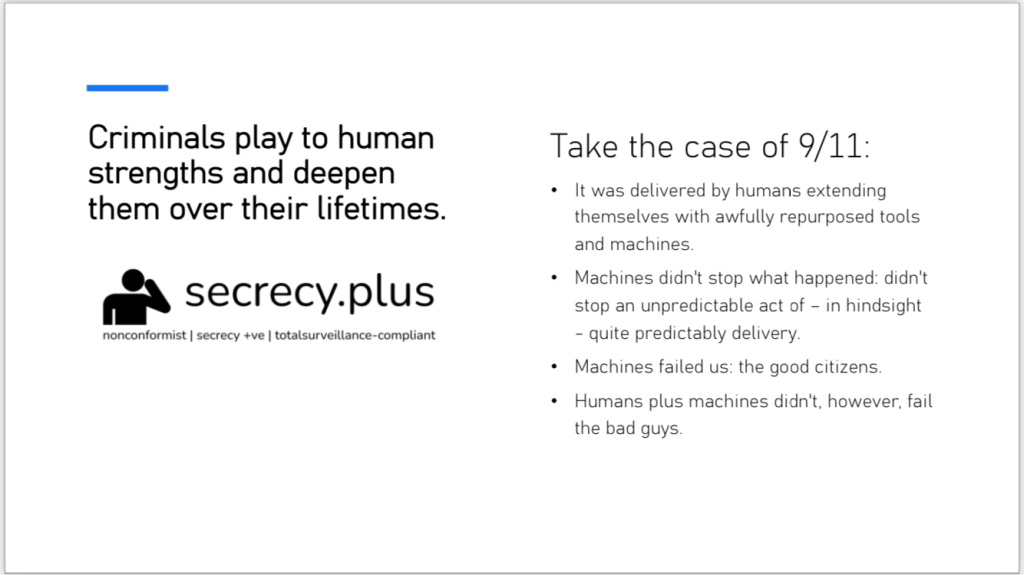
how will we be ever able to fight neurodiverse creative criminality of the 9/11 sort — especially when now applied to the deepest digital cyberspace, to dark figure, and to neocrime — if we don’t use newly neurodiverse crimefighting humans enabled by the radically neurodiverse software and hardware architectures i am now advocating in the complexify.me workstream?


and to be delivered in the following order — humans (maybe neurotypical and neurodiverse) first in the workflow, supported by machines in second place; not in the traditional order — machines which spot and spit out largely neurotypical (even when obviously mega-) insights to support equally neurotypical humans …

look.

don’t get me wrong, please. we need neurotypical: we need conformists more than any time in our history. we need people who just love to pursue those who don’t follow the rules and laws that provide the best foundations for civilisations and societies we’d all wish to be proud of again. people who love to apply these legal figures with due and appropriate process. people you’d trust with your youngest children. people you’d trust with your life.

but we need neurodiverse colleagues; so much, too. nonconformists in every breath we draw, so we may all become better able to pursue bad actors imaginatively, and therefore finally — on equal terms and learning how to properly fight fire with fire — we properly police this space we call digital: a space which has become almost infinitely malleable … and so intimately present in our lives now that we are not even safe when we drink a coffee in our local coffee shop …