curie + foucault … and then a crime-free world?

foucault said everything is dangerous: and more reason, for this reason, to study everything more deeply.

curie said we shouldn’t fear understanding: almost that it was our duty.

i want, now, to set up a national security facility which uses curie’s approach for its outer core, where our good people learn in supported ways to fight bad people.

and i want then, once we have fashioned the necessary tools, to develop an inner core which gets as pointed as foucault’s persistence re the dangerous.

at the #nobelprize museum today i saw two words on the floor near the entrance, amongst many others. the two i recognised and stood near were in english. i hope one day others i am able to recognise will be in swedish.

my words of preference were “persistence” and “disrespect”. of the two, the one i stood next to first was “disrespect”. not gratuitous: measured. that’s me. and that will always be me.

and that’s what i want to make of the aforementioned national security facility: something deeply infused with a profound lack of respect to the shibboleths of crime and … to what we can or can’t do to stop and dismantle them.

let’s do it.

it’s time we did. time to have confidence in our abilities. our competences. and our integrity.
“now is the time to understand more”

this really really really floats my boat.

newton said he saw further because he stood on the shoulders of giants.

but it’s not quite there as a phrase. it used to be for me, but after today it’s not.

not for me.

foucault said everything was dangerous and therefore more reason to be studied.

but that’s fearsome.

terrifying, in fact; maybe unnecessarily so, too.

it was for me when first i read it. even as when i did … well … it became my touchstone.

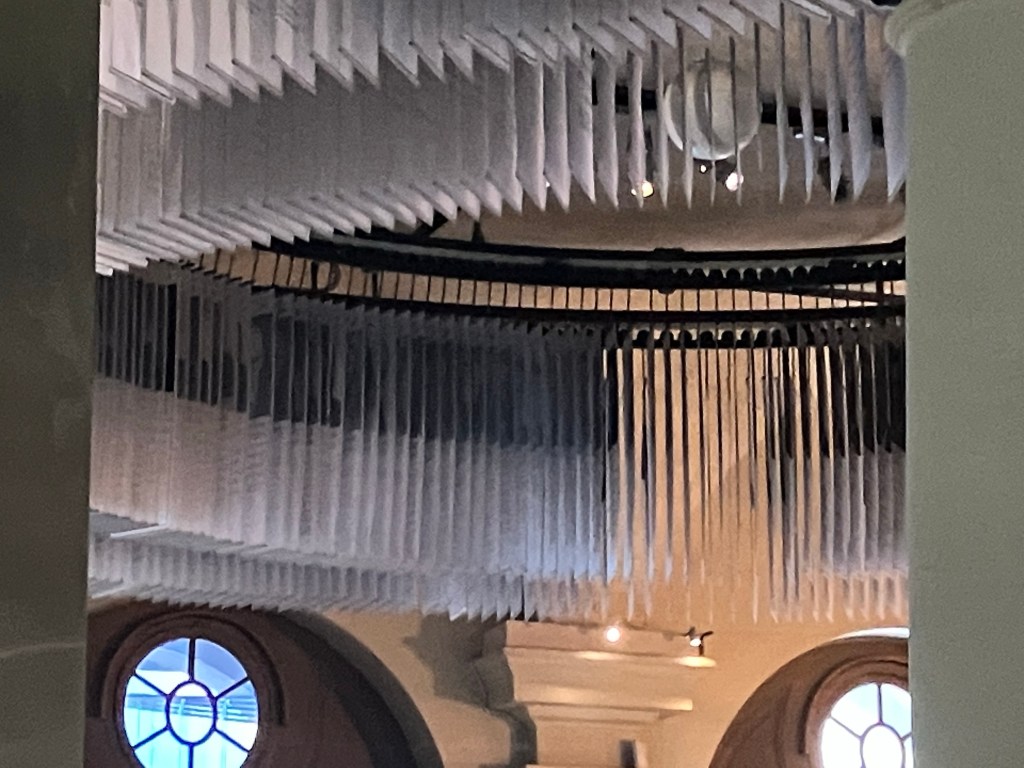
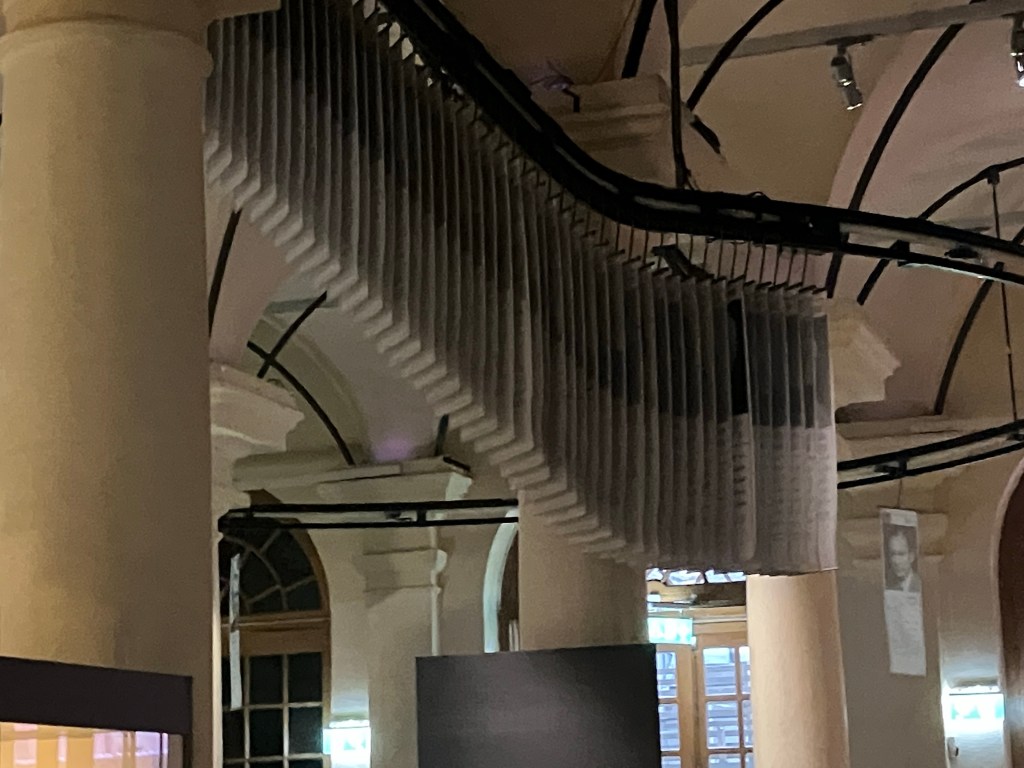
the pictures above communicate both ideas more humanly. that is, as befits the missions and values of the #nobelprize: don’t only achieve the most we can with grandeur, but achieve all of this and more with real and cogent ideals.

even idealism.

yes.

yes.

even this.

the first pictures show, then, these giant women and men moving above us; looking down as we look up. and we look up not to be looked down upon, but in beautiful admiration for — even adoration of — the elegance of their thought and endeavour.

and then again, neither do they look down upon us to diminish but, instead, to amplify our mutual connections and shared humanity. because as they move above us so high, the collective they start out as when we come in the entrance to the museum itself separates firmly and graciously, the deeper we go, into a rollcall of wondrous individuals.

because a collective based on anything else is no collective at all.

and this is #sweden and #norway and #scandinavia all over.

and this is why i feel at home with you — even as you might not feel quite at home with me, quite yet.

and then the last few pictures of the blackboard with chalked words basically say in #swedish and #english what foucault said years later.

but the thought is expressed much more kindly; it is said with equal passion it is true … but also with a profound and patent COMpassion. something i think foucault found more challenging. much much more challenging.

what he was, too. also a thinker of the mightiest. it’s how he was; and we have to — all of us — learn to become what we are.

and so that’s why i don’t want to fall into the trap of comparing. i just want to say that marie skłodowska curie’s much earlier enunciation of what has to be considered a universal truth makes me feel human again where foucault never could:

“Nothing in life is to be feared, it is only to be understood.

Now is the time to understand more, so that we may fear less.”