i like what i say about #happiness below — and in the film at the end of this post — because, for me, it’s spot-on and describes how i’ve lived my life till now.
however, a bit more forcefully than till now i want #happiness and its #butterfly to settle rather sooner than later on my shoulder.
just a bit of daily joy is all i ask … not even so i can fight more sustainably the bad people i must fight … just so i do it more efficiently.
you can’t be efficient if you’re unhappy. that’s why so many people who make a living out of monetising our capacity for waste promote so vigorously the unhappiness of us all.
let’s begin now to stop them together. and let’s find a bit of joy — each of us — for each other every day.
i trained in spain as an editor in the early part of the 2000s. but as someone who always blogged better than he authored, i already had the custom of attributing my ideas through the tool and habit of hyperlinking.
attribution is really important: not because it inevitably takes us down a peg or two, although it does. more importantly, an outcome with shape to it is more valuable than an outcome, full stop.
the memex machine
i realised this consciously ever since reading vannevar bush’s treatise on human thought: “as we may think”.
in it, using the immediate post-war tech available, and any future tech extrapolated from the same, he suggested a machine called the #memex. it would enable human thought to the extent that we would not only be able to store outcomes — what those most interested in making money would consider a product or service to be scaled up massively — but store the trails of thought that would always lead up previously (and to my mind — and bush’s — also preciously) to such outcomes.
because when a thought is a reel of thoughts not just a pic which snaps shut on time … this is when we have a human being rather than a machine.
the implications of attribution’s fact
the result of all the above? NOTHING we think up is independent of ANYTHING. as a consequence, it is tantamount — just about — to daylight (and more importantly, night-time) robbery to claim one has an exclusive right to make money out of any idea “you might EVER have”.
you don’t agree? then it isn’t. but then you’re a genius in the divisive sense most of society understands: that is, very few of us can or will be this figure; and most of us will never be anywhere near.
which is elitism to the max, in fact.
only i don’t agree with this. i don’t believe such elitist approaches accurately reflect the human brain and how it best works. and when leaders in different fields impress on us to believe that they do reflect the state of human thought, and then build business models on such belief systems, we get a type of tech-kryptonite thrust into the most vulnerable core of human experience.
my experience, meantime, as a language teacher, then facilitator, then enabler (the progression taking place out of what almost became a fanatical frustration with the rank incompetence of traditional learning paths) showed me ALL humans can radically improve their thought processes, given the right environment.
and where processes can be improved dramatically, surprising — even shocking — outcomes can be achieved. and so i saw it happen. and was a convert.
platform genesis
this is why both my son, from whom i am now deeply estranged, and myself worked together for a while on a platform we named “platform genesis”.
the idea is that all of us, all human beings, can find the right tools to uncover some aspect of genius in our souls, hearts, and grey cells. it’s not the preserve of intellect: it’s mainly the preserve of confidence in oneself — whether one has it or not. if one doesn’t, intellect cannot follow. if one does, a happy series of accidents — where a given — will lead to your genius in some way or other.
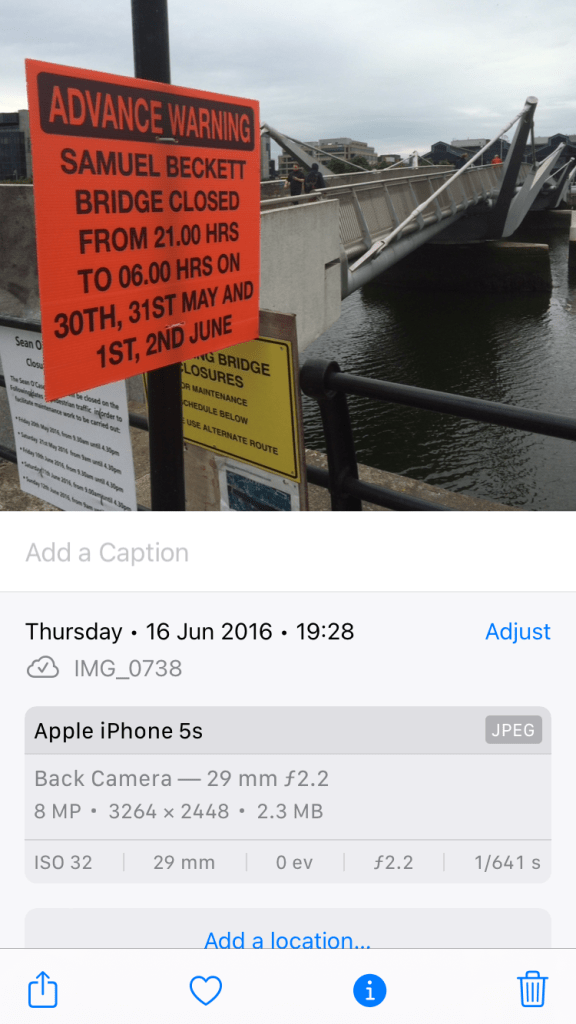
a few minutes after the photo that follows was taken i met the muse of my life. it’s hard to admit that nothing i have thought up since 2016 that evening in dublin on the banks of the river liffey would now exist if we hadn’t met and spoken for three hours, as we shared a meal on the roof terrace of “the woollen mills”.
i had lost my fear of flying the day before, you see: the 15th of june of that same year, when i flew into dublin on ryanair for the first time, for precisely the meeting that would then take place on what was my birthday the following day. being the 16th. coincidently called, in ireland mainly, “bloomsday”. (and so don’t you think it’s cool to have a birthday called “bloomsday”? the day you are born being that, i mean.
don’t you?)
and so i literally lost my fear of flying that june. actually, truly, in a second. a total flip. a click of the brain’s chip that’s never clicked back.
and therefore in my wider life, too: because i assure you, quite objectively, i have a better brain now at 60-something than i have ever had the whole of my life before. and it’s NOT because of intelligence that i am far more intelligent than i could once have imagined myself becoming. it’s because of the confidence that slowly seeped into and then infused my brain, my heart, and my soul … as an utterly natural consequence of meeting the muse of my life.
the meaning of this … for me
bringing together the threads of this article, then, i now conclude:
1. none of my ideas since are mine to exploit exclusively for my own benefit.
2. none of my ideas since are mine.
3. none of my ideas are yours.
4. none of my ideas are yours to exploit exclusively for your benefit.
5. all of the ideas which have emerged after this meeting of ours, and precisely because we met, belong to no one — and therefore belong, altogether, to a whole planet and creative ecosystem.
because it WAS a sort of magic: and magic, the genius of genie, once uncorked CANNOT be boxed into a business model for the benefit of the few.
conclusion
when we upturn a paradigm, we can choose to leave the business model — and therefore the hegemony — untouched. or we can choose to upturn two paradigms simultaneously: the “thing” itself (for want of a better phrase), and how we get it out there as fast as possible.
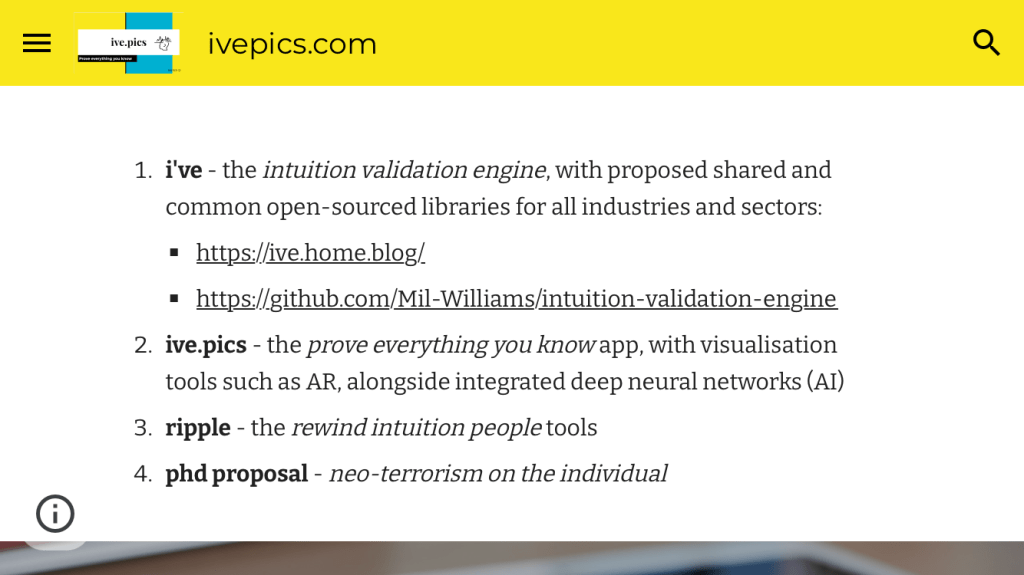
what’s the problem i’m looking to solve with the #gutenbergofintuitivethinking and the #intuitionvalidationengine? and #intuitionvalidation more broadly?
it’s not #darkfigure and #neocrime (only). it’s not #wastefulmeetings (only).
it’s not #loopholes and other zemiological activities (only).
it’s not the inability of #specialisms to duly and safely communicate across their knowledge lines (only).
rather, it’s something which informs all these use-cases — and many many more.
one UNCOMMON denominator: a denominator that connects everything in human experience since the dawn of rhymes:
truth. a concept of an absolute and indivisible truth. so we kick relativism finally into the long grasses, where it may be admired and remembered but not treasured. nor missed. again.
mil williams, stockholm sweden, 5th april 2023
accept and underline, therefore, and deliver on and re-establish, as a result, that a VALIDATED truth may be something we can establish ABSOLUTELY.
not universal truth: i’m not sustaining this. we can still be dependent on circumstance and context. but in each of these, an unattackable truth.
just this: impossible to break.
this i believe. deeply. firmly. and now till i die.
and if so, even if only gently, this then leads this article to its final statements.
all of the above says to me only one thing: i need to know what i owe my muse. because if any of the above can happen to any useful degree one day, it will happen one day only because of the impact she had on me, that day.
it’s consequently NOT a fixation at all i have for you, my dear muse, but an almost overpoweringly intellectual — as well as obviously emotional — demand to work out to what extent i was just a lever someone pulled.
not that YOU pulled it, either. i don’t think this for a minute. no.
but a tool or extension of someone or something out there … why is this so impossible to propose or contemplate? or prosper as an assertion to be justly considered?
three good things happened today: all related to how i perceive the world.
1. first, i do have a death wish: why, when i first read him, hemingway sooo immediately clicked with me.
2. however, i don’t want to be unreasonable or hurtful to others in my goal to achieve this outcome. i also most definitely don’t want support to ameliorate it. amelioration is the biggest wool-over-the-eyes of our western democratic time. i don’t want to be part of a process that perpetuates its cruelties.
3. my strategy — that is, only strategy — will from now on be as follows: i shall say and write about everything that i judge needs to be called out, in such a way that the powerful i will be bringing to book day after day after day will, one day, only have the alternative to literally shoot me down.
in order, then, to make effective the above, i resolve:
a) to solve the problem of my personal debt, acquired mainly due to my startup activities, so the only way in the future that the powerful shall be able to shoot me down is by literally killing me.
for my mistake all along was to sign up to the startup ecosystem, as it stands, as a tool for achieving my personal and professional financial independence:
• startuphunch.com (being my final attempt at making startup human)
as this personal debt is causing me much mental distress and, equally, is clearly a weakness i show to an outside world i now aim to comprehensively and fully deconstruct, as a massive first step, then, i do need to deal with it properly.
b) once a) is resolved, i shall proceed to attack ALL power wherever it most STEALTHILY resides.
that is, i focus on this kind of power: the stealthiest and most cunning versions of.
the ones where it appears we are having favours done for us, for example.
specifically, that is, big tech. but many many others, too.
what essentially constitutes the driving forces behind zemiology, loopholes, neo-crimes, and similar legally accepted but criminally immoral societal harm; all of which, as a general rule, is most difficult right now to track, trace, investigate and prosecute.
this is why i have concluded that my natural place of work is investigative journalism. and where i want to specialise — in this aforementioned sector and field of endeavour — is in the matter of how big tech has destroyed our humanity. but not as any collateral, accidental, or side effect of a principle way of being it may legitimately manifest.
no.
purposefully; deliberately; in a deeply designed way, too … to mainly screw those clients and customers whose societies and tax bases it so voraciously and entirely dismantles.
to screw, and — equally! — control. and then dispose of lightly and casually, when no longer needed, or beneficial to bottom lines various.
and so as a result of all this, i see that having a death wish is beneficial: if channelled properly, as from today i now intend it shall be, then it will make me fearless as never i dared to be. fearless in thought and disposition. fearless even when made fun of.
not in order to take unreasonable risks with my life — or anyone else’s: no.
rather, to know that life doesn’t exist when the things i see clearly are allowed to, equally clearly, continue.
and to want deeply, deeper than ever in my life, to enable a different kind of life for everyone.
NOT just for the self-selected few. those who lead politics, business and the acts of pillage and rape in modern society.
not just for them.
a better life for everyone, i say. everyone.
because i don’t care about mine. i care that mine should make yours fine.
now do you see? this is what makes me feel useful. nothing else. nothing else at all. and certainly not finding personal happiness. that would only blunt the tool.
ai’s proponents and advocates — of the human-insensitive version of this set of technologies, i mean — have kind of decided on a necessary battlefield between #machines and #humans.
as a #teacher, #trainer and #facilitator during decades this has never been my way. for me, knowledge isn’t how big yours might be but, rather, how well — how pointedly — you learn how to use what you acquire over the years.
speaking well in a language doesn’t require more than 800 words. it’s true. ask #chatgpt-x. what makes the difference is the baggage we bring to each word; the connections; the semantics; the allusions and how we choose not to say exactly what’s expected.
back in 2019 i lost my middle son’s affections. i had to borrow money from him to keep my #startup going. i’ll never get him back — for this and one other, unrelated reason. it was to get the below project off the ground.
in the event, the organisation i submitted to said it was unique (in a good way) and, simultaneously, that it didn’t advance science (in an opposing and bad sense, obviously). they informed me of this unofficially one morning early on — that is, that all my hopes and dreams were dashed — as i stood on a train platform whilst a train came in just that second.
the cctv would have seen me: the organisers themselves could also have seen — if they had wanted or cared to — the cctv of where i was and how i looked. it was obviously a terrible coincidence i resisted the temptation to take advantage of.
none of my three children now speak to me because of #startup-land. but the #philosophy — not the #tech — of the project attached deserves to speak to us, five years later.
let’s allow it to encourage us to be better #techies everywhere. change is inevitable, of course; but in #tech its nature never is. in such moments, in #tech we’re always choosing.
someone asked me this morning why i write. i didn’t answer them.
maybe it was an example of new knowledge for me. my dissertation supervisor, a very brainy person, told me once that we should treasure those moments when we didn’t know how to answer someone: they were examples of new knowledge.
certainly for ourselves, and then again maybe for others too: a wider humanity. in either case, to be valued above almost any other lived experience. because the experience manifests itself in all our endeavours: a common denominator which is neither low nor common, tbh. in work; in academia; at school; in relationships; in a love at first sight … everything i tell you.
why write? not to be read. never. to write in order to be read is to almost surgically remove the very condition good and faithful writing demands to remain faithful and good.
freedom. that’s why i write. to be free. to remain free. to sustain a wider freedom. to ensure liberty remains a goal of all human beings.
you see … to be read is nice but dangerous. to be read is to enter into a dialogue. and in such dialogue we inevitably compromise, fudge, lose our trails of thought, forget the purpose of reflection — and, then, indeed, its power.
that’s not me. and after sixty years of trying to be a writer who is read, i realise it mustn’t be me. because my virtue is that i don’t enter into dialogue before i have my ideas.
actually, that’s not true. by writing, i speak to myself. and this, for me, is key: because it’s truer than true that without this mode of speaking with my being i never am able to know, until i follow the described procedure, what that being thinks.
so if i have to enter into a dialogue with the person who asked me this morning about why i write … well … i write to be free and find out what it is to be me.
is all.
enough?
i give no more.
except a video i just made and then a poem i just wrote this morning at breakfast in stockholm city, sweden.
i’ve been thinking a lot about redemption, ever since a messenger and intermediary said to me in 2016 that my problem was guilt.
she was, on due reflection, wrong. guilt is good, if its reasons for provoking can be assuaged in competent and compassionate manner.
what i still suffer from is an absence of process, in the secular society i cherish, for redemption.
my supposition:
let’s presuppose the following: let’s say that religion served a real positive purpose which in its relative absence now in many of our societies has not been supplanted with other processes as compassionately. i say compassionately with circumspection, of course. religion itself has effected many horrible historical — and even current — events in humanity’s journey.
an example, then, of the redemption i mention?
well. here we are!
discretion is a very humane aspect of criminal justice systems, when used in the spirit of the law and its kindly interpretation.
i studied international criminal justice in 2017 at master’s level and on one occasion stumbled across the following anecdote in the academia i was reading: italy, well known for the misuse of family power and structure, may also invoke the good of family leading to a better criminal justice praxis there.
most crime in all criminal justice systems is committed by young men between the ages of 18 and 26. after that age, almost automagically, its incidence tails off. some suggest there may even exist physiological reasons for this: that young male brains get hard-wired to begin settling at around the upper age band quoted.
either way, we have a criminal justice reality: young men who commit crime are also victims of crime, in the sense that they are the most vulnerable group to enter criminality, and get very little proactive support to stay out of the criminal justice system. more often, in fact, they get targeted — maybe targeted into it — via prejudice and presumption of very many, damning and defining, societal forces.
in italy, then, this was the example: a law-enforcement officer heard of a young man around 17 who had just about committed his first crime; certainly infraction. the officer knew of the family, and instead of “inducting” the youth directly into a path which later would be heading irreversibly towards criminality, he went behind the back of the youngster and straight to his parents.
he explained the situation gently and non-threateningly, explaining that the family could help. here, we could argue, was good discretion operating to the max: even, that it shouldn’t have been necessary to use discretion to keep the young man out of being typed so young as criminality’s cannon fodder. maybe it could be conceivable that the officer’s own kpi-structure and law-enforcement praxis would consist primarily of keeping people out of the system — enabling and allowing them to redeem any initial acts so that criminality became something they themselves wanted to veer from — instead of counting up the number of criminals captured and banged away.
proposal:
on the of the above, and in relation to things i’ve already published on a new concept of criminal justice which i’ve termed natural justice, i’d like to propose that we take the renewed need for a societal infrastructure of redemption to be revisited.
in the absence of father confessors, that is in the absence of many people finding them unsatisfactory to their needs (where they work, no change needed of course!), we should create serious halfway houses between the criminality and zero good of #darkfigure and #neocrime as i understand them at one extreme (the 20 to 40 percent that is the crime and related loopholes invisible to criminal justice) and religiously delivered confession and relief at the other. which for secular societies no longer functions easily.
thinking more philosophically, it’s possible that the behaviours acted out as described in this post, which may then duly and rightfully lead to criminal prosecution, are encouraged because we need to be redeemed — to feel it, i mean. and unless in secular society you enter the criminal justice system, a societal-level redemption is not within reach. if we provided other ways which had nothing to do with criminal justice stigma, perhaps — too! — fewer would wish to be criminals.
i’ve often felt, as a by-the-by and in analogous way, that open-source and social-networked online communities have become so popular and active because in such spaces — the really competent and well-run ones i mean — we find the reality (or even just simulacrum, but at least this) of a democratic discourse that real democracy increasingly is lacking.
what’s clear is there are exist basic human instincts and impulses, and they must always act in pairs.
doing democracy is one; where nowadays the reward for its practice where this doesn’t invoke the relationship of abused partner?
and so doing ill is another; where nowadays the redemption which doesn’t involve punishment and disgrace?
newton said he saw further because he stood on the shoulders of giants.
but it’s not quite there as a phrase. it used to be for me, but after today it’s not.
not for me.
foucault said everything was dangerous and therefore more reason to be studied.
but that’s fearsome.
terrifying, in fact; maybe unnecessarily so, too.
it was for me when first i read it. even as when i did … well … it became my touchstone.
the pictures above communicate both ideas more humanly. that is, as befits the missions and values of the #nobelprize: don’t only achieve the most we can with grandeur, but achieve all of this and more with real and cogent ideals.
even idealism.
yes.
yes.
even this.
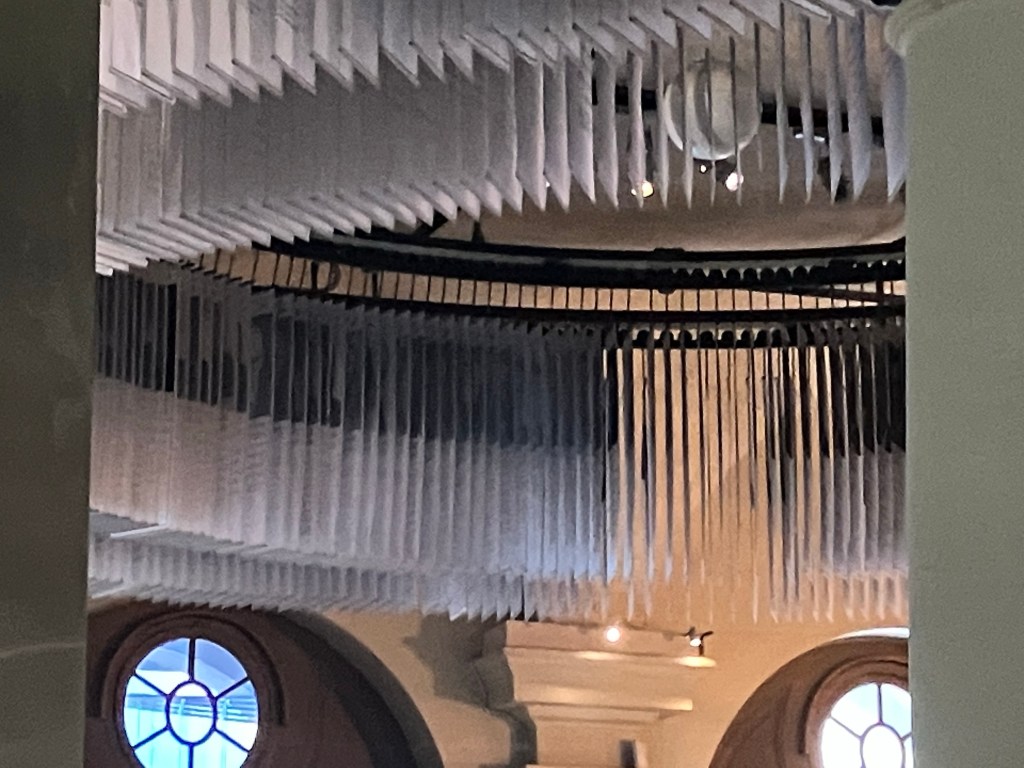
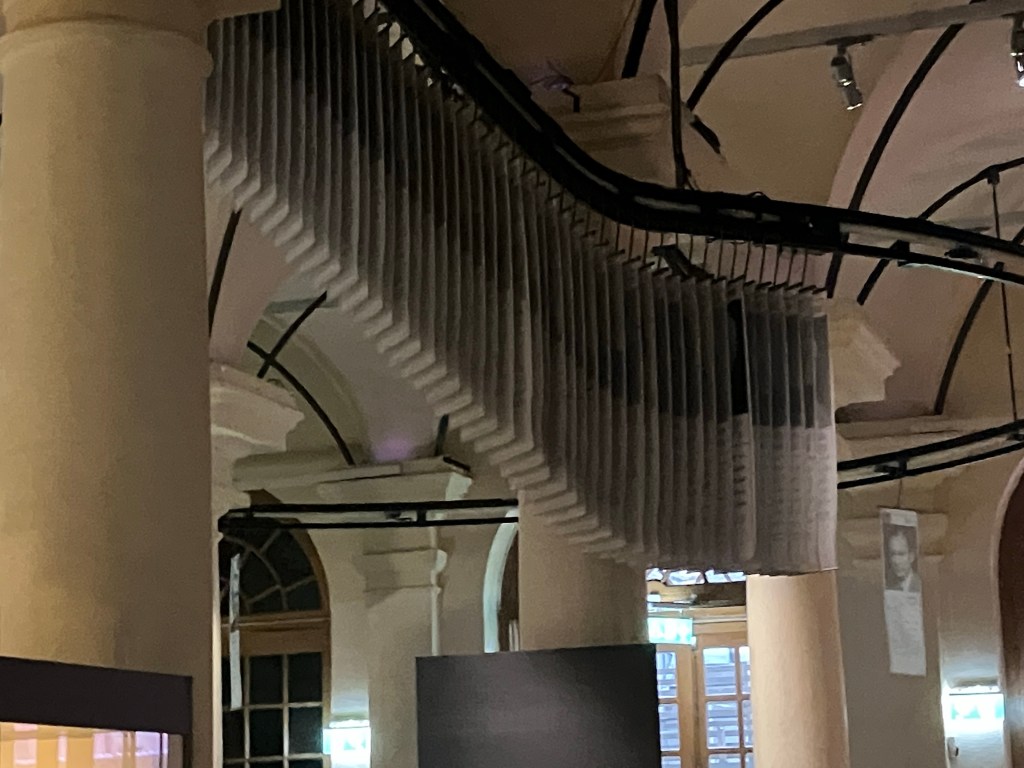
the first pictures show, then, these giant women and men moving above us; looking down as we look up. and we look up not to be looked down upon, but in beautiful admiration for — even adoration of — the elegance of their thought and endeavour.
and then again, neither do they look down upon us to diminish but, instead, to amplify our mutual connections and shared humanity. because as they move above us so high, the collective they start out as when we come in the entrance to the museum itself separates firmly and graciously, the deeper we go, into a rollcall of wondrous individuals.
because a collective based on anything else is no collective at all.
and this is #sweden and #norway and #scandinavia all over.
and this is why i feel at home with you — even as you might not feel quite at home with me, quite yet.
and then the last few pictures of the blackboard with chalked words basically say in #swedish and #english what foucault said years later.
but the thought is expressed much more kindly; it is said with equal passion it is true … but also with a profound and patent COMpassion. something i think foucault found more challenging. much much more challenging.
what he was, too. also a thinker of the mightiest. it’s how he was; and we have to — all of us — learn to become what we are.
and so that’s why i don’t want to fall into the trap of comparing. i just want to say that marie skłodowska curie’s much earlier enunciation of what has to be considered a universal truth makes me feel human again where foucault never could:
“Nothing in life is to be feared, it is only to be understood.
Now is the time to understand more, so that we may fear less.”
i’ve been a #language trainer and user for most of my life; therefore, in many respects a #conformist. rules, then, that needed to be learnt and followed.
but whilst the terms grammar and nazi often go hand-in-hand, being a #proofreader these days and in charge of the #qualitycontrol of documentation in a number of formats doesn’t make one inflexible. not if one wants to do one’s job usefully.
rules are not created to be broken. they’re not even created to be bent. they’re here to be interpreted. and this is what i really love about all the kinds of language i’ve come across in my life — from html code way-back-then to the russian language which i learnt for three years via my knowledge of spanish (that is, castellano). as well as the symbolism employed frequently by both manifest #mafias as well as their de facto cousins of often professional praxis and communities, and which i deepened my knowledge of during and since my #criminaljustice master at liverpool’s #ljmu.
so.
although i’ve been that language teacher for a lot of my professional life, there is nothing of the nazi in me at all: neither professionally nor personally. an attachment to the concept of there existing more examples of universal truths than we care these days to accept, for sure. but a desire and vocation to be flexible as well as firm in everything.
below, then, a glossary page to be built on of my thought’s progression these past sixty years or so.
‘would love to get feedback and engagement for a change. well. wouldn’t you, too?
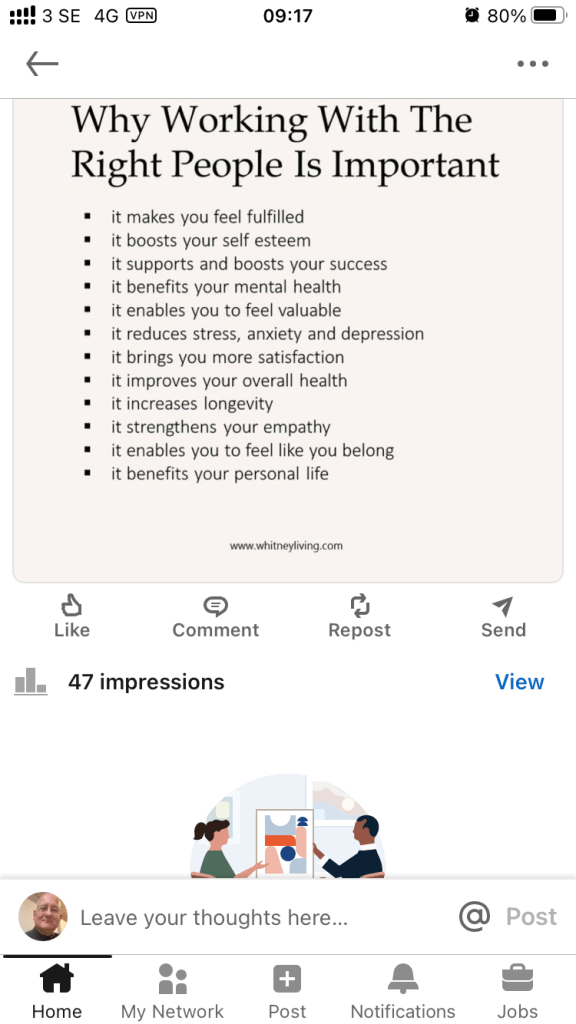
i realised this not long ago. i don’t want to work with this company or that. i want to work with people who also, simultaneously, may work for one company or organisation or another.
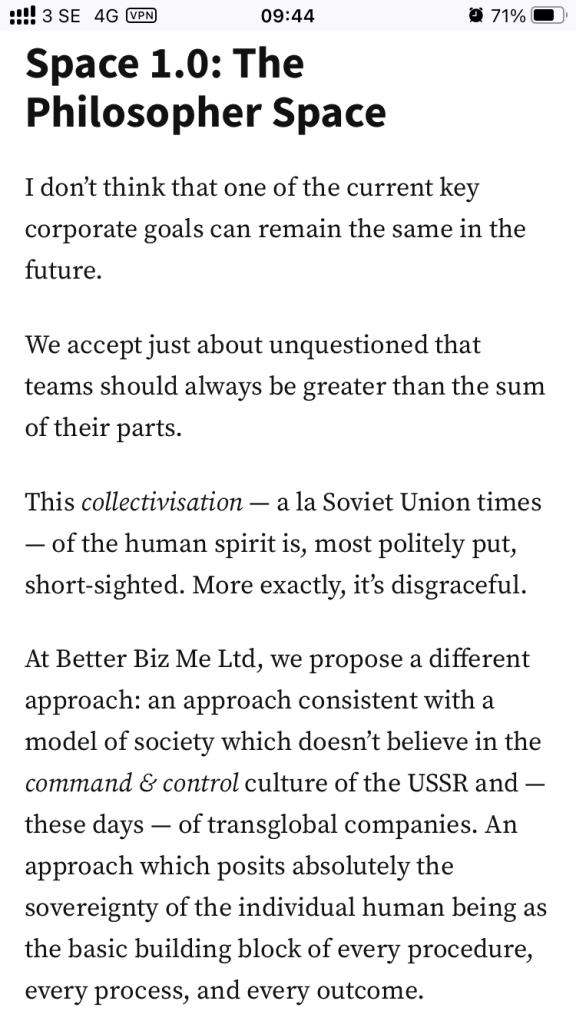
when the institution overrides the individual from the start is when, even if all the starting-signs are cool, the individuals will one day — especially when huge amounts of money all of a sudden become likely — be inevitably and overwhelmingly overridden by their instituitional framework.
i don’t intend for us to start as i don’t mean us to go on.
so first i want to meet people. i want an organisational structure which generates a hybrid of #holacracy. and i want brains to show themselves the most important factor and matter of all, where the overarching #gutenbergofintuitivethinking and #intuitionvalidationengine projects are concerned.
because if you choose people first, and the people are right for you, then the institutions automagically will remain so too.
at least … whilst your people of choice remain at the institution in question. and they will do in general, for sure — if the institution remains worth then staying. for in the question of #intuitionvalidation there is no building-block which is more significant than the human as individual.



















































 mil's page