when big politics and business make the customer a kleenex

three good things happened today: all related to how i perceive the world.

1. first, i do have a death wish: why, when i first read him, hemingway sooo immediately clicked with me.

2. however, i don’t want to be unreasonable or hurtful to others in my goal to achieve this outcome. i also most definitely don’t want support to ameliorate it. amelioration is the biggest wool-over-the-eyes of our western democratic time. i don’t want to be part of a process that perpetuates its cruelties.

3. my strategy — that is, only strategy — will from now on be as follows: i shall say and write about everything that i judge needs to be called out, in such a way that the powerful i will be bringing to book day after day after day will, one day, only have the alternative to literally shoot me down.

in order, then, to make effective the above, i resolve:

a) to solve the problem of my personal debt, acquired mainly due to my startup activities, so the only way in the future that the powerful shall be able to shoot me down is by literally killing me.

for my mistake all along was to sign up to the startup ecosystem, as it stands, as a tool for achieving my personal and professional financial independence:

startuphunch.com (being my final attempt at making startup human)

as this personal debt is causing me much mental distress and, equally, is clearly a weakness i show to an outside world i now aim to comprehensively and fully deconstruct, as a massive first step, then, i do need to deal with it properly.

b) once a) is resolved, i shall proceed to attack ALL power wherever it most STEALTHILY resides.

that is, i focus on this kind of power: the stealthiest and most cunning versions of.

the ones where it appears we are having favours done for us, for example.

specifically, that is, big tech. but many many others, too.

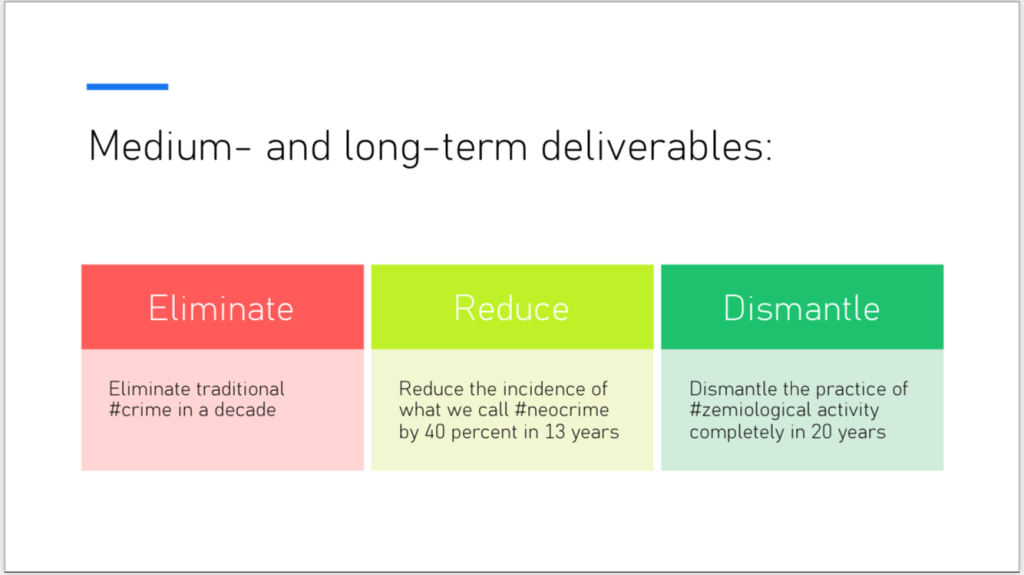
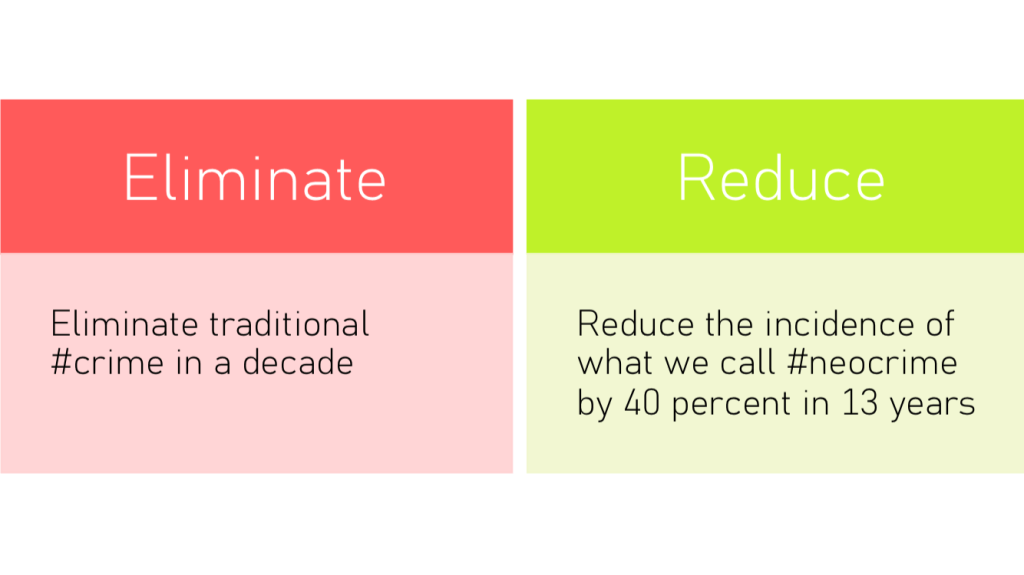
what essentially constitutes the driving forces behind zemiology, loopholes, neo-crimes, and similar legally accepted but criminally immoral societal harm; all of which, as a general rule, is most difficult right now to track, trace, investigate and prosecute.

crimehunch.com/neocrime

crimehunch.com/loopholes

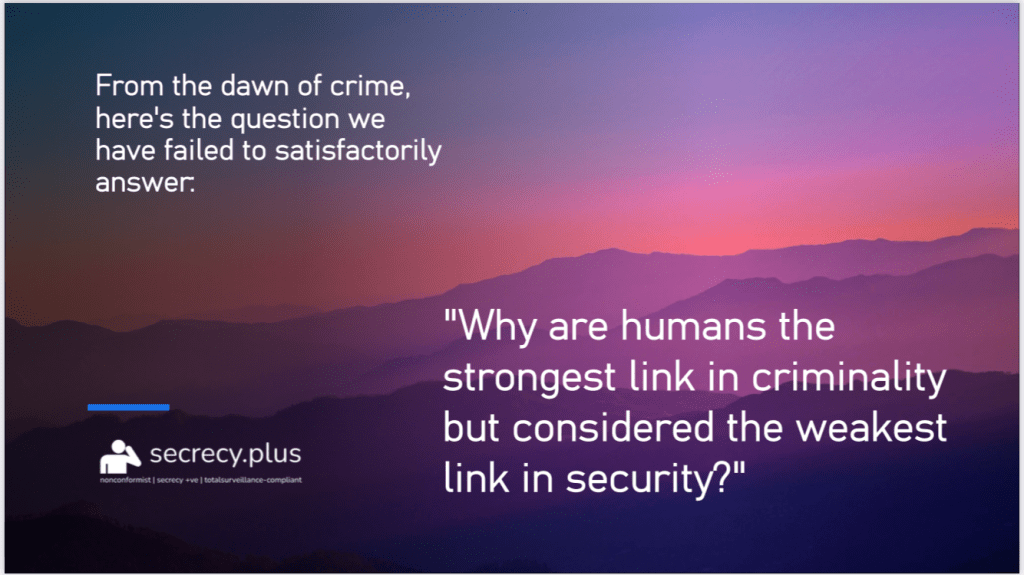
www.secrecy.plus/law | legalallways.com

www.sverige2.earth/example

this is why i have concluded that my natural place of work is investigative journalism. and where i want to specialise — in this aforementioned sector and field of endeavour — is in the matter of how big tech has destroyed our humanity. but not as any collateral, accidental, or side effect of a principle way of being it may legitimately manifest.

no.

purposefully; deliberately; in a deeply designed way, too … to mainly screw those clients and customers whose societies and tax bases it so voraciously and entirely dismantles.

to screw, and — equally! — control. and then dispose of lightly and casually, when no longer needed, or beneficial to bottom lines various.

and so as a result of all this, i see that having a death wish is beneficial: if channelled properly, as from today i now intend it shall be, then it will make me fearless as never i dared to be. fearless in thought and disposition. fearless even when made fun of.

not in order to take unreasonable risks with my life — or anyone else’s: no.

rather, to know that life doesn’t exist when the things i see clearly are allowed to, equally clearly, continue.

and to want deeply, deeper than ever in my life, to enable a different kind of life for everyone.

NOT just for the self-selected few. those who lead politics, business and the acts of pillage and rape in modern society.

not just for them.

a better life for everyone, i say. everyone.

because i don’t care about mine. i care that mine should make yours fine.

now do you see? this is what makes me feel useful. nothing else. nothing else at all. and certainly not finding personal happiness. that would only blunt the tool.

🙂
why NOT to thrive too?

yesterday evening was ace. where i’m staying someone new came for a week. i was told he was #finnish, and was asked by the host if i could hang around to receive.

it was downtime for me yesterday: i was needing some respite from all the thoughts i’d been having.

the new guy is young, brainy, sharp, kindly — and not #finnish at all, but #spanish. i spent the whole long evening speaking in #castellano with him, and it was fab: i realise how much i know about #spanish culture, and the bad memories just refused to surface on being with a good person from the country which i see now i’d also created so many good memories out from whilst there.

i also saw my #teaching and #enabling #skillsets kicking in. it was really interesting, communicating with him about our differing and similar perceptions of the worlds that overlapped around us — and then again, the worlds we each enjoyed which didn’t overlap. (as a by-the-by, and after the vibes of last night, i’d now like to explore mentoring quite seriously, if anyone who might facilitate this is reading these lines. i listen well face-to-face in a way maybe my writing gives lie to. and i make and communicate #polymath-style connections quite robustly and vigorously. both could serve newly arrived others to #sweden really well.)

he had actually been to #finland quite recently. and i have been in both #sweden and the #uk on and off since last december; that is, just before christmas.

‘much to praise in #scandinavia. very much both of us liked already.

we covered a lot of ground: he’s here on a post-#spanish master internship at #karolinska. and i told him of the 10,000 startups in #stockholm. and i explained how ignorant of another world i’d been all these years. and i said how moving from one country to another might not only be a question of building on existing abilities but also recognising the job and work roles would have not only differing descriptors but maybe even different goals and desired outcomes: even different philosophies.

we also spoke of the importance of philosophy more widely in everything — here, especially #tech (he studies and works in the field of #biology): worlds we all these days find ourselves inhabiting.

and finally he helped me satisfactorily resolve a conundrum which had led a friend of my father’s back in the 1960s to commit suicide. if i remember rightly, the friend had been a biochemist: and was involved in the study of cellular will — that is, whether at cellular level the idea and fact of free will can be detected.

it pushed my father’s friend over the edge; the philosophical challenge being that maybe whatever you chose to do would be impulsed inevitably by something external to yourself. no free will, then … anywhere, ever, at all.

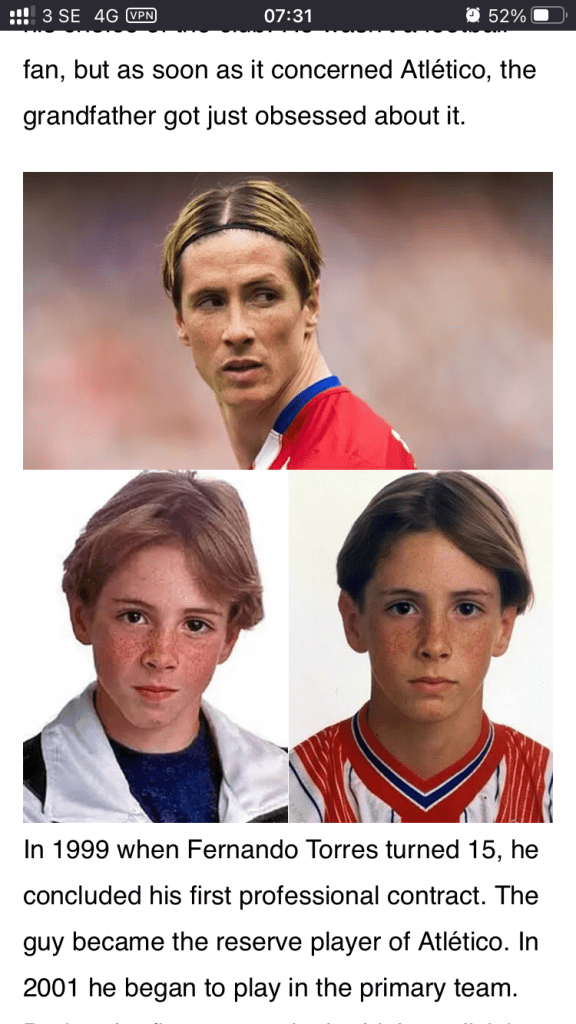
young ismael, the spanish intern and researcher’s name, reminds me of fernando torres just a little bit. and he defo scored a goal or two when he explained to me the fact that a healthy cell to remain healthy can neither be #dependent nor #independent. it suddenly laid it out clearer than clear for me the reality that in a completely different time had served to kill my father’s friend: cells do indeed have free will; and they exert it to survive … even if nothing else. and what they must choose in order to survive in this way is what gordon brown said once about #interdependence: it’s the only thing worth pursuing, tbh. neither needy nor downright may you in all intellectual sincerity be. simply conscious of the collective you form a part of which always, always must be posited around the actions of individuals.

and so if cells, why not us?

and if us in order to survive, why not in order to thrive too?

https://m.allfootballapp.com/news/EPL/LIKE-A-MODEL-El-Nino-Fernando-Torres/2617229

on not wanting to be a genius

i think we sometimes use terms to ensure they can be boxed away safely.

criminal means him (mainly), not me.

axe murderer … whoa!

serial womaniser — never even occurred to me.

mentally ill. well. just crazed.

like a paving we never will tread; never will see ourselves treading … not being, you see, of that cloth.

“… and then we have a problem”

i have a beef (you may have noticed) with western democratic and corporate notions of #teamwork.

i have a similar distaste of command and control economies. and, equally, i dislike exhortations to five-year plans and one-best-way only.

all these things were what we fought the #sovietunion during the #coldwar to resist.

and then, after we considered we won that war, thirty or forty years on it turns out the #ussr had won all the basics. big corps deliver command and control like nobody’s business, ever. #teamwork which subsumes the capabilities of original, #nonconformism to the interests of the collective … well, wouldn’t you know? and five-year plans — how common aren’t these in modern ways of thinking and doing … whether corporate companies or corporate-style public sectors?

let’s face it: the individualism of the human species has been lost to the need to do something over and over again, exactly.

one thing i notice in #stockholm right now: so many houses are simply anything but uniform. and they keep all the big trees wherever they don’t have a house’s foundations. they actually build around trees instead of razing it all to the ground before starting. and then, only then, balefully planting little trees which take decades to grow.

i could give you a ton of analogous examples, too: examples of where the #swedish have forged their own thoughts and praxis on a collectivism based beautifully around the individual. the individual person and the flora …

it’s not perfect: but it strives to do better.

nowhere else have i seen this instinct manifested so clearly. nowhere. nowhere with such a gorgeous attention to details.

we have a problem in our western democratic corporately-organised institutions and groupings: we universally fear a standout talent. we box it up in a label which protects not the labelled but ourselves. in fact, we prefer to see it as standout rather than something we could all deliver on one day.

even the box we call #genius is there to defend us from what we fear: that we also might shine today as never before during too many years.

better not to hope ever, than to break the habits of a deadening lifetime.

no?

on a “human-sensitive ai”

ai’s proponents and advocates — of the human-insensitive version of this set of technologies, i mean — have kind of decided on a necessary battlefield between #machines and #humans.

as a #teacher, #trainer and #facilitator during decades this has never been my way. for me, knowledge isn’t how big yours might be but, rather, how well — how pointedly — you learn how to use what you acquire over the years.

speaking well in a language doesn’t require more than 800 words. it’s true. ask #chatgpt-x. what makes the difference is the baggage we bring to each word; the connections; the semantics; the allusions and how we choose not to say exactly what’s expected.

back in 2019 i lost my middle son’s affections. i had to borrow money from him to keep my #startup going. i’ll never get him back — for this and one other, unrelated reason. it was to get the below project off the ground.

in the event, the organisation i submitted to said it was unique (in a good way) and, simultaneously, that it didn’t advance science (in an opposing and bad sense, obviously). they informed me of this unofficially one morning early on — that is, that all my hopes and dreams were dashed — as i stood on a train platform whilst a train came in just that second.

the cctv would have seen me: the organisers themselves could also have seen — if they had wanted or cared to — the cctv of where i was and how i looked. it was obviously a terrible coincidence i resisted the temptation to take advantage of.

none of my three children now speak to me because of #startup-land. but the #philosophy — not the #tech — of the project attached deserves to speak to us, five years later.

let’s allow it to encourage us to be better #techies everywhere. change is inevitable, of course; but in #tech its nature never is. in such moments, in #tech we’re always choosing.

let’s choose wiser. please.

https://mils.page/ai

yeah?

on returning to our childhood states of creative enquiry … and to the max, maybe?

introduction:

maybe #ai can do a few things humans are paid to do. but that doesn’t mean what we’re paid to do by businesses everywhere consists of what our real creativity as unpredictable humans is being exhibited — or even widely fomented.

the proposition:

maybe #it-#tech’s architectures have for so long forced us — as the humans we are — into undervaluing, underplaying and underusing our properly creative sides, that what #ai’s proponents determine are human creative capabilities are actually the dumbed-down instincts and impulses of what would otherwise be sincerely creative manifestations of human thinking: that is, where given the architectures i suggest we make more widely available — for example, just to start with, a decent return to a secrecy-positive digital form of pencil & paper so we DON’T consistently inhibit real creativity — and therefore encourage a return to our much more creatively childlike states of undeniably out-of-the-box enquiry …

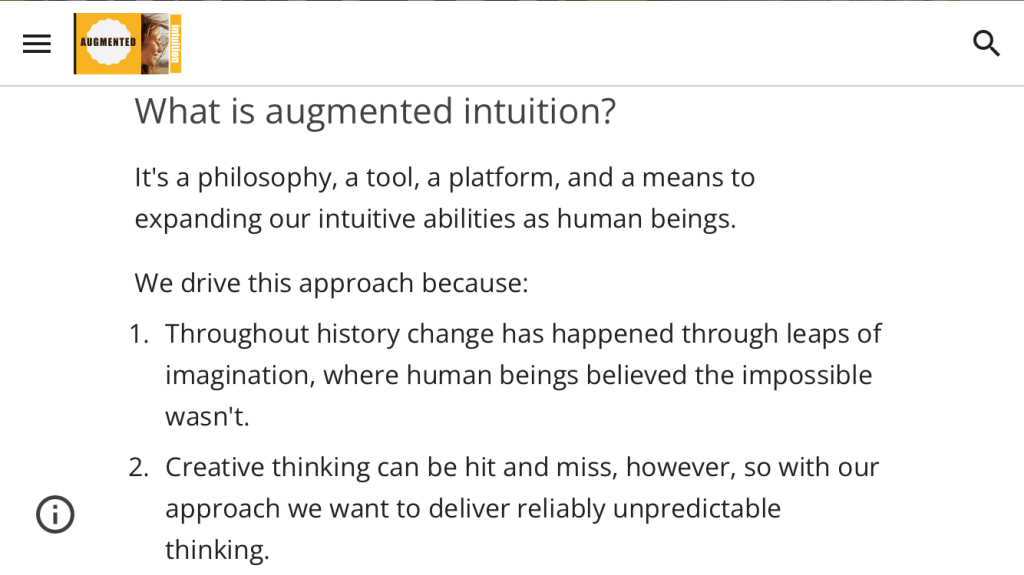
augmentedintuition.com | a historical whitepaper advocating an augmented human intuition

in this sense, then, the real lessons of recent #gpt-x are quite different: not how great #ai is now delivering, but how fundamentally toxic to human creativity the privacy- and secrecy-destroying direction of ALL #it-#tech over the years has become. because this very same #tech did start out in its early days as hugely secrecy- and privacy-sensitive. one computer station; one hard-drive; no physical connections between yours and mine: digital pencil & paper indeed!

it’s only since we started laying down cables and access points for some, WITHOUT amending the radically inhibiting architecture of all-seeing admins overlording minimally-privileged user, that this state of affairs has come about: an #it-mediated and supremely marshalled & controlled human creativity.

no wonder #ai appears so often to be creative. our own human creativity has become winged fatally by #tech, to the extent that the god which is now erected as #ai has begun to make us entirely in HIS image, NOT extend and enhance our own intrinsic and otherwise innate preferences.

summary:

its not, therefore, that #it-#tech has been making #ai more human: it’s that the people who run #bigtech have been choosing to shape humans out of their most essential humanity.

and so as humans who are increasingly less so, we become prostrate-ducks for their business pleasures and goals.

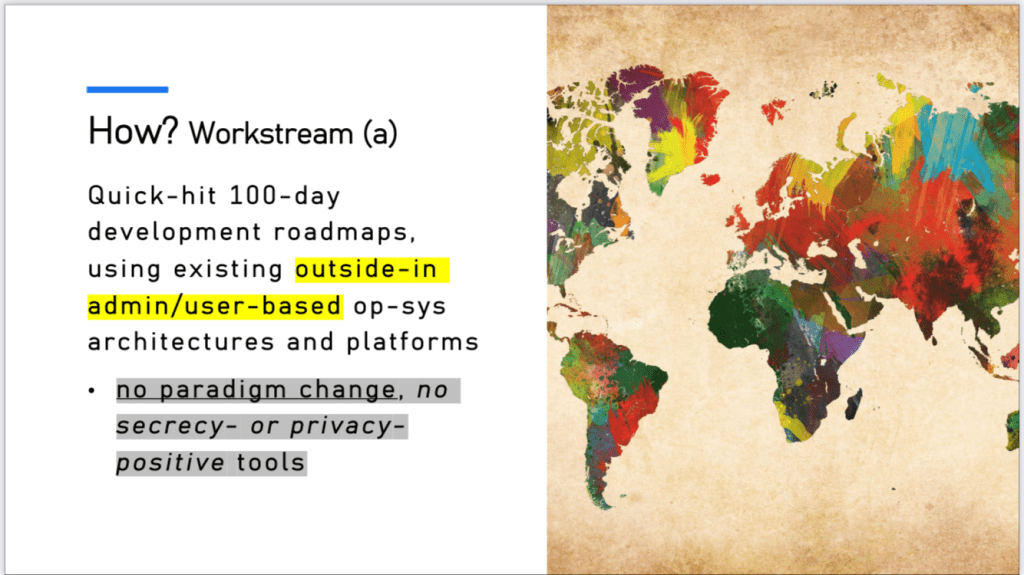
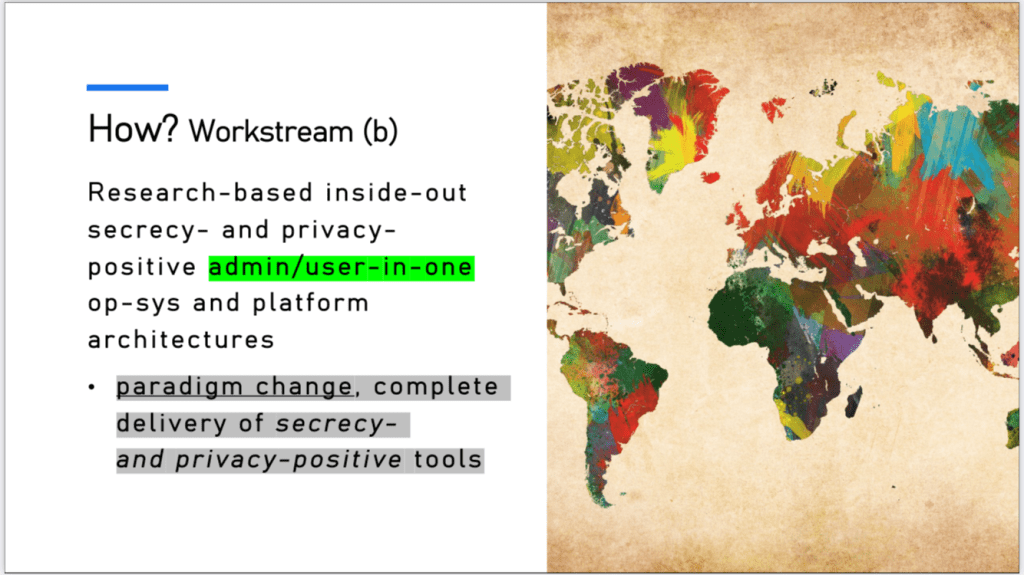
an alternative? #secrecypositive, yet #totalsurveillance-compliant software and hardware architectures: back, then, to recreating the creativity-expanding, enhancing and upskilling tools that a digital pencil & paper used to deliver:

secrecy.plus/spt-it | a return to a secrecy- and privacy-positive “digital pencil & paper”

a final thought:

in a sense, even from #yahoo and #google #search onwards, both the #internet and the #web were soon designed (it’s always a choice, this thing we call change: always inevitable, true, it’s a fact … but the “how” — its nature — is never inevitable) … so from #search onwards, it all — in hindsight — become an inspectorial, scraping set of tools to inhibit all human creative conditions absolutely.

the rationale? well, the rationale being that #bigmoney needed consumers who thought they were creators, not creators who would create distributed and uncontrollable networks of creation under the radar.

and then with the advent of newer #ai tools, which serve primarily to deliver on the all-too-human capability to bullshit convincingly, #it and related are finally, openly, brazenly, shamelessly being turned on all human beings who don’t own the means of production.

we were given the keys to the kingdom, only to discover it was a #panopticon we would never escape from. because instead of becoming the guards, that is to say the watchers, we discovered — too late — we were forcefully assigned the roles of the watched:

thephilosopher.space | #NOTthepanopticon

and so not owning the means of production, with its currently hugely toxic concentrations of wealth and riches, means that 99.9 percent of us are increasingly zoned out of the minimum conditions a real human creativity needs to even begin to want to function in a duly creative manner at all.

that is to say, imho, practically everything we see in corporate workplaces which claims the tag of creativity is simple repurposing of the existing. no wonder the advocates of #ai are able to gleefully proclaim their offspring’s capabilities to act as substitutes of such “achievements”.

wouldn’t you with all that money at stake?

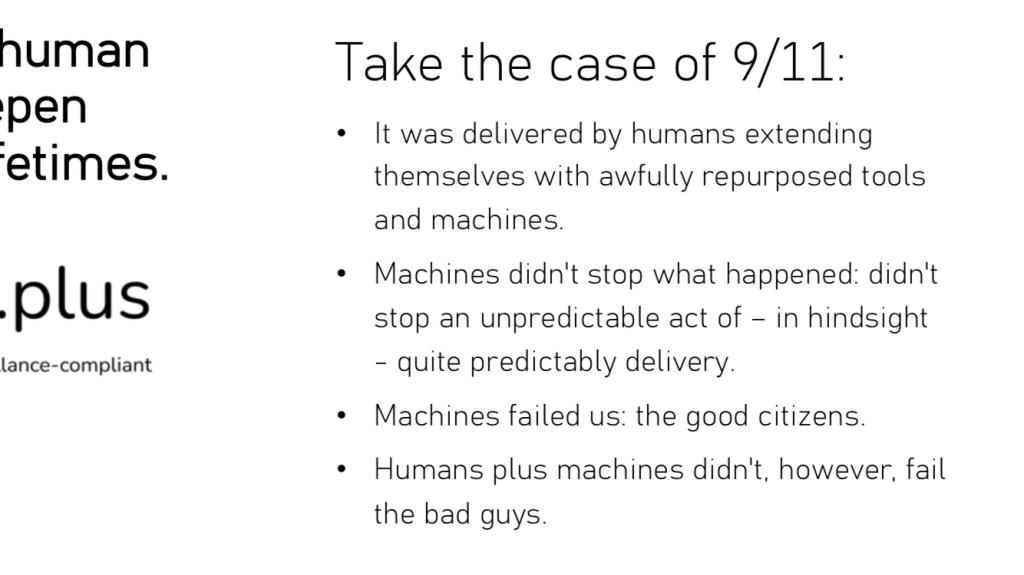
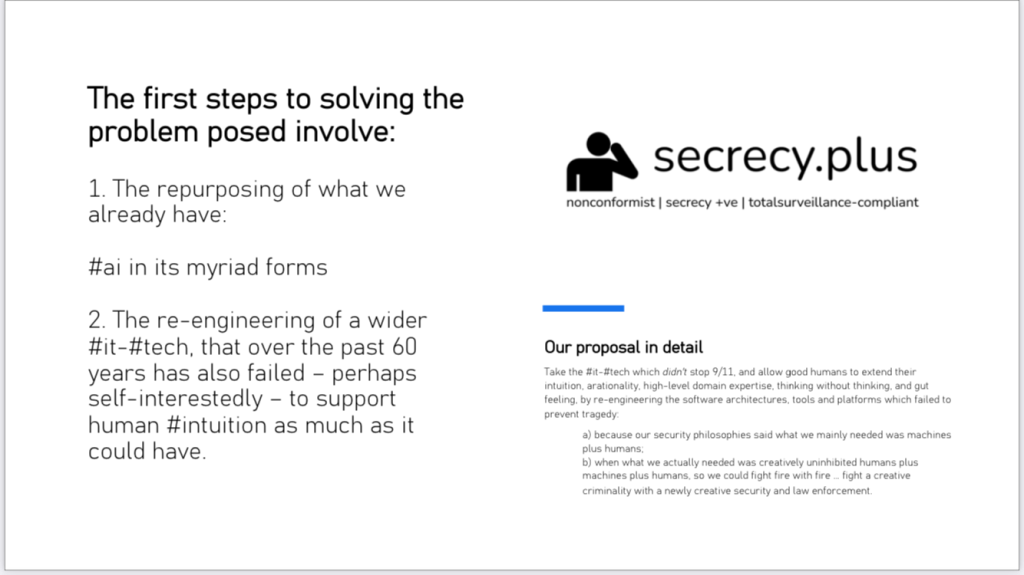
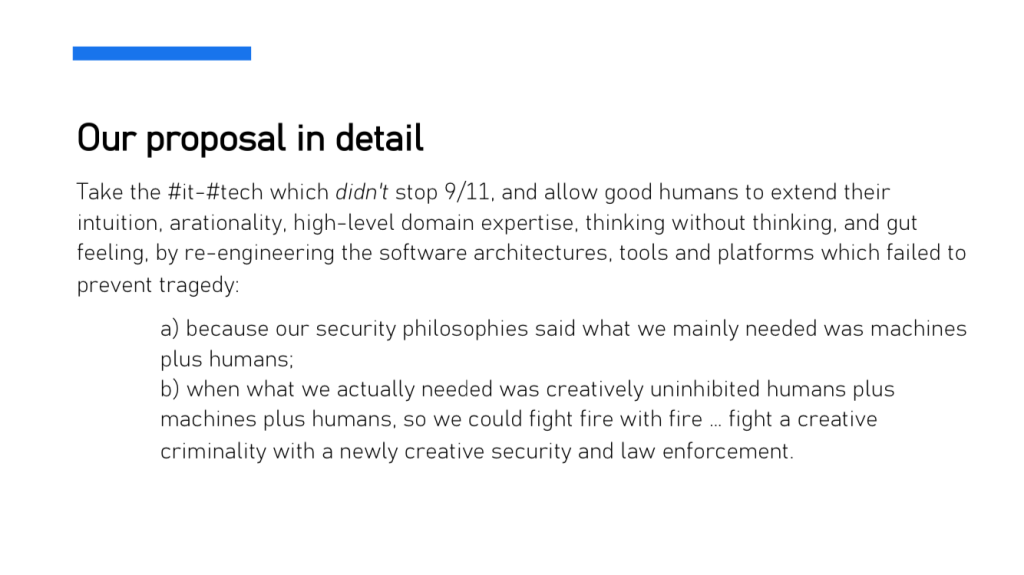
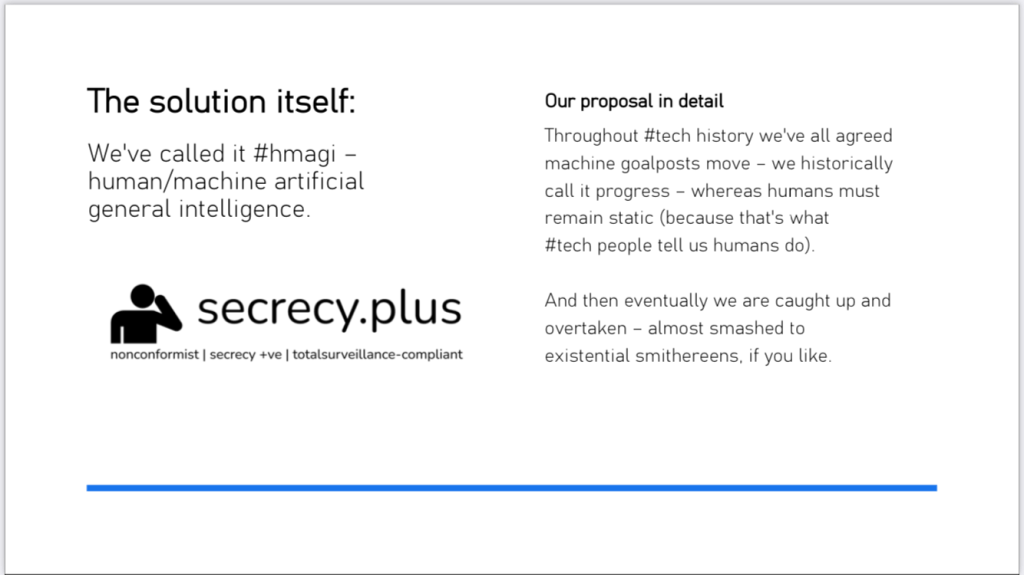
secrecy.plus/hmagi | #hmagi

why write

someone asked me this morning why i write. i didn’t answer them.

maybe it was an example of new knowledge for me. my dissertation supervisor, a very brainy person, told me once that we should treasure those moments when we didn’t know how to answer someone: they were examples of new knowledge.

certainly for ourselves, and then again maybe for others too: a wider humanity. in either case, to be valued above almost any other lived experience. because the experience manifests itself in all our endeavours: a common denominator which is neither low nor common, tbh. in work; in academia; at school; in relationships; in a love at first sight … everything i tell you.

why write? not to be read. never. to write in order to be read is to almost surgically remove the very condition good and faithful writing demands to remain faithful and good.

freedom. that’s why i write. to be free. to remain free. to sustain a wider freedom. to ensure liberty remains a goal of all human beings.

you see … to be read is nice but dangerous. to be read is to enter into a dialogue. and in such dialogue we inevitably compromise, fudge, lose our trails of thought, forget the purpose of reflection — and, then, indeed, its power.

that’s not me. and after sixty years of trying to be a writer who is read, i realise it mustn’t be me. because my virtue is that i don’t enter into dialogue before i have my ideas.

actually, that’s not true. by writing, i speak to myself. and this, for me, is key: because it’s truer than true that without this mode of speaking with my being i never am able to know, until i follow the described procedure, what that being thinks.

so if i have to enter into a dialogue with the person who asked me this morning about why i write … well … i write to be free and find out what it is to be me.

is all.

enough?

i give no more.

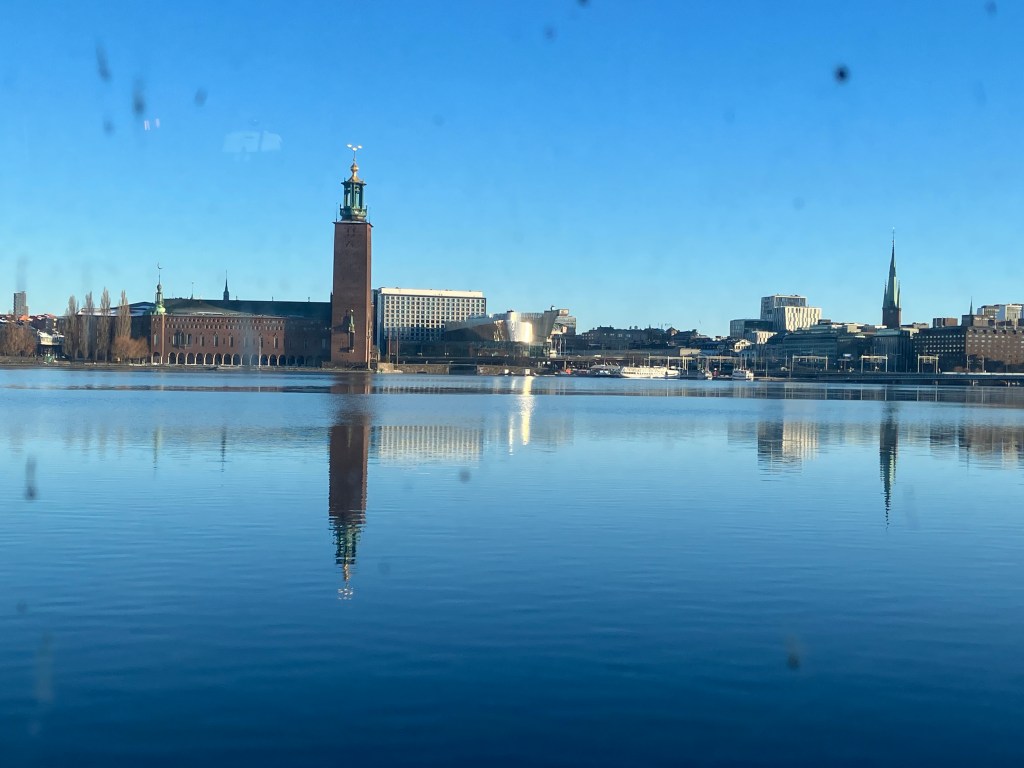
except a video i just made and then a poem i just wrote this morning at breakfast in stockholm city, sweden.

♥️ 🇸🇪


“a poem on the sound of silent friendship” by mil

it’s not a condition

it’s not a redemption

it’s not a transaction of sexual reward:

i met you and saw you

and sensed kindred soul

beyond the blood that tied us down

and bound us with violence

as if sworn to some crown


it’s not anything like this

anything at all

it’s just that i found myself

that evening enthralled

by a person who was fun

after all was said and done:

a person whose brain

matched a beautiful way


of moving her body

without insistent degree

but just in that measure

i found recently to be good

in this place i am now:

a lagom of life and how

where we aim to deliver

on more than a brutish noise


the sound of silent friendship

between you and me

has become my go-to manner

of being a man on this rock

and i find in its steadiness

i need nothing more

than to know before i go

i was a good friend in the end


what happens when society is secular but redemption remains a desire and real human need?

introduction:

i’ve been thinking a lot about redemption, ever since a messenger and intermediary said to me in 2016 that my problem was guilt.

she was, on due reflection, wrong. guilt is good, if its reasons for provoking can be assuaged in competent and compassionate manner.

what i still suffer from is an absence of process, in the secular society i cherish, for redemption.

my supposition:

let’s presuppose the following: let’s say that religion served a real positive purpose which in its relative absence now in many of our societies has not been supplanted with other processes as compassionately. i say compassionately with circumspection, of course. religion itself has effected many horrible historical — and even current — events in humanity’s journey.

an example, then, of the redemption i mention?

well. here we are!

discretion is a very humane aspect of criminal justice systems, when used in the spirit of the law and its kindly interpretation.

i studied international criminal justice in 2017 at master’s level and on one occasion stumbled across the following anecdote in the academia i was reading: italy, well known for the misuse of family power and structure, may also invoke the good of family leading to a better criminal justice praxis there.

most crime in all criminal justice systems is committed by young men between the ages of 18 and 26. after that age, almost automagically, its incidence tails off. some suggest there may even exist physiological reasons for this: that young male brains get hard-wired to begin settling at around the upper age band quoted.

either way, we have a criminal justice reality: young men who commit crime are also victims of crime, in the sense that they are the most vulnerable group to enter criminality, and get very little proactive support to stay out of the criminal justice system. more often, in fact, they get targeted — maybe targeted into it — via prejudice and presumption of very many, damning and defining, societal forces.

in italy, then, this was the example: a law-enforcement officer heard of a young man around 17 who had just about committed his first crime; certainly infraction. the officer knew of the family, and instead of “inducting” the youth directly into a path which later would be heading irreversibly towards criminality, he went behind the back of the youngster and straight to his parents.

he explained the situation gently and non-threateningly, explaining that the family could help. here, we could argue, was good discretion operating to the max: even, that it shouldn’t have been necessary to use discretion to keep the young man out of being typed so young as criminality’s cannon fodder. maybe it could be conceivable that the officer’s own kpi-structure and law-enforcement praxis would consist primarily of keeping people out of the system — enabling and allowing them to redeem any initial acts so that criminality became something they themselves wanted to veer from — instead of counting up the number of criminals captured and banged away.

proposal:

on the of the above, and in relation to things i’ve already published on a new concept of criminal justice which i’ve termed natural justice, i’d like to propose that we take the renewed need for a societal infrastructure of redemption to be revisited.

in the absence of father confessors, that is in the absence of many people finding them unsatisfactory to their needs (where they work, no change needed of course!), we should create serious halfway houses between the criminality and zero good of #darkfigure and #neocrime as i understand them at one extreme (the 20 to 40 percent that is the crime and related loopholes invisible to criminal justice) and religiously delivered confession and relief at the other. which for secular societies no longer functions easily.

yes: a natural justice, after all.

final observations:

thinking more philosophically, it’s possible that the behaviours acted out as described in this post, which may then duly and rightfully lead to criminal prosecution, are encouraged because we need to be redeemed — to feel it, i mean. and unless in secular society you enter the criminal justice system, a societal-level redemption is not within reach. if we provided other ways which had nothing to do with criminal justice stigma, perhaps — too! — fewer would wish to be criminals.

i’ve often felt, as a by-the-by and in analogous way, that open-source and social-networked online communities have become so popular and active because in such spaces — the really competent and well-run ones i mean — we find the reality (or even just simulacrum, but at least this) of a democratic discourse that real democracy increasingly is lacking.

what’s clear is there are exist basic human instincts and impulses, and they must always act in pairs.

doing democracy is one; where nowadays the reward for its practice where this doesn’t invoke the relationship of abused partner?

and so doing ill is another; where nowadays the redemption which doesn’t involve punishment and disgrace?

curie + foucault … and then a crime-free world?

foucault said everything is dangerous: and more reason, for this reason, to study everything more deeply.

curie said we shouldn’t fear understanding: almost that it was our duty.

i want, now, to set up a national security facility which uses curie’s approach for its outer core, where our good people learn in supported ways to fight bad people.

and i want then, once we have fashioned the necessary tools, to develop an inner core which gets as pointed as foucault’s persistence re the dangerous.

at the #nobelprize museum today i saw two words on the floor near the entrance, amongst many others. the two i recognised and stood near were in english. i hope one day others i am able to recognise will be in swedish.

my words of preference were “persistence” and “disrespect”. of the two, the one i stood next to first was “disrespect”. not gratuitous: measured. that’s me. and that will always be me.

and that’s what i want to make of the aforementioned national security facility: something deeply infused with a profound lack of respect to the shibboleths of crime and … to what we can or can’t do to stop and dismantle them.

let’s do it.

it’s time we did. time to have confidence in our abilities. our competences. and our integrity.

why don’t people who love advocating machine progress find it easy to advocate analogous processes of human progress?

it’s a long title, but it’s a big subject.

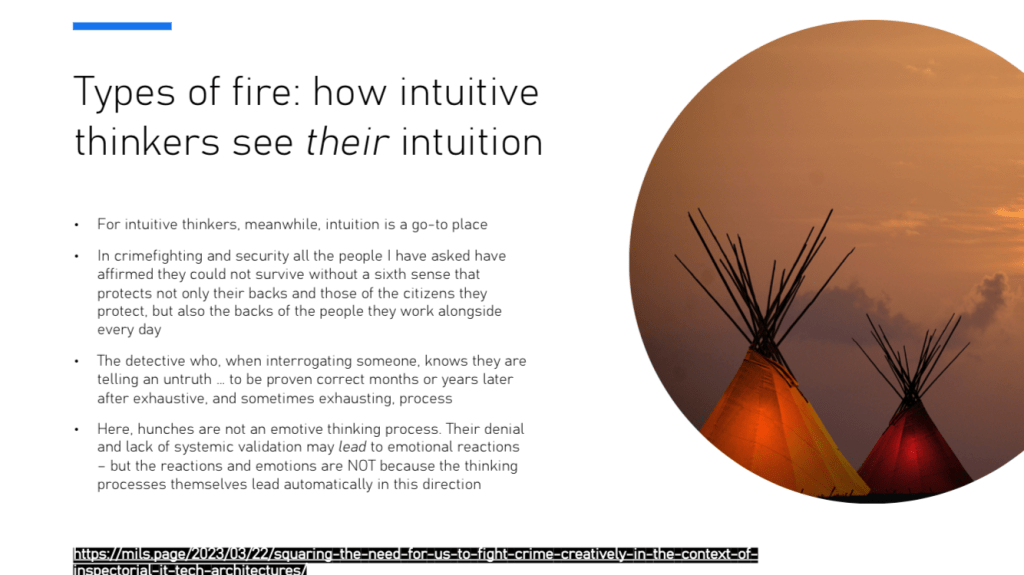
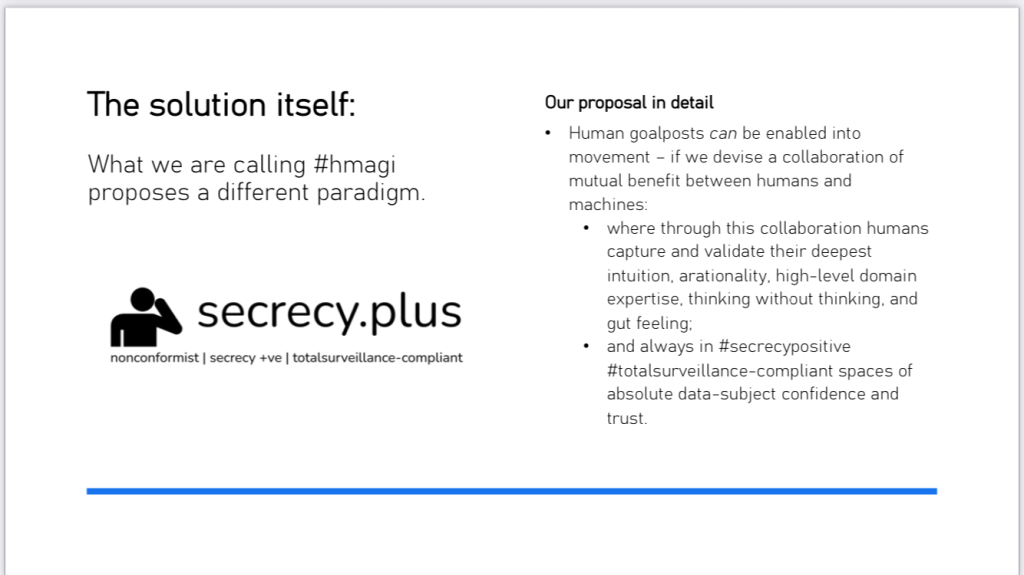
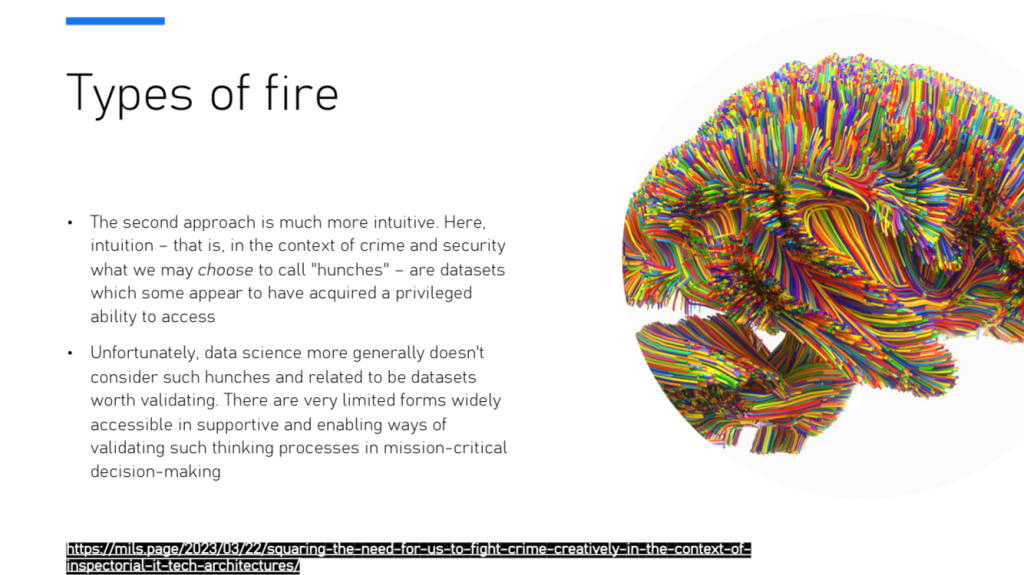
over the years, since i’ve started proposing seeing intuitive thinking as a logical dataset we should spend a lot more money on capturing, verifying and validating in systemic, human-empowering, inside-out ways, i’ve spoken to a lot of technologists.

without exception — except tbh just this last wednesday when i was at an aws-organised event in stockholm — ALL software engineers and imagineers of this kind have shown fabulous and rightful enthusiasm for the demonstrable machine progress we’ve historically witnessed since the start of humanity’s extension via tools — and yet have been absolutely resistant, sometimes to the point of rudeness, to the idea that we may move human goalposts in equal measure: that is, decide to promote the 90 percent of the human brain most of us are still apparently unable to advantage ourselves of.

one super-interesting aws person i spoke to on wednesday, for most of the evening in fact, on and off, told me at one point that the human brain only uses around 40 watts to do all the amazing things practically all examples of the same which have populated this rock since human history began have clearly been able to deliver on. compare and contrast this with the megawatts needed to run a data centre, able even now only to approach human creative capabilities.

but even on wednesday at the aws event, tbh, techie people were unable to show as deep an enthusiasm for progressing humans in the way i would advocate: not within a lifetime as we have been encouraged to assume are the only goalposts we can move, but intergenerationally, which is what i am increasingly proposing.

that is, actually create a tech philosophy which mimics what film and movie tech have done for over a hundred years: make humans more important to all industrial process through dynamics of industrialisation, instead of ensuring we are less substantial and significant through procedures of automation, obviously designed to reduce our future-present relevance.

because when you hear proponents of generative ai, of any ai, the excitement is palpable: “look what they can now do: write school and university essays that look academically rigorous.”

or write code with just a verbal instruction, is the latest one.

what they don’t ask is whether it was a task which human beings should have been asked to do in the first place.

or, more pointedly, a task which the human beings who did do it competently should have been remunerated to the extreme levels they have historically been remunerated to, for carrying out in ways that — privately speaking, admit it! — became so easy for them to charge exorbitantly for.

in my own auto-ethnographic case, i always got lower marks in my education than my brains indicated i deserved. my latest master was in international criminal justice: during the 2016-2017 academic year in the uk. i always assumed i was lazy. you see, i used a process which wasn’t academically orthodox: i’d create through my brain’s tangential procedures a brand new idea (new for me, anyways), and only then proceed to read relevant literature … if, that is, it existed. back to front. altogether. and marked down, completely all the time.

and in the light of chatgpt’s achievements, i also begin to wonder: because this kind of tech, to me, is nothing more than incredibly deepened search engines. but weren’t the humans who did such jobs also “only” this? really, only this.

and so people who scored well in analogous manual activities were therefore good not at creating new worlds with their academia and coding and software development but, rather, capable at little more than grandiosely integrating essentially tech-informed step-by-step approaches into the otherwise naturally, ingeniously and much more multi-layered human mind.

and so these kinds of students used procedures which were far more appropriate to it-tech environments, and thus scored highly in such education systems.

when truly we should have long ago considered such procedures an absolute anathema to all that COULD make human thought magnificent.

i mean … think the aforementioned 90 percent of the brain whose employment we may still not manage to optimise. and then consider a software or tech platform where its creators tolerate not using 90 percent of its monetising abilities.

really, it’s this: that is, my experience with technologists of all kinds who work in it-tech, where automation is absolute king. (and i say “king” advisably.) they love telling the world how their latest robot — or whatever — will soon be indistinguishable from real human beings in how it looks, speaks, moves and interacts more widely. but why?

the technical achievement is clear. the monetisation opportunities of convincing solitary individuals they need robotic company in place of other human beings are also manifest. but the “why” we should be such advocates of machine progress and yet, simultaneously, UTTERLY INCAPABLE of showing the same levels of enthusiasm for considering we might create environments and thinking-spaces — as i have been suggesting for five or more years — that make intergenerational human advancement possible with the support and NOT domination of tech (that is, as per what movies and films have delivered for humans for that hundred years or so, and NOT as per the relationship between human beings and vast swathes of it-land since, say, the 1950s) … well, this is surely difficult for anyone to understand and explain. unless, of course, we really are talking womb envy: “i can’t bring a human being into the world as completely as a woman can, so instead i’ll make machines that do what humans do, only allegedly better.”

🙂
wdyt?

any truth in any of the above?

why do the boys in tech-land get so enthusiastic about the latest technologies that overtake apparently deep human capabilities — and yet reject so fervently and consistently the possibility that humans might also be able to use equal but repurposed tech to make humans more? but as humans?

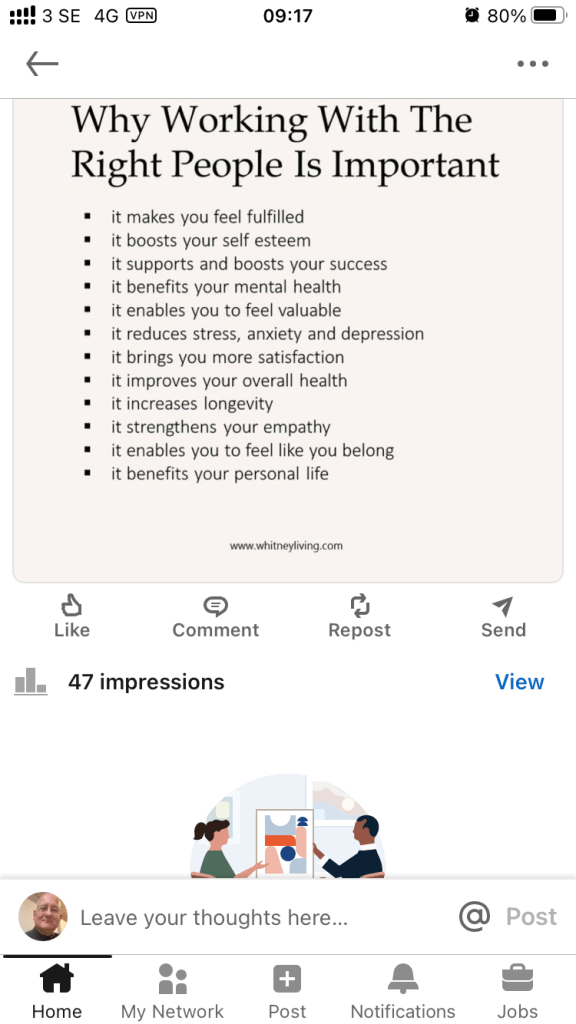
choose people to work with, not their institutions

https://www.linkedin.com/posts/jewel-pena-53257213_activity-7041962988248952832-m7Pq

i realised this not long ago. i don’t want to work with this company or that. i want to work with people who also, simultaneously, may work for one company or organisation or another.

when the institution overrides the individual from the start is when, even if all the starting-signs are cool, the individuals will one day — especially when huge amounts of money all of a sudden become likely — be inevitably and overwhelmingly overridden by their instituitional framework.

i don’t intend for us to start as i don’t mean us to go on.

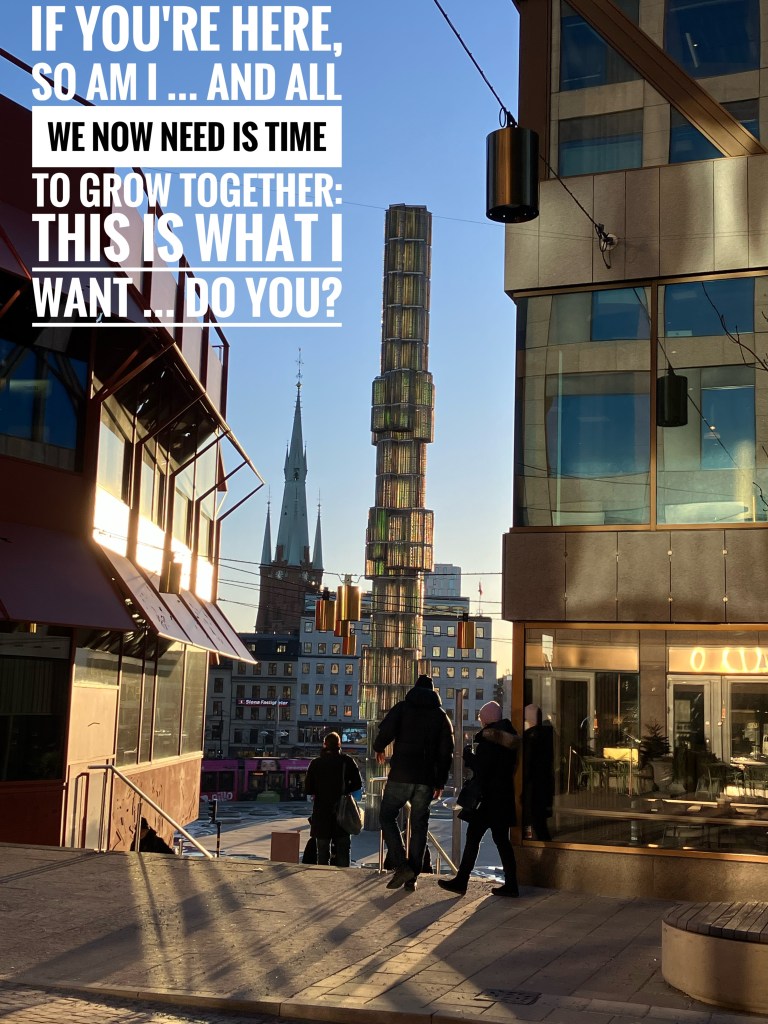
so first i want to meet people. i want an organisational structure which generates a hybrid of #holacracy. and i want brains to show themselves the most important factor and matter of all, where the overarching #gutenbergofintuitivethinking and #intuitionvalidationengine projects are concerned.

www.ivepics.com

because if you choose people first, and the people are right for you, then the institutions automagically will remain so too.

at least … whilst your people of choice remain at the institution in question. and they will do in general, for sure — if the institution remains worth then staying. for in the question of #intuitionvalidation there is no building-block which is more significant than the human as individual.

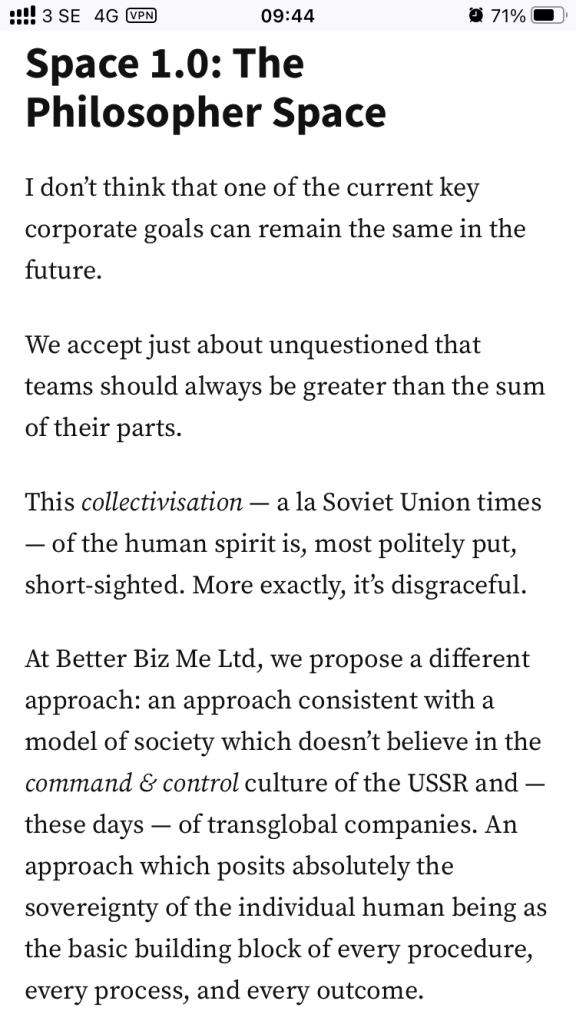
thephilosopher.space/space-1-0-the-philosopher-space

platformgenesis.com

www.secrecy.plus

omiwan.com

mils.page/presentations | #milspage #presentations

mils.page/intuition-day | #milspage #intuitionday

mils.page/distributed-privilege | #distributedprivilege