
introduction:
there was only one kind of label that ever sounded positive for me during my life. because my parents labelled me and my siblings all our lives. and to our detriment: to diminish us.
labels can be shortcuts to understanding; or they can be machetes to slice a man into the dismembered state he’ll never be able to recover from.
background story:
in 2003 i was labelled and dismembered by the british state: i was judged a paranoid schizophrenic. it was a judgement: perhaps even a judgment.
they incarcerated me for a month and attempted to ensure i believed all was lost. two weeks after leaving my state of incarceration i was working fifteen- to twenty-hour shifts at mcdonald’s. when my social worker had assured me i would be fit for no more than maximum two hours a week voluntary activities for at least two years.
i refused to be cowed by this label: i am not made of the kind of stuff which will.
so as a young democratic citizen who grew up on the battlefield that was his parental marriage and relationship, a life-changing label was also finally applied by the country he had been born to.
nowhere did justice reside in his experience of life.
what happens when the label is right:
the label was wrong: and this i shall sustain to this day. why only one kind of label has sounded at all positive during my time on this otherwise beautiful and precious rock: that thing we call “designer labels”.
even here, they may be tinged with an injustice of sorts: privilege, and so forth. but i am generally generous to these kinds of labels and privileges because they are a form of art: real art. the clothing of human beings in pleasurable and expressive ways might not socioeconomically be within everyone’s reach — but neither is a picasso or a rodin.
what happened yesterday:
yesterday, however, i continued — like a plane’s circling of a crowded airport — my slow approach to the idea of being labelled … only this time in good faith, accurately and professionally competently.
first of all, i had occasion to read the below:
• https://www.linkedin.com/pulse/when-introverts-rebel-joanna-rawbone-msc

before we continue, i’m not saying this is necessarily my “rosebud”, but as a process to getting closer to fairly starting to unpick my enigma, it’s not a bad place to begin.
second, i’ve been in sweden on and off since just before christmas. the swedish are generous; not malicious. they are watchful; not cautious. they are incessant, though not obsessive, gatherers of data of the world around them; they always know when they still haven’t got quite enough to take a rightful decision. and they are, in the main, kindly and aspirational; not ambitious in a trampling way.
my sister was accused of bad parenting for just about seven years by the english & welsh education system. her two children are super-intelligent: the brightest buttons and shiniest souls i have ever seen. the education law in england & wales makes it impossible for a parent to get a proper medical intervention when behavioural issues show themselves — unless and if the school agrees it’s not bad parenting. for seven years the two schools she had to interface with refused access to doctors. under this law, you cannot get access to a consultant for your own child even via their gp.
now it might occur to you to think maybe my sister didn’t know the truth about her own children. she doesn’t claim to, either. she never has. she did know that she didn’t have enough tools to deliver on the sacred joy and duty of being as good a parent as she wishes to be always.
i do have to say at this point, however, that she is a qualified psychologist and counsellor under uk systems, various. she does therefore have some privileged understanding and critical capacity in the areas of knowledge in question. the schools in the uk didn’t care. that only made it a more bitter pill for her to choke on.
how and why sweden is different:
she and her family emigrated to sweden a couple of years ago. her children, and wider family therefore, are now being supported and enabled more in a year than seven in the uk.
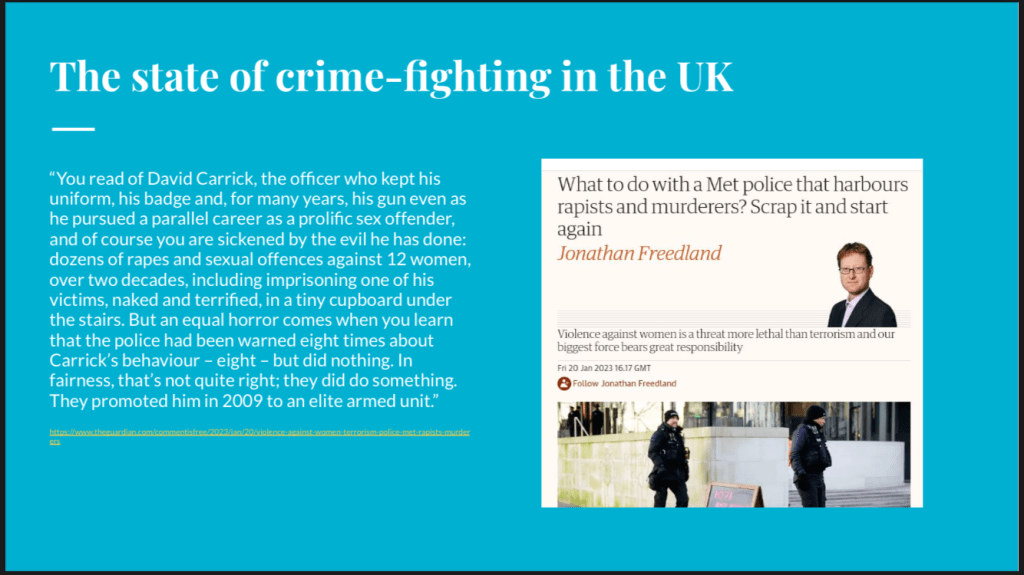
she has had to accept that to unlock this support a labelling process for her children did have to proceed. but here the process has striven mostly all along to evidence its trustworthiness: that is, its desire to be trusted by all stakeholders involved. in the uk, my experience showed that the british are prepared to use mental health tools as weapons of an undemocratic security infrastructure.
this is why i am now ready to be labelled:
you might immediately say: “surely RElabelled.” but no: you would be wrong. i wasn’t labelled: i was attacked, taken out and dismantled over decades by a security establishment that didn’t like the truths they knew pretty soon i would begin to deliver on in respect of their incompetences, multiple. if, that is, i didn’t have my capacity to bear intellectual and sociopolitical witness undermined profoundly first.
the time i’ve been in sweden is the first time — the very first — i’ve ever been in a country where this hasn’t been the desired end i’ve sensed.
and this is why — in such an environment — i am now fully ready, aware of all the potential consequences — to be labelled duly and compassionately by a nation-state of compassionate and proper citizens and professionals.
because what this will unlock is surely, now, worth its weight in the most precious substance known to humanity: the truth.
• www.sverige2.earth/complexify | complexify.me
• download the full presentation (also below) here (pdf)























 mil's page