

it’s a long title, but it’s a big subject.

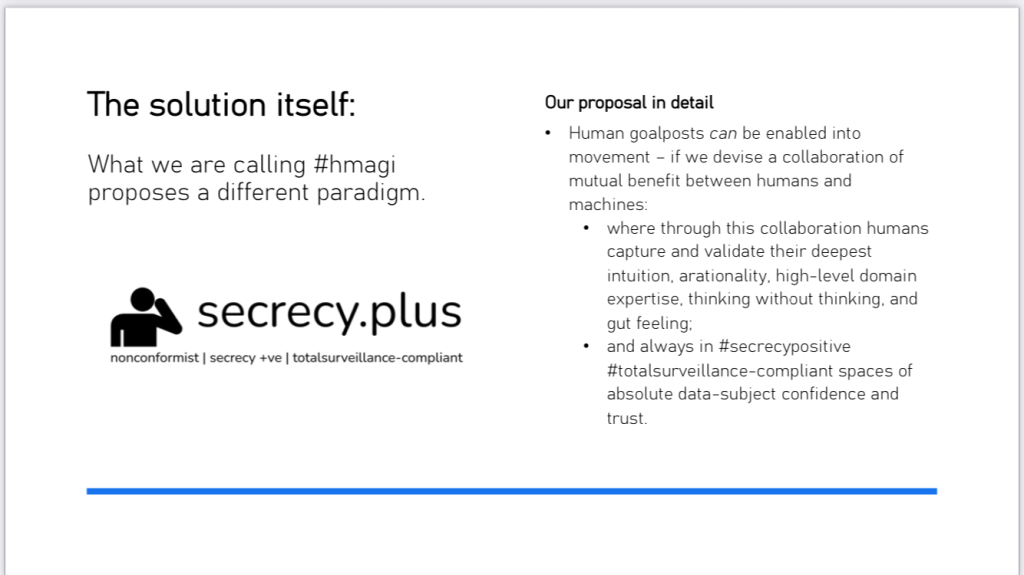

over the years, since i’ve started proposing seeing intuitive thinking as a logical dataset we should spend a lot more money on capturing, verifying and validating in systemic, human-empowering, inside-out ways, i’ve spoken to a lot of technologists.
without exception — except tbh just this last wednesday when i was at an aws-organised event in stockholm — ALL software engineers and imagineers of this kind have shown fabulous and rightful enthusiasm for the demonstrable machine progress we’ve historically witnessed since the start of humanity’s extension via tools — and yet have been absolutely resistant, sometimes to the point of rudeness, to the idea that we may move human goalposts in equal measure: that is, decide to promote the 90 percent of the human brain most of us are still apparently unable to advantage ourselves of.
one super-interesting aws person i spoke to on wednesday, for most of the evening in fact, on and off, told me at one point that the human brain only uses around 40 watts to do all the amazing things practically all examples of the same which have populated this rock since human history began have clearly been able to deliver on. compare and contrast this with the megawatts needed to run a data centre, able even now only to approach human creative capabilities.
but even on wednesday at the aws event, tbh, techie people were unable to show as deep an enthusiasm for progressing humans in the way i would advocate: not within a lifetime as we have been encouraged to assume are the only goalposts we can move, but intergenerationally, which is what i am increasingly proposing.
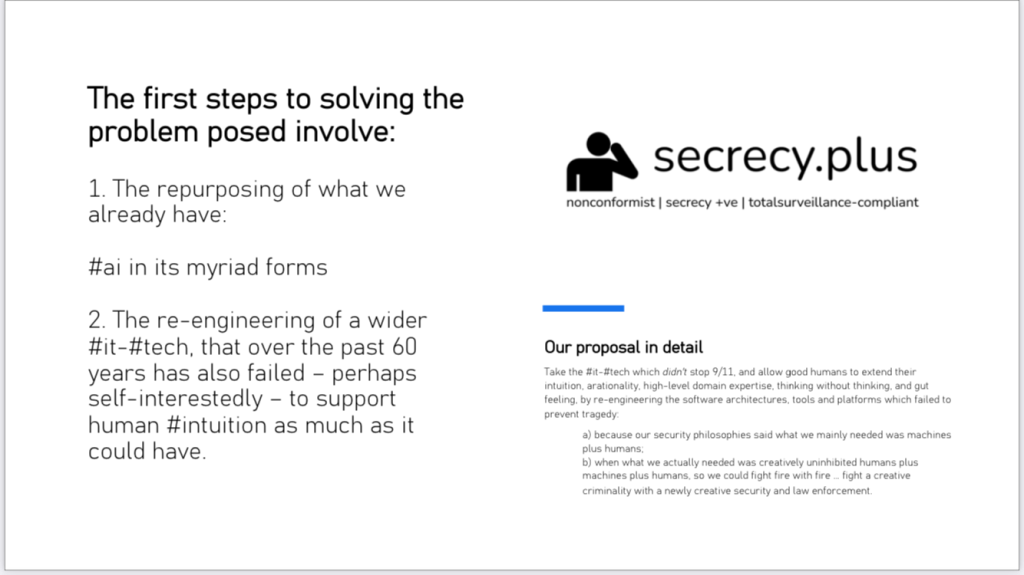
that is, actually create a tech philosophy which mimics what film and movie tech have done for over a hundred years: make humans more important to all industrial process through dynamics of industrialisation, instead of ensuring we are less substantial and significant through procedures of automation, obviously designed to reduce our future-present relevance.
because when you hear proponents of generative ai, of any ai, the excitement is palpable: “look what they can now do: write school and university essays that look academically rigorous.”
or write code with just a verbal instruction, is the latest one.
what they don’t ask is whether it was a task which human beings should have been asked to do in the first place.
or, more pointedly, a task which the human beings who did do it competently should have been remunerated to the extreme levels they have historically been remunerated to, for carrying out in ways that — privately speaking, admit it! — became so easy for them to charge exorbitantly for.
in my own auto-ethnographic case, i always got lower marks in my education than my brains indicated i deserved. my latest master was in international criminal justice: during the 2016-2017 academic year in the uk. i always assumed i was lazy. you see, i used a process which wasn’t academically orthodox: i’d create through my brain’s tangential procedures a brand new idea (new for me, anyways), and only then proceed to read relevant literature … if, that is, it existed. back to front. altogether. and marked down, completely all the time.
and in the light of chatgpt’s achievements, i also begin to wonder: because this kind of tech, to me, is nothing more than incredibly deepened search engines. but weren’t the humans who did such jobs also “only” this? really, only this.
and so people who scored well in analogous manual activities were therefore good not at creating new worlds with their academia and coding and software development but, rather, capable at little more than grandiosely integrating essentially tech-informed step-by-step approaches into the otherwise naturally, ingeniously and much more multi-layered human mind.
and so these kinds of students used procedures which were far more appropriate to it-tech environments, and thus scored highly in such education systems.
when truly we should have long ago considered such procedures an absolute anathema to all that COULD make human thought magnificent.
i mean … think the aforementioned 90 percent of the brain whose employment we may still not manage to optimise. and then consider a software or tech platform where its creators tolerate not using 90 percent of its monetising abilities.
really, it’s this: that is, my experience with technologists of all kinds who work in it-tech, where automation is absolute king. (and i say “king” advisably.) they love telling the world how their latest robot — or whatever — will soon be indistinguishable from real human beings in how it looks, speaks, moves and interacts more widely. but why?
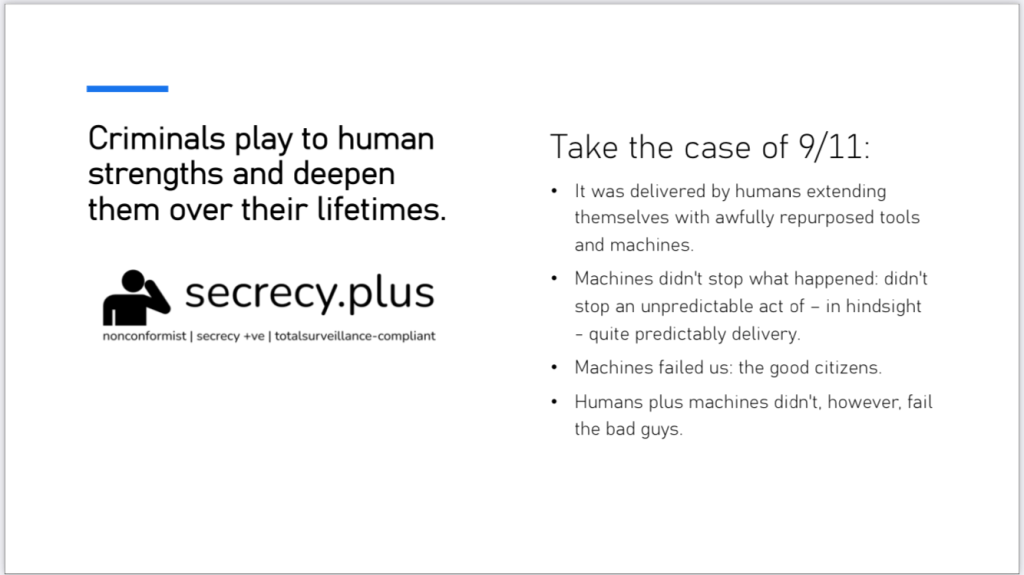
the technical achievement is clear. the monetisation opportunities of convincing solitary individuals they need robotic company in place of other human beings are also manifest. but the “why” we should be such advocates of machine progress and yet, simultaneously, UTTERLY INCAPABLE of showing the same levels of enthusiasm for considering we might create environments and thinking-spaces — as i have been suggesting for five or more years — that make intergenerational human advancement possible with the support and NOT domination of tech (that is, as per what movies and films have delivered for humans for that hundred years or so, and NOT as per the relationship between human beings and vast swathes of it-land since, say, the 1950s) … well, this is surely difficult for anyone to understand and explain. unless, of course, we really are talking womb envy: “i can’t bring a human being into the world as completely as a woman can, so instead i’ll make machines that do what humans do, only allegedly better.”
🙂
wdyt?
any truth in any of the above?
why do the boys in tech-land get so enthusiastic about the latest technologies that overtake apparently deep human capabilities — and yet reject so fervently and consistently the possibility that humans might also be able to use equal but repurposed tech to make humans more? but as humans?















 mil's page