i realised this not long ago. i don’t want to work with this company or that. i want to work with people who also, simultaneously, may work for one company or organisation or another.
when the institution overrides the individual from the start is when, even if all the starting-signs are cool, the individuals will one day — especially when huge amounts of money all of a sudden become likely — be inevitably and overwhelmingly overridden by their instituitional framework.
i don’t intend for us to start as i don’t mean us to go on.
so first i want to meet people. i want an organisational structure which generates a hybrid of #holacracy. and i want brains to show themselves the most important factor and matter of all, where the overarching #gutenbergofintuitivethinking and #intuitionvalidationengine projects are concerned.
because if you choose people first, and the people are right for you, then the institutions automagically will remain so too.
at least … whilst your people of choice remain at the institution in question. and they will do in general, for sure — if the institution remains worth then staying. for in the question of #intuitionvalidation there is no building-block which is more significant than the human as individual.
this is absolutely spot-on. it’s what’s driven me all my life. i have refused, under severe duress, from all directions, that is home and professional both, to accept that the way out of a world of horror is to mindfully and then abjectly disconnect.
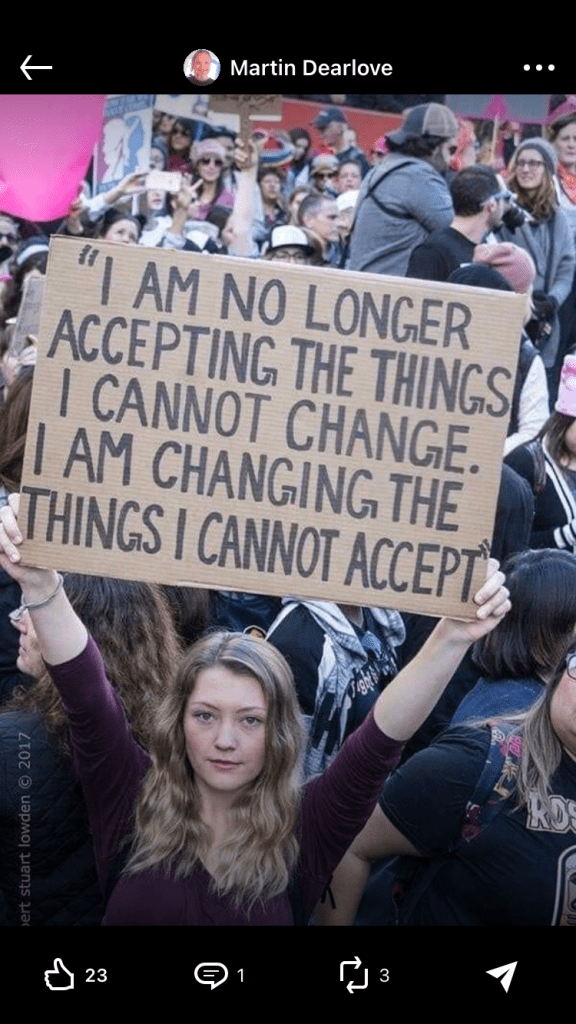
the things i cannot change remain unchangeable where i accept my own wellbeing overrides being well with my conscience.
and at the age of 60, i feel firmly vindicated. the rest of my life needed the first 60 years to be as unsatisfactory as they have been. because unsatisfactory is the route to really knowing the truth: the truth that leads to judicious actions and gentle wisdoms. even if the latter simply tell us what we did wrong where once we could have done right.
i now focus on my work. i need no deep love; want to play no fields; want nothing closer to me than a cup of coffee or, at the very most, a shared good meal in a restaurant whose menu i am utterly unfamiliar with.
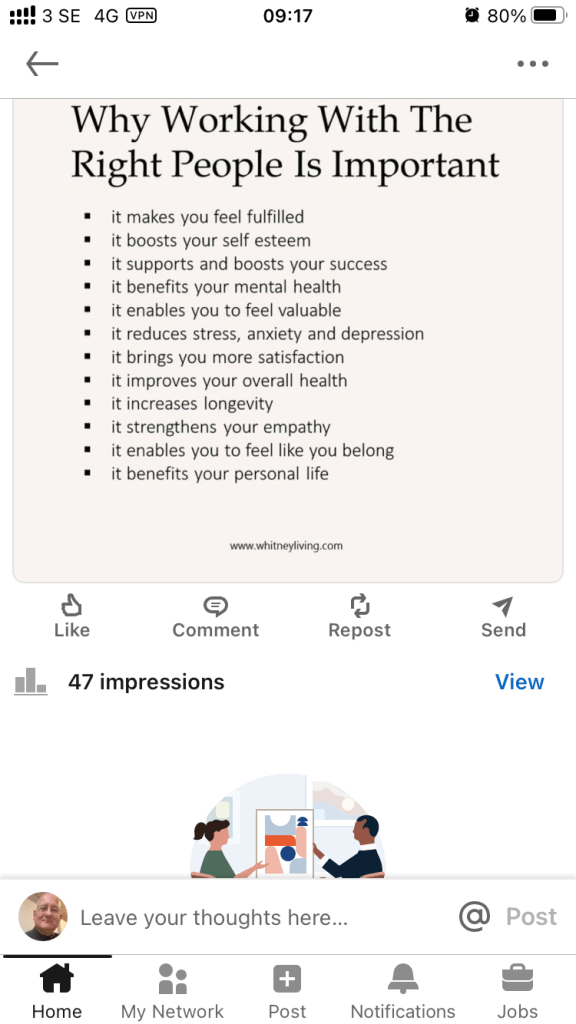
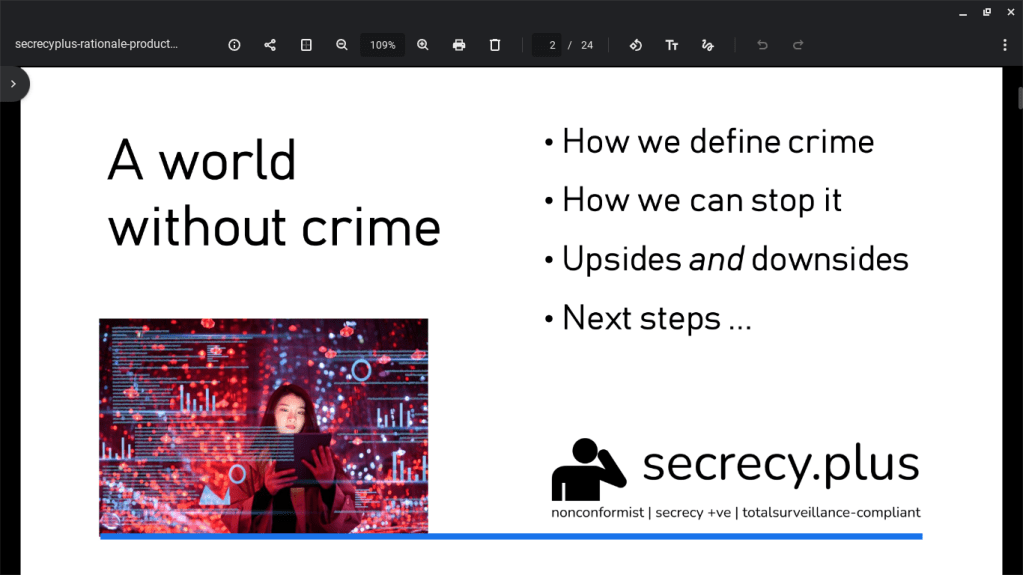
and so most of all, focus on my work. that’s what i want: what the beautiful woman below and her poster declaim. some of that for me now, please. and then a rest-of-life full of good deeds to SATISFACTORILY end it all.
vindication.
yes.
a satisfactory vindication … indeed.
mils.page/presentations | slide-decks and presentations of mine and in collaboration from recent and not so recent times
i think i upset a lot of people. i remember a more than hour-long conversation with faceless executives from a big us tech corporation i really value and would love one day to work with.
i say “faceless” neutrally, mind: they had no faces, just circles with initials; and were never introduced to me. six or seven plus the person who organised the video-chat. during lockdown, it was.
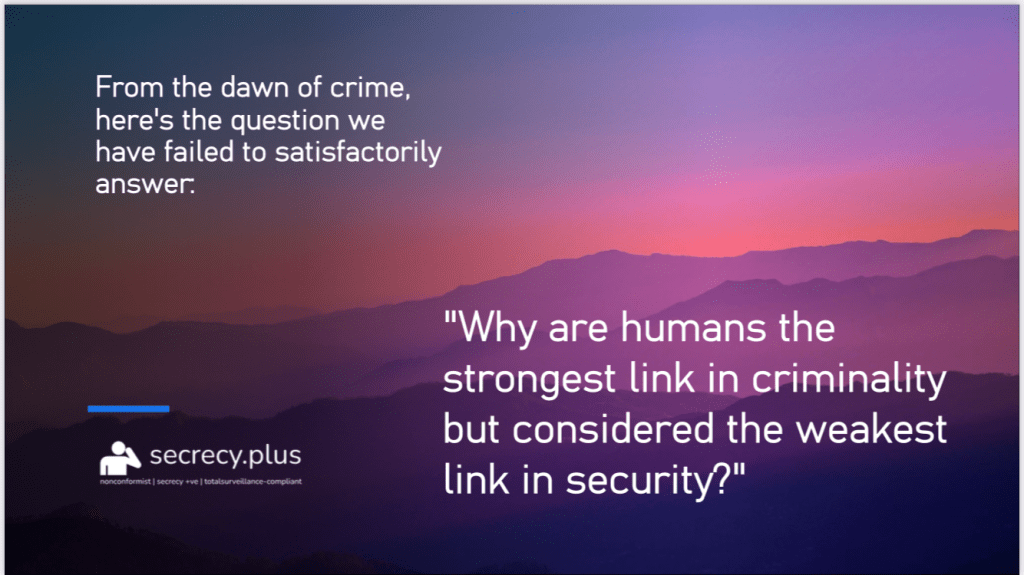
i asked them the above question: there was silence for around ten seconds. in the event, no one replied at all. the fear was palpable. the fear that someone would say something which someone else would report back, and forever mark a person’s career, without recourse to explanation.
or so i thought. on reflection, maybe i had gone too far. maybe it was wrong for me to suggest their machines weren’t up to the job of beating creatively criminal terrorists. maybe it was wrong for me to suggest we could do more to creatively crimefight: to make human beings capable of being as nonconformist to the good as the putins et al of recent years have manifestly been longitudinally to the extreme ill.
here’s the thing: maybe i wasn’t wrong but maybe i wasn’t enough right.
obviously, if the exercise was delivered to its full extent, whatever your answer the assembled would inevitably agree that both machines and hollywood scriptwriters (or their analogous: the skillsets of, at least) would be the best solution. but even here problems would exist — and i would go so far as to suggest, actually, real roadblocks.
people who operate by rules and regulations — conformists we all need that make the world function with justice and fairness — don’t find it easy to value the contribution of nonconformists who, more often than not, make their own hugely competent rules. and, then again, of course, vice versa. conformists don’t always float the boats of nonconformists as much as they should.
so to allude to the fact that we need to be as good as the supremely creative criminality out there in our own forging of a singular combination of intuitive arationality with the best machines we can manufacture is NOT the solution.
no.
the solution lies in ensuring the cultures of nonconformism and conformism may come together to facilitate this outcome of creative crimefighting and national security … this … just this … has to be the solution.
if we minimally know our philosophy, a thesis — being that crimefighting and national security need ever more traditional ai to deliver a fearsome capacity to pattern-recognise nonconformist evil out of existence, alongside people who press the operational buttons on the back of such insights — will get, from me, its antithesis: that is … we need just as much, if not more, what we might term the “human good” to battle the “human bad”.
and maybe the machines, too. alongside and in fabulous cahoots.
yes. and maybe, of course, the machines.
but what if we change the process? what if a synthesis? as all good philosophy?
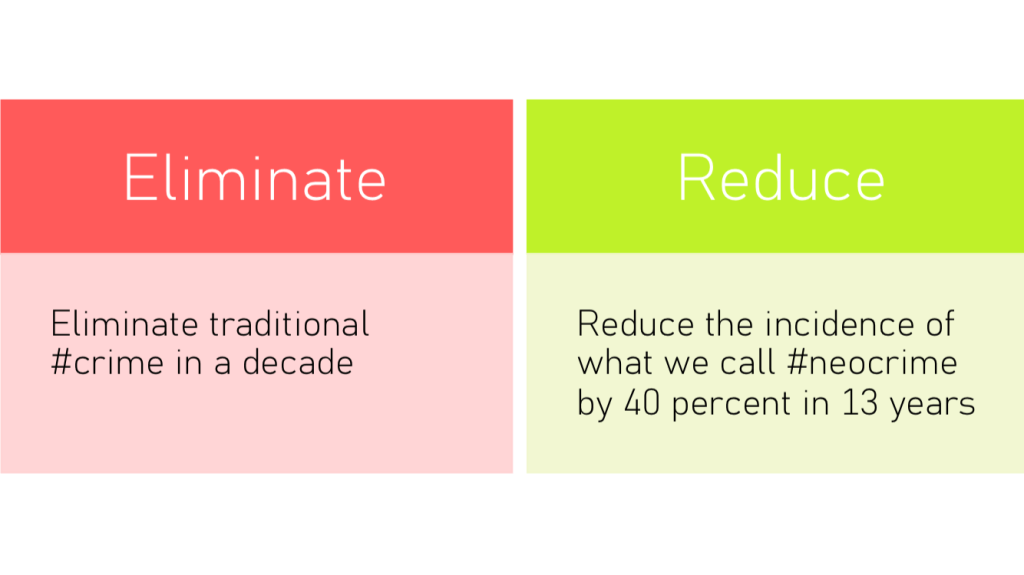
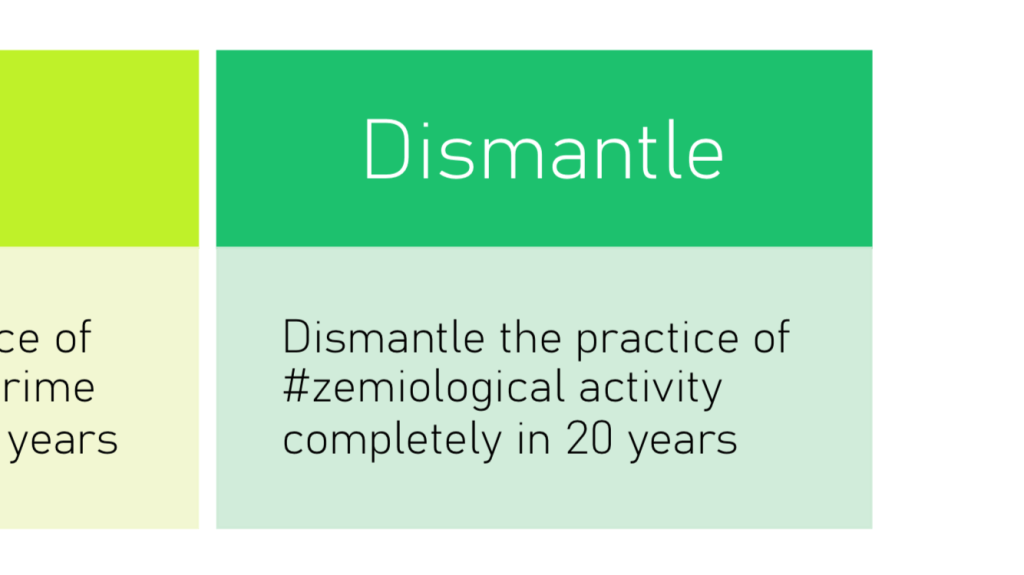
1. to find the nonconformist what and how — the next 9/11 before it arises — we use hollywood and analogous creativity to imagineer such events.
2. and to find the who and when of such newly uncovered neocrimes, we apply the obviously terrifyingly useful pattern-recognition capabilities of the ever more traditional ai. so that their adepts, their supporters, their proponents … and those conformists who more generally are comfortable with such approaches … well … simply be comfortable with this new paradigm i propose.
in this scenario, the suits and the flowery shirts work in consonance but never simultaneously. and so we square the circle of respect amongst the two parties, which long-term would always be difficult to sustainably engineer and forge permanently.
i am wondering this morning if the reason some companies are choosing no longer to embrace #hybridwork is because it may make it easier for their staff to make the #gigeconomy and #sideproject-activities function efficiently and compatibly — but no longer with clear and deep #manager-oversight. the option to buy into new #ip generated by such processes then, of course, wholly escapes them.
previous to this, the #gigeconomy was a control mechanism of quite some power as far as salaries and conditions were concerned. but now #hybrid and #homeworking may actually turn this balance upside down. and some companies may not have the relevant cultures to be able to embrace the advantages that might make it all work for all.
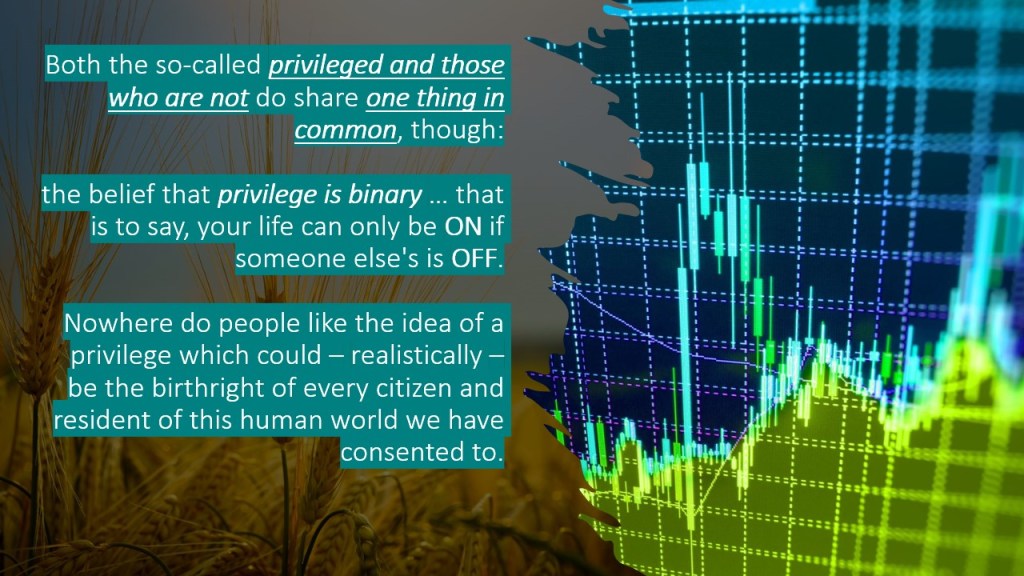
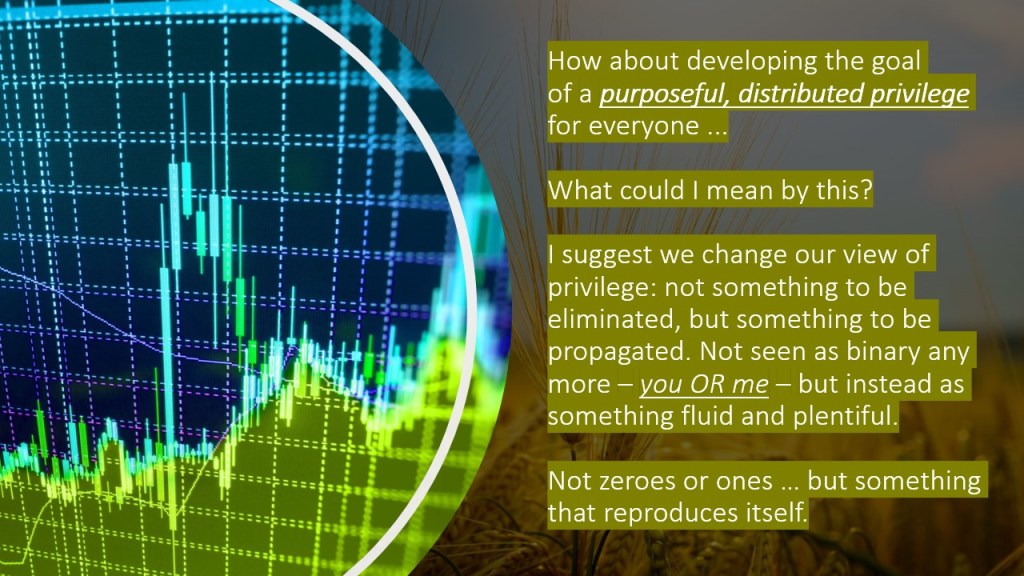
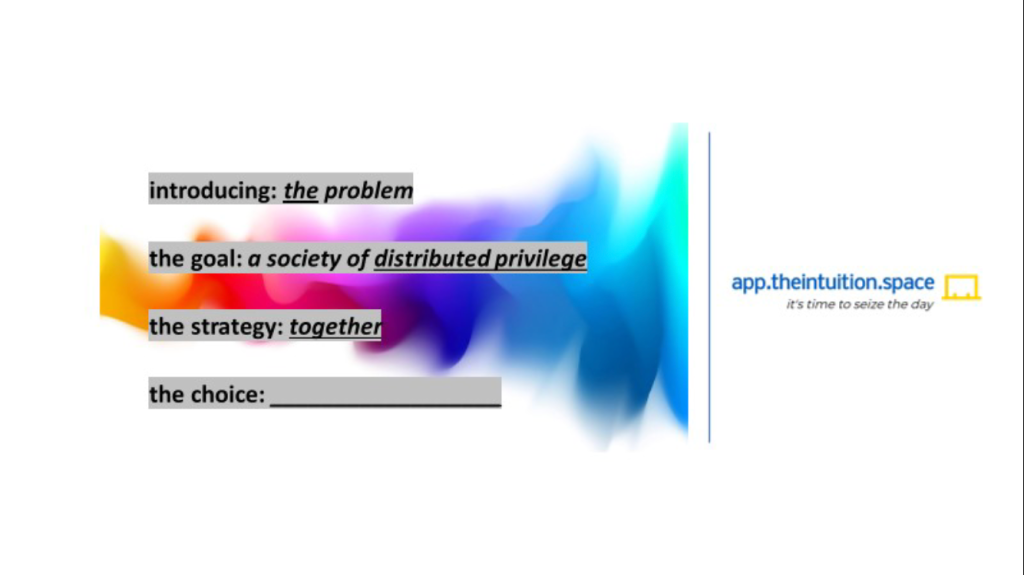
either way, i think the idea of a #nonbinary #distributedprivilege to further the interests of a more efficient socieconomic network of common future-present activity would serve to further the interests, also, of #diversity and #creativity in our western liberal democracies.
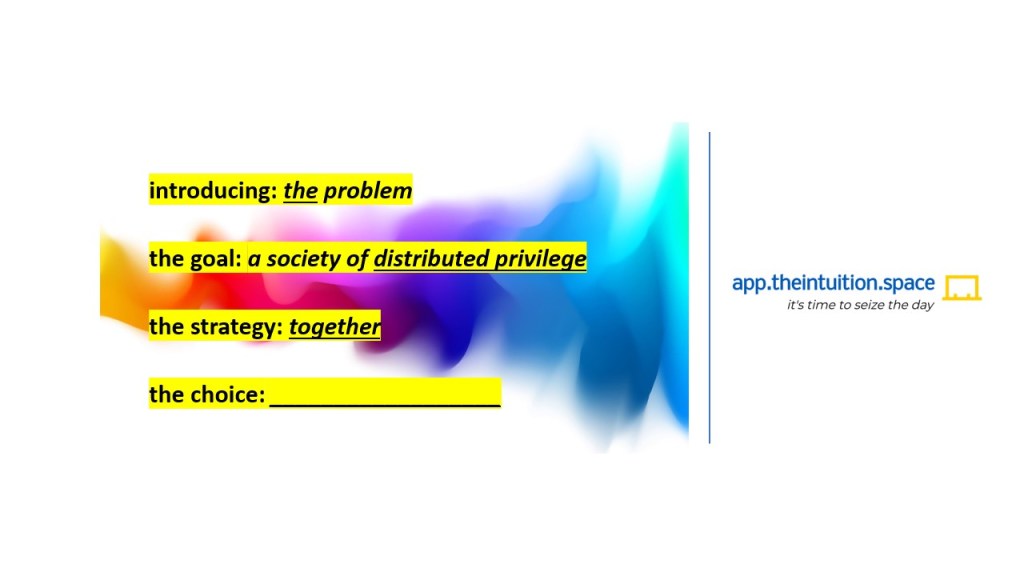
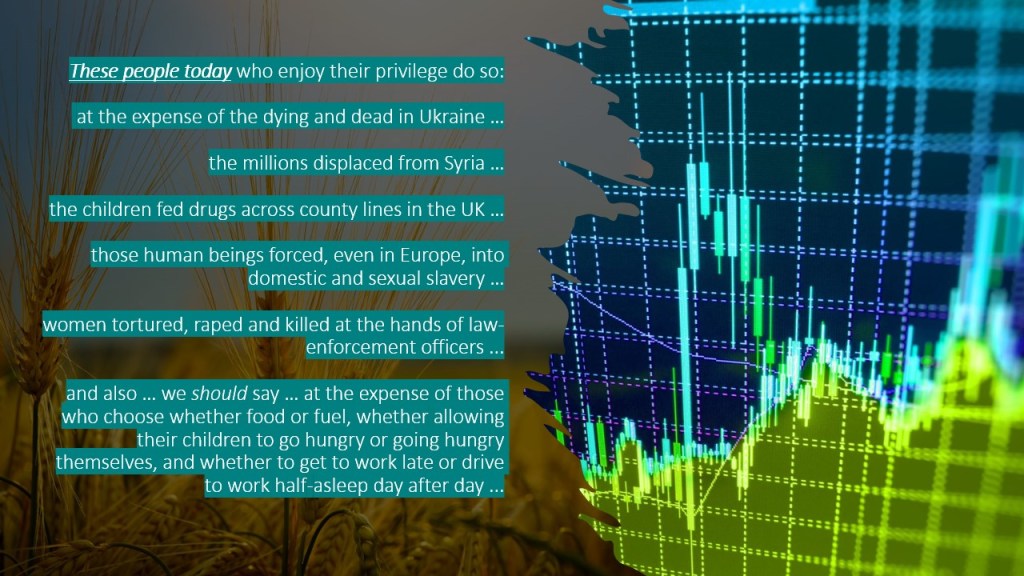
attached, a (big!) little something i’ve been working on yesterday afternoon.
a slide-deck of 33 slides down to about six.
content itself still to do, mind … but you can see where my #roadmap, already.
and i’ll be taking it with me to #sweden next week: a country which has striven so long to truly, actually, sincerely deliver a society of #distributedprivilege.
what i’ve been aiming at all this time i now realise, with ALL my projects around #intuitionvalidation.
and it makes me happy to begin slowly to know how to express it.
to not connect when something only unsatisfactorily connects is a really important skillset and aspect which the good human brain exhibits.
the capacity to forget for a bit is a human virtue of the highest thinking.
to create a future NOT based out of the past is what separates humans from our tools. (even as sometimes we ourselves are turned abusively into aspects of the latter.)
post:
so: #lean and startup-land solve one problem and one problem always. the problem they solve is not what the customer is hurting most about. it’s not the pain in the customer journey as tech dogma claims it suggests.
no.
it’s the pain on the journey on which both client and supplier begin to ride together. it’s the pain-point that the two of them can agree on as being where they must meet:
not what i as client most need sorting necessarily, but what i can afford right now according to your price list.
not even what you as supplier are most objectively suited to resolving but, rather, what you as supplier find it easiest to convince me is what i need, once you’ve identified where it is i am most prepared to first stump up some dough. (and with this, any dough ffs. just so long as some.)
and finally, most definitely, in no way do such processes and spaces guarantee at all clearly that the world’s most complex (note: not complicated) and, therefore, pressing problems will find their solutions even attended to never mind provided by such startup ecosystems, business mindsets, and wider ways of working deeply.
speculative tech like #ai — it’s supposedly been beating humans incompletely since at least the 1980s (and probably for decades before) — always needs to convince us it’s just about there. the funding, for one thing, demands:
1. until an #ai (let’s use this loose term for now) is able to get so frustrated with an insoluble problem that they end up getting blind drunk … only to wake up in a haze to a solution perfectly formed …
2. until an #ai awakes from a beautiful dream with a fabulous new idea subconsciously imagineered to perfection overnight … for it then, in the second of that awakening, to forget totally the detail — or even the concept itself — for six further months … and then for everything to come flooding back in even more astonishing form, to be finally recorded, scoped and amazingly implemented …
3. until an #ai may choose to NOT make connections or identify patterns or see relationships or deliver on finalities … because something doesn’t fit quite as right as it one day might …
4. until an #ai has a leap of faith based on data it INVENTED OUT OF THE FUTURE … because creation is the nature of the human brain … even when utterly utterly mindlessly terrifying:
until all the above and other things happen .. well … our dearly beloved proponents of #ai (thus loosely described) will continue to argue that we can do everything on the basis of what’s already been patterned. and that the apex of human achievement invokes ONLY copying what others have already done — just better: that is, faster, more accurately, for longer without tired — essentially, an alpha male’s orgasm … no?
🙂
and thus the competent delivery of #ai and similar technologies only ever needs to aspire to this.
the new #ai unleashed onto the world recently — #chatgpt — is praised for writing indistinguishably school and university essays. it’s praised for giving advice crackpot-like or otherwise. it — and similar tech — receive plaudits for faking flemish masters’ painting styles. i haven’t seen but surely imagine that songs in the key of sheeran have already flooded the social networks of this planet, devised at the hands of this sort of code.
we need to stop this.
we need to stop saying what #ai can do.
we need to start asking two questions:
1. if #ai can do what a human being can do, is it actually an achievement of historical record and delivery that another human being can do exactly the same as the human process that the #ai in question is also able to do? that is: why WANT to indistinguishably copy a flemish master? why not always prefer to discover the master — or mistress — deep and unrevealed inside your very own being?
because whilst copying is cool, it’s only cool if it leads to synthesis and final originality. after all, in the act of production we may uncover the output of creation. and then understand, perhaps, that there might inhabit well inside our persons — each of us — geniuses of magnificent shine:
(equally, of course, we might ask — as rightly people have — if a machine so easily reproduces a human activity such as writing an essay for university or school, whether our civilisation is focussed on the right testing regimes in the first place. but that’s for a quite different post.)
2. it’s bad enough to find ourselves needing to ask whether what our tech can duplicate in ourselves involves things which we might continue ourselves — in the absence of such tech — to even consider it societally desirable to carry on doing. it’s much worse to say a whole tech ecosystem — that which is structured around #lean, customer journeys, pain-points and the overbearing need to invoice a digital service or product asap (in short, startup land as we have known and loved it for so long) — doesn’t solve the vast majority of remaining deep and complex world problems because, actually, its practitioners and owners have designed it specifically so it wouldn’t.
there’s much more money in planning a drip-feed of ten years of product releases than in creating a system which might identify the real dangers of immensely, horrifyingly human #nonconformism: that is, its thinking processes and the disadvantage we now face, as we have become progressively incapacitated to do this sort of activity in the corporate-sanctioned dynamics of diluting teamwork.
because whilst we in corporate-land choose to inhibit creative #nonconformists via our tech architectures and business structures, the putins of the world have clearly been doing — longitudinally — quite the opposite.
haven’t they?
so let’s not only stop to duly think whether a tech that can repeat what the majority of us humans do every day is worth the thunder and lightning its proponents will continue to generate. yes: it’s useful in many respects, of course. but we must stop asking what can our tech do and start, instead, to focus our funding on OUTCOMES that need DELIVERY, not BOTTOM LINES that must be DELIVERED.
otherwise, we get what we get: and so we have.
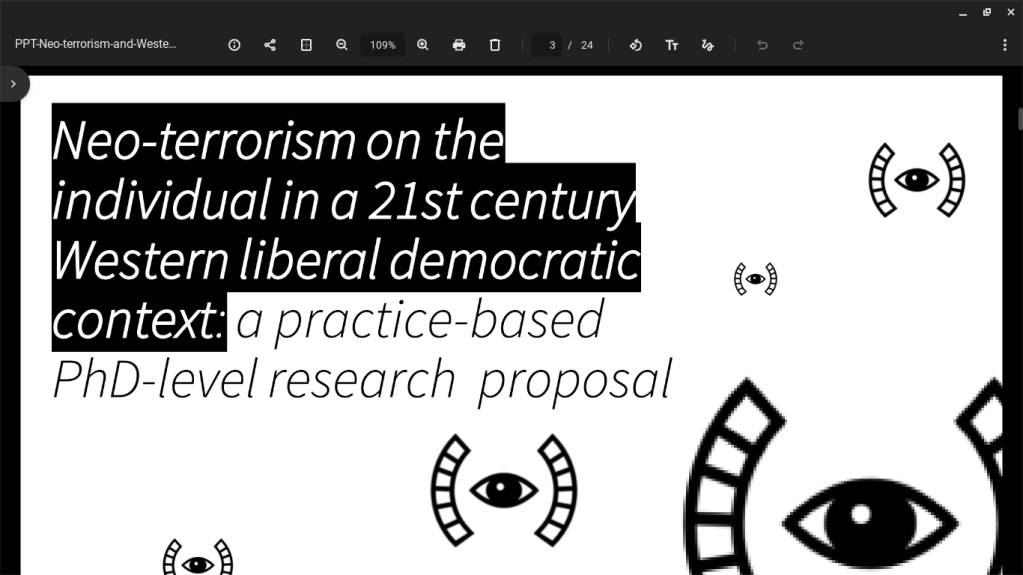
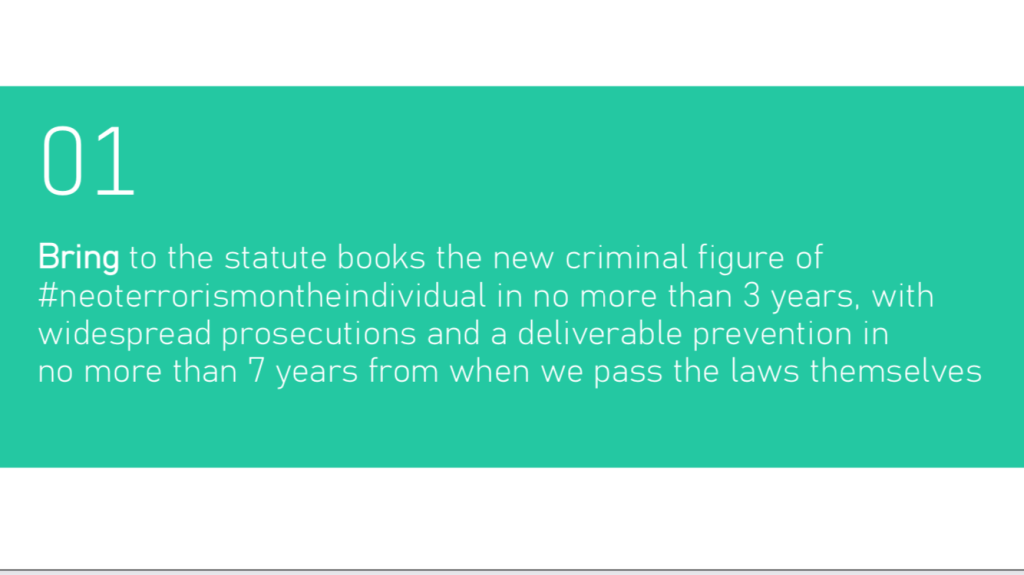
an example? just one? here’s one … a western defensive and attacking capability to identify and forestall future ukraines, and maybe now, as we are allowed to voice these things finally … alongside neo-terrorist pandemics … before they even become a glint in evil organisations’ eyes:
let’s stop fetishising the machines whose investments have cost us so much, and whose future ROIs we have planned out to the millimetre.
let’s be human, instead.
let’s say:
we can make money out of making humans more human, not less significant
we can make money out of prioritising solutions that cure rather than perpetuate
we can choose to focus on complex and spread the word that this won’t mean complicated
and we can finally argue that the startup ecosystems various that we have become sooo used to — as they provided the only furniture with which we have lived our comfortable lives — do have their seriously disadvantageous downsides: whilst simultaneously (of course) solving some of the accumulatively littler things fabulously, equally they have served to diminish the big things gravely — especially when it is becoming increasingly apparent that this has also been a deliberated dynamic all along …
because just because you’ve invented a system which does lots of relatively small things massively — that is, automatedly — doesn’t mean you are anywhere capable or prepared re delivering on the resolution of massive things pointedly.
and, after all, this is a difference we are currently choosing not to even discuss.
most #it #tech is primarily about identifying how to remove human beings from processes so the organisations which achieve these goals can more easily generate revenues from what remains: their machines. but it’s not the only way.
post:
what i love about #movie and #film #tech is its capacity to make humans bigger humans: essentially, much more human. the microphone, a bigger voice. the camera, a finer eye. even the stage, a more concise bearing of witness.
meantime, #it #tech has striven always to remove humans from the processes in question so that dominant interests may monetise more easily what remains.
take a look at this scene whose technological and emotional achievements mainly involved the simple repurposing — devised and driven i believe by the film director alfred hitchcock — of existing filmic strategies, via the combining of two separate procedures into just one flow:
a simultaneous zoom and dolly movement: which served to challenge the physical world through physical means. no animation; no cgi. something real to bear witness to something utterly real.
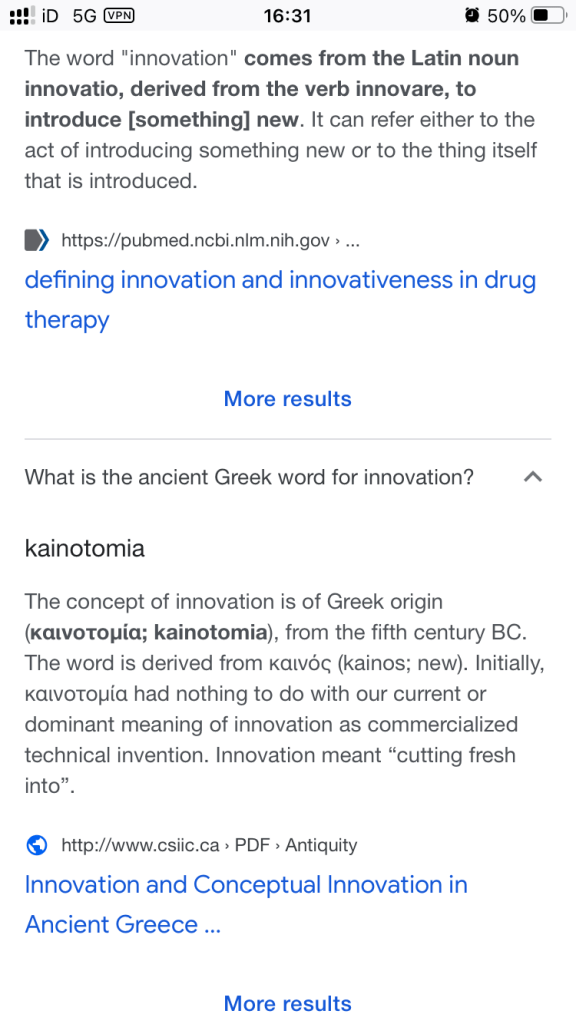
repurposing #tech is really what floats my boat: low risk; high value-add; countering current, usually lazy, hegemonic thinking in a sector … that is, choosing ultimately to deliver on the ancient greek version of what #innovation really should invoke: “to cut deeply into …”
that is, i am intending to mean, REAL cutting-edge thinking. as, for example, i’ve been proposing for a while re #ai here:
it’s beautiful, is this idea of repurposing. it’s beautiful because it foregrounds little details. and through their accumulation, kept over time in single planes of thought, such processes of repurposing may achieve the quantum leaps of faith i am asking us all to return to believing we human beings are fundamentally capable of; are fundamentally suited to:
i’ll just leave it here: paraphrasing that in #latin it kinda means to renew or make new … pretty close to today’s physical act of commercialising something that wasn’t really commercialised before.
this may or may not be significant. commercialising things is, after all, the dominant discourse for #innovation — indeed, practically all we do in any field of endeavour — in countries like the #uk and the #us.
but what interests me much more is the #greek delivery of #innovation as an act and concept: “cutting fresh into” it says.
as in incisive thought … and just about literally as per incision.
the former is make pots of money: once achieved, job done. nothing wrong with that. it’s fine as far as.
the latter, meanwhile, is … nothing to do with this, and everything to do with the human imagination and its capability to stretch everything before it. because.
so when did #innovate become edged away from cutting … and so when did cutting-edge actually become a lie?
it only remains for me to ask a final question: why when human thought is so fabulous at leaps of faith has our civilisation and business ways of delivery placed so much value on step-by-step progress?
i used to teach english as a foreign language and a second one.
i used a system with a process called ppp:
presentation
practice
production
i realised, as i shared my knowledge over the years, that it was a good process: for me, anyways. it replicated how i learnt what i thought about the world around me.
except the order, for me, was different.
in my case, when for example i thought-experiment or write, i produce first, and then — to myself — i present, often for the first time in my life. i only know what i know after i communicate it. because, in my case, i don’t know if yours, in its telling we have its act of creation. yes. literally this.
the practice, meantime, is meta: it never isn’t happening.
that’s my brain, anyhow — for me and my metacognitive outcomes: produce, and so only then be presenting to oneself.
and then not be not practising, ever.
in its making yesterday, the video which follows is a very good summary and example of how i understand what i am thinking deep inside my intuitive core.
and i am comfortable now with this series of procedures. and i think i shall continue to the end of.
meantime, as i write these lines, i am minded to discover something else about myself: two weeks ago i was in stockholm, sweden. i was alive, and comfortable.
since the 21st of february i have been in my homeland, becoming increasingly uncomfortable. you all love how you are: that’s your right. but i can’t love your way of being: and that’s my right.
from now on, i do business in respect of tech documentation with whomsoever values my services and capacity.
equally, not one of my tech projects will you now work on if you do not reside in sweden gladly and joyfully. or at the very least, once experienced, understand why i want nothing else.
tech can be fabulous and compliant and purposeful and societal and security-minded and defensive against a clearly common enemy — as well as supportive of the citizenry more generally.
and the third most innovative country in the world — a country of barely ten million people — is proof that if you ain’t got it, it’s because you don’t want it.
and so where you don’t even want to try, i don’t want you to try. but i don’t want your closed doors, either.
because i shall continue to do so: that is, to try where you do not.
in places where others also want to.
and a population of ten million and a half is much more than we need. in fact, to take the first steps … well … we just need two feet that want to.









































 mil's page