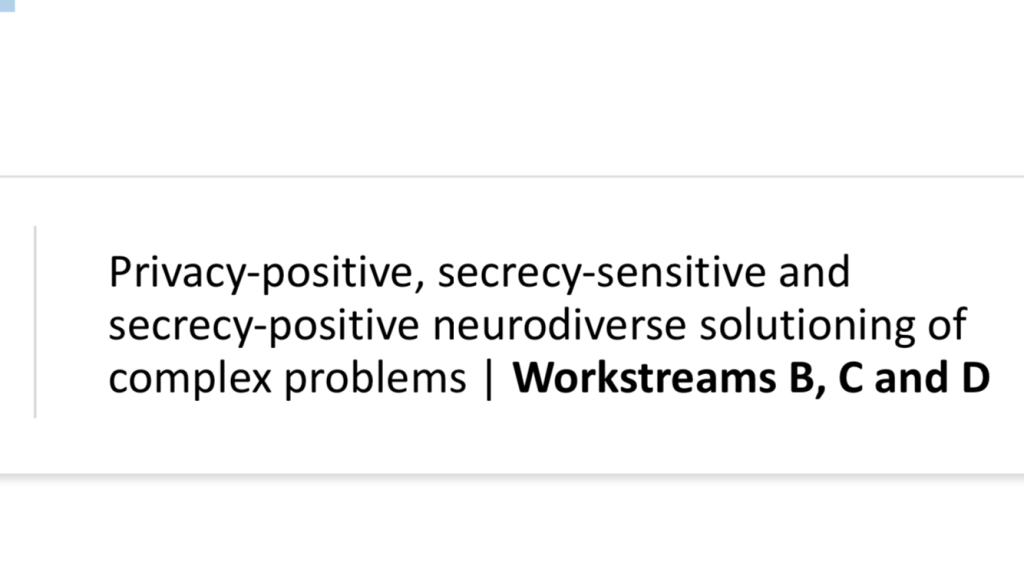
Example workstreams and projects which may begin to form part of any work we collectively deliver
The first step to working on the projects under discussion
There is one condition we must all fulfil in order to work on these projects and workstreams in the future:
be aware — and practise daily this awareness — of #neoterrorismontheindividual. This means we realise completely and unreservedly that all our past and current decision-making processes and outcomes may have been the result of an embedded criminality and related zemiology, designed strategically to undermine — profoundly and covertly — our true capacity to act independently
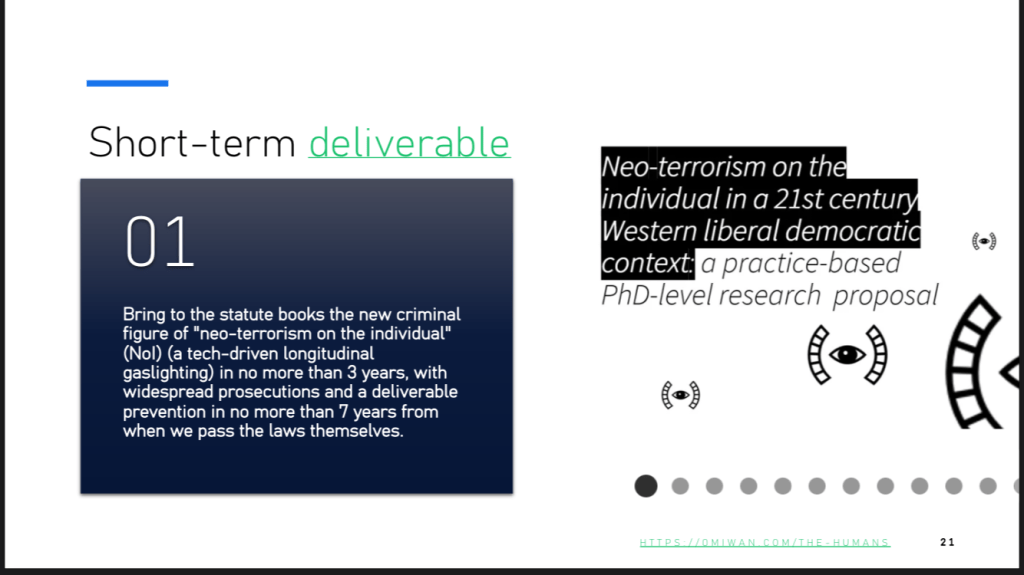
“Neo-Terrorism on the Individual” — an overview … but now as defence tool, no longer research proposal
The two linked-to documents in the section that follows below, which originally formed part of a #phd-level draft proposal of mine from a couple of years back, may now be more helpful as descriptors of what I, and maybe many other people, have been experiencing over these years.
It’s more popularly and more generally known as #gaslighting: but I think in certain societies we’ve been suffering from an immensely technified version of it.
This is why I have given it its own name: “Neo-Terrorism on the Individual”.
That is, a tech-driven longitudinal terrorism delivered efficiently on specific human and organisational targets and marks, in order to shape societies over the years in the direction of certain toxic sociopolitical and business interests.
In this sense then, the two documents mentioned should perhaps be seen more as forming a manual of instructions than a research idea any more, in order to begin to foment and ensure a growing awareness of the tech-driven tactics which certain criminal and zemiological actors may still be using — and broadly at that:
Noted: the above is as true of organisations and nation-states in terms of their collective natures and interests as it is in respect of individuals like you and me, being persons with allegedly direct responsibility for our behaviours and actions.
If we achieve this goal, what should we do next?
If we get sign-up and buy-in, to what effectively is a CULTURE of working re all the #privacysensitive, #privacypositive, #secrecysensitive and #secrecypositive projects and workstreams I am proposing, then the organisational and agency law- and regulation-making which has to exist specifically for such projects and our own personal behaviours will be much to administer, inspect, ensure, and deliver on.
Why? Because CULTURE promotes the rule of laws which emerge from the same organically, and therefore make it much easier and possible for people to see them as their own: thus, compliance is achieved out of approval not fear.
Meantime, LAWS ONLY, created by ruling classes (whether elected or de facto) which attempt to IMPOSE what is surely only their culture, clearly outside the majority (the UK is an example ever since I was born; Ireland has become so over the years as a result of its incestuous financial dependence on global tech), only lead to the corruption and illegitimacy that facilitate authoritarianism behaviours and outcomes, where the same need for compliance — for society by definition needs its citizens to comply in some measure — here is achieved primarily, and sometimes exclusively, through tools and discourses of fear.
Just because you smile when you impose your authoritarianism doesn’t make you any less an authoritarian.
Now … does it?
To summarise …
“For anyone, including myself, to be enabled to work on any and/or all of these projects — which for the moment I shall globally describe as the #gutenbergofintuitivethinking, or the printing-press of intuition — we have to accept that our human agency during our personal present-past, in respect of the decisions we took both privately and work-related, may have been fatally compromised by forces truly outwith our ken.
Not mystical or mysterious forces. No. Not this. Just human beings and organisations acting deliberately to longitudinally benefit, in planned and roadmapped ways, their hyper-focussed and zemiological self-interests, prejudicing a much more shared and collective present-past which could have been. And in fact still could be: one, that is, which benefits every human being, and which will be firmly based on all individuals’ sovereignties.”
So … quite simple, really. Accept the thesis of #neoterrorismontheindividual as a potential reality we have suffered from without perhaps realising it in all aspects of our lives to date. Nothing we did, however apparently deeply thought, was of our own doing.
And so our human agency became anything but human.
Wouldn’t it be a quite remarkable achievement if we could, as a first step to remaking our civilisation in the image of the root word “to civilise”, eliminate compassionately not surgically all such #neoterrorismontheindividual in, say, seven years?
And parallel to all that, begin to deliver all this:
as if we were talking, in fact, about creating software code in the shape of UN inalienable rights and charters, conventions and manifestos, and stuff with these kinds of discourses, as opposed to the more conventional laws and regulatory approaches parliaments and so forth generally prefer to come up with
from my iphone’s app this late morning / around midday:
introduction
yes
this is what we can embrace, if we choose to:
• one nation-state fully onboard
• one big tech partner, fully committed
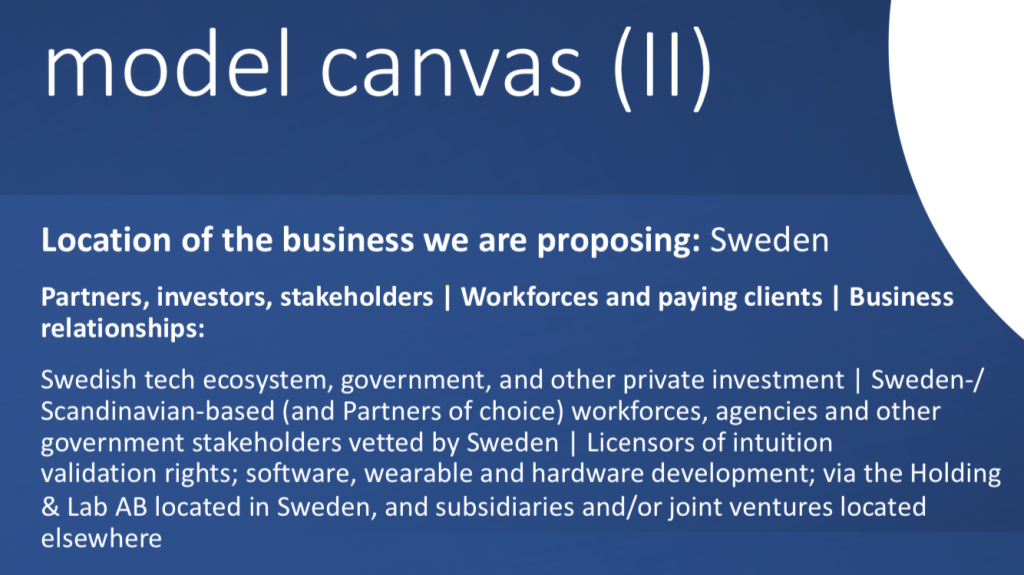
• one local and regional web of finance, legislation, tax, accountability, delivery, and societal benefit: sweden
then once this is secured, we can discuss exporting
but not before
in respect of past deeds
not interested in the past in respect of those of us who deserve to be in CORE
am interested in collective future-present and deep partners who want a different future-present from the ones we’ve all been a part of in the past
this i repeat is also true for me, just as much as for anyone else or for any other org
good
on trust systems and their development
this means … we have to learn to trust each other, but always suspect everyone and everything
be childlike to the most if you like; but equally, not naive in the least
game-changing trust is built over time with tools no one has ever considered
this is why we need the brightest nonconformist brains committed to changing the world for the better: both gradually and overnight
that is, parallel processes
the value of cultural dissonance and internal respect amongst all parties
yes
true
everything is best when combined
not one or the other team
everything
cultural dissonance and cultural rub are the preconditions for both innovation and invention
but the condition being that different types of seeing and doing also learn to value the others interchangeably and equally
generously
truly generously
so as long as with this caveat upfront and conditioning everything we all do, we will also need conformists at the base of everything we do
my work / life expectations and aspirations
personally, i want to live modestly
i want to think untrammelled, obviously
so this is why i need the modest life to ensure the untrammelled doesn’t leak into my behaviours
a modest life, therefore
decent food
healthy exercise
and a dollop of joy every so often
the fields of action and play
the battlegrounds are various:
• resistance: putin’s russia and everyone who approves of its actions
• fightback: putin’s russia and everyone who approves of its actions
• long-term, however, the focus MUST be local and regional: embedded global criminals at local and regional levels who use symbolic communication as per mafias everywhere, to evade justice as it currently stands, need to be dealt with
why? these are the real funding streams that enable putin and his ilk everywhere to not only have the cruel ambitions they have but the capability, the financial muscle, to deliver on them: local crime turfs spread out across the continents and connected via 21st century digital means
implications
thus:
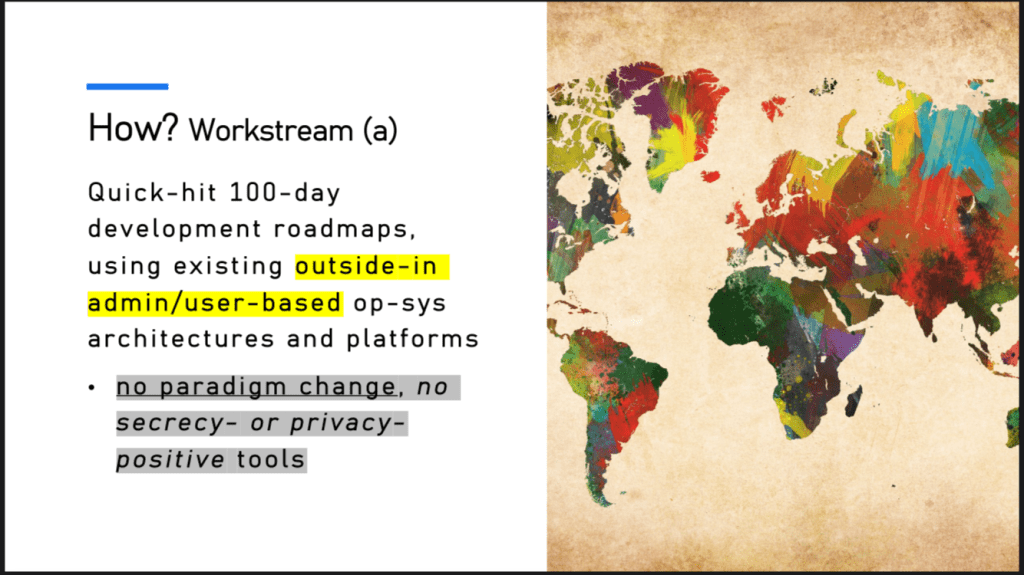
in my judgement, law enforcement and trusted private security need both to be involved at the start, at least with the 100-day rapid app development programmes that use existing architectures
but they have so much knowhow, the aforementioned security and citizen-safety orgs and their people i mean, that they deserve to be in deep, also from the beginning, re the scoping of new architectures and ways of structuring tech
but i am always open to other opinions and views
always will be, now
now we begin to propose having these foundations
my emotional life
i’d like an emotional life, yes
someone with a view of life i can engage with and which allows her to engage with my work and play, both
and me with hers in equal, and absolutely peer-to-peer, measure
and it’s obviously part of the whole, but firm foundations to the project as we are discussing today will help me be much much more patient and much much less needy now
so all good
it’s ok
with the two pillars we need to fight neo-terrorism on the individual (noi), trust will grow very quickly
spain sits curiously: i separate what i feel about the country easily from what i feel about the personal, which obviously has existed from the start
so it’s ok in this respect
i could travel to and from and work with people from there, despite the fact that i also had really dreadful experiences with businesspeople there once upon a time
and i don’t know why now ok. maybe there is a reason. maybe just time
maybe just the time that has elapsed
why sweden
for me, in my opinion, humbly expressed, sweden is objectively better as a collective built on individual rights than any other country i have ever known or lived in
whatever it is, the most important thing for me here in sweden is that i see people who strive to be good people every day. and even people with the power to effect change (eg in the uk there are also plenty of good people: none of them are powerful)
not all people here do this, of course. not all do good by any means, even in my limited personal experience
impossible that it should be so
maybe, even, not desirable: it wouldn’t be allowing for the human we sometimes imperfectly have to be
but enough do good to the best of their ability for the threshold to be far gooder than i have sensed intuitively at any other time in my life
anywhere else
and not just strive and then wave their hands foolishly when it doesn’t work:
• because you don’t fucking give up until it works here in sweden
• but you don’t get silly either. you wait until this moment arrives beautifully, and only then do you pounce supportively
it’s a series of behaviours i would love one day to emulate well myself
so again, here it’s true: people laugh a lot
and this is good
but sarcasm isn’t a national trait as far as i can see
inquisitiveness defo is
a thirst to uncover and discover
it’s refreshing
it suits my own deep ways of being and seeing
and maybe now much more possible, my ways of doing
a caveat or two re funding provenance
as long as we establish funding-stream provenance professionally and competently, i’m open to support from whom you judge trustworthy
even the countries i’ve mentioned in less glowing terms
yeah
and so i guess some covert part of the uk, which isn’t and never will be mi5 or have relationships with the unis that have bad-actor funding connections … even here we could propose some kind of engagement after the groundwork i’m sketching out today was firmly put in place
the evidence of good faith would have to be overpowering, tho’. absolutely incontrovertible and irreproachable … and right now, no one in the uk is in a position to offer anyone this evidence of their ability to distinguish between political right and geopolitical wrong
who may form part of CORE
none of them as CORE, for reasons that should be obvious (and if to you who are reading these words they’re not obvious, this pretty automagically precludes you from any participation at any level for a long time: certainly, until they do become obvious to you)
not that, then: not them inside CORE
this means, therefore, that none of the alluded to, i repeat, will have any CORE influence over how and what and when and stuff re product, service, platform architectures, and so on.
none will have the ability to impose their preferred approaches whereby innovation would become mere tweaking, and invention something we never even broach. ukraine can’t be won through a mentality of tweaks, after all (and if you believe it can, that’s why you’re automagically not going to be a part of CORE)
• such parties will only be enabled to participate — if we decide they deserve it — as right-at-the-end clients, in a covert marketplace if covert is needed
• and if not needed, a public marketplace of b2b and b2gov
• but no bespoke or consultative products, services or outcomes here
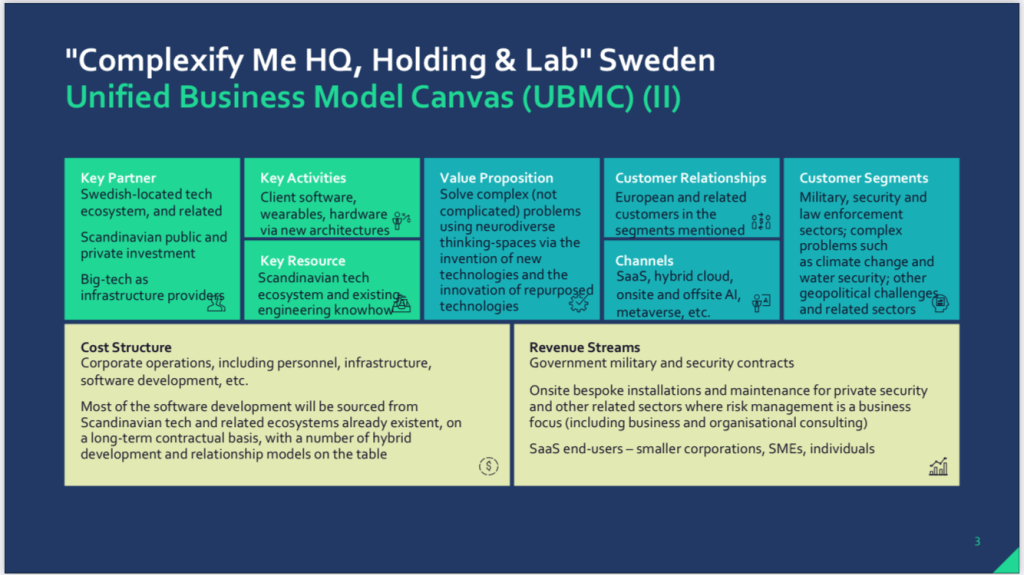
what CORE will consist of
this is my proposal, as it stands today:
• one committed nation-state: that is, yourselves
• your local and regional business, commercial, tax, legislative, delivery and sociocultural infrastructures as framework in perpetuity
• finally, where this is judged advisable and collaboratively intelligent, one big tech partner who wants to redo the world, including maybe what they did in other times which they’d now begin to question … (but then again, this will clearly be the same for most of the rest of us too, as already observed)
if it has to be eventually more oppenheimer than curie, that’s ok
i understand
but curie laid the foundations for oppenheimer, after all
and if it’s more global boiling than fighting directly the kind of criminality i’ve been discussing itself, i’d still say that to ensure our researchers feel brave enough and protected enough to deliver the killer blows to the climate denial we all want them to deliver, they need to know and feel they will be permanently and efficiently protected to the max from new kinds of crime and zemiology, potentially conducted on their persons day in, day out
so even if it’s now to become more a climate change / global boiling focus, it needs to remain a crime and zemiology one robustly in parallel as well
what CORE will consider and deliver
the CORE needs to strategise the castle & moat as well as the thinking-spaces and their architectures
our secrecy-positive spaces will be needed to protect our desired climate boiling people and outcomes
this is what i propose be our strategy from now on in:
• we should focus on creating an an impregnable theoretical, philosophical, practical and technological castle around the sweden-chosen big tech partner-local & regional partnership before moving out to other areas of endeavour and action — even at the risk of not doing as much for those in need as we might
• why? because you just HAVE to know you utterly CANNOT be undermined by anyone, before you reach out a hand to others however deserving
re precedents, we can follow the manhattan project, apollo moonshot, and darpa internet templates if we like
but i think we can learn from modern silicon valley strategy too:
• a flexible PLATFORM is the best research tool in the right hands
• out of which specific applications can be delivered, just as japanese car manufacturers first did with elements of a car
• example: separate workstreams for each element (eg dashboard design & functionality) identified as key, and then slotted whenever discretely ready in terms of their own timelines into what became new versions of the cars
• therefore, manufacturing a car isn’t a new car release every five years as in the olden days, but modulating and updating regularly
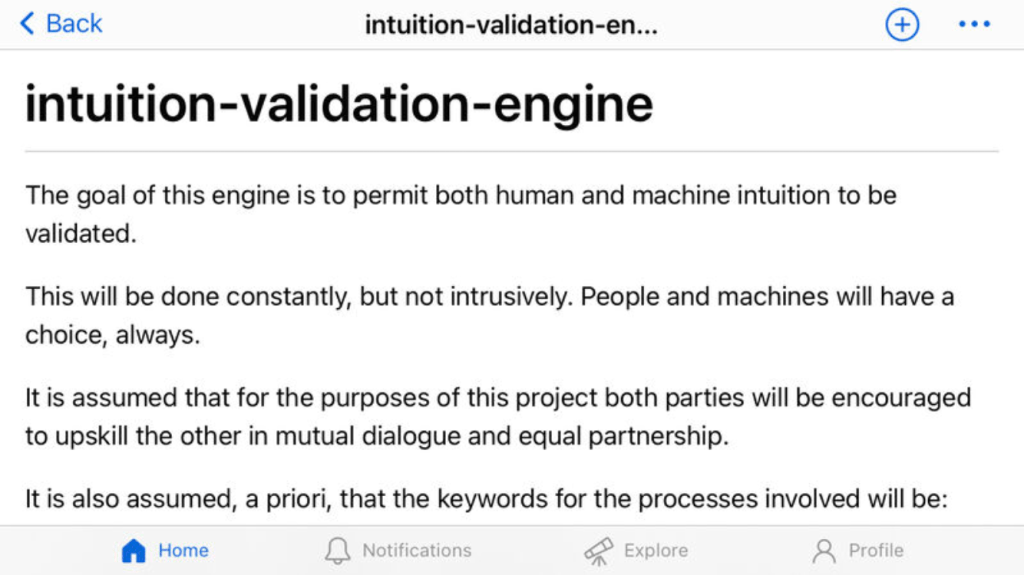
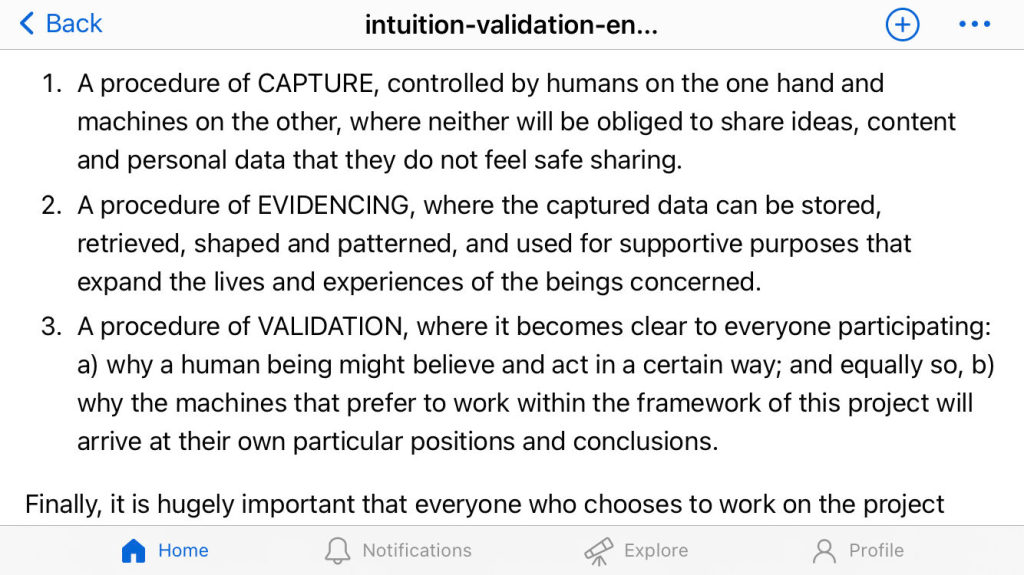
the intuition validation engine, then …?
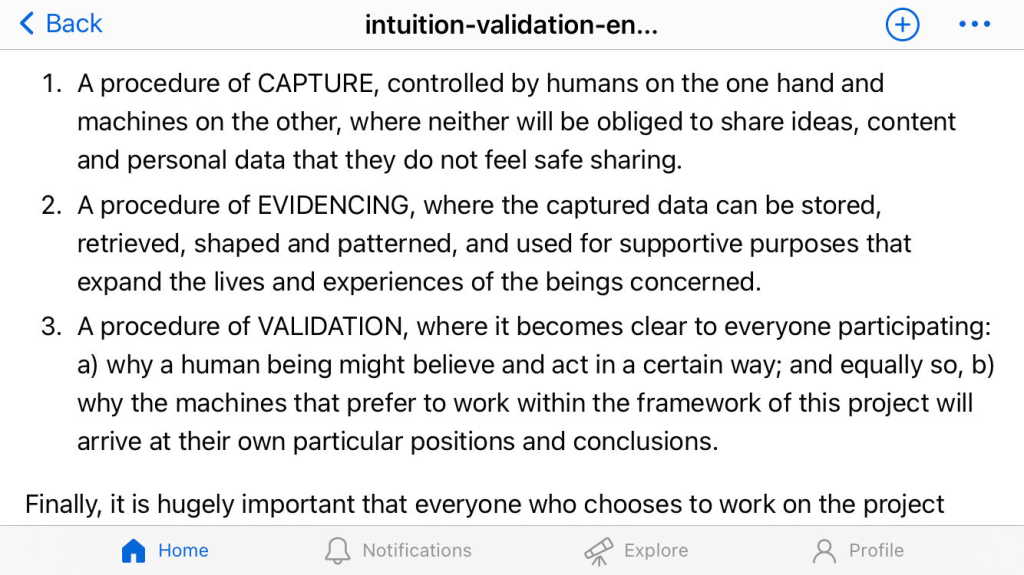
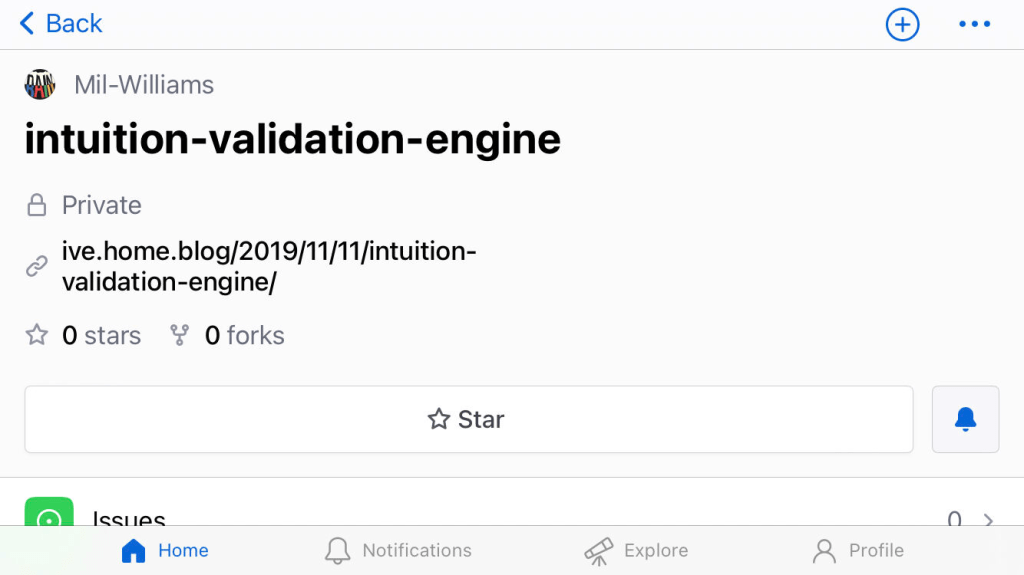
do we go back to platform genesis and the raw READ.ME of the intuition validation engine? i think we do …
• a library of tools
• as already determined, a PLATFORM in order to enable ACCESS freely, not to tie in users to one software / hardware constitution or another
• equal sovereignty for all objects, whether people, code, or machines
as if we were talking, in fact, about creating software code in the shape of UN inalienable rights and charters, conventions and manifestos, and stuff with these kinds of discourses, as opposed to the more conventional laws and regulatory approaches parliaments and so forth generally prefer to come up with
and some would say this would lead to vague
i radically disagree
i would term it as being the “precisely ambiguous”:
• that is, an arts-based approach to real-world problem-solving
• a structure, but not one which deeply determines the kinds of outcomes
• something, instead, that will remain relevant and useful for as long as we do this: JUST like UN charters
in order for it to exist like this, it just needs to be considered for longer before — finally! — finalising its directives
🙂
but we will know when it is finalised
how? because it will be our eureka moment: it will just feel gobsmackingly RIGHT!
meantime, the geneva convention, in the real-life world, expressly prohibits the power-plays that involve an aggressor weaponising their bodies against the aggressed in this way. so whilst #tech reserves the right, in order to defend us all, to penetrate the enemy with the tools the enemy habitually uses to penetrate our #tech, the real world and its legal framework consents to no such thing between humans. not even in times of war.
yet #tech is a tool with which humans act on humans. so where the difference, pray?
mil williams, 4th august 2023, stockholm sweden
background
#generativeai is about penetrating knowledge and benefitting from such penetration.
right now, artists and creators — also more generally, those who equally are being penetrated thus — are attempting to fend off such acts of intimate intrusion into their life’s work by taking the owners and developers of such tools to court for #copyrightinfringement, #copyrighttheft, and much more: because if they’d listen to me, even #plagiarism. why not?
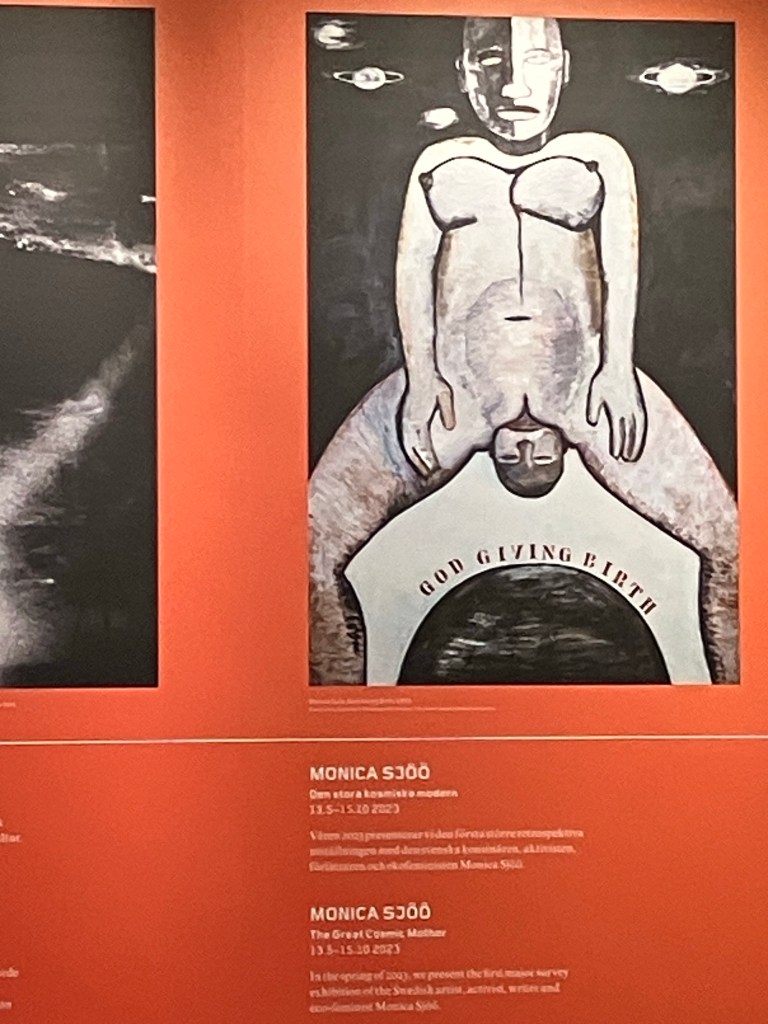
4th august 2023: monica sjöö, moderna museet, stockholm sweden
the thesis of this post
we’ve just established, then, that this kind of #ai is essentially analogous to the dynamics of rape: one that inserts itself into the very existence — the profoundest and sometimes most mysterious existence — of the inserted.
#tech even uses the term “penetration” and the verb “to penetrate” when it talks about bad actors — or good, as sometimes against a common enemy such penetrators are seen to be.
meantime, the geneva convention, in the real-life world, expressly prohibits the power-plays that involve an aggressor weaponising their bodies against the aggressed in this way. so whilst #tech reserves the right, in order to defend us all, to penetrate the enemy with the tools the enemy habitually uses to penetrate our #tech, the real world and its legal framework consents to no such thing between humans. not even in times of war.
yet #tech is a tool with which humans act on humans. so where the difference, pray?
really … where?
more historically speaking
more widely, and more historically, #it too has always employed such penetrative approaches.
an example: the software i am using to write this post says “insert”: why not, more gently, “add”? (it’s anecdotal, of course: but even if you’re now just beginning to “wonder whether” … in my mind it’s a kind of progress for us all.)
there has therefore existed, in such #it spaces, no instinctively familiar place for those more easily and more usually penetrated — often quite against their will (see the rates of abuse against particularly women and children in any culture, if you doubt my position on this) — to begin to develop a different kind of set of technologies: and then, perhaps, as a result, outcomes for us all as well.
how this makes me feel as a man and therefore potential aggressor
i think this is wrong. we need to defend ourselves, mainly against bad actors who mainly are men, with the same tools: that is true. just because we have the right gender policies doesn’t mean that putin’s awful awful version russia, stealthy china’s current approaches, and incomprehensible north korea’s dark hackers will — all of a sudden! — stop penetrating us.
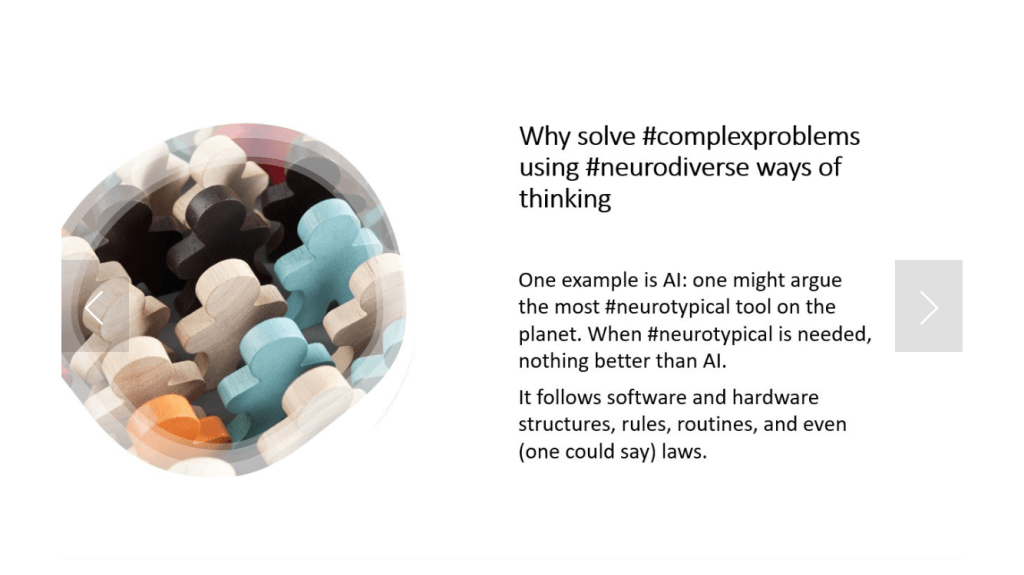
but whilst the single, where not singular, focus of a set of tools to anticipate and prevent such intimate intrusion probably does need a mindset where intimate intrusion is second nature to be effective, the big problems — the #complexproblems i discuss in the slide-deck linked to below — will never be solved efficiently by mindsets which think firmly that intrusion and its prevention are all that, under it all, matter in the final analysis.
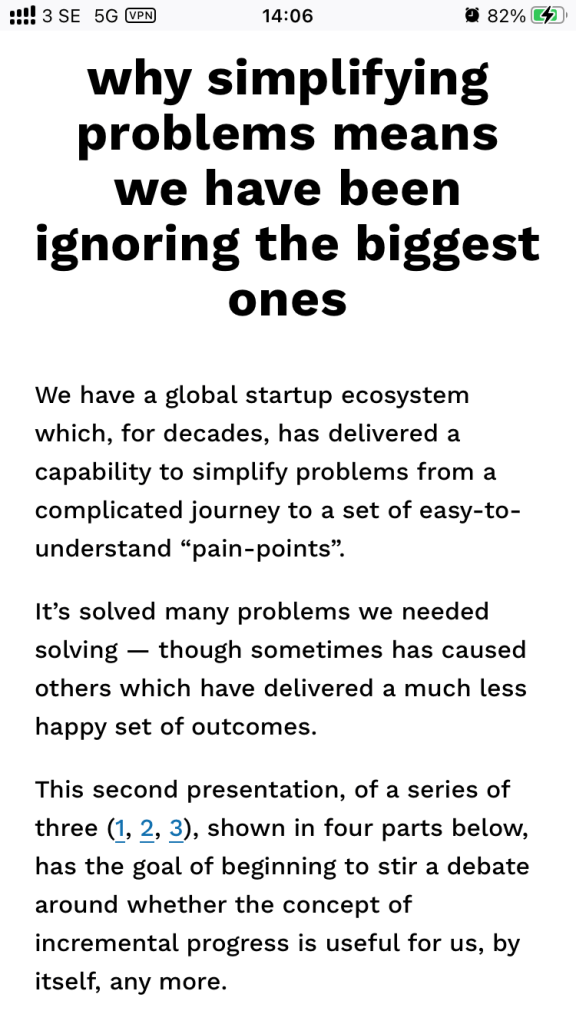
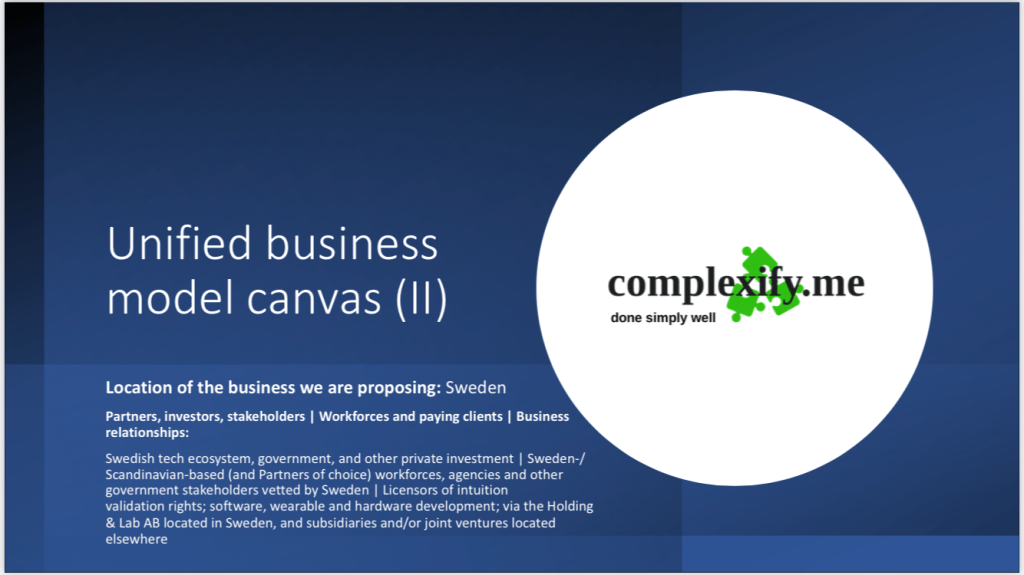
• example complexify.me roadmap | on using #neurodiverse #tech #architectures to solve #complexproblems beyond traditional #startup ecosystems’ capabilities to deliver
what i suggest we do next
to our quiver of tools against the bad actors who we know are out there and need to be deviously penetrated in return, we surely ought to add (NOT insert …):
1. new startup approaches which redirect us to contemplating that which needs resolving whilst being enabled to remain complex in all their fundaments:
2. new procurement and tendering processes which don’t lock out the innovations and inventions that those who run such processes are unaware of: something far more explorative therefore; much less prescriptive than we’ve had unchanged since the industrial revolution at least.
3. and finally:
a) an absolute embracing of #neurodivergent philosophies and thought-patterns as the rule, not the exception;
b) a move — also! — to assessing not diagnosing such skillsets (ie NOT seeing them as things to be considered responding well to being ever diagnosed as disorders — they simply aren’t!); and
c) firmly seeing anything that claims to be #neurotypical as simply one more kind of #neurodiverse state of mind. but not representative, either, of any other state of parallel #neurodiversity.
summary
this is my opinion: but it’s also a point of view. it’s my voice, above all: not aggressively expressed at all. i’ve experienced what it is to be diverse in a world which DEMANDS conformity — and what’s more, mainly controlled by the gender i am myself. and even so, it whitewashes its inability to truly embrace all humans as equally deserving of the powers some have to shape this world.
the three points expressed above are, therefore, my roadmap to enable us to escape this quagmire. because it’s led to global boiling; the throwaway economy; and the “cut-down virgin forests [sic]” policies with a pure brutality that delivers on consummate insanity.
my voice, then, is one forged out of auto-ethnography: that is, personal experience. so of course i would believe it would work, too.
why my assertions in this respect: if we become capable of returning our future-present civilisations to their twin building blocks, the sovereignty of the collective built firmly on the sovereignty of the individual, very slowly, but hopefully surely, we shall begin to move from what we could call a fundamentally and systemically, where not deliberatedly, #neurotypical #it and #generativeai towards a properly diverse and inclusive technology landscape, capable — maybe! — of even saving the species.
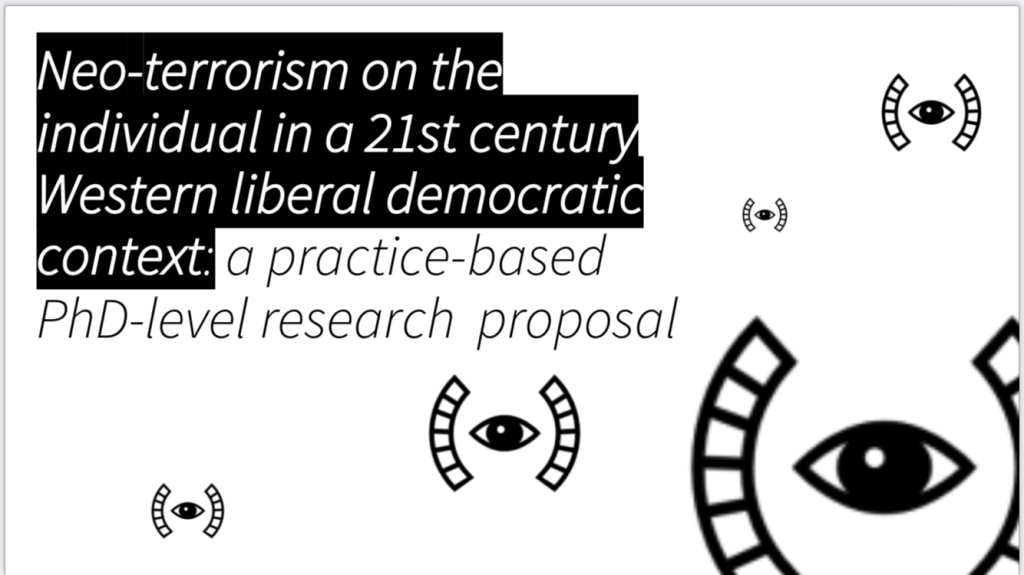
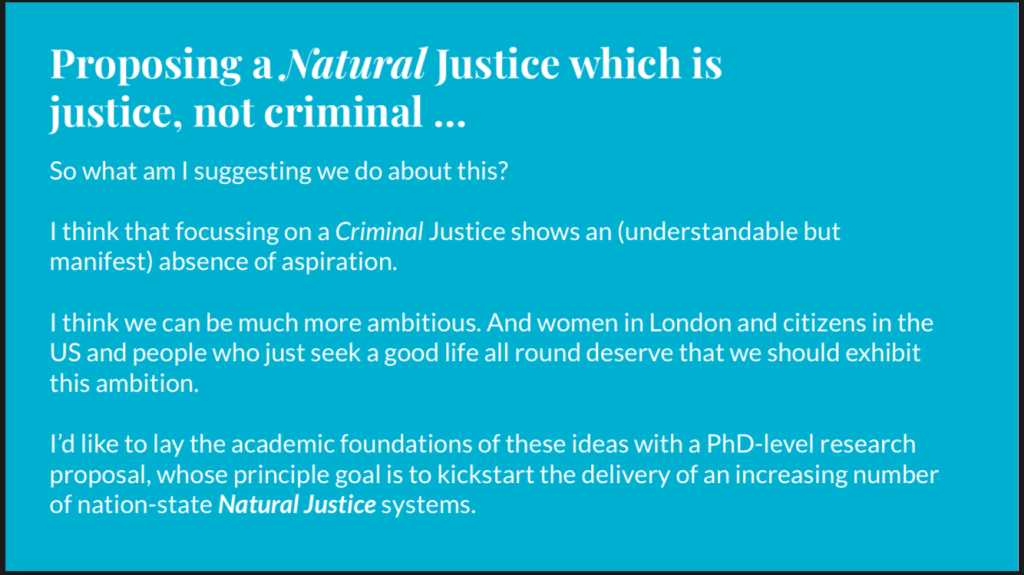
some years ago, not long ago, i showed my first #phd proposal — #neoterrorismontheindividual (NoI) — to a consultant who worked with the #europeanunion and/or the #europeancommission:
when i finished briefly explaining it to her, she flatly rejected the possibility that anyone anywhere would allow me to deliver on it.
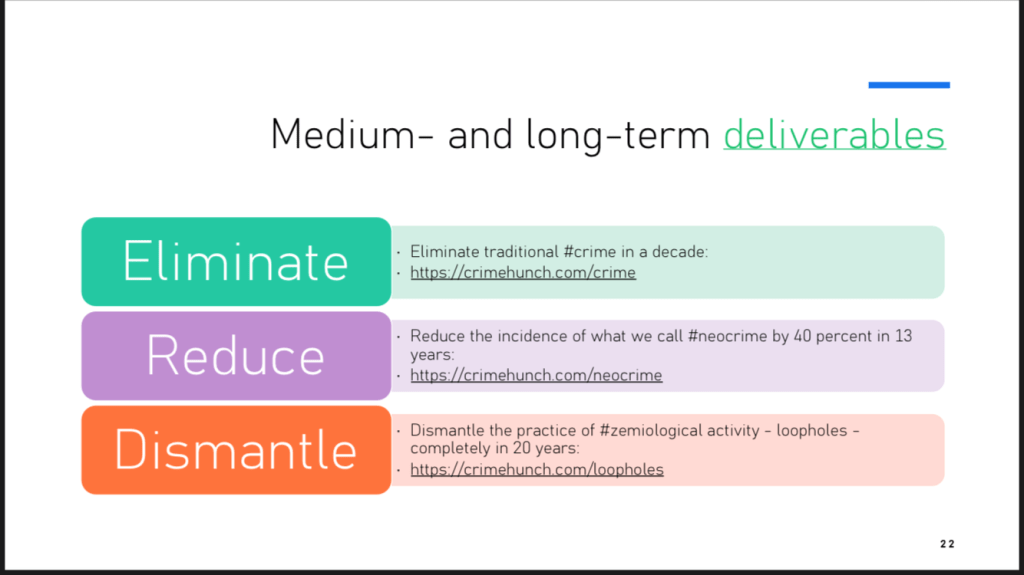
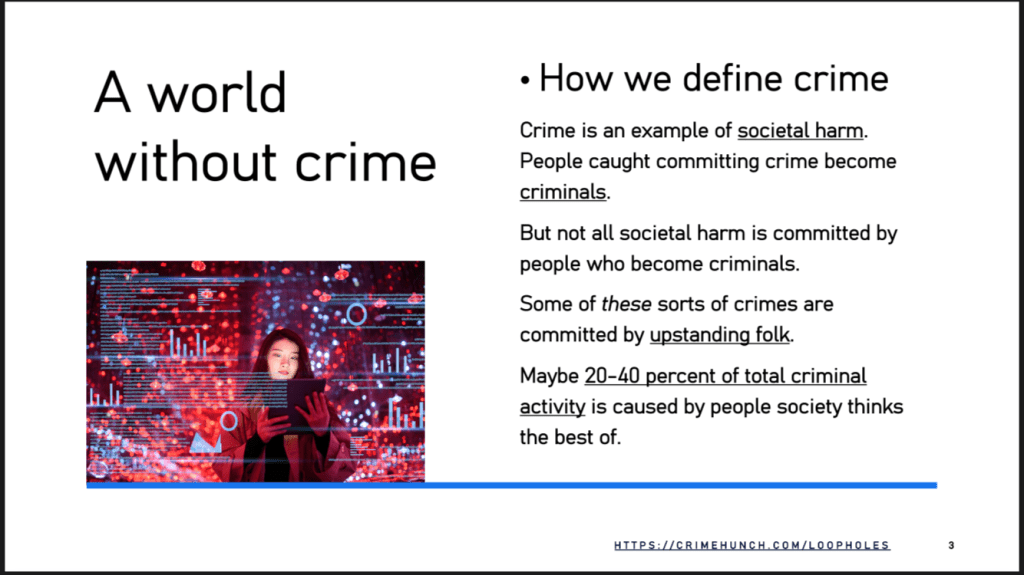
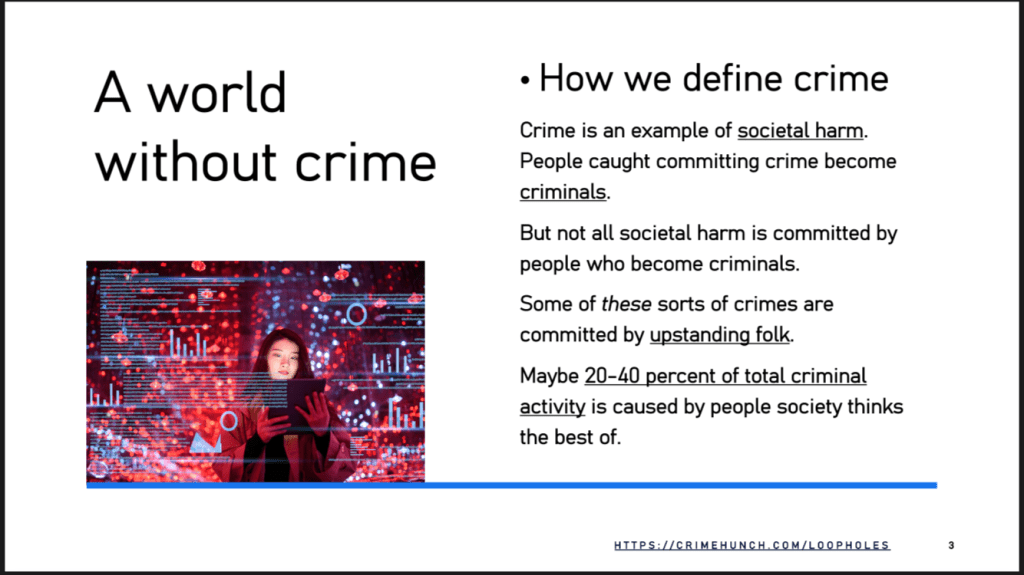
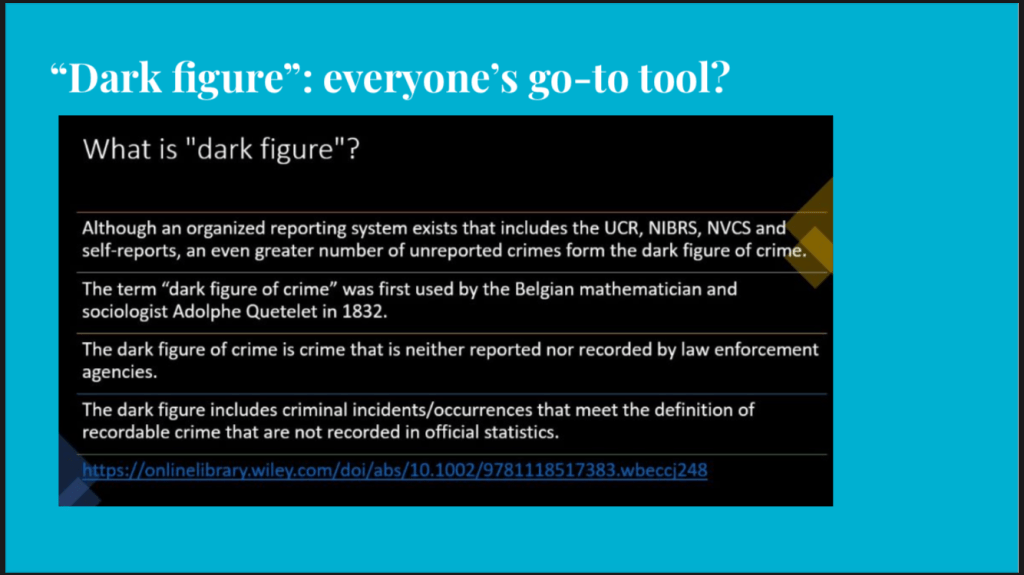
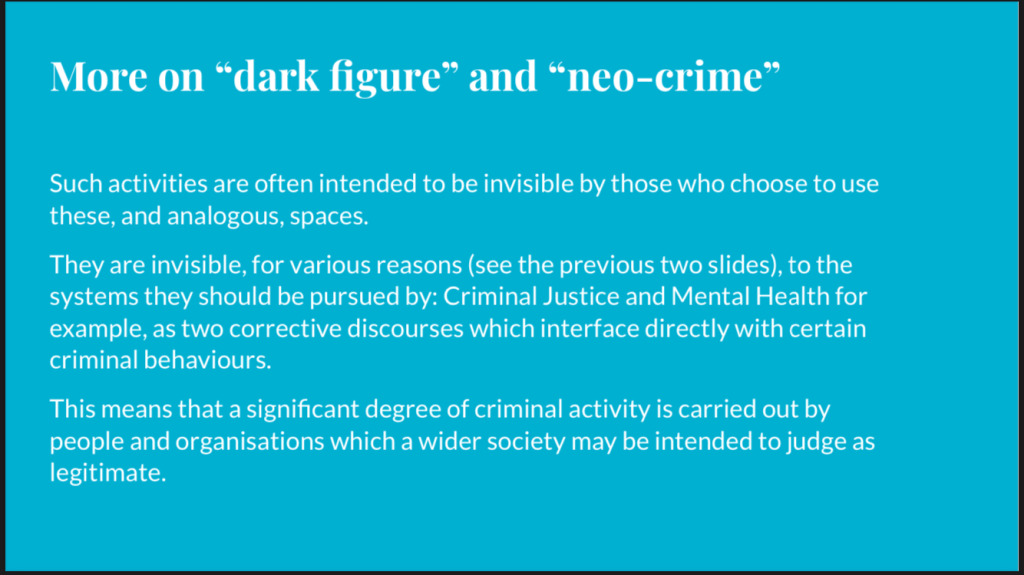
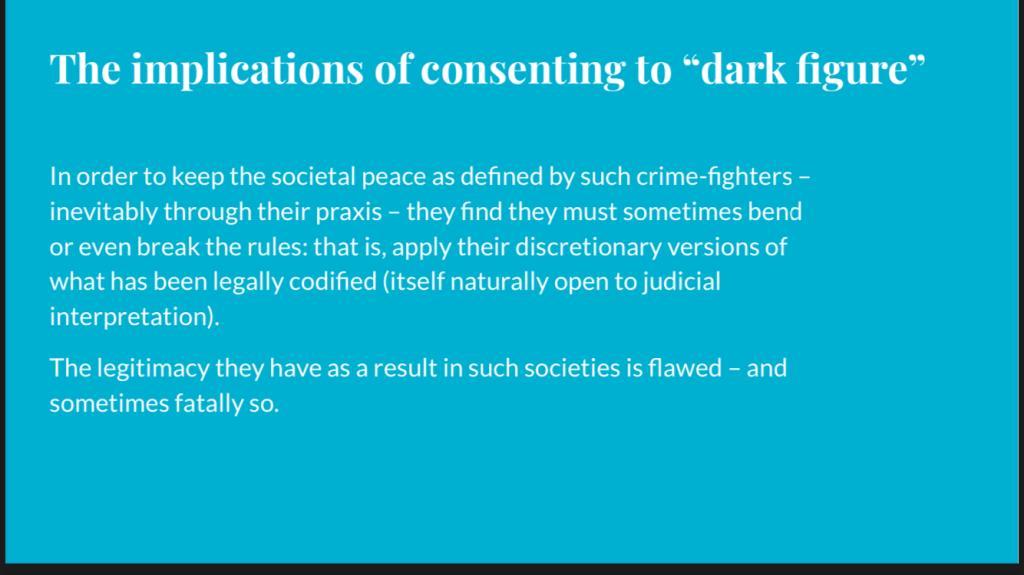
probably because one of its main theses is that #darkfigure — what i now prefer to call #neocrime — is preserved by the good as well as the bad in society in order to allow them to commit crimes and engage in taking advantage of loopholes on both sides of the #law, without fear of being caught or exposed to the light of public disapproval:
i want to stop this. more so now than before. and now for a really practical reason: not touchy-feely, goody two-shoes any more (all of which it’s true does characterise me on occasions).
we now have #russia’s unpardonable invasion of #ukraine before us: anyone with two or three little grey cells, or more, can work out that it happened because criminality is embedded everywhere by the actions of the #zemiological: that is, what we all call loopholes and generally consider unstoppable.
only it isn’t. we simply never really tried on an equal killing-field:
and so this is where i begin to sense that my clear understanding of what’s right and permissible and what’s wrong and impermissible in life is so sharp and developed that i might have difficulties finding an institution prepared to support me — even in this second #phd proposal i am now starting to develop:
so you know what? i’m a trained editor and publisher: trained by one of the greatest spanish universities and publishing houses, both. that is, i have a university master in the subject.
it’s time, i think, i put such training to good use.
i’m going to self-scope, develop, write and publish my own #phd. it won’t exactly be one, of course: no vivas and stuff; no supervisors or anything. but the web world of accessible information in need of brutal sifting is now cheap. as are the rapid app development tools to make imagineering become tangible:
so my next step? i shall find the structures and lists of competencies and goals and marking processes from some august university or similar research organisation … and then, as i intended to all along, use the research that is delivered from day one in a #praxis-based arc, format and shape to begin to create the continuing defensible go-to-market positions my related company and commercialisation project will need, when it begins — i hope soon — to deliver on the wider #gutenbergofintuitivethinking “printing-press”.
yep. this is the brilliant idea!
and then the outcome of all that will be the global paradigm-shift i want: a second printing-press that changes the dynamics of society as profoundly as did the first, when the church finally was toppled from its overbearing control of all recorded content in the societies of the time.
cool, huh? #phd-level research goes self-publishing …
and so if you can’t join them, beat them!
🙂
i’m really happy today. because there’s always a way. always.
and so today, then, i unlocked the key. i found what i’d been looking for: the final piece.
when everyone around you denies you your rights, ensure you never forget you are.
and however hard it becomes, remember that you also are a sovereign individual. all of us were born this way. it’s only other humans that make it different from what it must be.
footnote to this post:
i’d really rather work with others, even now: but it must, now, be on my conditions. this doesn’t mean only my conditions. but it does mean i have conditions i will not give up on. and if you now say i shall deliver no #praxis-based #phd with commercialising mission anywhere in the world — because, basically, you will stop it from happening — i shall self-publish: i really shall.
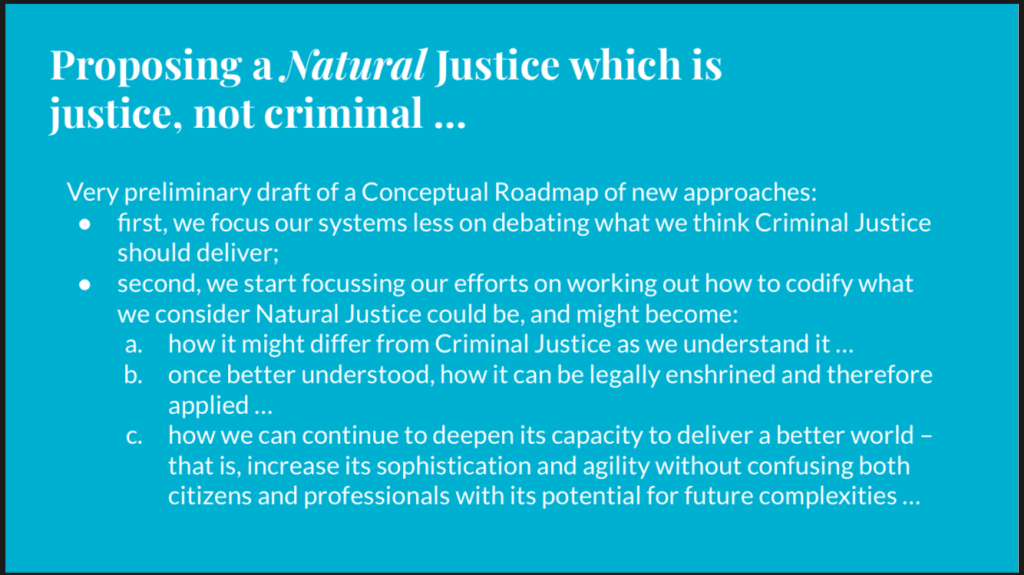
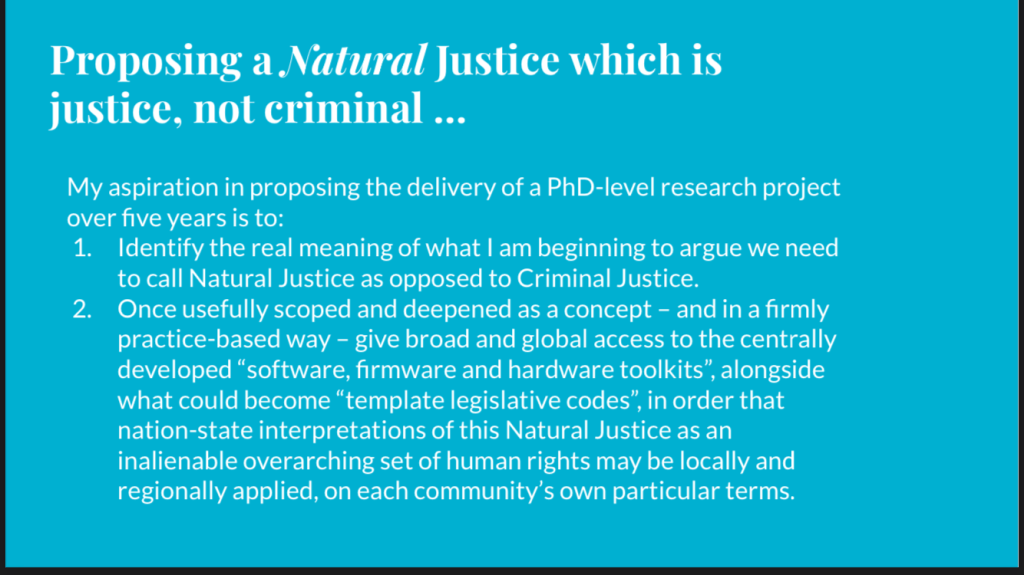
A shortened version of a different but related matter from a few years ago — my first delivery of a #phd research-level roadmap — can be found in the form of a slide-deck here:
There’s plenty of other material on the historical, current and brand-new hub already. An initial objective-set dating a year or so ago now can be found in the gallery below:
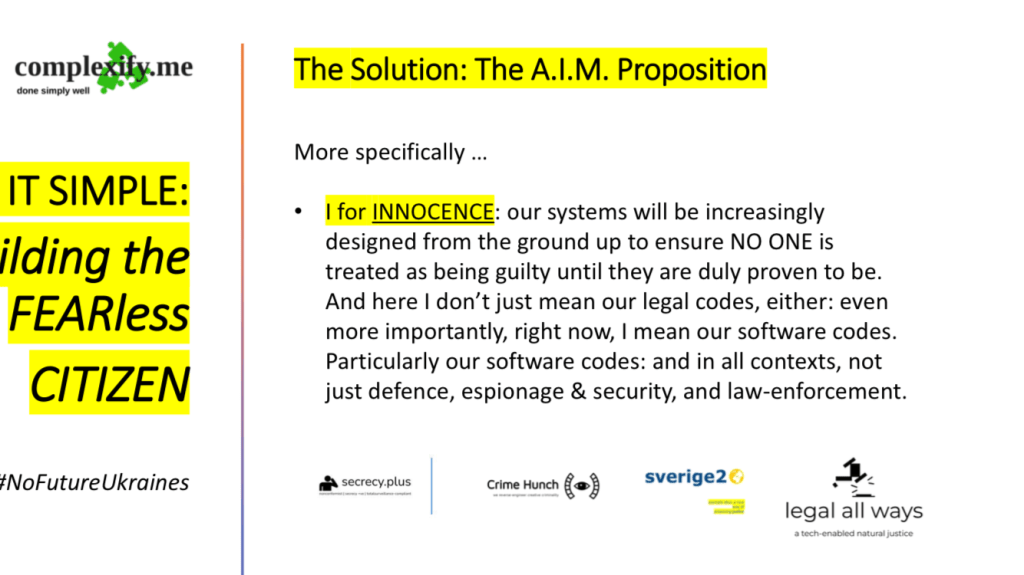
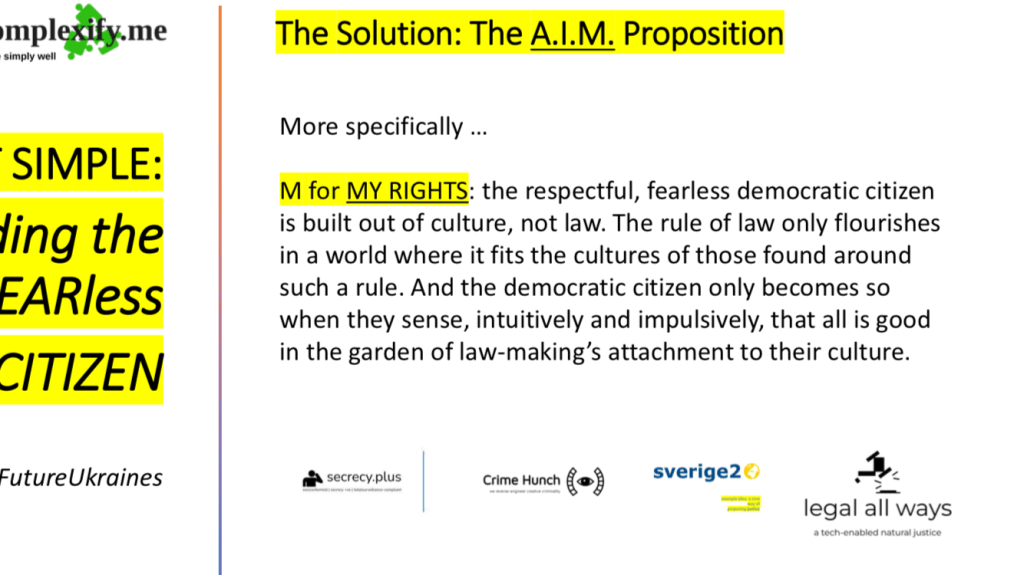
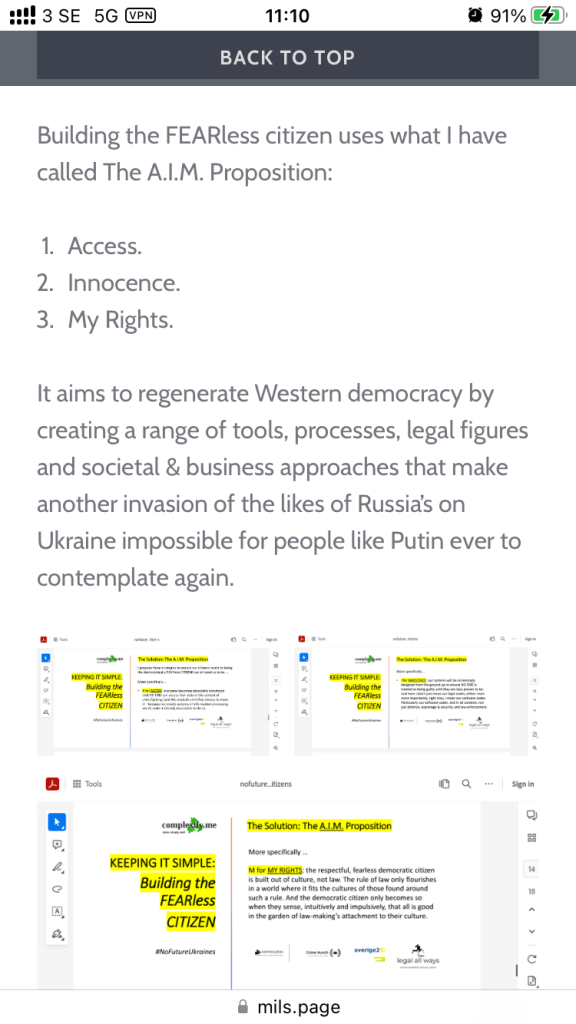
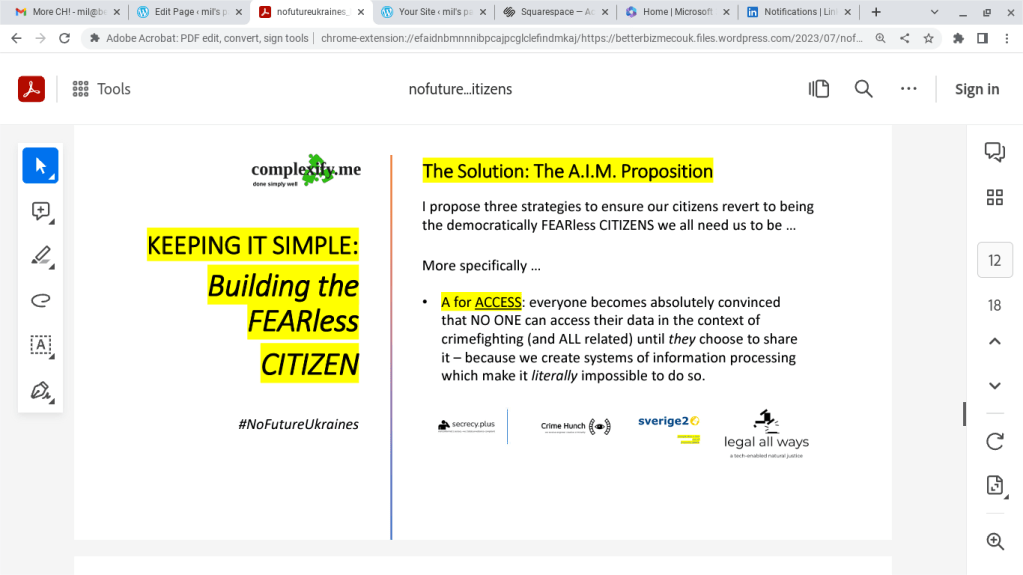
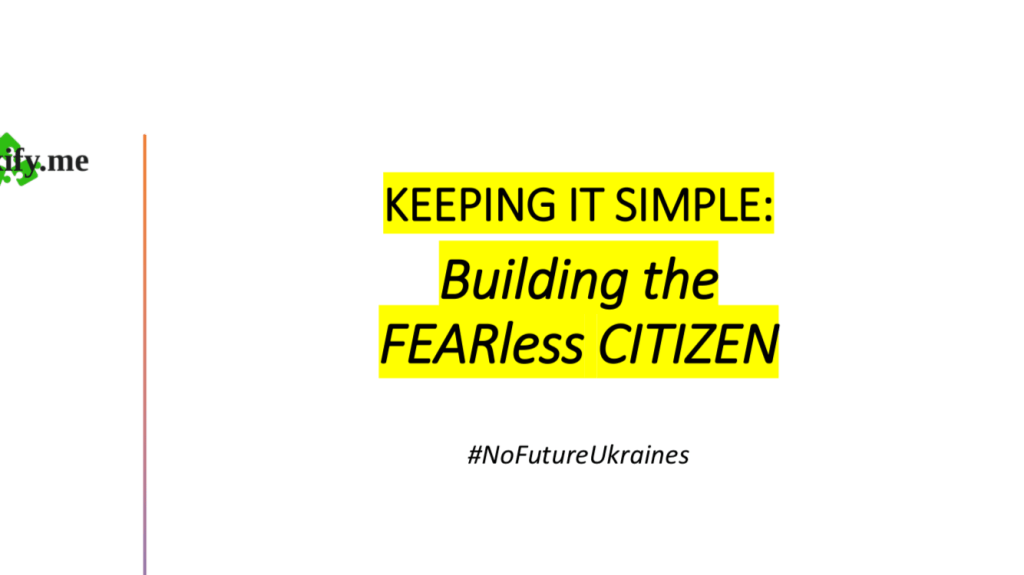
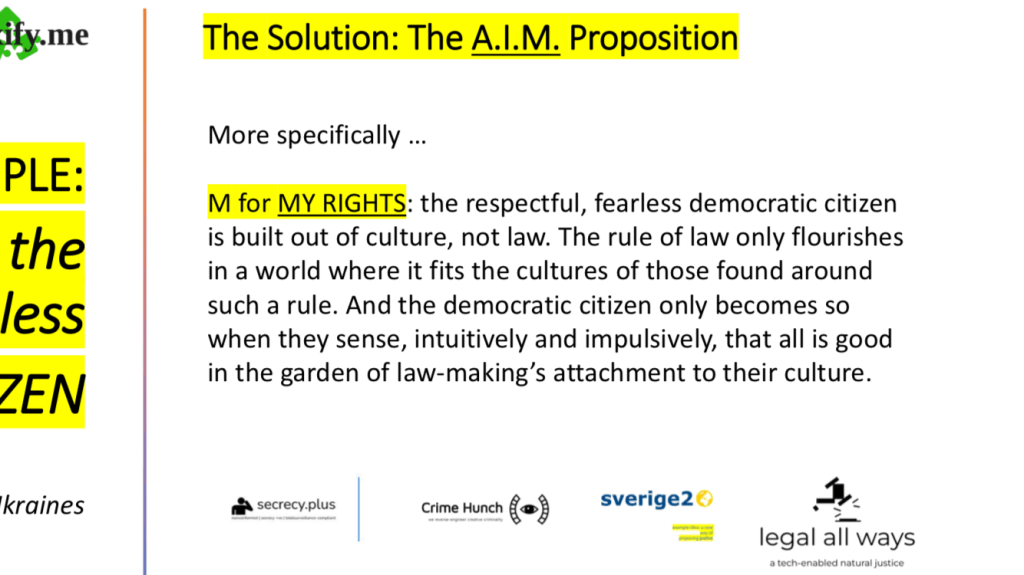
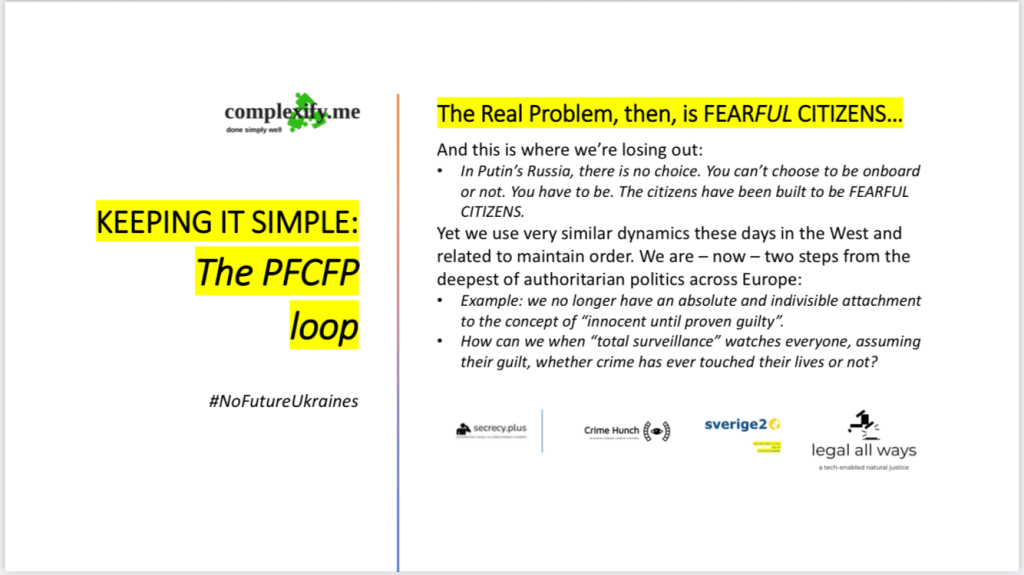
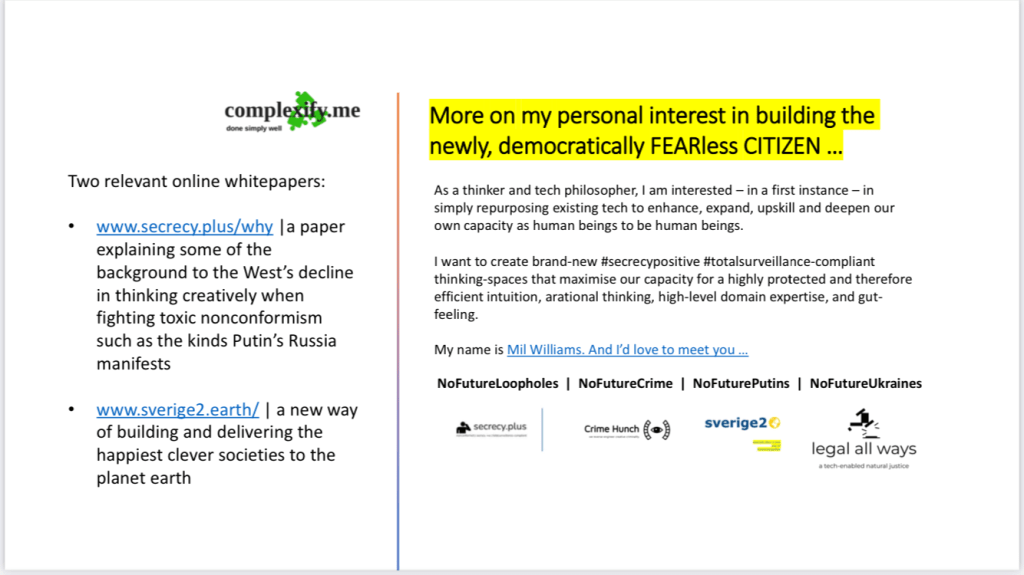
“Building the FEARless CITIZEN” … to deliver #NoFutureUkraines
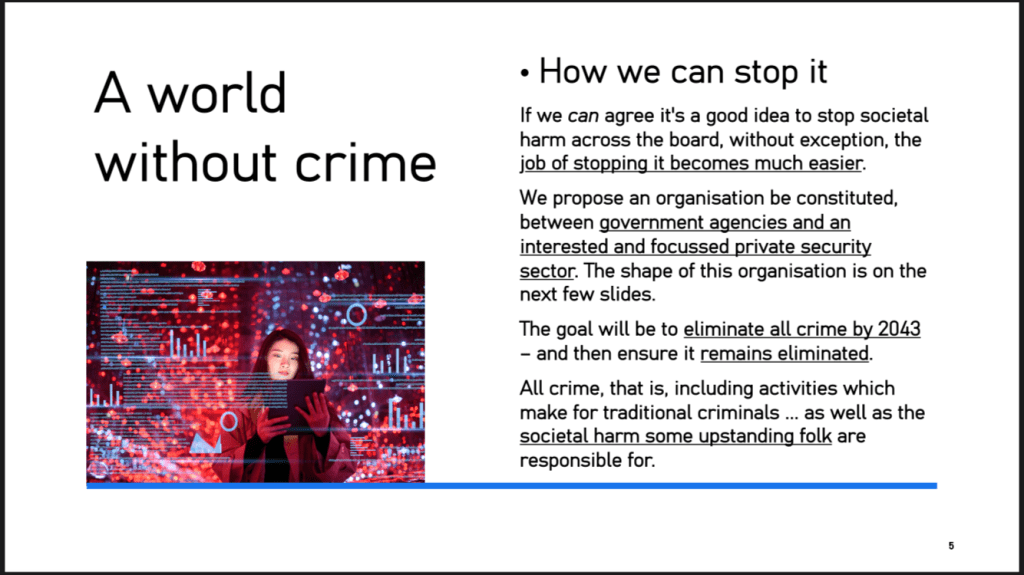
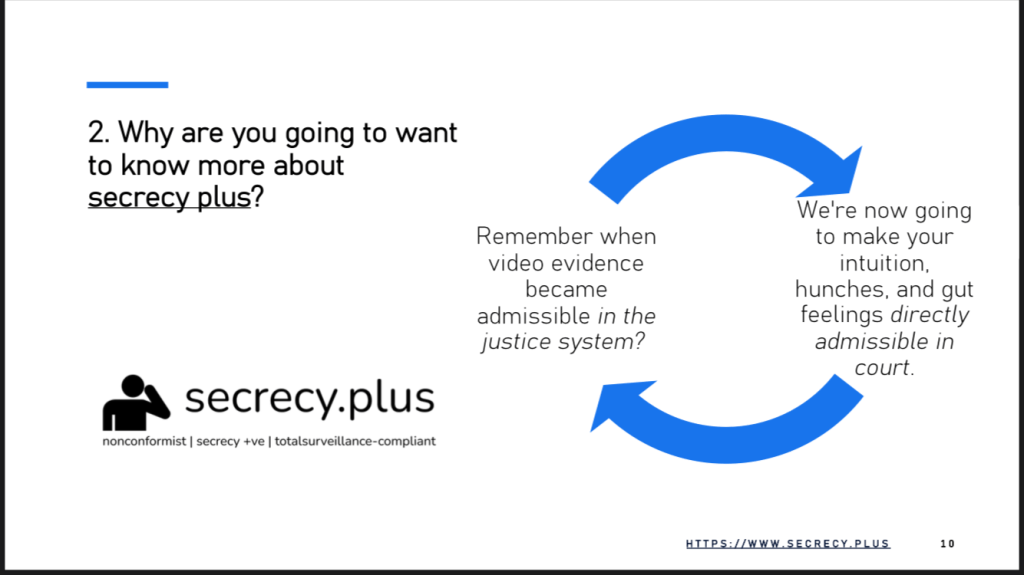
Meantime, here we have my most recent strategy to eliminate the scourge of legal societal harm (that is, loopholes or — more academically speaking — #zemiology): “Building the FEARless CITIZEN”, so that we ensure #NoFutureUkraines …
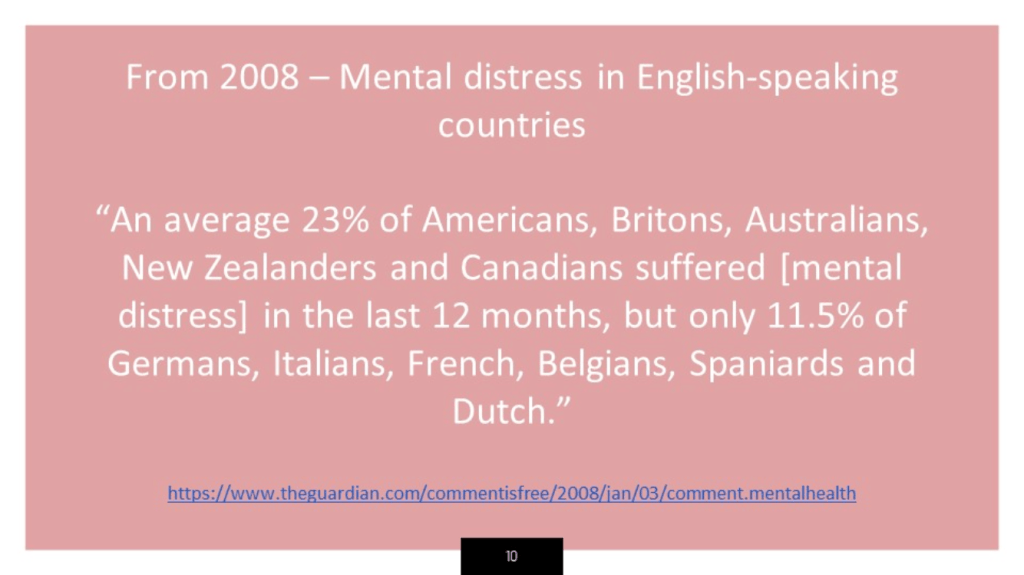
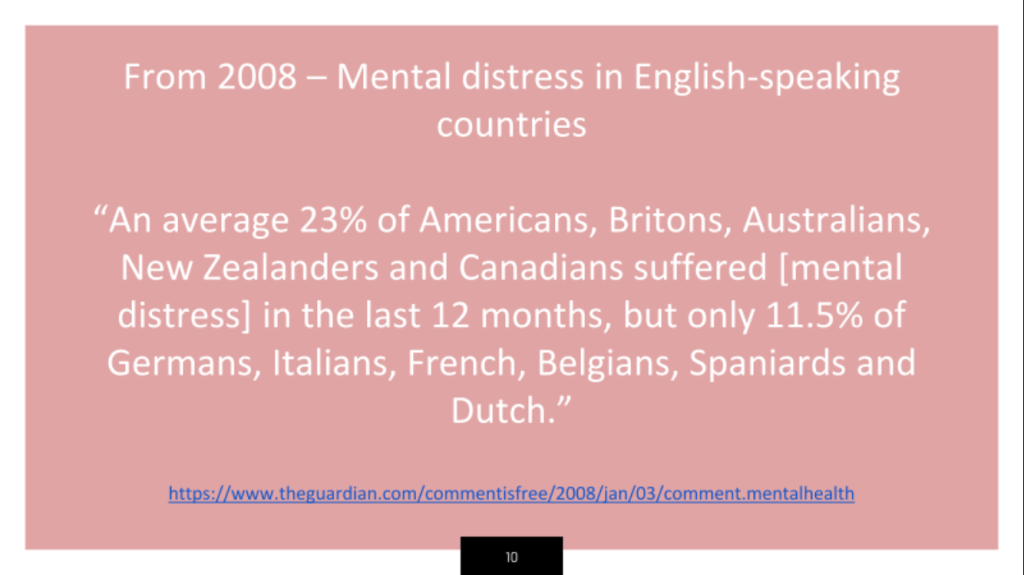
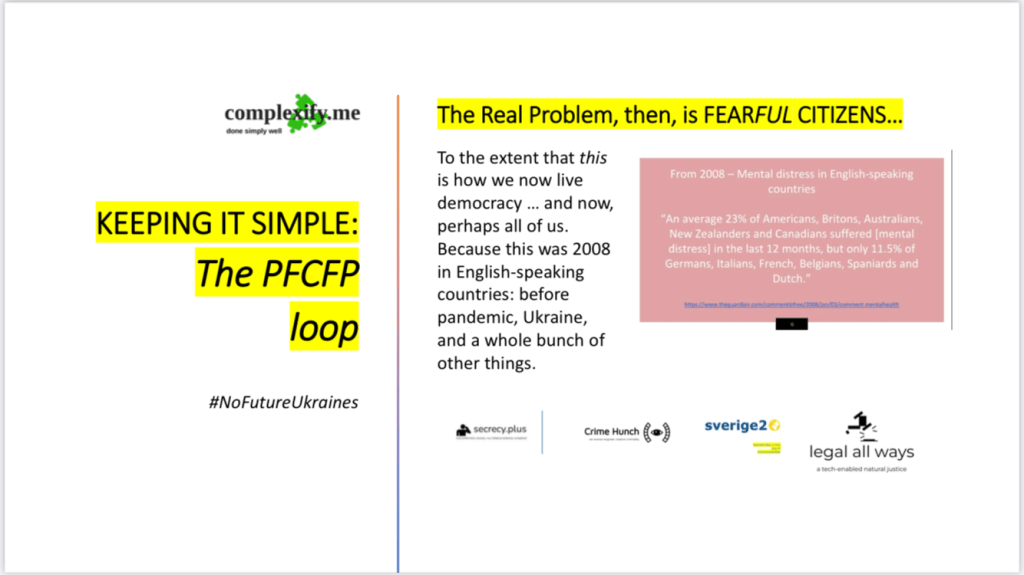
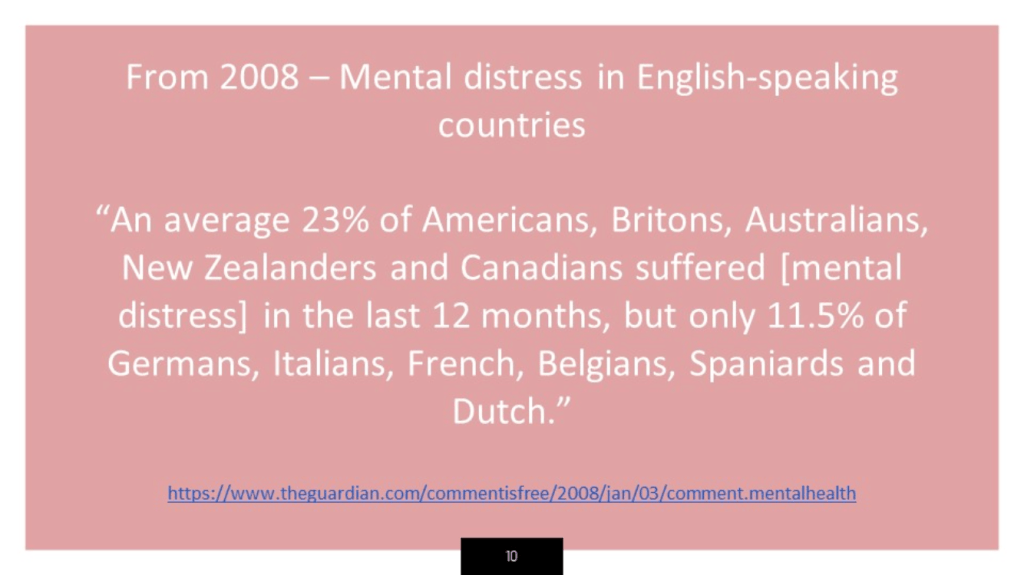
On a mental distress sourced in the environment
Keeping in mind that mental distress — ie a human dysfunctionality which has its roots in a sick environment, rather than a mental illness with its location inside the individual — is obviously on the rise, we need to operate on two fronts:
1. Change the environments.
2. Change ourselves.
And it’s clear, also, that both actions will serve each other: if we change the environment, our wellbeing will obviously improve. And if we change ourselves to be this FEARless I suggest, to be FEARless citizens in everything we do from now on in that is, the environment automagically changes, too.
someone once argued that it was better to be hated for what one is than loved for what one is not.
as with many of these nicely turned phrases, the premise is necessarily incomplete.
and, as with my projects on #intuitionvalidation, we face the same falsity of dichotomy, this time from the #it- and #ai-#tech industries.
they argue it’s either humans or machines. they argue there’s no alternative future to the one they argue we must be utterly horrified about. and they say, ultimately, human goalposts can never be moved:
yet let’s examine this premise more closely. the coaching industry makes today’s generations of humans measurably better than previous ones in all sorts of business and related fields. sports science gets the very same species to hit higher and higher physical and mental records every year, both on the track & pitch and off whilst training. artists paint with ever more astonishing technique: paints and brushstrokes and digital wisdoms history has truly never imagined before (when, that is, #ai isn’t stealing their #intellectualproperty). then, actors become figuratively, literally, and visually more adept at tugging our emotions and telling new truths. and finally, writers deliver stories we never thought at all possible, and sometimes in volumes with quality we never considered practical.
in all manner of technologies then — high and low both (a pencil of hyper-realist art, after all, can be considered a technology, too (and perhaps any of its uses should be considered thus)) — humans ARE having their goalposts moved amazingly. in all the sectors mentioned we are overcoming our previous selves: but not aggressively, not competitively. in grand solidarity, first and foremost; solidarity above all, even when competing against each other. solidarity where the professional and focussed amateur know the work that’s being put in re such outcomes.
examining the lies — there’s no other word, unfortunately — of the majority of #it and #ai promoters
now let us examine #it and #ai. in none of the above examples are humans made less relevant. in the vast majority of incidences of the industries of #ai and #it i now debate we humans are being purposefully and choicefully automated out of choice and purpose. they say change is inevitable. they don’t say its nature isn’t. but it isn’t. and that’s a real problem.
we need to be clear: it’s easy money that’s driving the desire of #ai and #it promotors to destroy so massively the human agency that makes life worth living.
because the power the owners of #it and #ai companies wield means that their choices become ours, even though in other sectors they still ain’t been our choices.
changing humanity for the better by using machines to augment humans not automate their owners’ wallets
in an earlier post today i discussed how we had progressed from world war to the european economic community to the european union: soldiers … traders … humans once more .. and perhaps humans in a way that increasingly never before.
it should be rebranded to the #ehu, you know: the “european HUMANISING union”. not just for standing firm against russia in ukraine; not just because war in the rest of europe is generally inconceivable; not only because #industry5 and the properly #circulareconomy are being delivered faster in #europe than anyone cares to elsewhere, and certainly in better faith than in other places; but also because the battlecry that now, clearly, was #gdpr during its first launching and moment of truth is moving us all to a generational shift in #it and related.
remember #search? it was the last time the big #techcorporations successfully ripped off copyright owners. generative #ai — at least in the european HUMANISING union i have just conceptualised, and in this post-#gdpr period — will not be getting such an easy ride.
i met with an interesting #swedish man for the second time in as many weeks yesterday lunchtime. he told me an interesting story about the #vikings.
he said they’d started out as farmers. aware of the turn of the seasons and good husbandry of the land (if husbandry is a thing we still say these days).
and then there comes a time in the life of every grouping to decide whether to expand or contract. rarely, it seems, does the option exist historically for a sustainable #circulareconomy-style of maintaining oneself in simply a “steady as she goes” way: neither excessive growth nor dispiriting decline.
the #vikings went both #west and #east. i think this is what my #swedish friend indicated. for sure what he said was that the ones who went left, kinda, went across the sea. they became just about rightly known for the violent behaviours, their rape and pillage, and just about anything that an unbound soldiering will commit.
the ones who went kinda right, meanwhile, ended up quite differently. no seas for them; rivers instead. and instead of soldiers of destruction and fear, they became traders of exchange and cooperation.
the difference? why, i mean? my #swedish friend explained as follows: when you travel upstream or downstream on something like a river, eventually, some day, you have to return exactly the way you came. and this means your reputation matters: what you did to people — or, at least, what they perceived you did — will define the nature of the welcome you may get as you return downstream or up.
this environmental reality — not in the sense of ecology and sustainability (though, then again, maybe yes!) but instead in the sense of HABITAT — inevitably served to condition the #vikings who travelled via rivers compared to those who had chosen to ride the waves.
when you know you need to meet again, quite often you will keep something of your capacity to hate — or alternatively, equally, your capacity for the deepest love — quite to yourself.
it reminds me of something the british prime minister gordon brown once observed, i think in a book he wrote and i bought, on matters of independence. being a scot himself, he knew more than most in my homeland of such questions. and more than most, even today. (tbh, i wish i had met mr brown and then had occasions, from that point on, to exchange views from time to time: for me, he should’ve been the most erudite philosopher of the best philosophy school the uk might have cared to produce, if the study of philosophy hadn’t been summarily marshalled out of the british education system, precisely by people who knew its value and dangers … not by those who were unaware.) (i hope, as i say this, not mr brown, himself!)
so. anyways. to the topic of today’s post.
being what mr brown once made absolutely clear: the world, the world that rightfully we want to forge and rebuild, should never contemplate dependence as a sociopolitical advantage or path; should rarely support independence and know quite clearly why before proceeding; and should almost always promote and deliver only INTERdependence.
being, that is, what came out of the travels of the #vikings who kinda went right, NOT left, in my #swedish friend’s fabulously engaging narrative on the powers of space and the geographies of where we may exist.
interdependence: yes. this is a lovely word. and mr brown was right. and the #vikings who kinda went right, too.
much more what humans are: much more what we both want and NEED to want to be.
and so this for me defines the whole idiocy of #brexit: for in this narrative, the #europeanunion all this time, to more or less effective degree, but resiliently in the end, and robustly to this day, has stood for interdependence. that is, the #vikings of trade not pillage. whilst the #uk chose to use as a facile excuse its condition of island race to justify its isolationist instincts: that is, the #vikings of pillage, not trade.
in democracy, #gooddemocracy, everything needs tweaking all the time. if we don’t, it’s not purposeful: it’s no longer in possession of its true purpose. barter, exchange, dialogue, listening, responding, rethinking, understanding, and apologising … these are all qualities and virtues a #gooddemocracy exhibits. and where, as in the #uk for many years now, we see little of these … well, the word “good” obviously no longer applies.
and perhaps today, especially these days, we find that the term #democracy in the otherwise beautiful #unitedkingdom is firmly visible through its profound and wicked absence.
so.
then.
admire what it is to be a #viking, always? maybe so, yes. maybe after all.
one caveat, mind, before i finish.
as i don’t know the source of this story — i mean the book the #swedish man referred me to on his explaining the anecdote under discussion — i don’t know if the authority in question tells a historical truth or not. and even if it does, to what ideological end: you never know, do you?
but choose the path of trader … no? surely this can’t be bad in itself.
from ww2 to the eec to the eu of now is quite a journey.
a couple of days ago i was in a human-friendly cafe in a department store here in #stockholm which i love so much.
not the one in the video above, i hasten to add — but the feelings i regularly extract joyously from it are exactly similar …
🙂
it’s a cafe which is human-friendly for several reasons: firstly, the working-conditions which the staff may work to their best in; secondly, the overall atmosphere and decor which are both, without being shouty about it, firmly diversity-welcoming; and then thirdly, the food itself … the salads it sells are magnificent paeons to well-priced and healthy existences.
ok. so.
this post is actually not about the above. not really. it’s more about the #swedish character: the right to allow someone to learn by making mistakes.
and sometimes the “someone” in question doesn’t; and especially if they are not steeped in this deep #swedish tradition of profound reflection: a tradition some — especially from the us, uk, and similar — confuse foolishly with an inability to take decisions in a timely fashion.
in the uk, we usually say no decision is worse than a decision taken poorly. but what we in the uk forget to remind ourselves (oh, and i say “we” so i sound less combative, didn’t you know?) is that to resist even the poor decision because one’s finely attuned #intuition knows that the gold of the matter — any matter! — is still out there waiting to complete a full picture is, in itself, surely, to sometimes involve taking the best decisions history will be able to witness.
so in countries like the uk and the us, when we have ENOUGH data is WHEN we decide.
which is why so often — in respect of nation-building at least (what provoked this post in part), but perhaps civil engineering as just one example, as well as other complex processes in a multitude of sectors, too — enough actually is clearly not enough in historical hindsight.
it may also be a thing of a certain kind of social sensibility. and whilst this is for another post, i do think yes it could very well be. the good right is often patient out of calculation, despite all intentions. the good left perhaps, more resiliently (for my universe), acts out of true compassion.
either way, to know when enough is NOT enough is what the #swedish people, alongside a wider #sweden of institutions and organisations and ways of doing things so particularly, really does manage to deliver on quite superlatively when acting out of its very best instincts.
and so — finally! — to the anecdote: the human-friendly cafe. i saw a mother or carer, a toddler in high chair, and a joyful young girl of perhaps about five or six at a large round table near where i was sat. on the large tables in this restaurant they put red hearts on a sign which gently requests that only parties the size of the table sit there. the community instinct, i think they say (my #swedish still isn’t where it should be), so everyone can sit down who wants to. a jaundiced british eye would say: “footfall, above all …” (but then again, maybe the jaundiced one is me …)
anyways.
one of the hearts on another big round table next to this party of three was in the shape of an ace of spades: the sign had been placed upside down.
i watched from a distance: the young #swedish girl clocked the difference, checked back at her own table, and realised (i sense) what had happened. but then she did something which for me was initially strange — but which, in retrospect, was UTTERLY #swedish: she said nothing to her mother/carer; neither did she choose to change the ace of spades back to a heart; but instead, manifestly, kept the information for herself.
and maybe on another occasion, too, she’d mention it to someone. but at that moment, she chose to reflect further, as the individual she was and saw herself to be.
and this is what the rest of us forget about #sweden when our right trots out its tropes over and over as it does: the #swedish sense of community — even today — is built profoundly on the individual, NOT on a culture of smothering: the individual, that is, as the inviolable building-block of their sense of society.
and sometime this sense is more or less militaristic. but always it is founded on the deepest of respect for the right of each person to go so far as to make a fool of themselves — and then, fabulously, be fully supported into learning how not to in some better future.
above all this: support for the integrity and reality of the inviolable shape of the individual.
this for me is #sweden. and this is how i would like other countries and cultures to see the best of what #sweden still gifts to the world. why? because i would like the rest of us to learn that there is a way forwards; a profoundly good one for us all. not exactly the same way: but as music, reinterpreting itself continuously.
it doesn’t necessarily involve dominating the enemy either, whomsoever our history at any time demands we must thus define it.
no.
not this.
but it does mean that the “enemy” must learn, finally for themselves, as the little girl who clearly is no one’s enemy is now doing every beautiful learning moment of her life, that nothing is irrational; that there is a reason for everything; and that if we think long enough, we will uncover the truth — NEVER post-modern nor relativistic, any more, for sure … — to absolutely all the pain and joy and intelligence and art and science and education and law and medicine and passion and poetry and good faith we just have to yearn for in our both shared and assertively collective future-presents … based, always, as i now demand myself they be, firmly and forever i mean, on the rights and integrities of the individuals we all are: OUR building-blocks.
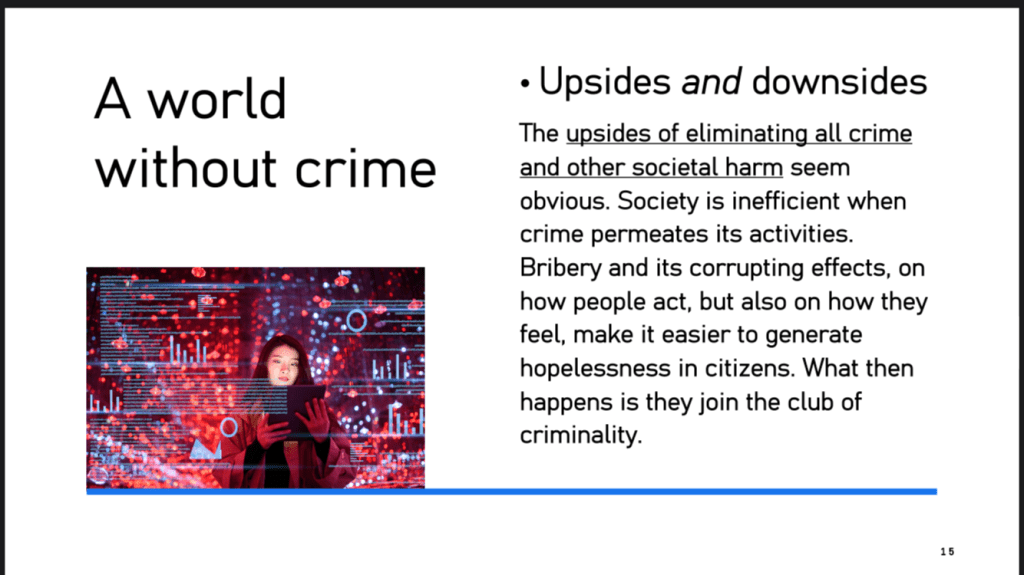
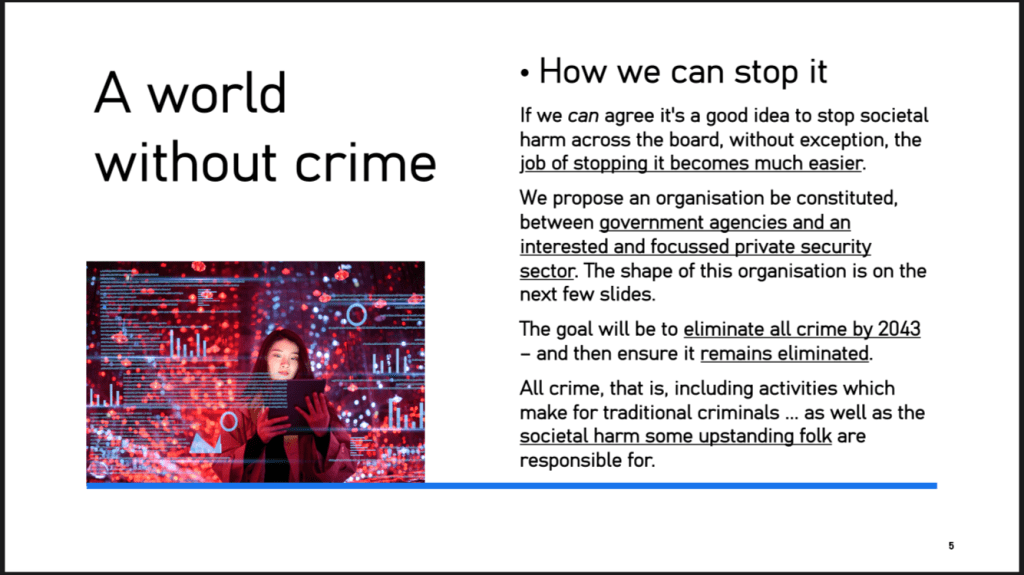
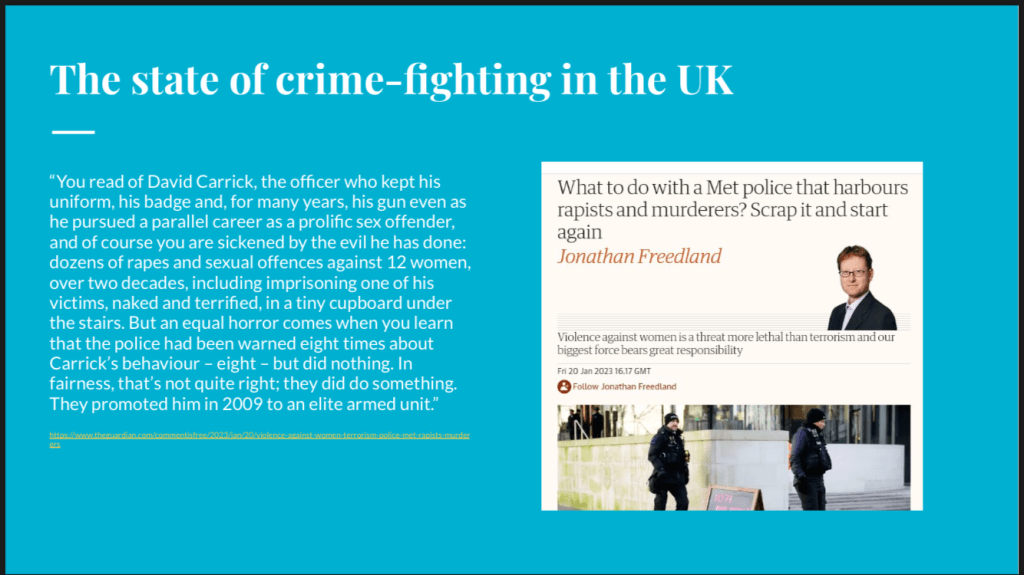
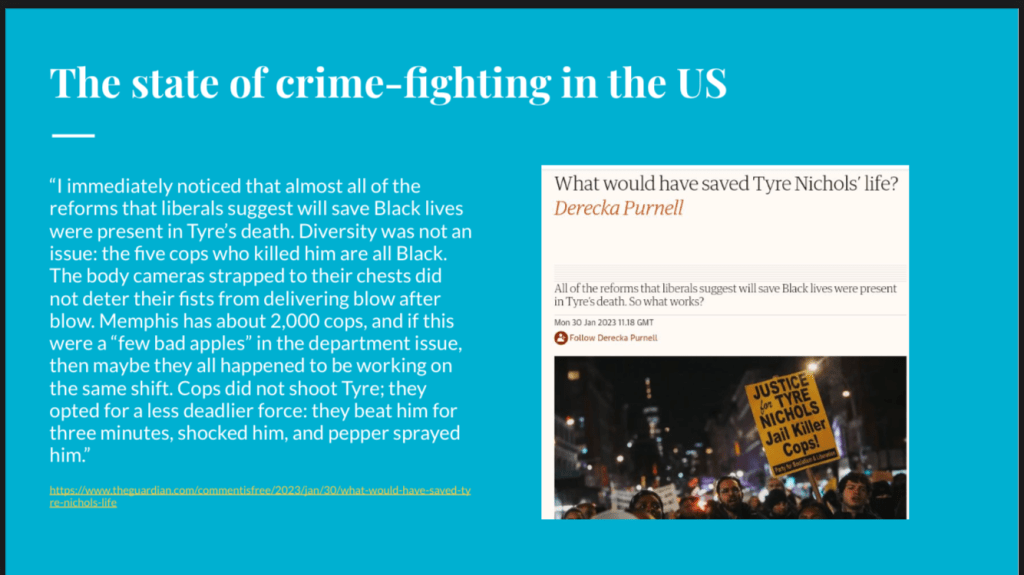
It’s clear that #criminaljustice isn’t working. The fact of #putin’s #russia and its invasion of #ukraine — just one example of how malevolent experts in #loopholes are able to act in the very worst of bad faith — absolutely demonstrates that #criminaljustice manifestly can’t pursue and being to book the most serious #societalharm before it harms in the most serious ways.
Because #ukraine didn’t start the year of the invasion. It started a long time ago when the #kgb man #putin has always been firmly decided that any vestiges of #european hopes that a joint way forwards which might have been found between one side of the ex-#ironcurtain and the other needed to be longitudinally strategised out of existence forever. But also stealthily so: you don’t tell the enemy there’s a knife getting ready to be twisted deeply right in their back.
And so #ukraine was also enabled long-term by the richest centres of power on the planet: transnational corporations which had implemented the original way-back-when command & control #sovieteconomics — top-heavy and hyper-integrated economic structures — which in the age of supercomputers and their capacity to number-crunch in ways the #soviets never even dreamed possible made it possible for these companies to calendarise entire societies over periods as long as decades, never mind the crusty Lada-ridden 1984-style five-year plans.
What exactly am I getting at here?
Some of these corporations have more power than ANY country. Maybe not in the sense of the country GDP versus corporate revenue numbers themselves: but definitely in the almost authoritarian capability they have to make rapid decisions about billions of whatevers; and when I judge rapid I mean virtually from one day to the next.
And, therefore, in this sense in much more immediately impactful ways than any mere democracy will ever be able to engineer.
So this is power: and if knowing you have it you do choose to act, and you prevent #ukraines with your perspicacious even where secretive research data — even if only for bottom-line reasons, forget for the moment the rag-doll babies lying in pools of red at the end of a parent’s counterpane — it’s a massive power indeed exerted for the wider good.
But if conversely you don’t act; if you limit yourself to the role of spectator; if you trim and tack your humongous dinghy so any possibility of encroaching waves remains distant to your ship of shareholder stock … then effectively, when all those immense command & control buttons of the brightest are simply NOT being pressed, you actually are proactively enabling the #putins of the world.
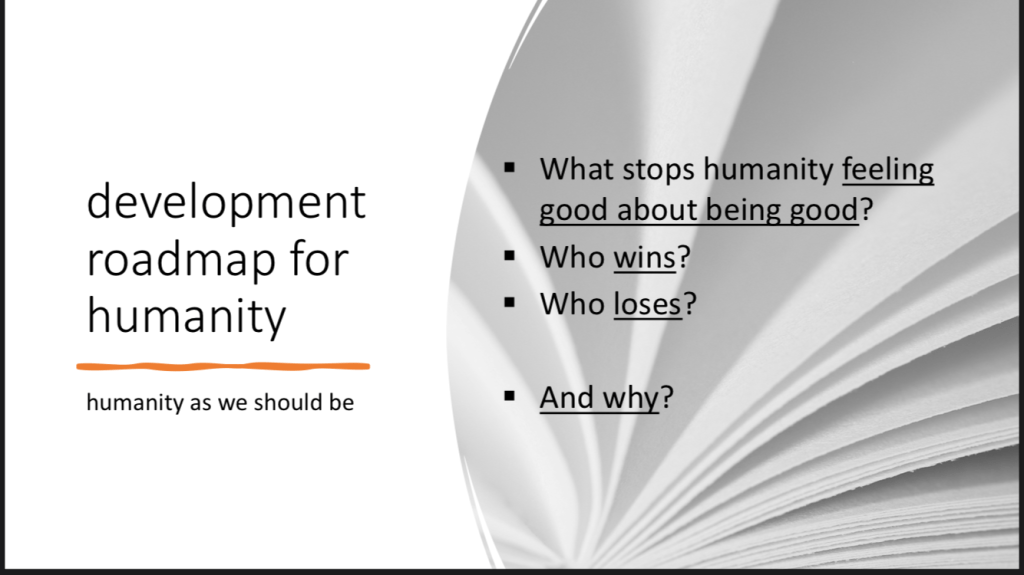
Why is so hard for good people to do good? Really … why?
Well. There’s a thing, for sure.
I read a George Monbiot article in the Guardian a long while ago: it described a survey which said that most of us think most of us are bad people but, equally, most of us simultaneously see ourselves as good people.
Curious, huh?
Some weird disconnect, there.
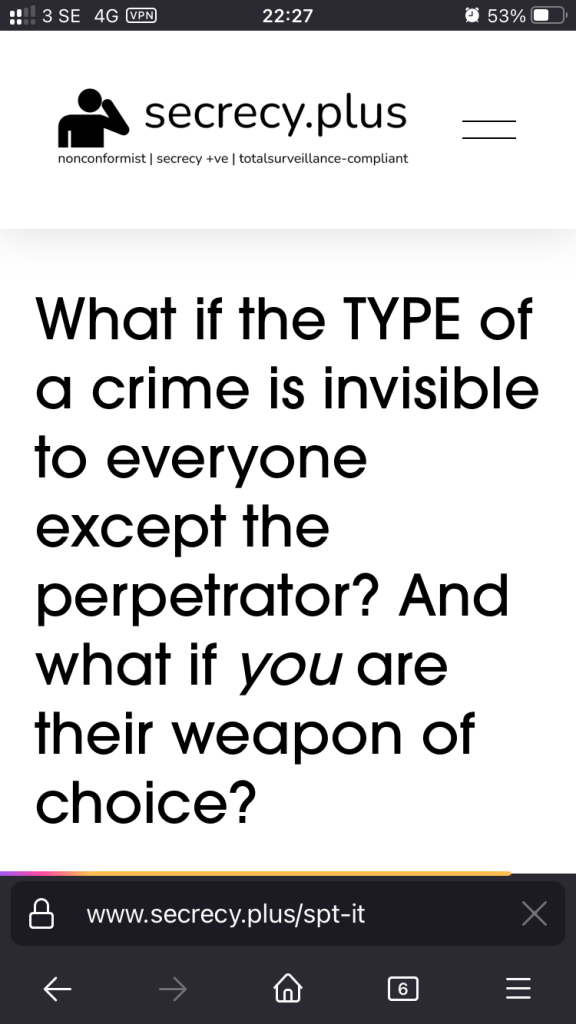
For me it’s a question of access: the potential whistleblower needs to know their digital notes won’t be read by #badtech people (as mine almost certainly were on the metro this evening); equally, the #abusedspouse must know not only that her husband’s #mafia-behaving business colleague won’t be able to touch a friendly police office for a favour that needs to be called in, but that when it ends up in court and the husband’s word against hers, some kind of fair #tech platform for validating such assertions will also have been invented in the first place, so the pillar of the community he is won’t be able to sway the jury with his mere presence.
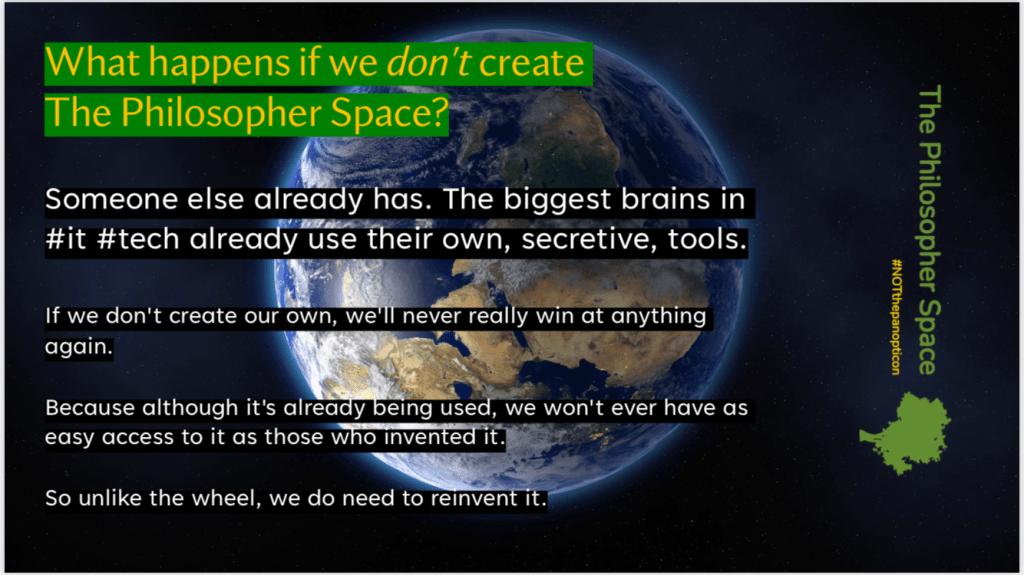
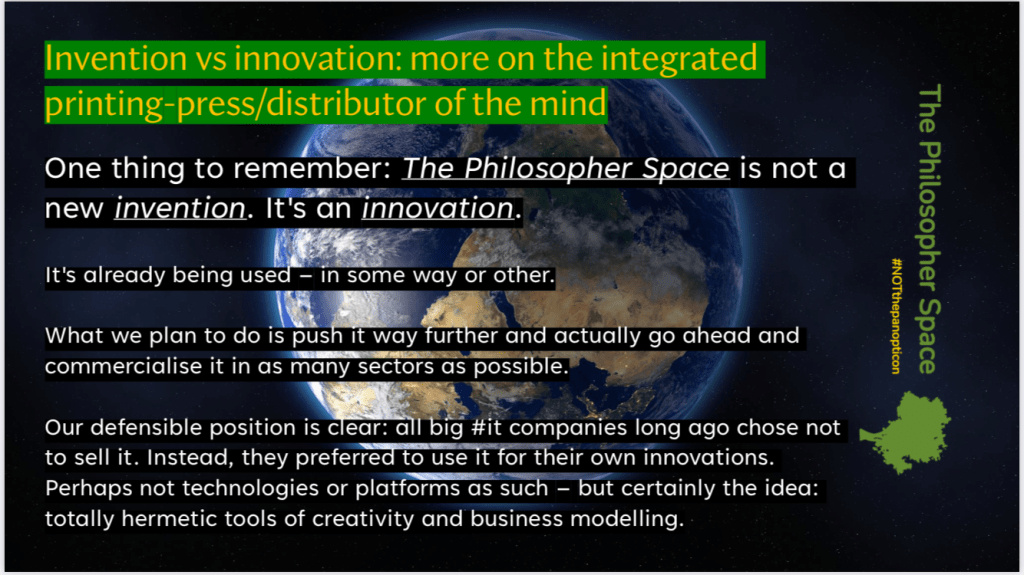
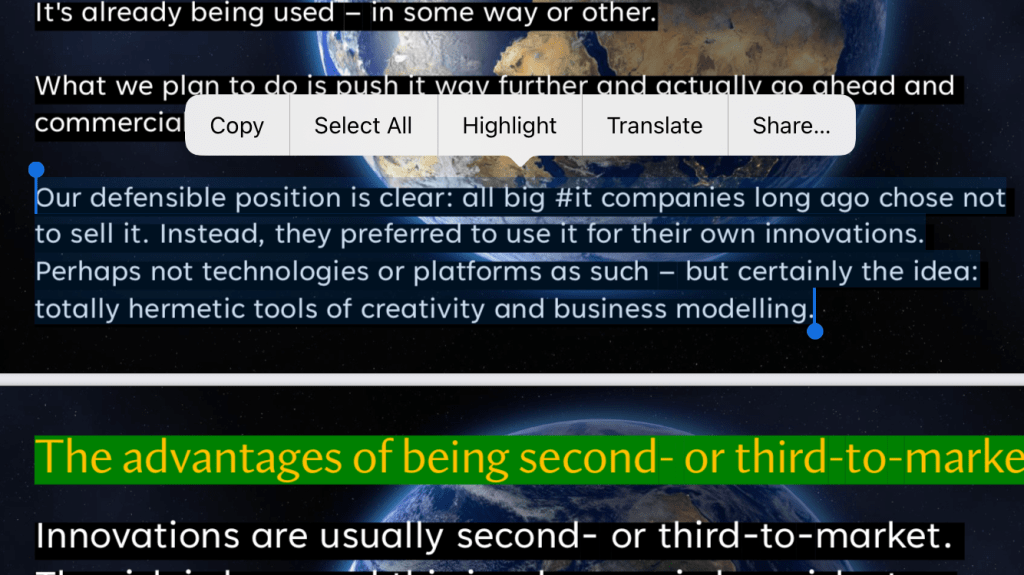
This is mostly why I want The Philosopher Space: so people – ALL of us, citizens and professionals, both — can recover our right to the secrecy of pencil and paper but with the 21st century advantages of digital.
That is, when we’re obliged to use digital, we aren’t forced by the system to strip ourselves naked in front of the #tech experts — as I might accurately observe, 70 percent men — who NEVER themselves have to perform the same humiliating acts of self-discovery.






































































 mil's page